
The development of successful architectural projects necessarily involves a series of stages, from conceptual design to delivery to the developer or even demolition, which is customary practice. An example of standardisation of this project development structure — in our case, leisure and tourism projects — can be found in the work plan defined by the Royal Institute of British Architects (RIBA). This institution organises the design and construction process into eight stages.
Stage 0, or strategy, focuses on determining the actual needs of the project and its feasibility. This is followed by phase 1, preparation and information. This stage defines what is to be built and gathers the relevant initial information, including the client’s objectives, budget, schedule and site surveys.
Stage 2, design concept, takes shape in the first sketches and visualisations, as well as in the early definition of the project’s structures and sustainability strategies. It includes its thematic narrative and visual identity, the type of experience it aims to offer and its harmonisation with the environment.
Phase 3, on the other hand, is spatial design and coordination, in other words, the master plan. Suddenly, the design has become technically possible. These designs reflect the organisation of user flows, the size of the attractions and fundamental aspects such as safety, operation and maintenance. This phase coordinates all engineering with architecture to ensure that all elements fit into the space and avoid interference.
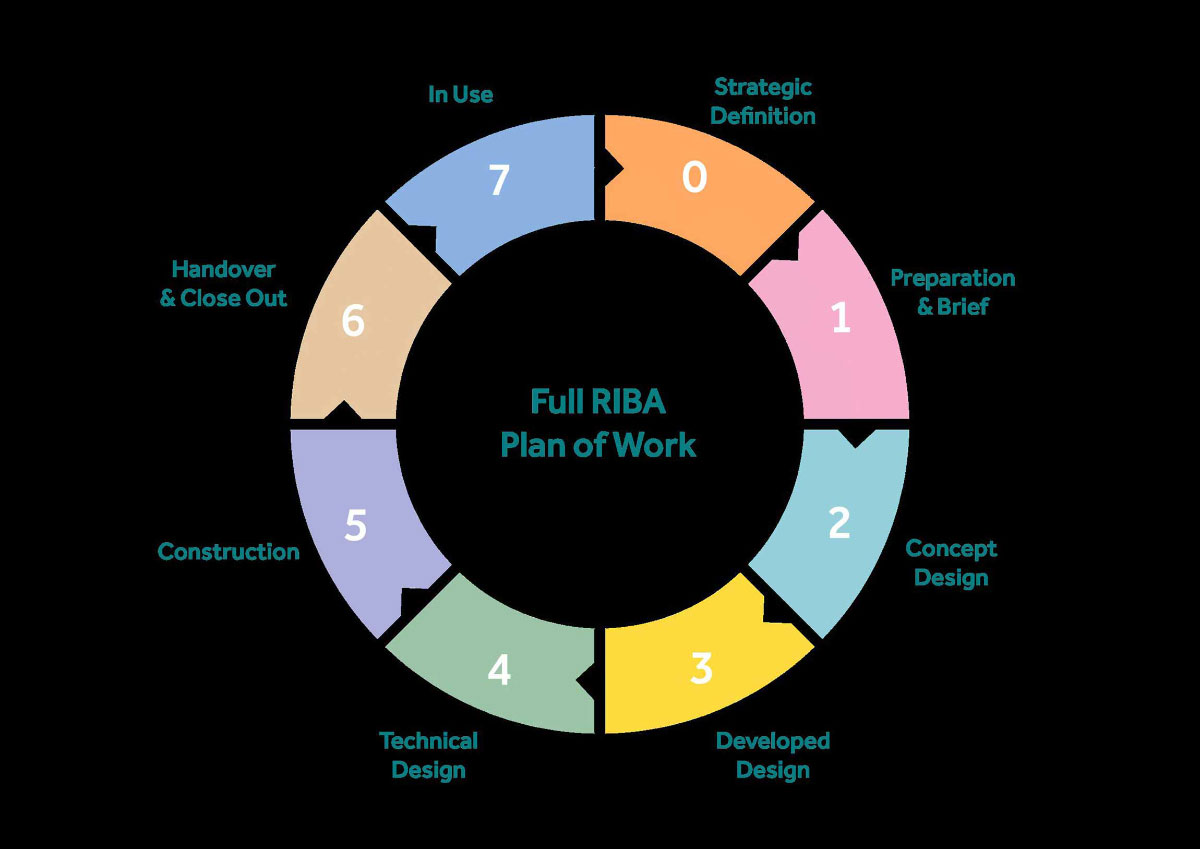
Stage 4, technical design, generates the detailed plans and technical specifications necessary for construction, in other words, the executive plan. This stage coordinates the architecture, structural design, technical installations and specific systems. It ensures compliance with regulations and the technical feasibility of the project.
Phase 5 is the actual manufacturing and construction phase. Stage 6 concludes with the final testing of the project and its facilities. After corrections and any repairs, it culminates in the handover of the building or asset to the client.
Phase 7, the last phase, covers the entire useful life of the building, including its maintenance, evaluations after occupancy and operation, and, eventually, its demolition or recycling.
By Pablo Vidal, senior architect in the Architecture Department at Amusement Logic