
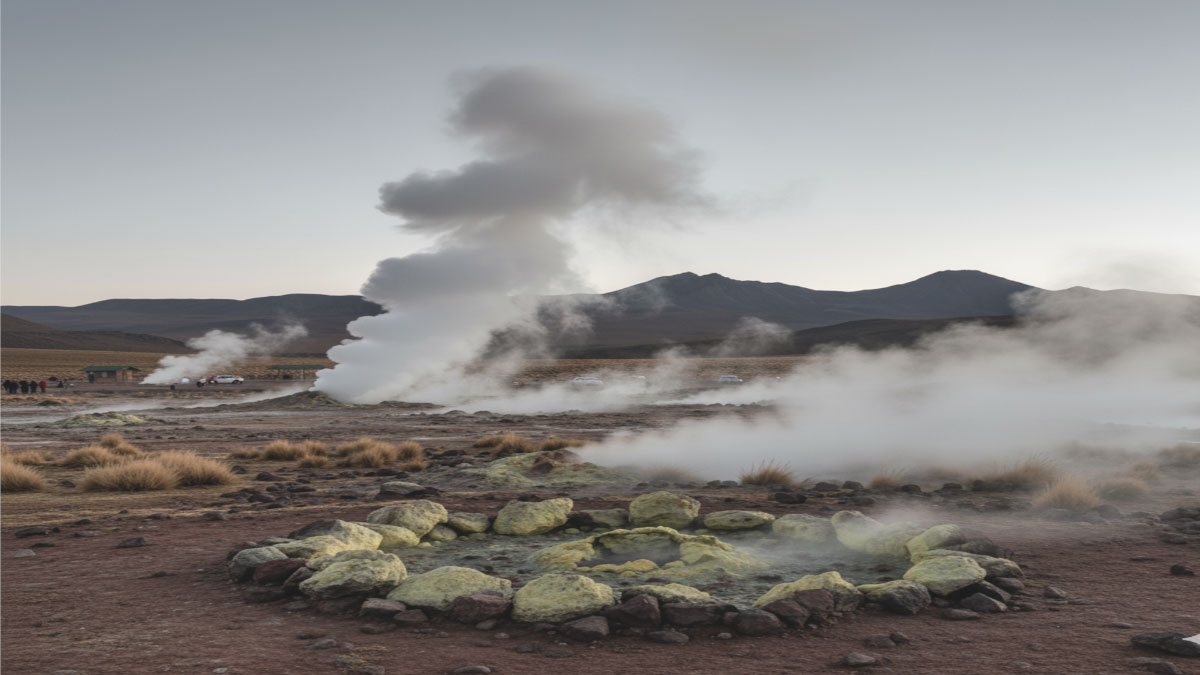
Geothermal energy is a system that harnesses the natural heat stored inside the Earth for both industrial and domestic air conditioning applications. This natural heat is produced due to the Earth’s thermal gradient, as a result of the energy that continuously emanates from the planet’s core towards its surface: the temperature increases by approximately 2 to 3 °C for every 100 m of depth.
In the building sector, the most commonly used system for heating and cooling homes consists of a geothermal heat pump connected to a network of exchangers buried underground. This equipment exchanges heat between the ground and the home, providing integrated heating, cooling and hot water.
Geothermal energy collection systems
Three systems are used to harness heat from the ground:
–Horizontal collection: this is the most economical system, although it requires a large area of land, as the collectors are installed at a shallow depth.
–Vertical collection: ideal when space is limited. This involves drilling wells between 30 and 150 m deep under the house, which increases the initial cost but is more efficient.
–Groundwater collection: a viable option when there is an underground aquifer with a constant flow. It directly harnesses the heat contained in the groundwater.
Application of geothermal energy in buildings
This technology allows for the comprehensive use of underground energy in multiple ways:
–Domestic hot water: continuous and economical production.
–Heating in winter: extraction of heat from the ground to maintain a stable and comfortable indoor environment.
–Cooling in summer: reversal of the cycle to transfer indoor heat to the ground, similar to a low-energy air conditioning system. Under the right conditions, passive cooling can even be achieved, with minimal energy costs.
–Swimming pool heating: or extension of the season of use by heating the water.gic
Advantages and considerations regarding geothermal energy
Its main advantages include:
-Long-term profitability: although the initial investment is high, maintenance is minimal and the system has a very long service life.
–Versatility: a single unit provides heating, cooling and hot water.
–Sustainability: renewable energy, inexhaustible on a human scale and with minimal emissions.
–Comfort and safety: quiet operation, no aesthetic impact and no risks such as legionella.
–Very high efficiency: as the temperature of the subsoil remains stable throughout the year —unlike the variability of the atmosphere— the heat pump operates with a much higher efficiency than conventional systems such as gas, oil or even aerothermal boilers.
However, its viability depends on the characteristics of the land, such as the availability of space or its geological composition, and requires the home to have low-temperature emission systems, such as underfloor heating, to maximise its efficiency.
By David González Molina, BIM manager in the Architecture Department at Amusement Logic