
Saudi Arabia has launched an ambitious large-scale urban cooling project in its capital, Riyadh. The aim is to reduce the temperature of surfaces such as roads, building façades and public spaces by between 8 and 15 degrees Celsius. The initiative, known as the Cooling Riyadh Project, forms part of the Green Riyadh programme and is one of the kingdom’s efforts to mitigate the urban heat island effect – a phenomenon whereby cities reach significantly higher temperatures than surrounding areas due to the density of infrastructure and heat-absorbing materials.
“It is considered one of the world’s most ambitious metropolitan-scale urban cooling initiatives,” stated sources from the Royal Commission for the City of Riyadh, the project’s promoter, in comments reported by Saudi Gulf Projects. The commission commissioned the Greek consultancy firm PLANET S.A. to develop a comprehensive cooling strategy with the aim of “improving thermal comfort across the city”.
According to statements from sources at PLANET S.A. cited by Zawya, the consultancy firm will work for a period of 12 months “through data-driven analysis, sustainable urban planning, and resilient infrastructure practices”. The aim is to draw up a detailed framework to understand the thermal conditions in the capital and establish a roadmap for improving them.
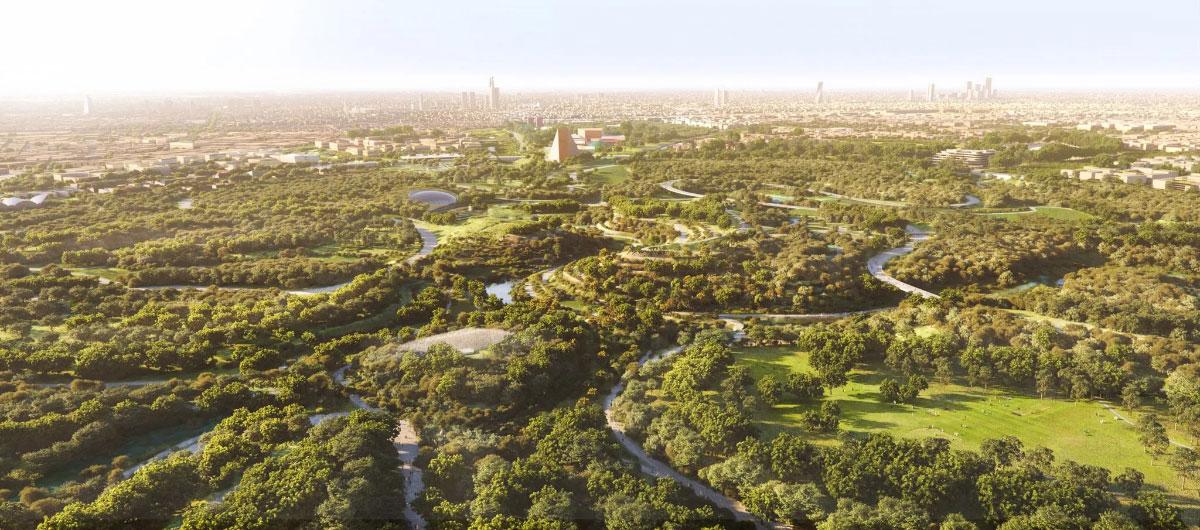
In addition to widespread tree planting, which is already part of projects such as King Salman Park, the new plan will address the structural factors behind the urban heat. Proposed solutions include the use of innovative road surfacing materials that reflect heat rather than absorb it, the creation of open water channels and evaporation ponds, and the extension of vegetation cover to strategic areas. The proposal also addresses elements such as building façades, open spaces and the materials used in pedestrian environments.
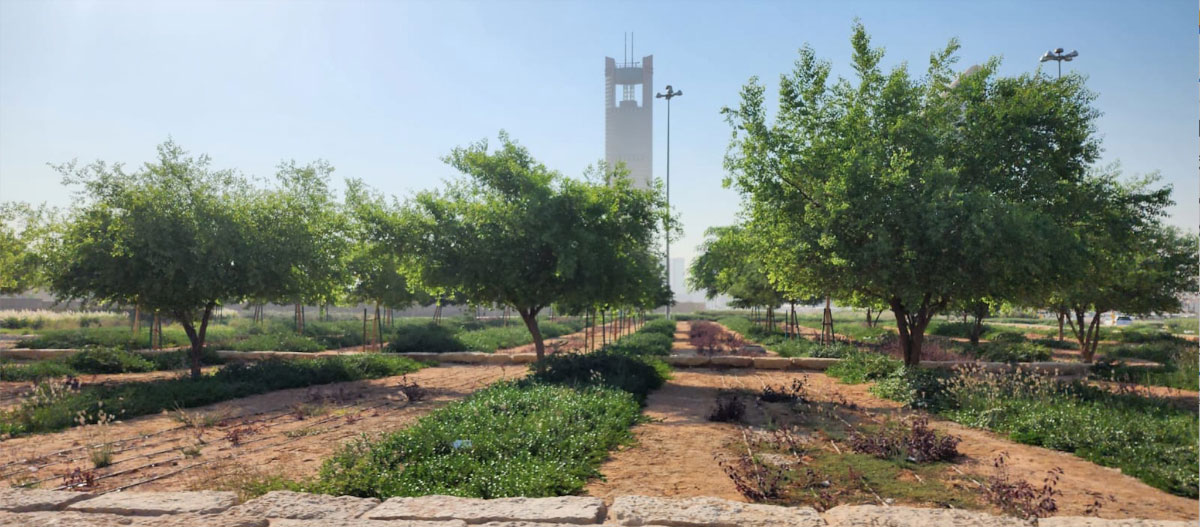
To assess the effectiveness of the various solutions prior to their implementation, five pilot districts have been selected where the cooling measures will be tested and evaluated. Once the study is complete, “beyond its local impact”, PLANET S.A. concludes, “the initiative is expected to serve as an international reference model for cities facing increasingly extreme temperatures”.
Sources: Saudi Gulf Projects, Zawya.
Images: Royal Commission for Riyadh City.