
Swimming pools have undergone multiple transformations in recent decades. What was once simply a place for swimming has now become a feature whose creation brings together design, architecture and technology. This evolution is evident, first and foremost, in the very concept of design.
Traditional rectangular swimming pools, with their sporting functionality, have given way to infinity pools, overflow pools, organically shaped pools, or those featuring access beaches. All of them blend harmoniously with the landscape rather than imposing themselves upon it.
But the transformation goes beyond geometry. Contemporary swimming pools, which are no longer merely containers of water for swimming, incorporate relaxation areas with submerged benches, hydromassage areas, shallow children’s areas or even spaces for leisure and socialising around the water. In this way, the swimming pool is used as much for physical exercise as for rest, play or interaction.
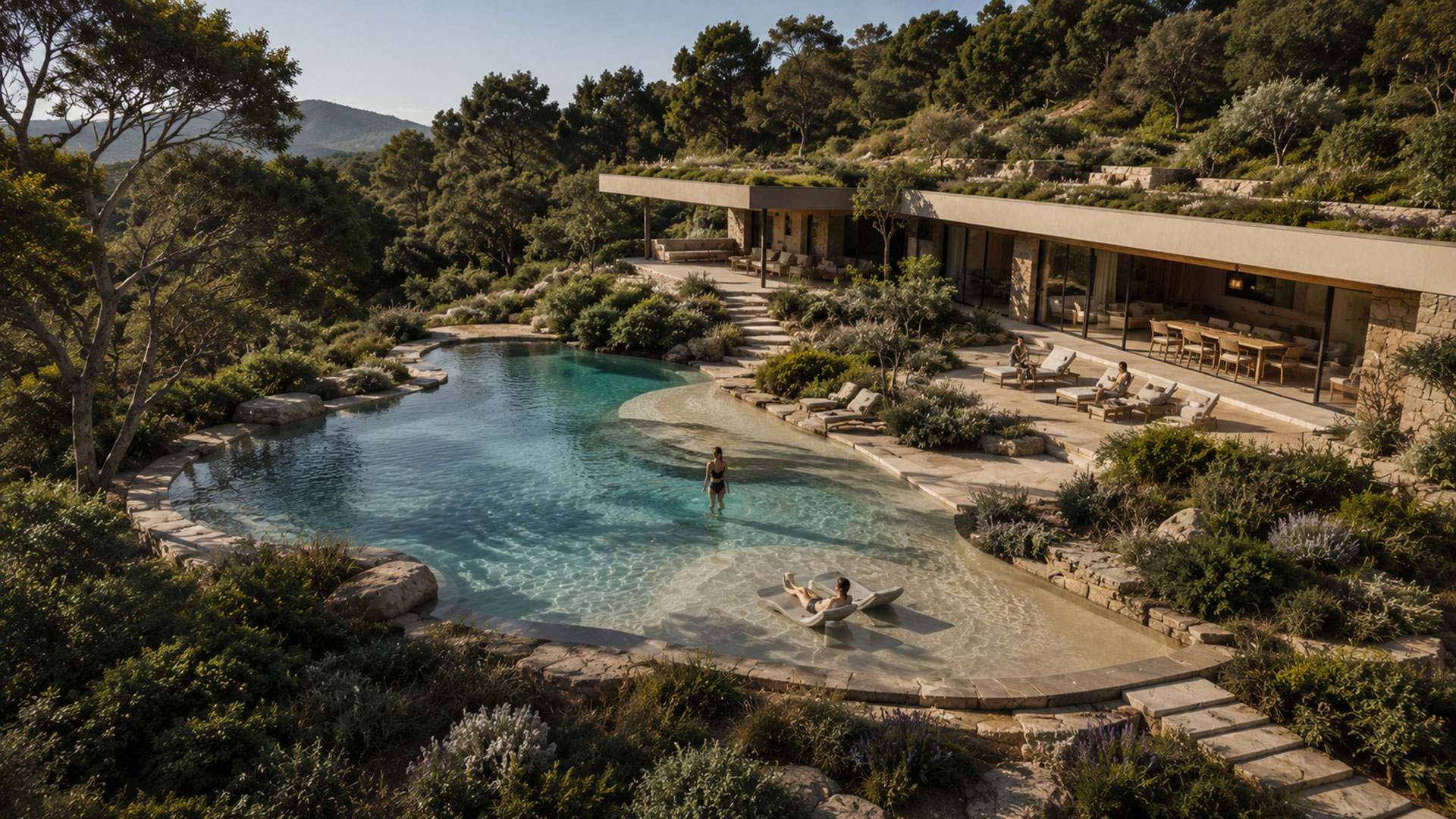
New materials have considerably expanded the possibilities in swimming pool design and construction. Large-format porcelain tiles, glass mosaics that play with light, mineral finishes that mimic natural stone, and highly durable composite materials have replaced traditional mosaic tiles and other materials. Furthermore, these new materials are more resistant to chemicals and weather conditions, offer improved slip resistance, are easier to maintain and extend the pool’s lifespan.
In terms of technology, smart systems now make it possible to control filtration, climate control, lighting and water quality parameters with great precision, even via mobile devices. These solutions not only optimise maintenance by anticipating needs and detecting anomalies, but also reduce energy consumption and improve the efficiency of the installation, in line with a commitment to environmental responsibility and sustainability.
By Ángel Ibáñez Pérez, Senior MEP Engineer in the Architecture Department at Amusement Logic