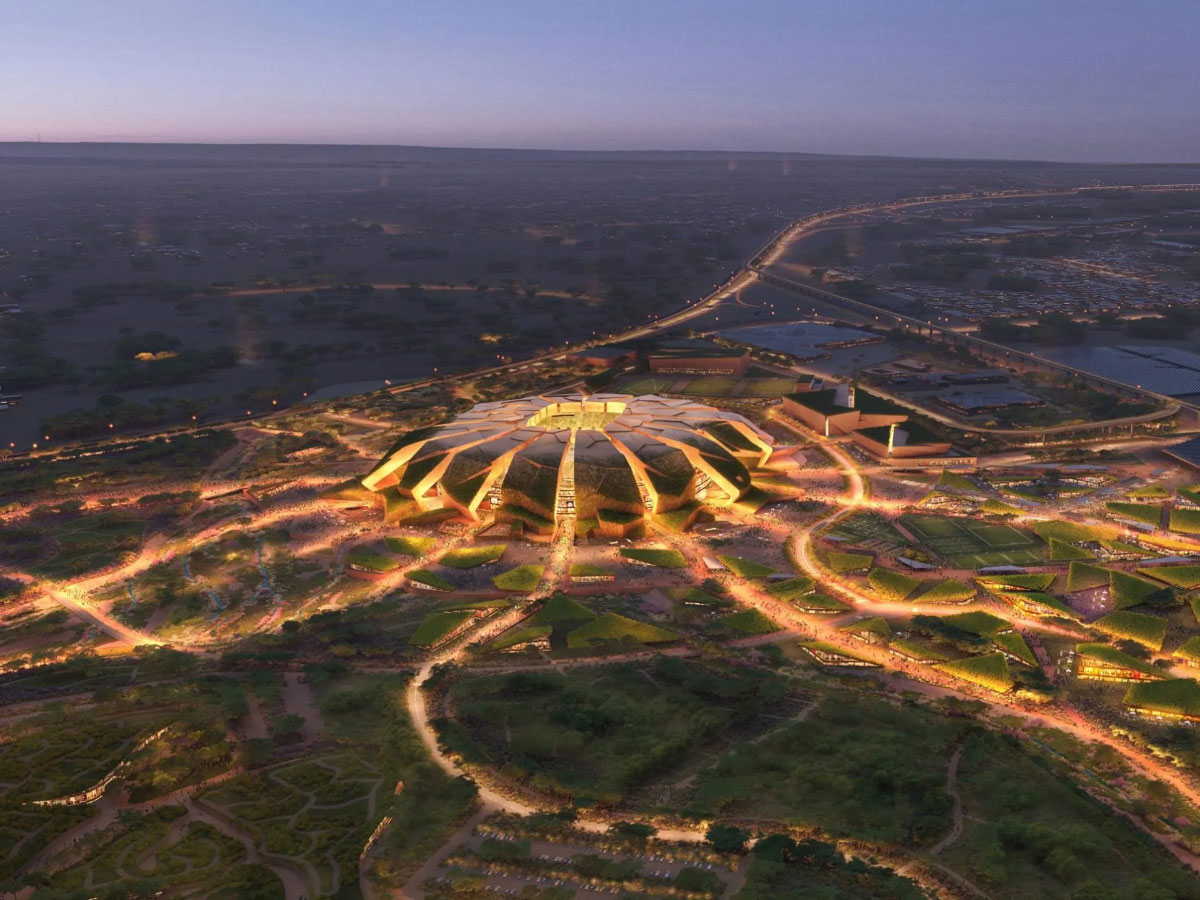

Next to King Salman Road, adjoining the vast King Abdulaziz Park, in the north of Riyadh, capital of Saudi Arabia, what will become the country’s largest-capacity stadium and one of the largest in the world is set to rise. Thanks to its architecture and its green approach, it will also be one of the most distinctive stadiums ever built. This is King Salman Stadium, a project designed by the architecture studio Populous.
As the country awarded the hosting rights for the 2034 FIFA World Cup, Saudi Arabia will count on King Salman Stadium as a central element of the global event and, at the same time, as the home ground of the national football team. The scale of its master plan is best understood through one figure: the stadium and its associated facilities will cover an area of more than 660,000 m². These associated facilities will include an athletics stadium, training pitches, fan gathering areas, an aquatic centre with an Olympic-size swimming pool, an indoor sports hall and a community sports park with facilities for volleyball, basketball and padel. Finally, a 9 km sports circuit will connect all the facilities with the public King Abdulaziz Park.
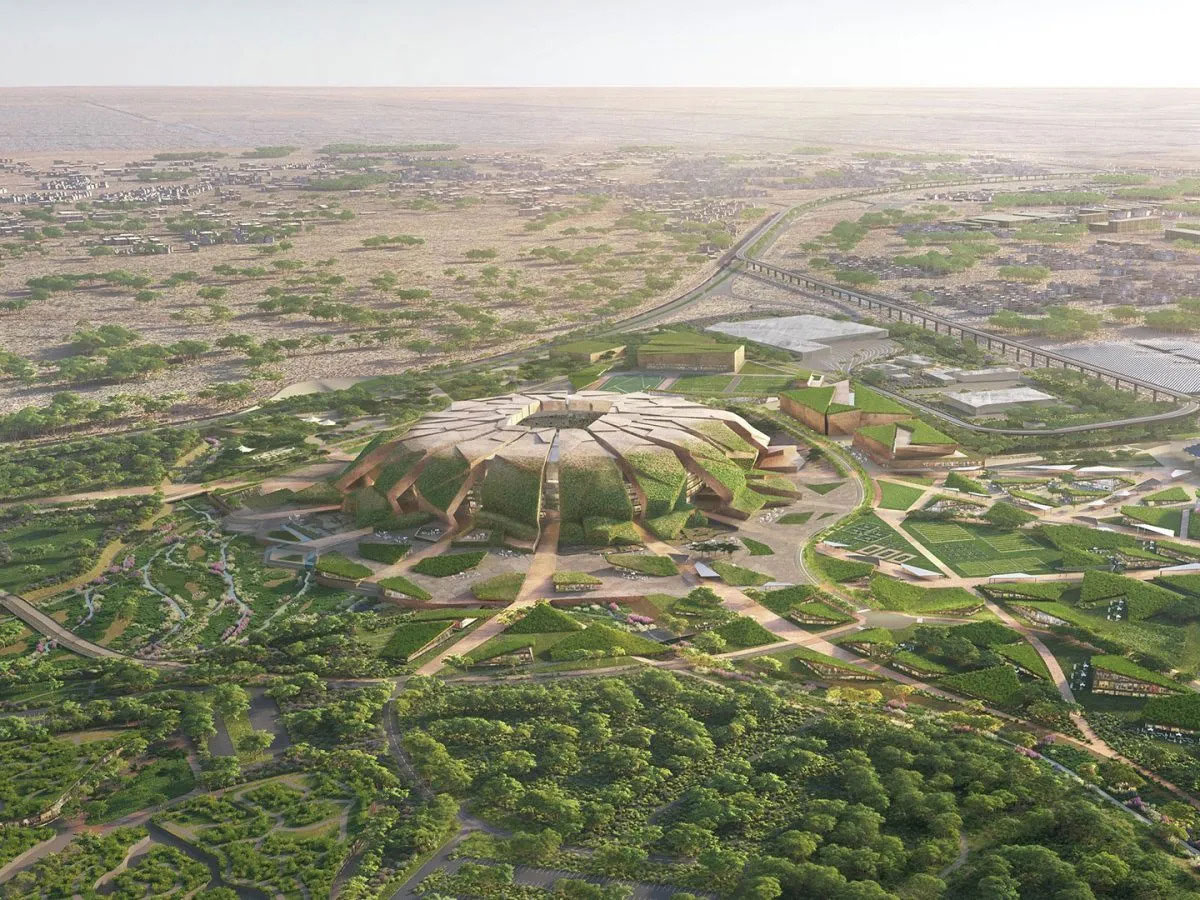
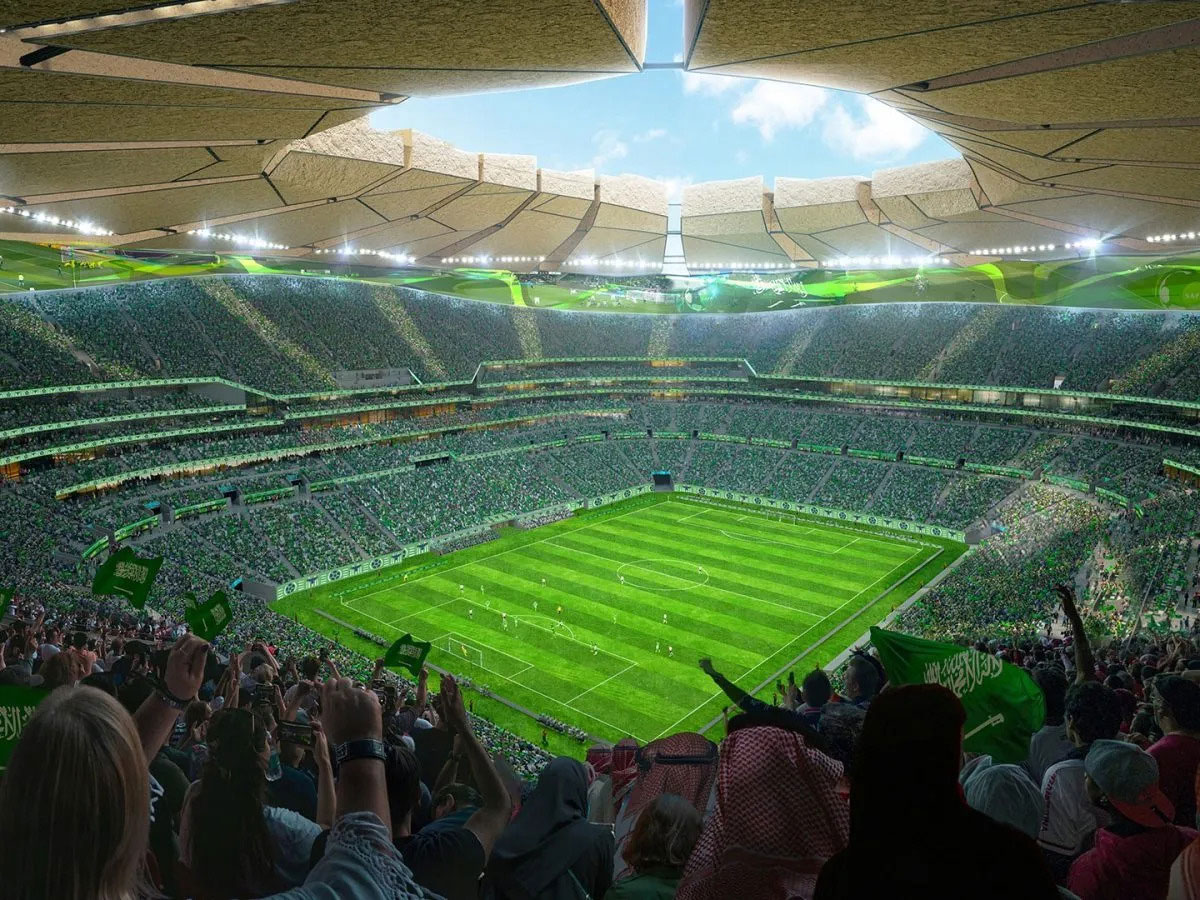
The proposal by Populous, as we say, transcends —or perhaps pulverises?— the conventional idea of a football stadium. To describe the overall concept shaping the architectural project, Populous says it draws inspiration from “Saudi Arabia’s mesmerising natural landscape”, while the “symbolic concept” invokes the metaphor of “a seed that germinates, cracks the earth and emerges as a dynamic yet seemingly natural intervention”. One only has to look at the images to understand what they mean. What surprises us most about this project is precisely the primitive quality of its architecture. But then, is there anything more primitive than a seed that splits the earth as it germinates? Exactly.
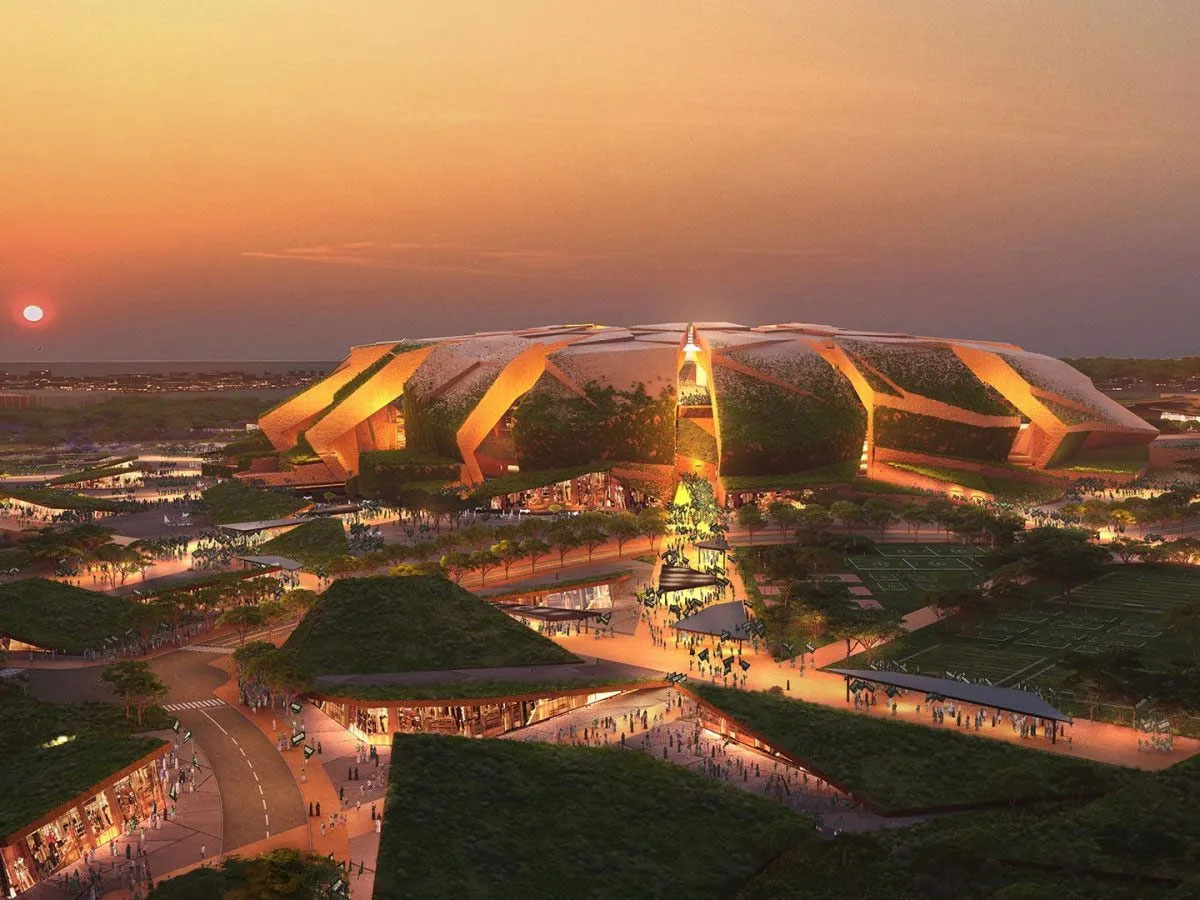
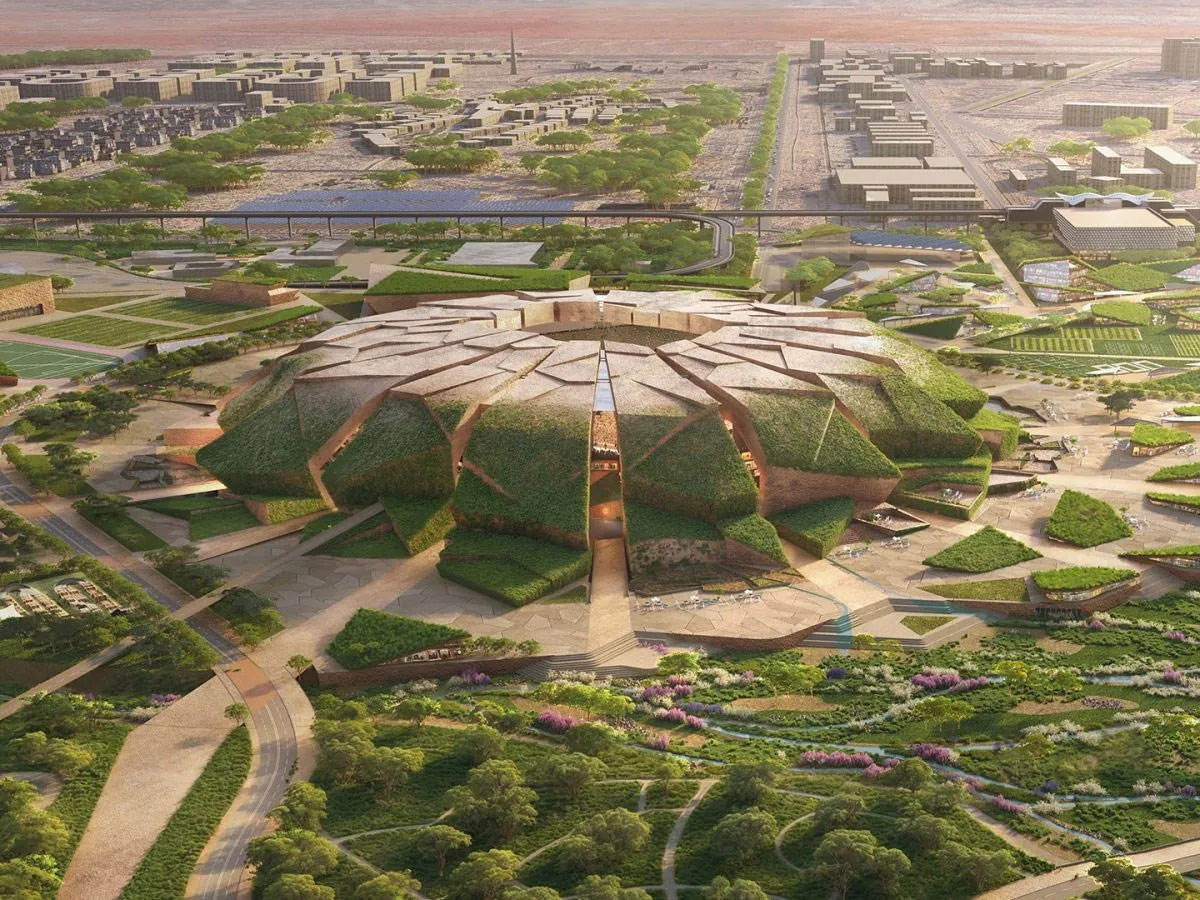
The main stadium will have a capacity of more than 92,000 seats. Meanwhile, the distribution of boxes and seating reveals the importance the project gives to luxury and public relations: 150 seats in the royal box, 120 VIP boxes and 300 seats in the same category, as well as 2,200 seats for distinguished guests.
Among the project’s most striking elements are the interior gardens, a pedestrian walkway on the stadium’s roof, offering a panoramic view over King Abdulaziz Park, and the green walls and green roofs, which together cover more than 96,500 m². Incidentally, its opening is scheduled for late 2029.