
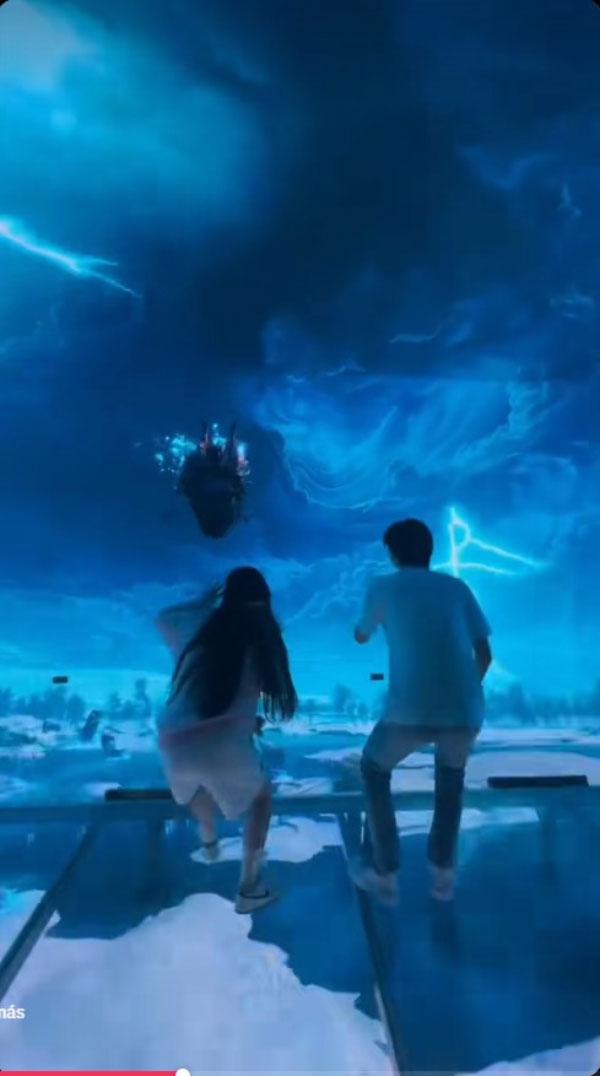
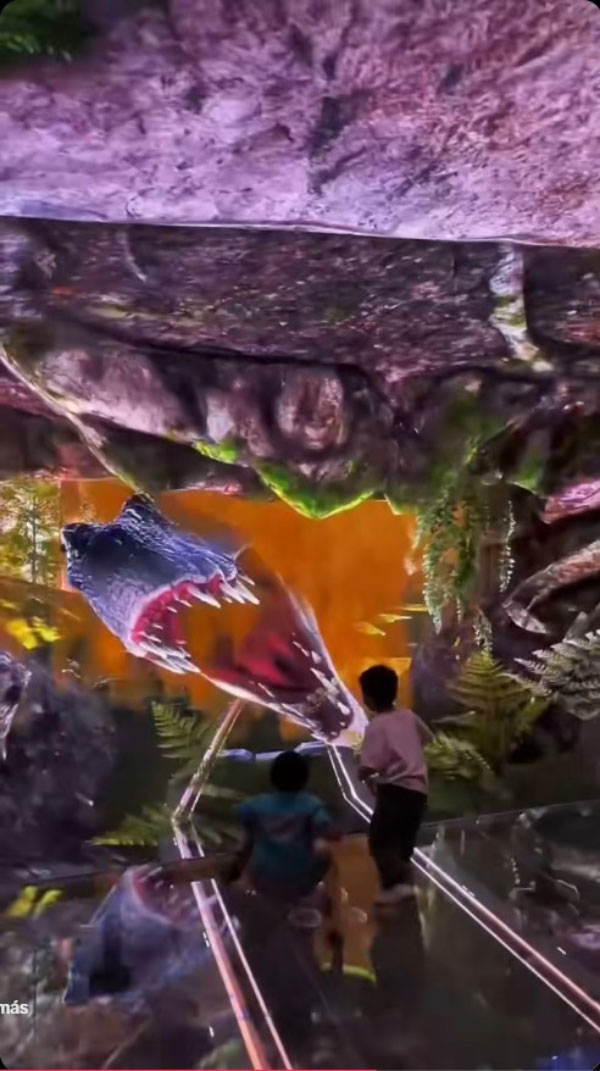
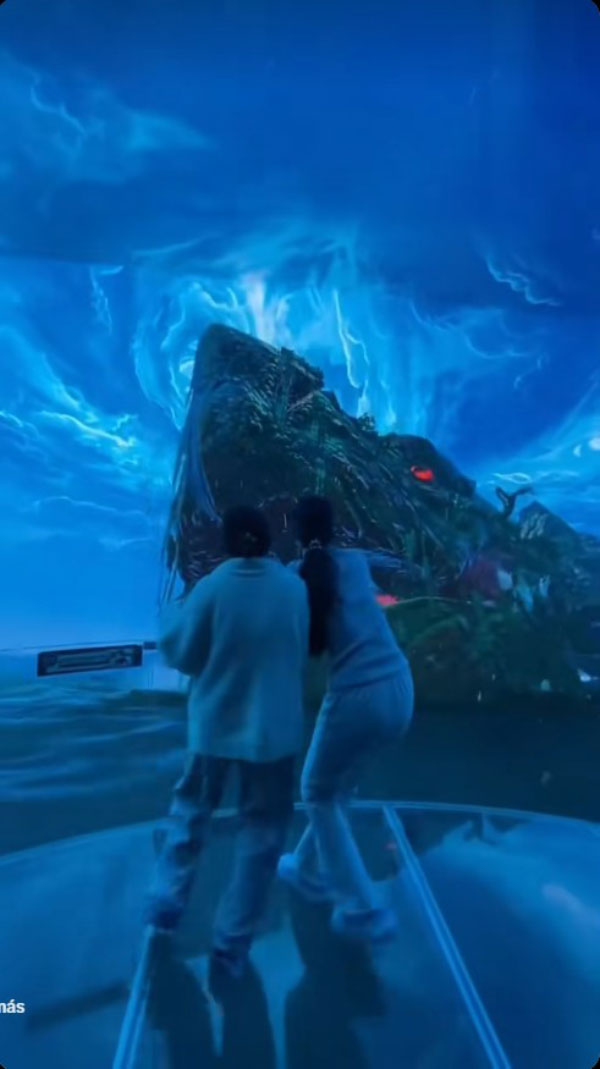
In the Chinese city of Luoyang, south-west of Beijing, a venue has just opened its doors, representing one of the latest initiatives in Chinese tech tourism focused on collective immersion. In this space, there are no headsets, no individual sensors, and certainly no virtual reality glasses. All you need to do is walk through a door to enter another world. The floor, walls and ceiling form a continuous screen on which a stream of digital images and landscapes transports visitors to a parallel reality. The venue is called Illusion Space (幻境空间, Huànjìng Kōngjiān).
Whilst in the West virtual reality relies heavily on individual devices, in China, developments such as Illusion Space are exploring a different path: immersive spaces where groups of people share the same digital experience without the need for any physical interface. The installation in Luoyang, which has been covered by Western media and some technology-focused social media accounts, uses a system of high-definition laser projections, combined with multi-dimensional tracking and spatial audio.
The concept thus moves away from the isolation that often accompanies virtual reality headsets. In venues such as the one in Luoyang, parents and children, as well as groups of friends, move about freely, sharing the same projected scene and, therefore, the same experience. This is no minor detail. The social dimension of the experience is just as significant as the technology that makes it possible.

In recent years, various Chinese cities have embraced ‘shared immersive reality’ formats applied to cultural tourism. In Beijing, for example, the Dongcheng district has several venues officially designated as Beijing Digital Consumer Experience Centres (北京信息消费体验中心). Among these is ‘Journey Through China’ (穿越中国, Chuānyuè Zhōngguó), a venue that combines moving seats with a 270-degree panoramic screen to simulate a flight over the country’s most iconic landscapes. And the Yiyun Digital Art Centre (艺云数字艺术中心, Yìyún Shùzì Yìshù Zhōngxīn), also in the capital, has 2,200 m² dedicated to immersive experiences that integrate artificial intelligence, sensors and real-time rendering engines.
Closer to the Luoyang model, the Supreme Longmen (无上龙门, Wúshàng Lóngmén) hall, located in the visitor centre of the Longmen Grottoes — a UNESCO World Heritage Site, incidentally — features a holographic dome 17 metres in diameter. It offers a 360-degree view of the city’s history. The Chinese Ministry of Culture and Tourism has recognised the attraction as an innovative smart tourism project. Supreme Longmen combines immersive technology with a narrative of historical heritage. It has become one of the region’s most highly rated destinations.
The proliferation of such spaces reflects a trend observable in the Chinese tourism sector: the use of ‘digital tourism’ formats that do not replace the physical experience, but rather enhance it. What sets Luoyang’s initiative apart – and similar ones that have emerged in shopping centres and leisure venues across China – is its focus on accessibility and immediacy. There is no need for advance bookings or technical explanations beforehand. Visitors simply walk in, look around and are immediately immersed in the attraction.
Visitor reviews frequently mention the word ‘realistic’ and the feeling of ‘being inside the film’, without the dizziness that sometimes accompanies conventional virtual reality. In any case, collective immersion – without the need for headsets – is emerging as a new direction in digital entertainment, with potential applications in hotels, resorts, theme parks and shopping centres.
Sources: Dongcheng District People’s Government of Beijing Municipality, CCTV, Diario 13, Noticias 24 Hrs.
Images: Video screen captures in Luoyang Essence and Trend Luoyang.