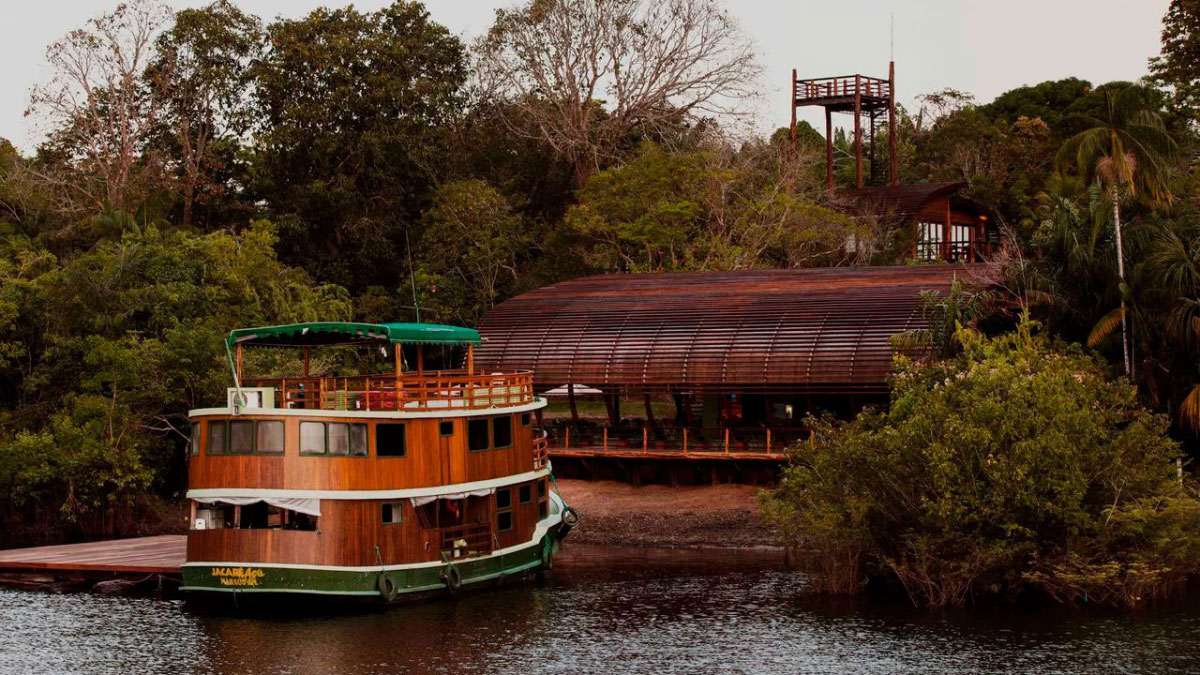

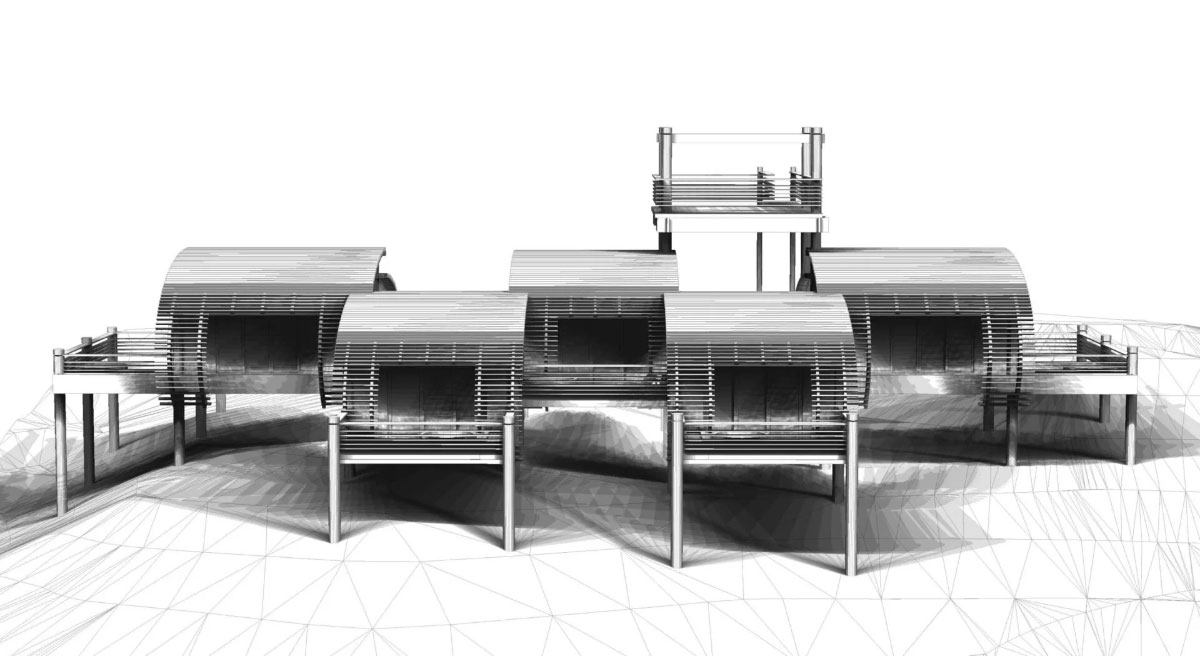
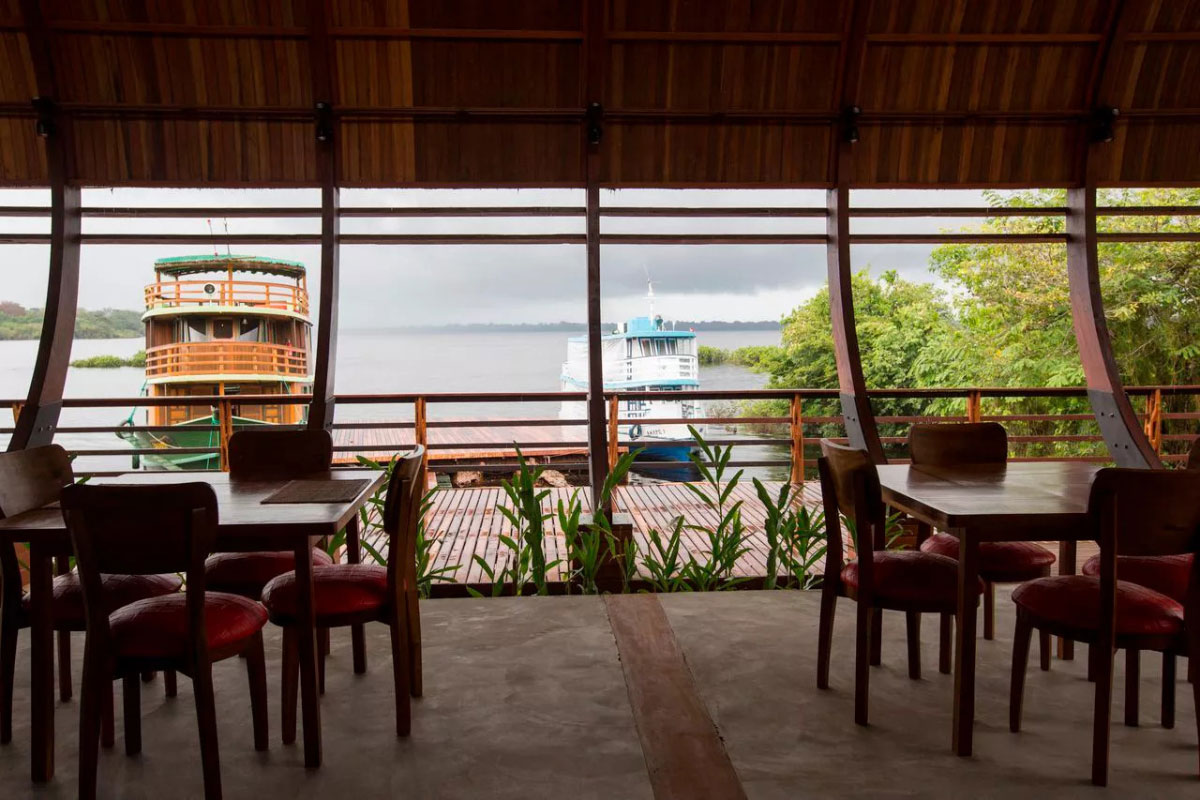
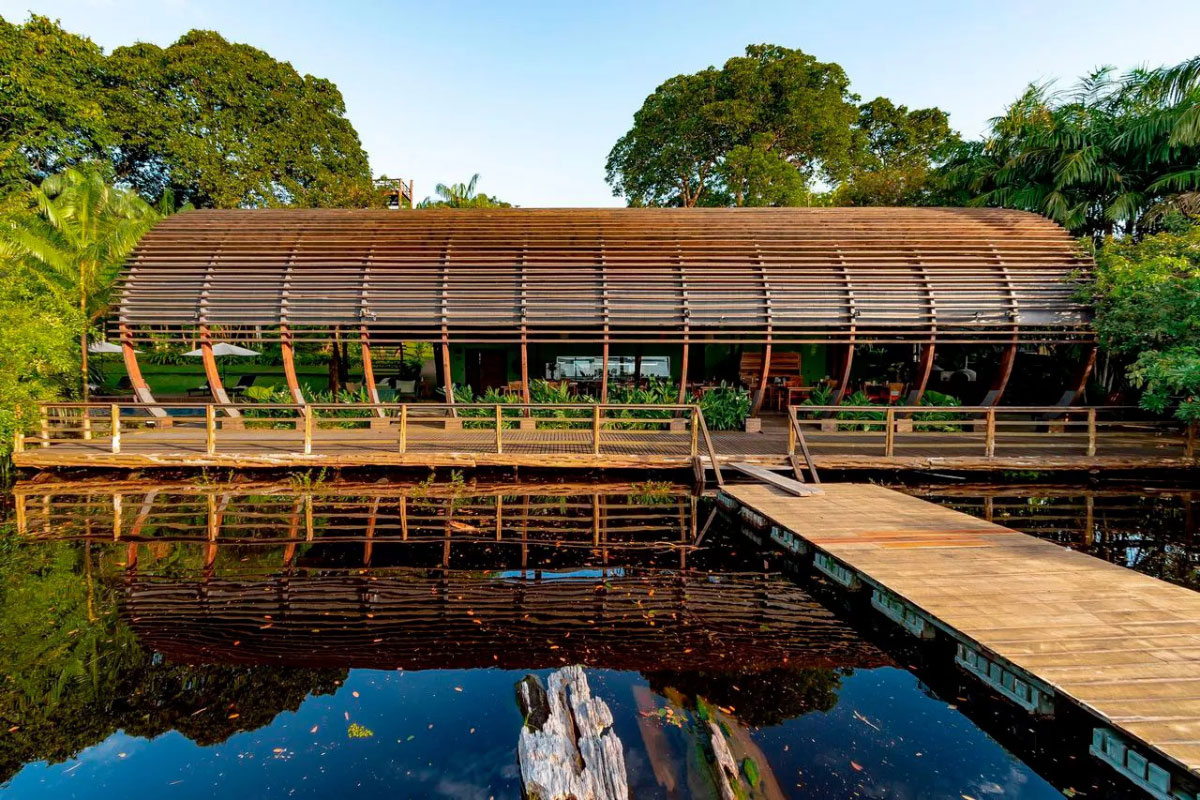
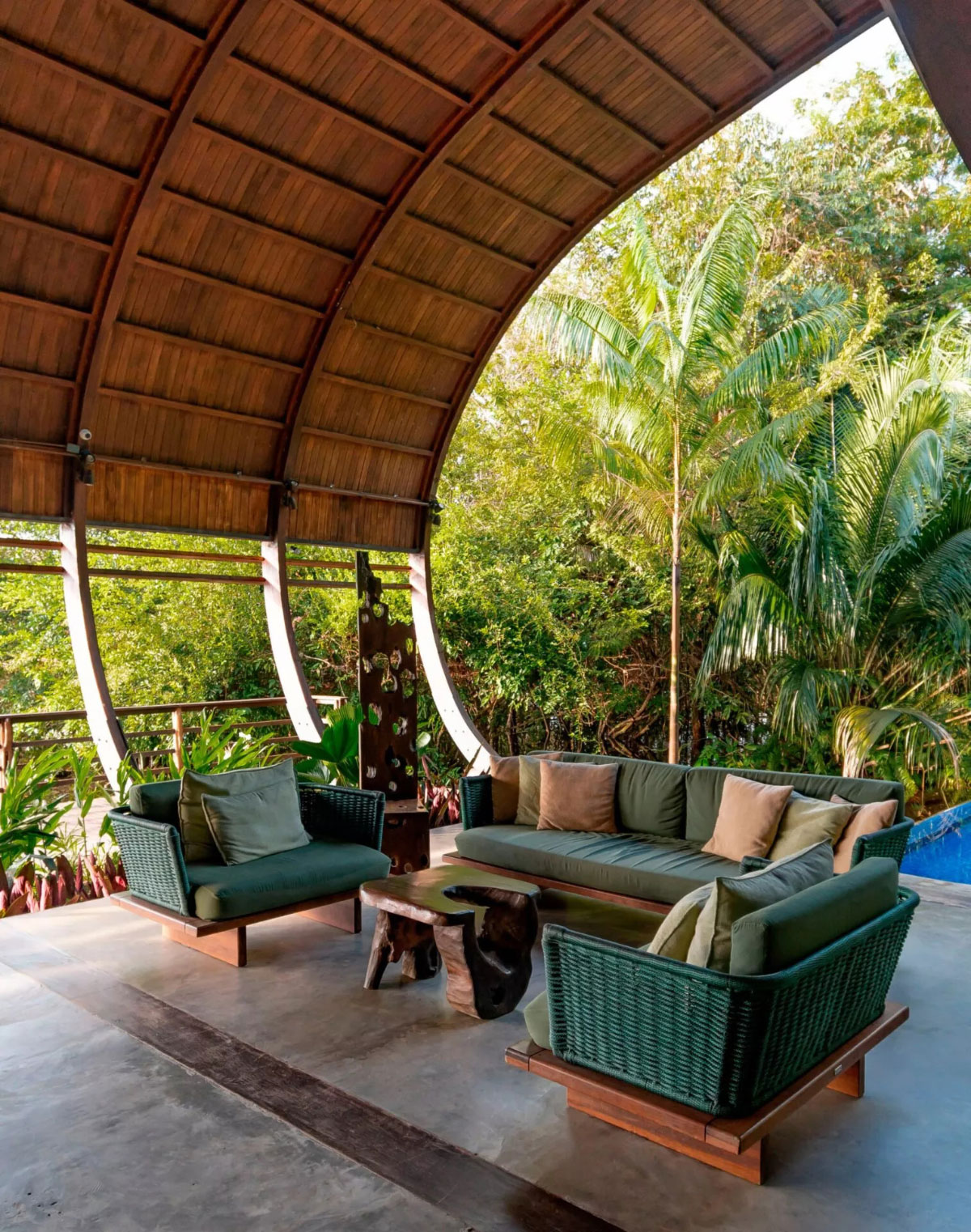
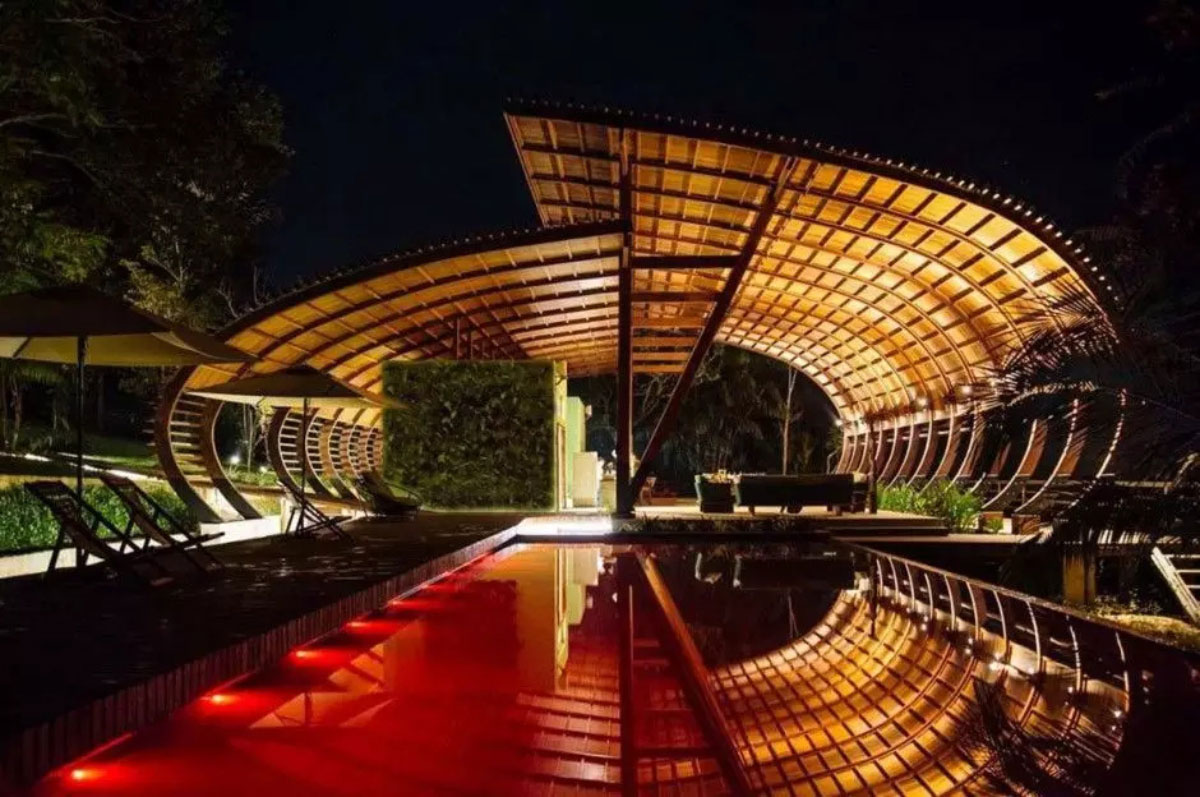
Wooden buildings resembling beached ships are barely visible amidst the dense vegetation. They are located in Novo Airão, a small town 180 km northwest of Manaus, the capital of the state of Amazonas, Brazil, facing Anavilhanas National Park and on the banks of the Rio Negro—respectively, the second largest river archipelago in the world, with more than 400 islands, and the most voluminous tributary of the Amazon River. But the appearance of these buildings is not accidental; it stems from a particular story, as you will soon discover. This is the Mirante do Gavião Amazon Lodge, a hotel that, beyond the comfort of its rooms and the pleasant simplicity of its welcoming spaces, offers an unusual interpretation of what it means to build in an ecologically sensitive environment.
Indeed, the Mirante do Gavião was initially just a stopover point for the “low-impact” tourist cruises organized by Expedição Katerre, based in Novo Airão since 2004. However, after its inauguration in August 2014, its design—awarded that same year with first prize from the Brazilian Association of Corporate Architects in the Commercial Building category—by the architecture firm Atelier O’Reilly Architecture & Partners, attracted so much attention that it soon ceased to be a mere complement and became a destination in itself. But let’s look at the particular story that led the Mirante do Gavião to become what it is today.
It turns out that some of the families in the riverside community of Novo Airão have traditionally been dedicated to building wooden boats, a craft passed down from father to son for many generations. When it came time to design the lodge, its architects, after conducting the necessary research, were mindful of the context in which it would be built. The architecture firm discovered a shortage of skilled labour among the local population in conventional construction.
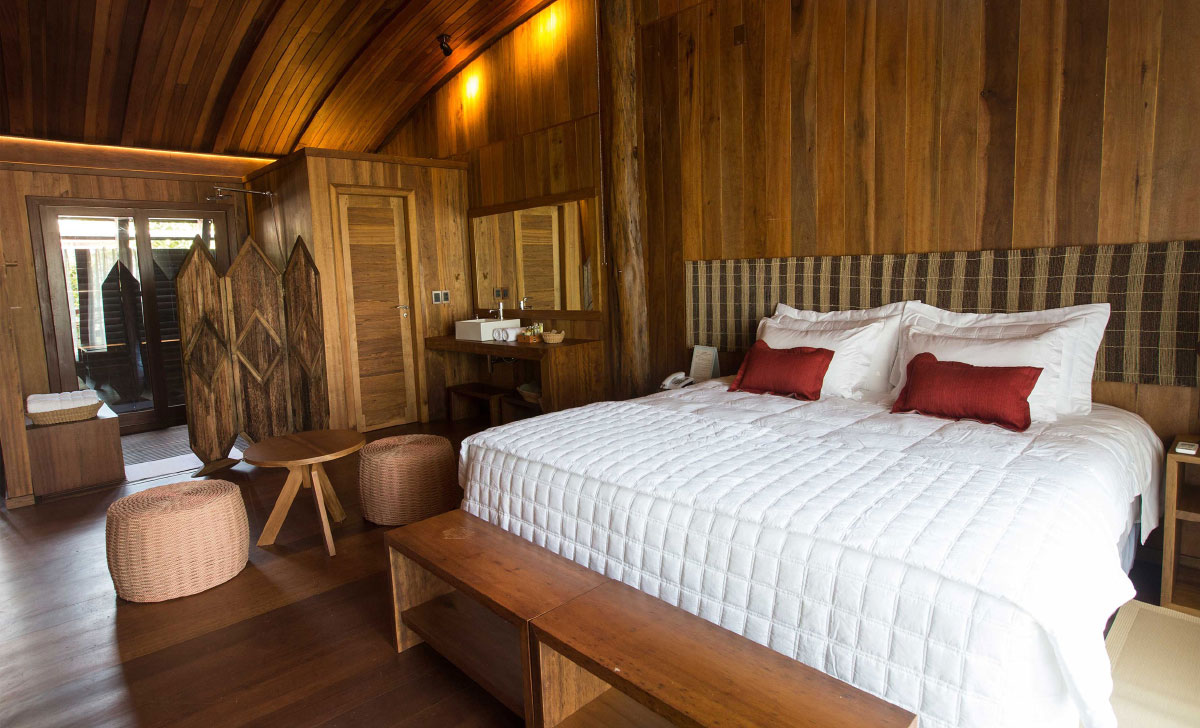
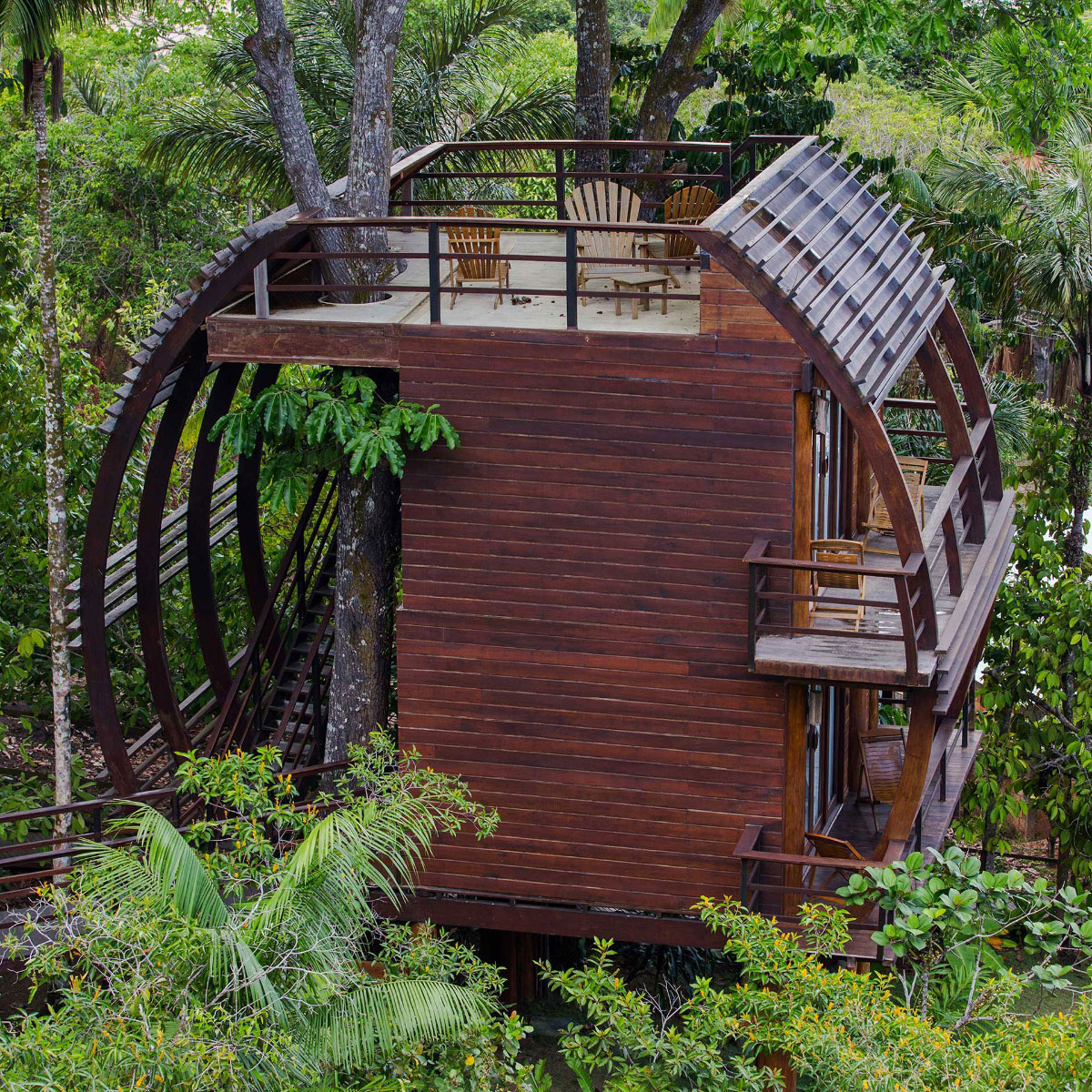
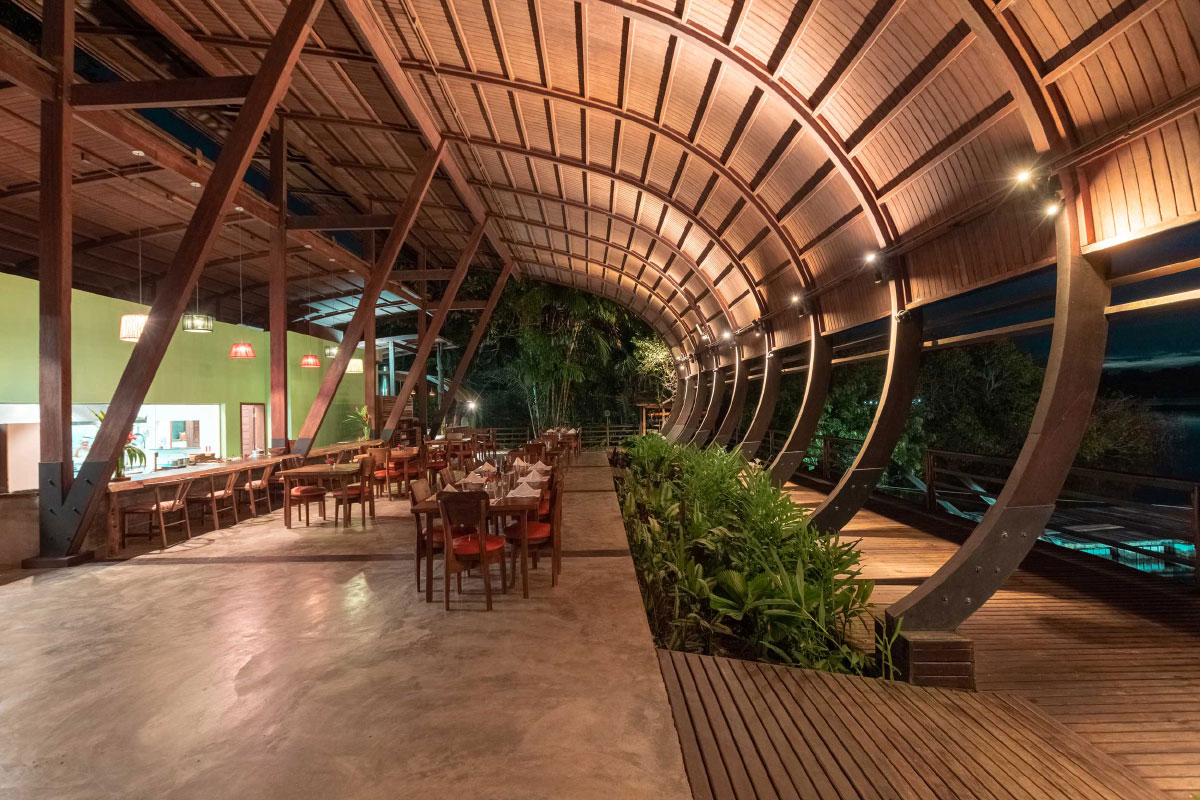
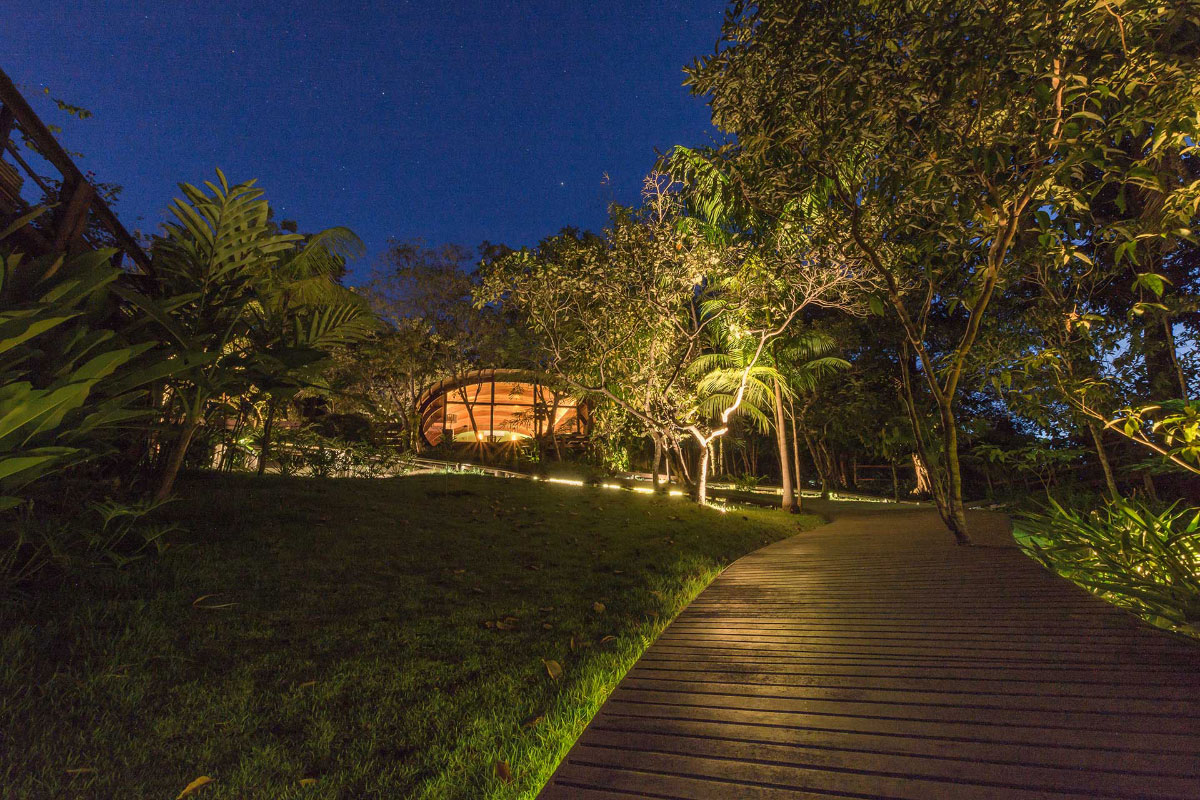
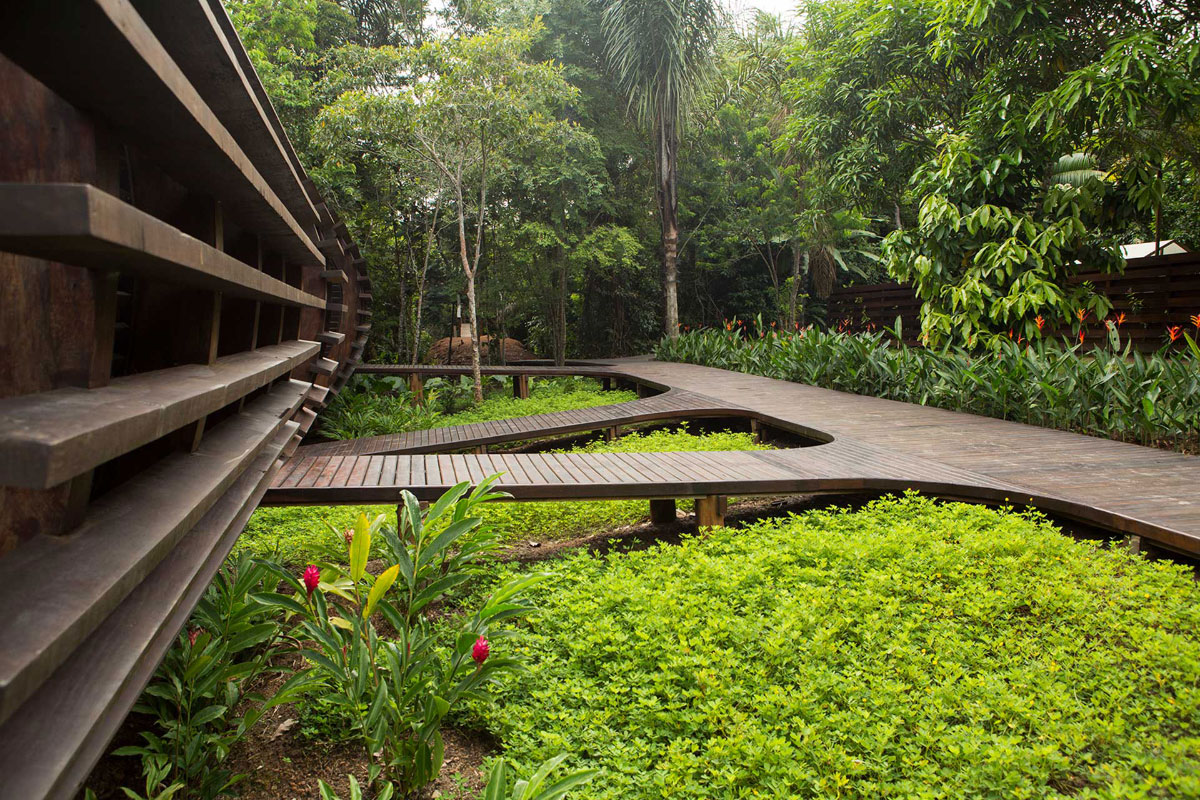
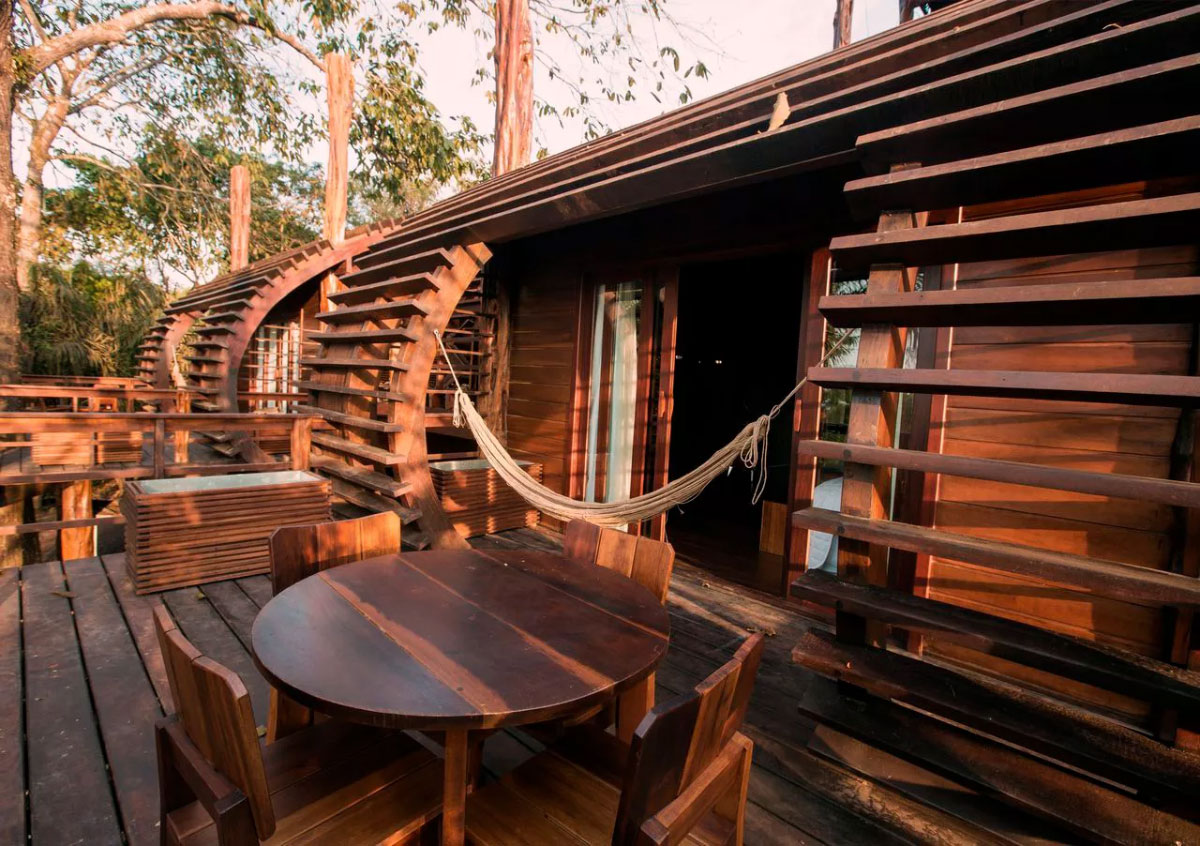
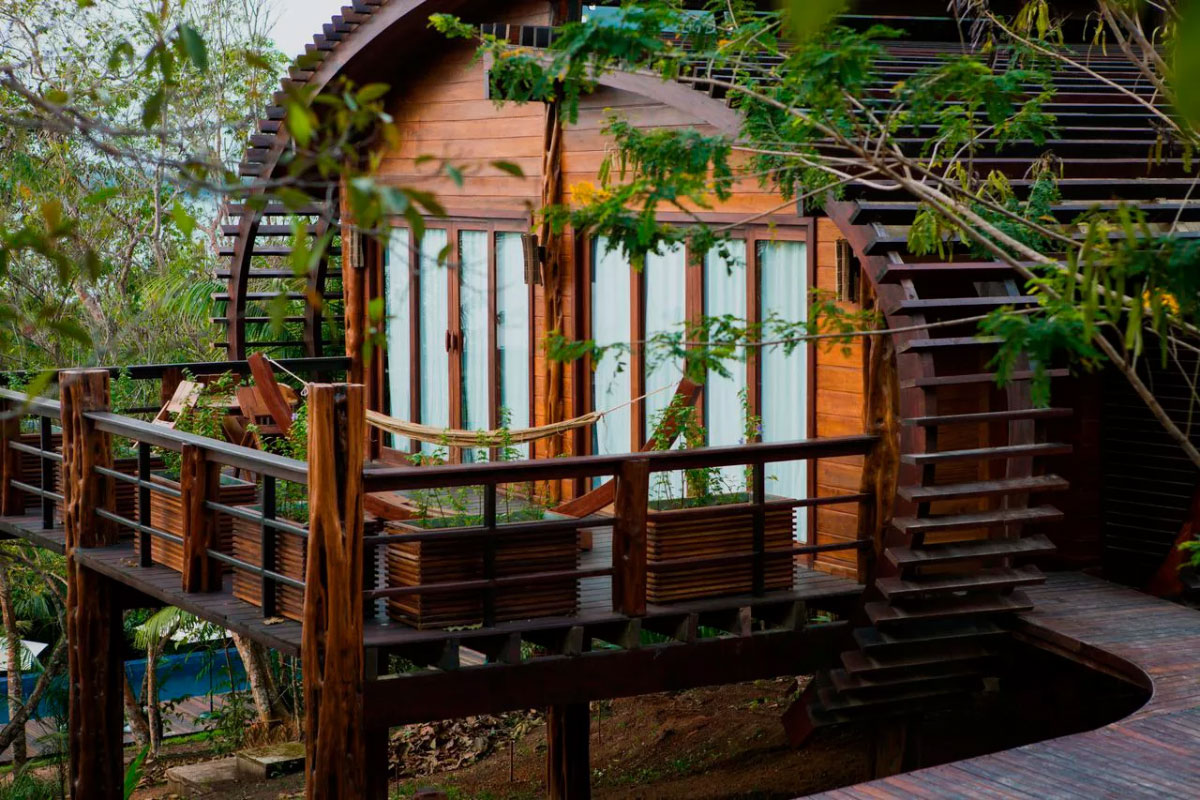
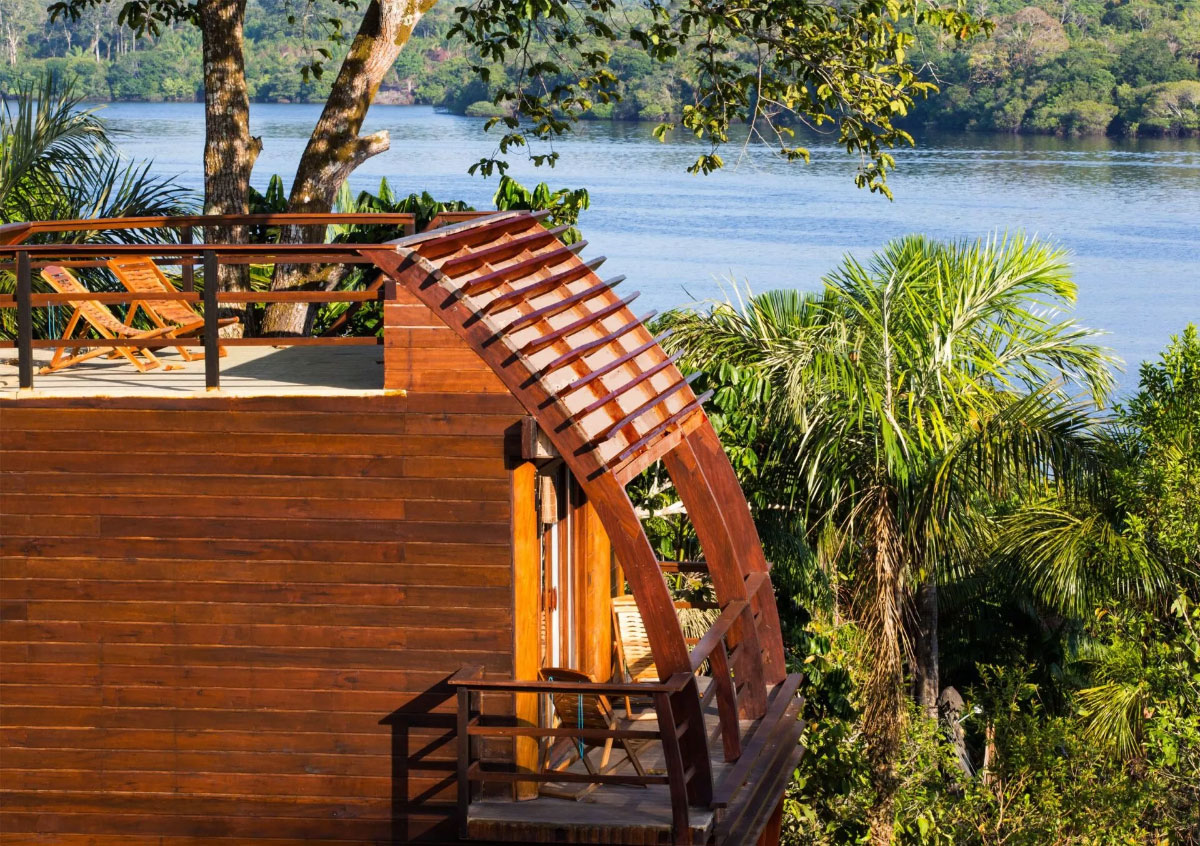
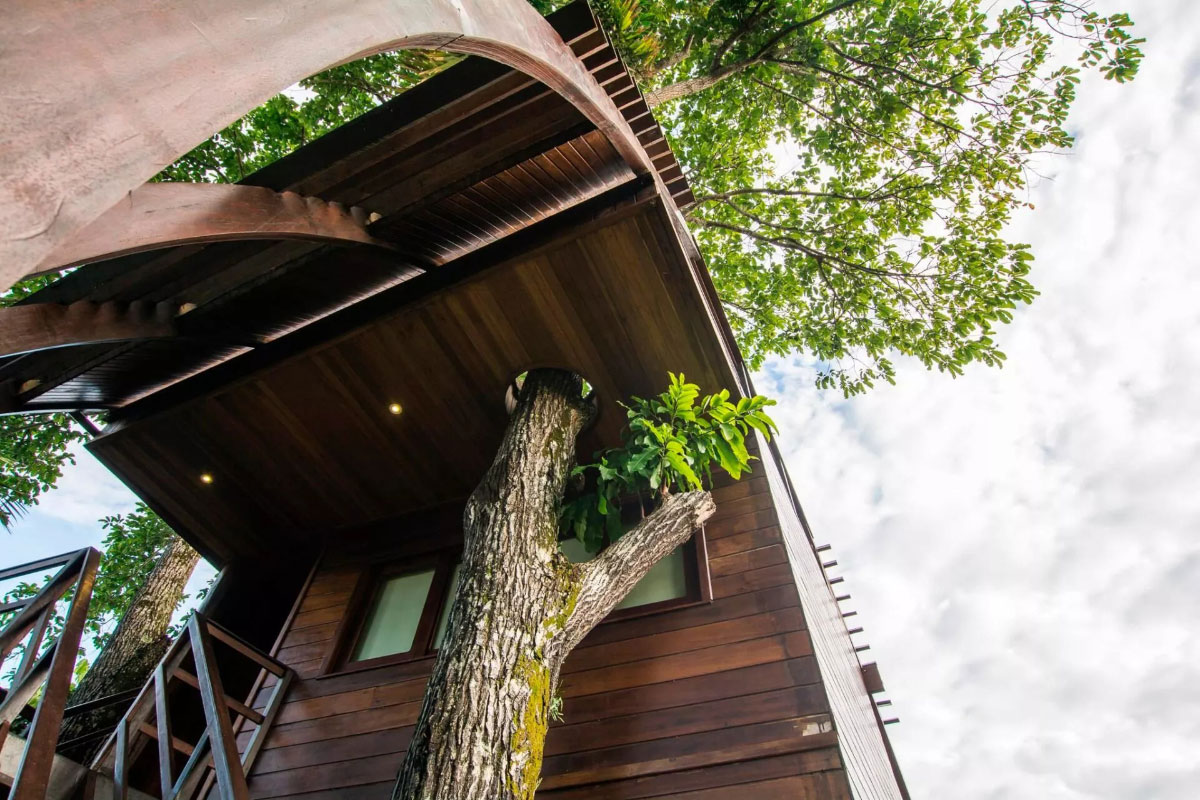
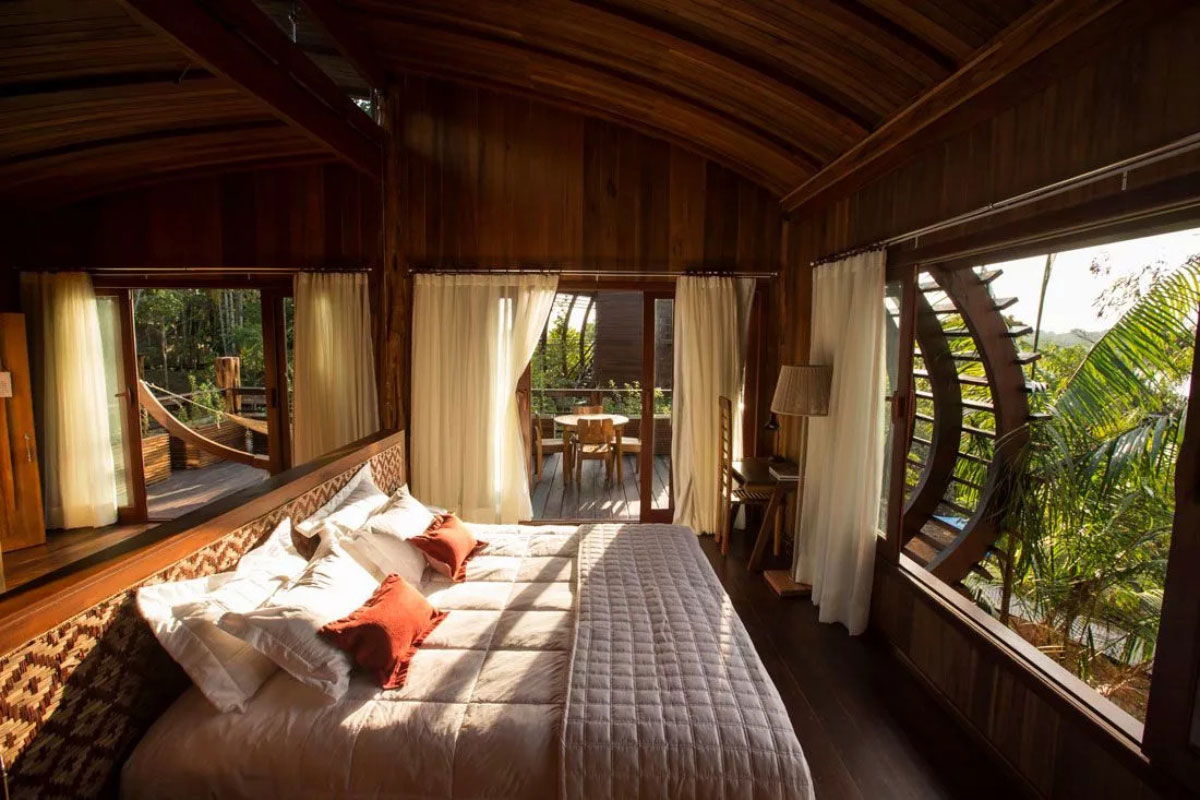
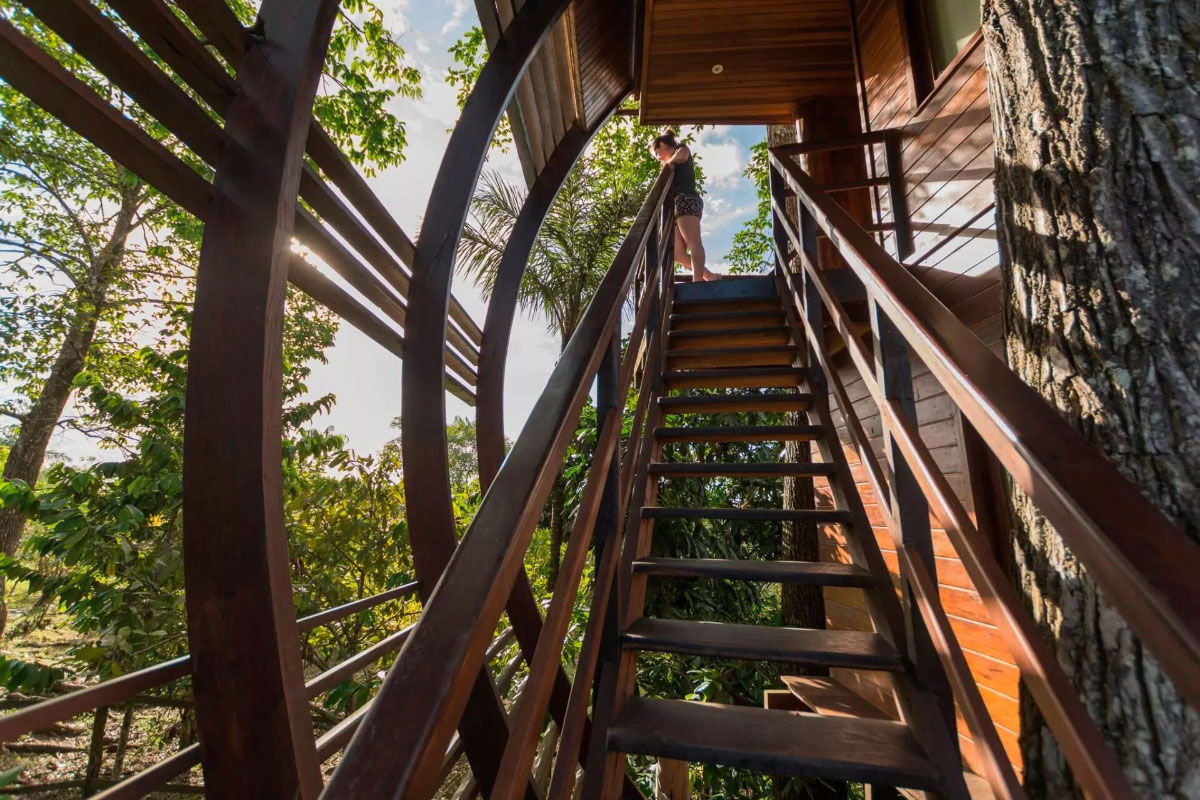
It was then that the architects asked themselves how they could translate their expertise—shipbuilding—into habitable architecture. They answered their question with the design of Mirante do Gavião. For two years, the project employed 60 people from the town, all trained and supervised by local artisans experienced in naval technology. As a result, the buildings have the appearance of inverted ship hulls. The wood used for construction, likely itaúba—one of the most abundant species in the region, widely used in shipbuilding for its exceptional quality and hardness—comes from reforestation efforts, in a context where the rainforest is under constant pressure.
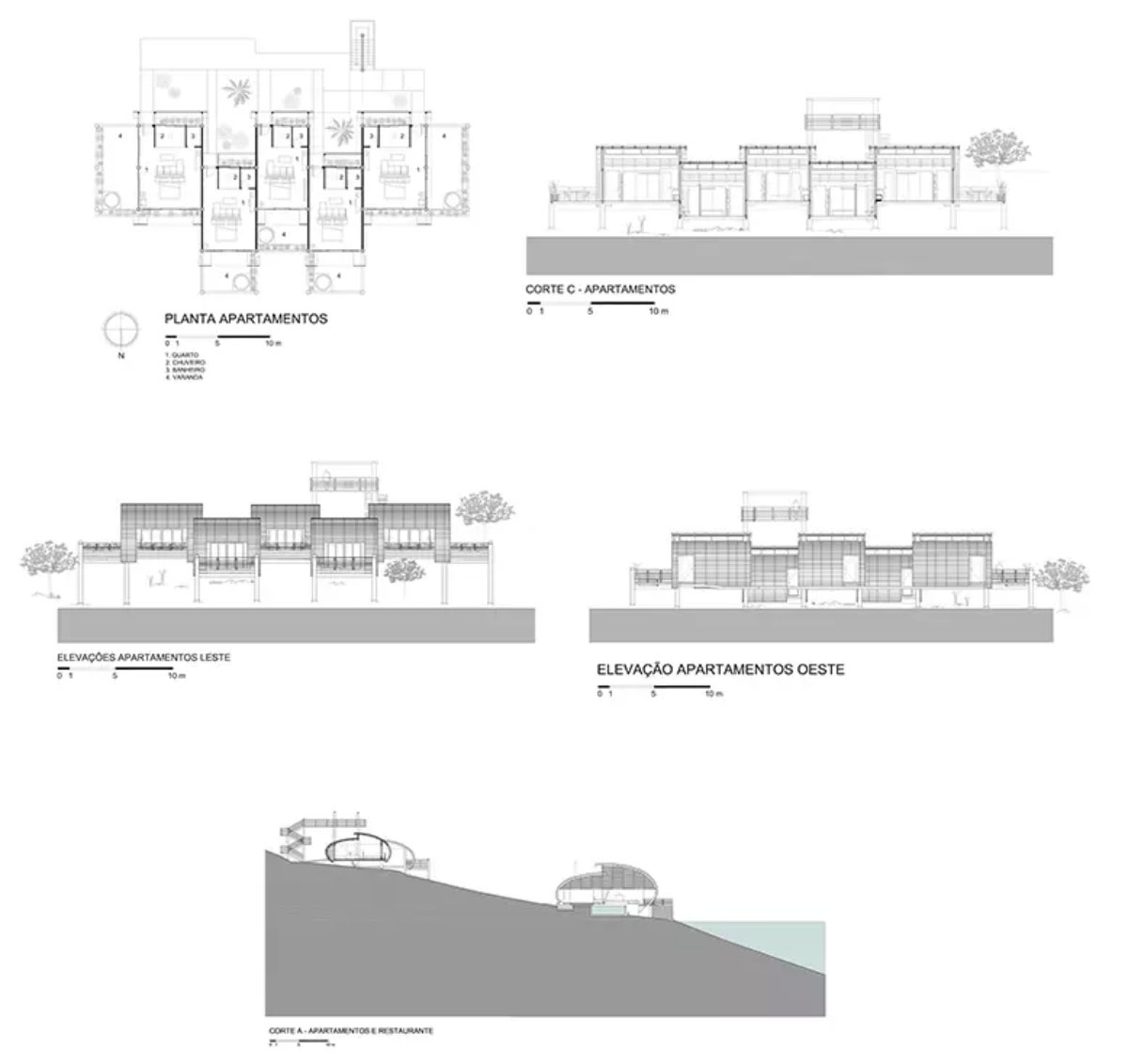
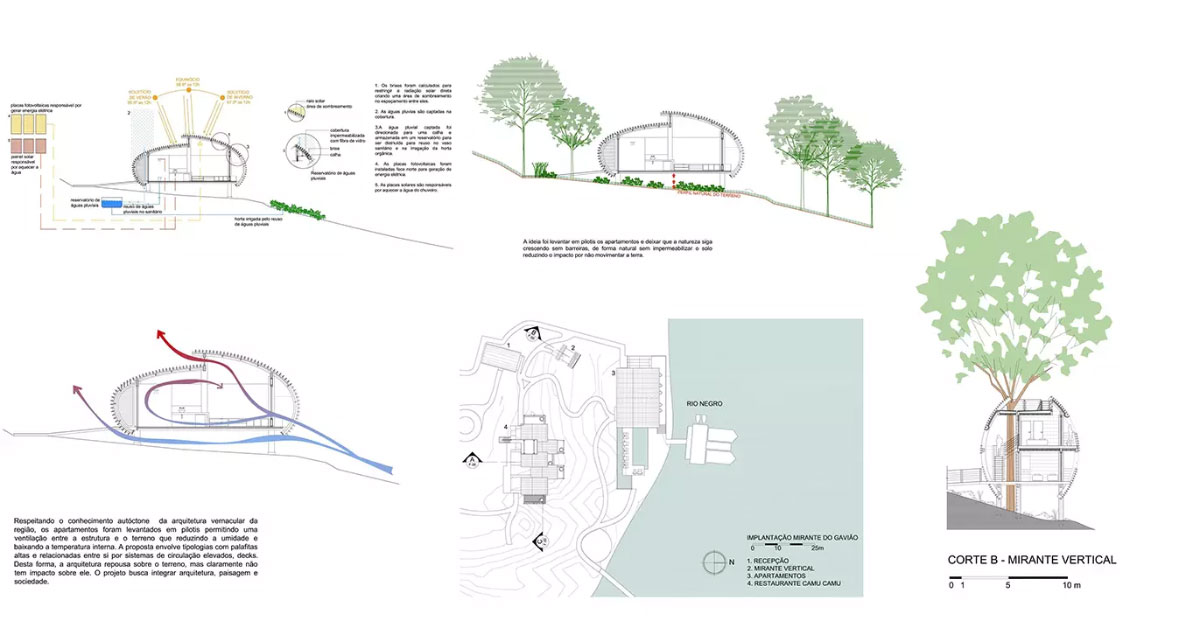
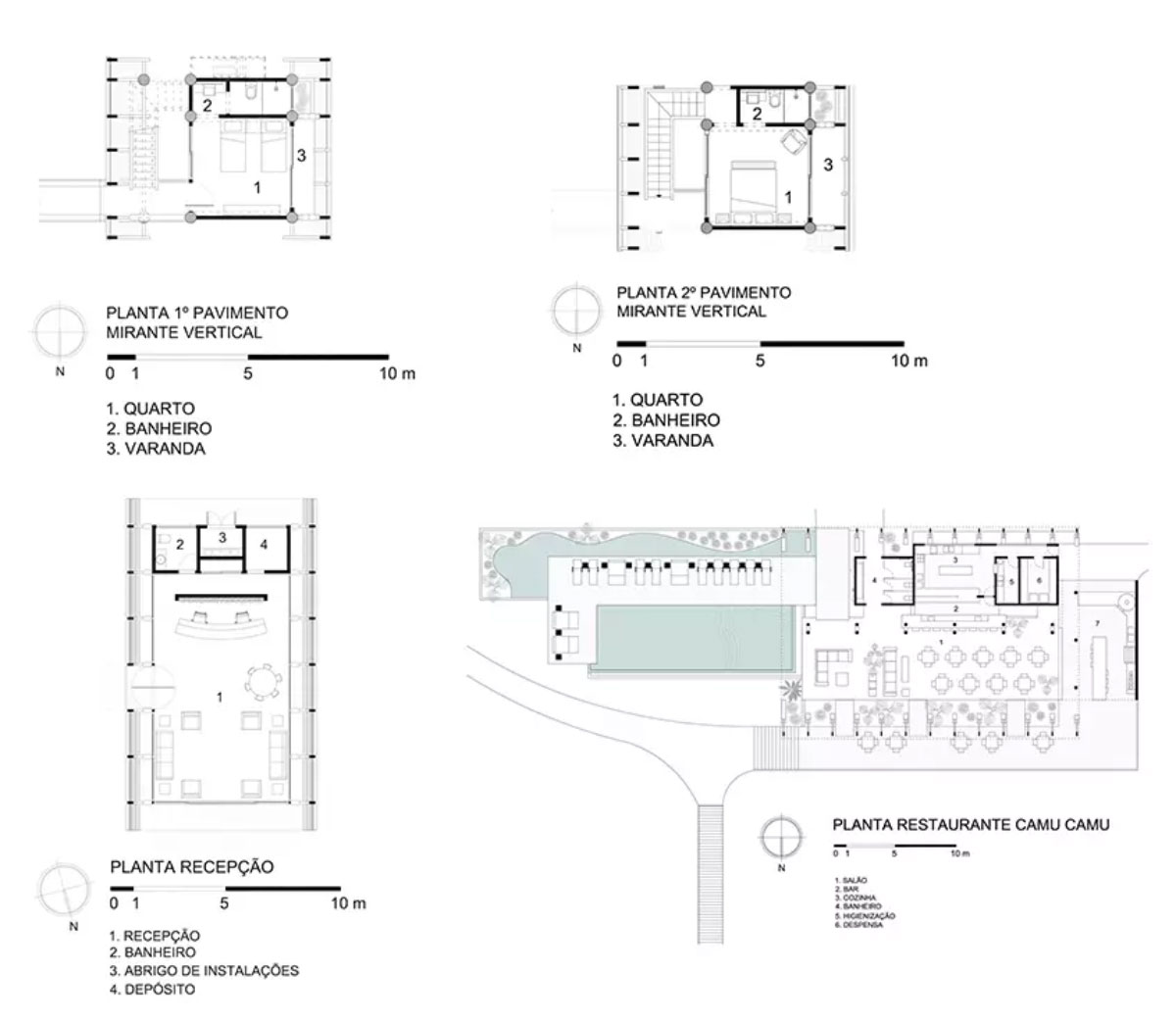
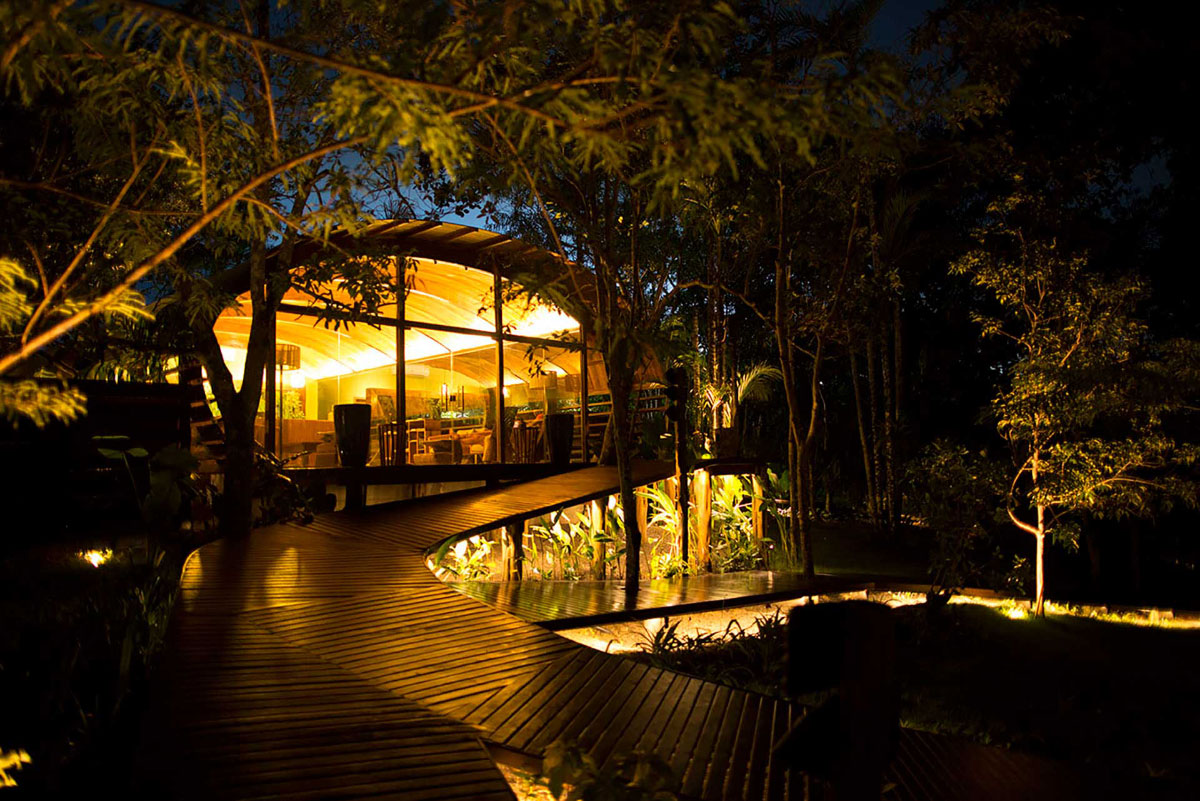
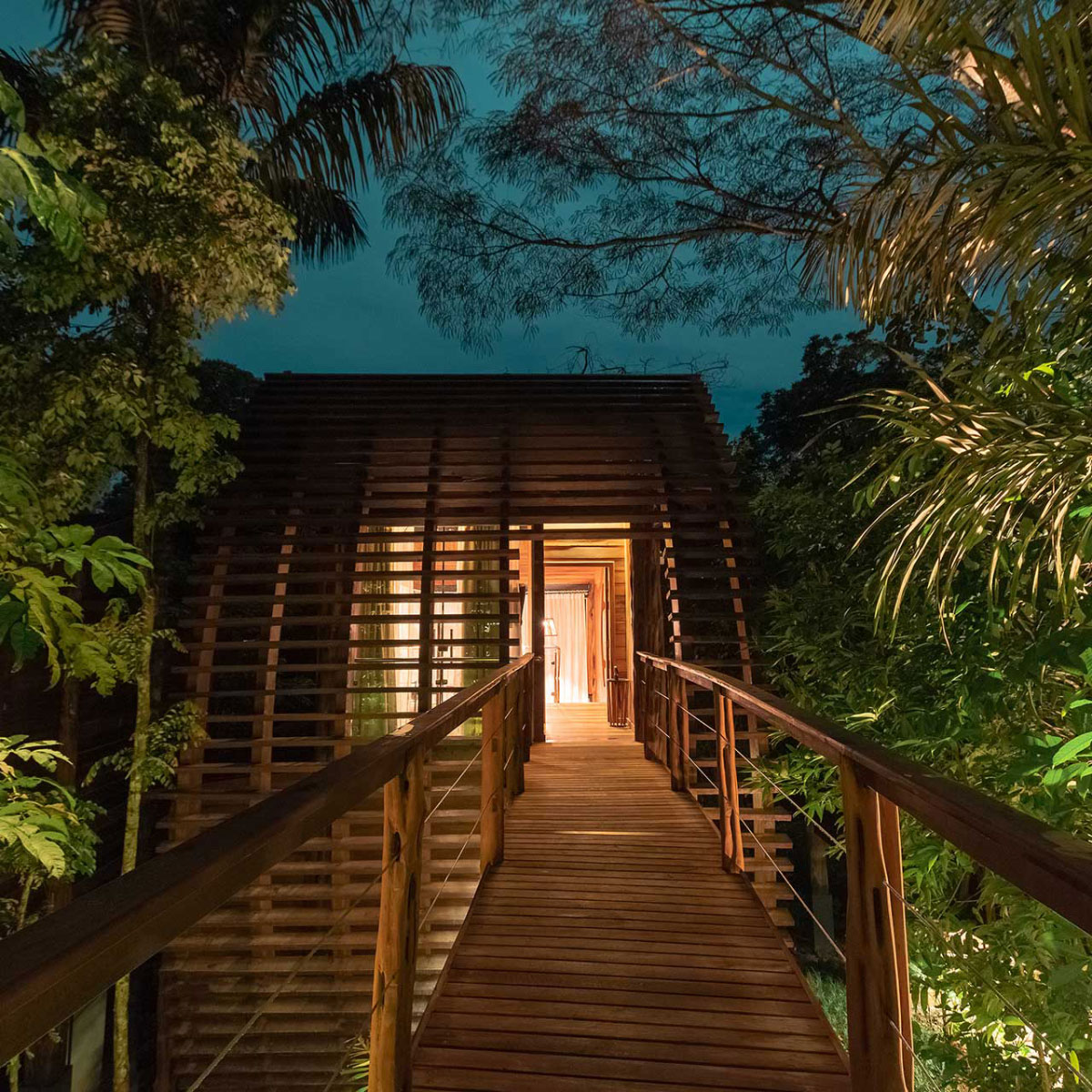
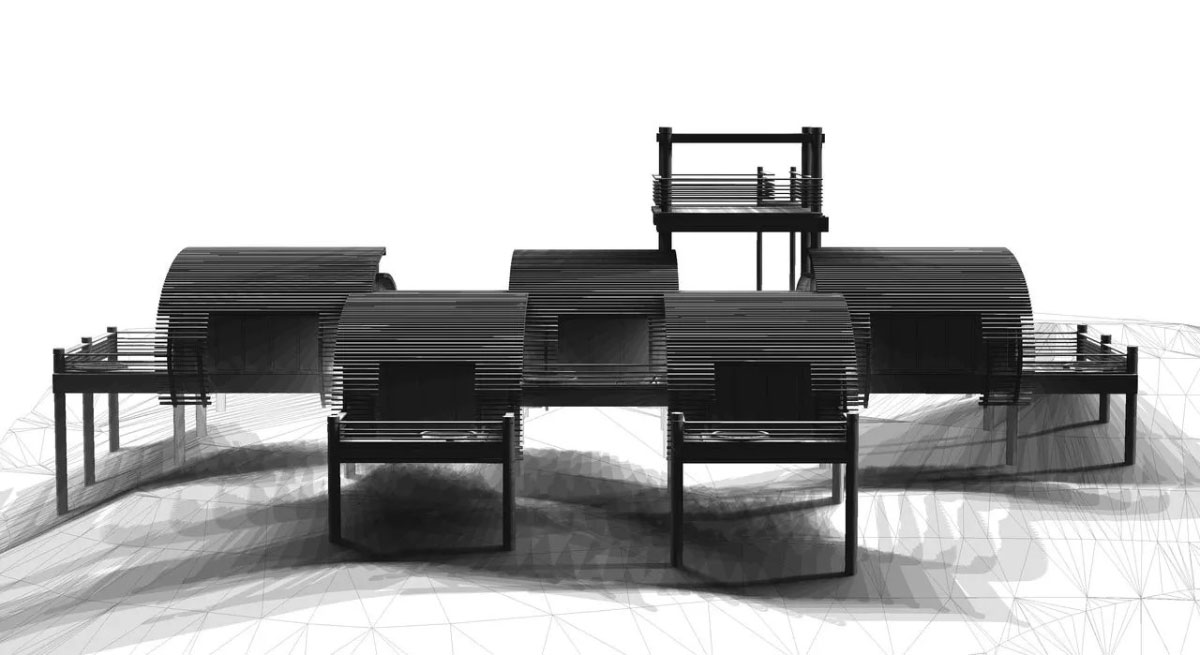
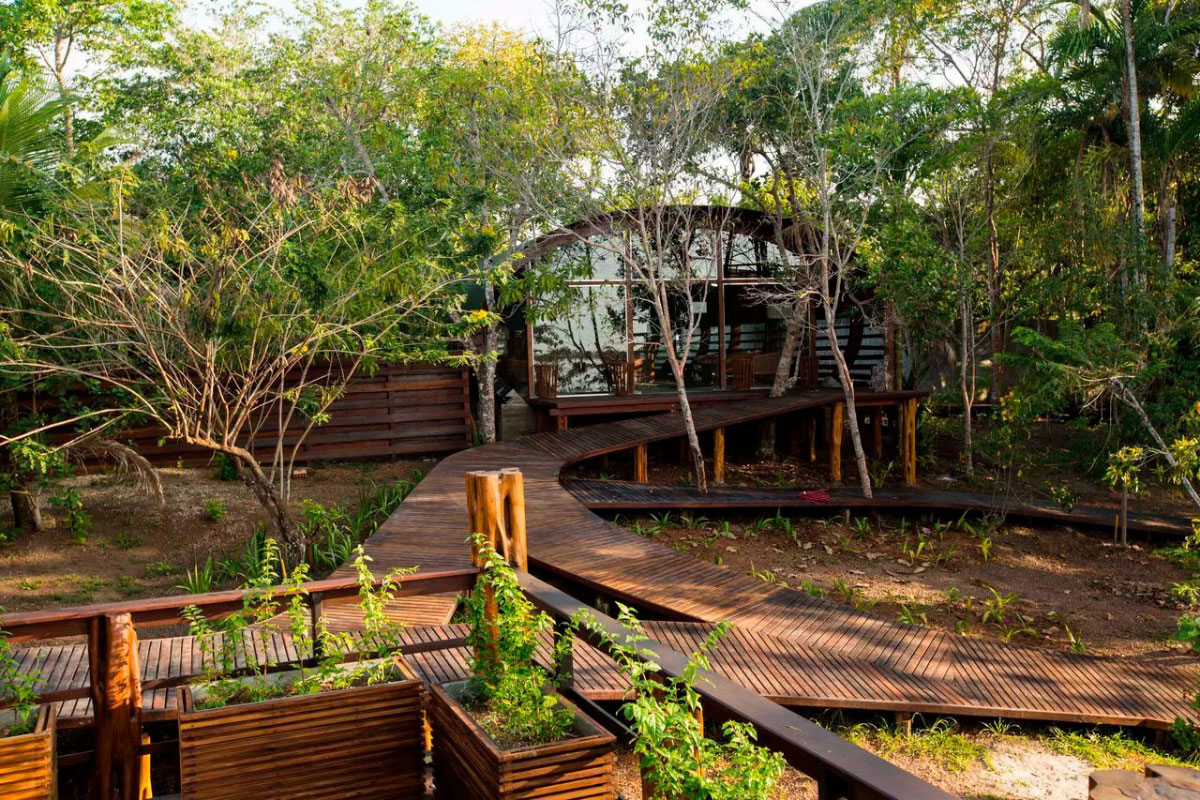
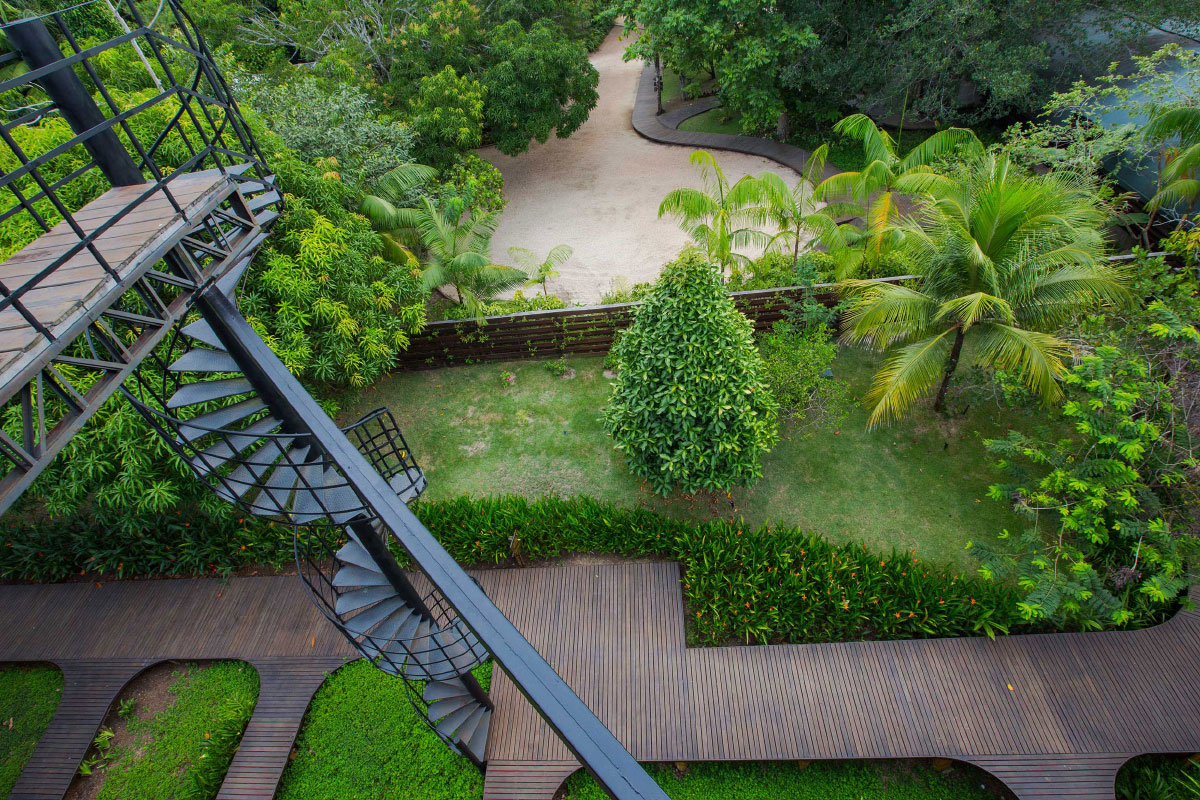
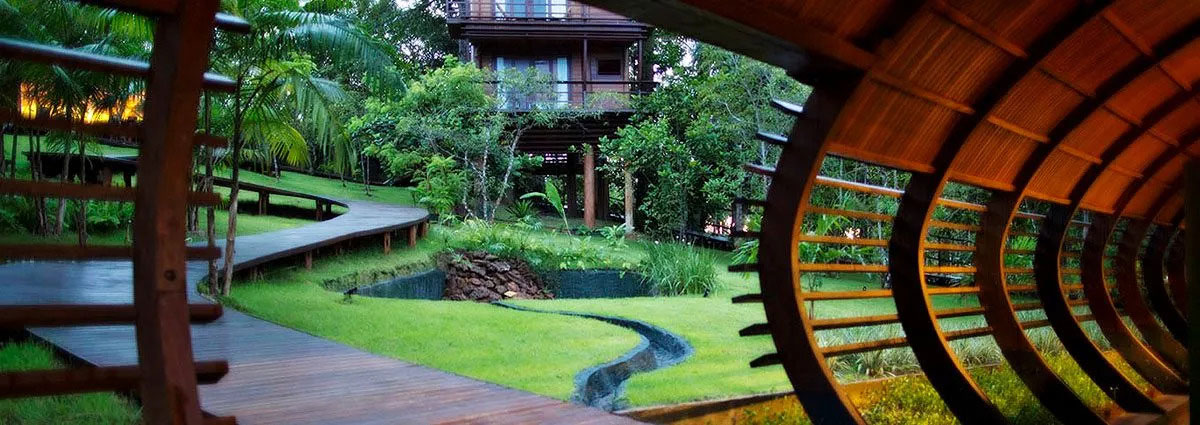
The terraces, spaces, rooms, and small apartments were raised on stilts, just like the traditional houses of the region. This maintains soil permeability, encourages the free growth of vegetation, and promotes air circulation, which helps reduce humidity and temperature inside. Elevated walkways connect the different areas without altering the topography. The electrical system and water heating are powered by solar energy. Organic waste is composted. The hotel also has an organic garden and wastewater treatment plant.
The landscaping that gently embraces Mirante do Gavião was designed by Studio Clariça Lima. They drew inspiration from the botanical illustrations of the English artist Margaret Mee, who documented the Amazonian flora for decades. The brief, simple in its statement, was complex in its execution: to create the most natural environment possible. Studio Clariça Lima took advantage of the conserved trees and prioritized native plant species well-adapted to the environment. In this way, the lodge’s landscaping consumes fewer water resources and provides sustenance and stability to the regional ecosystem.
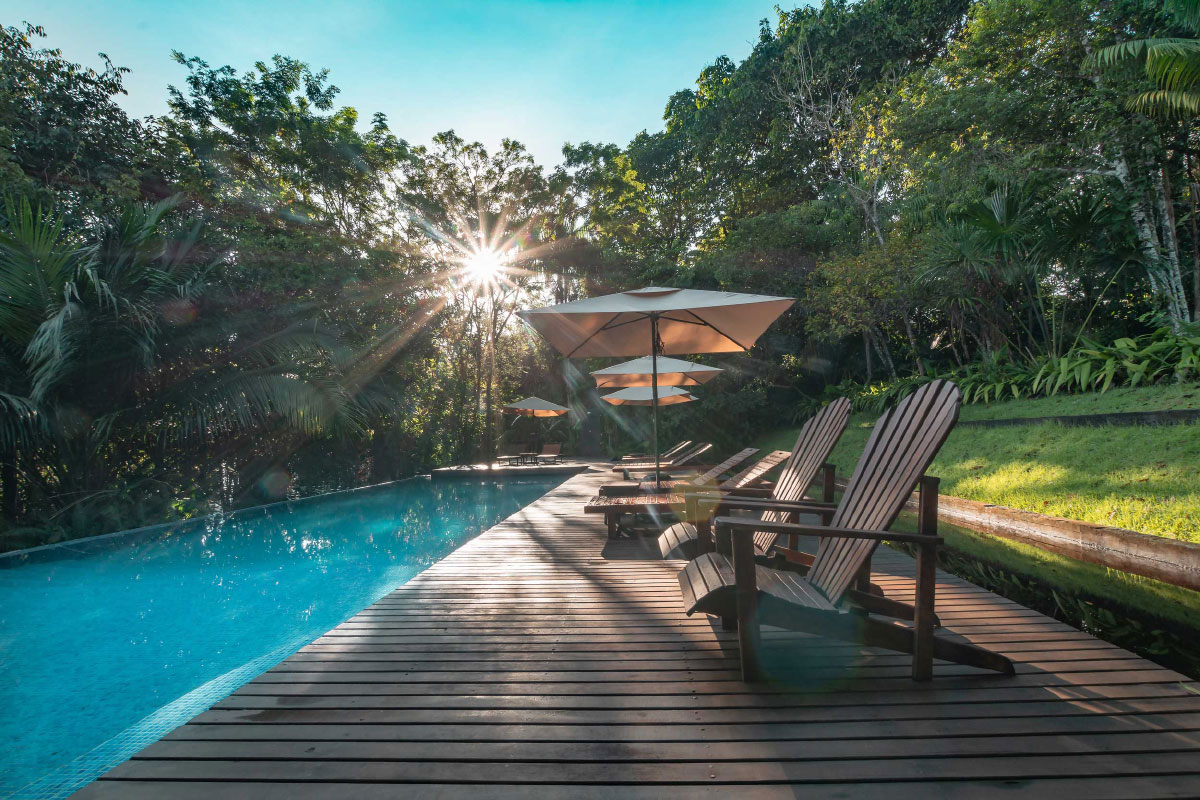
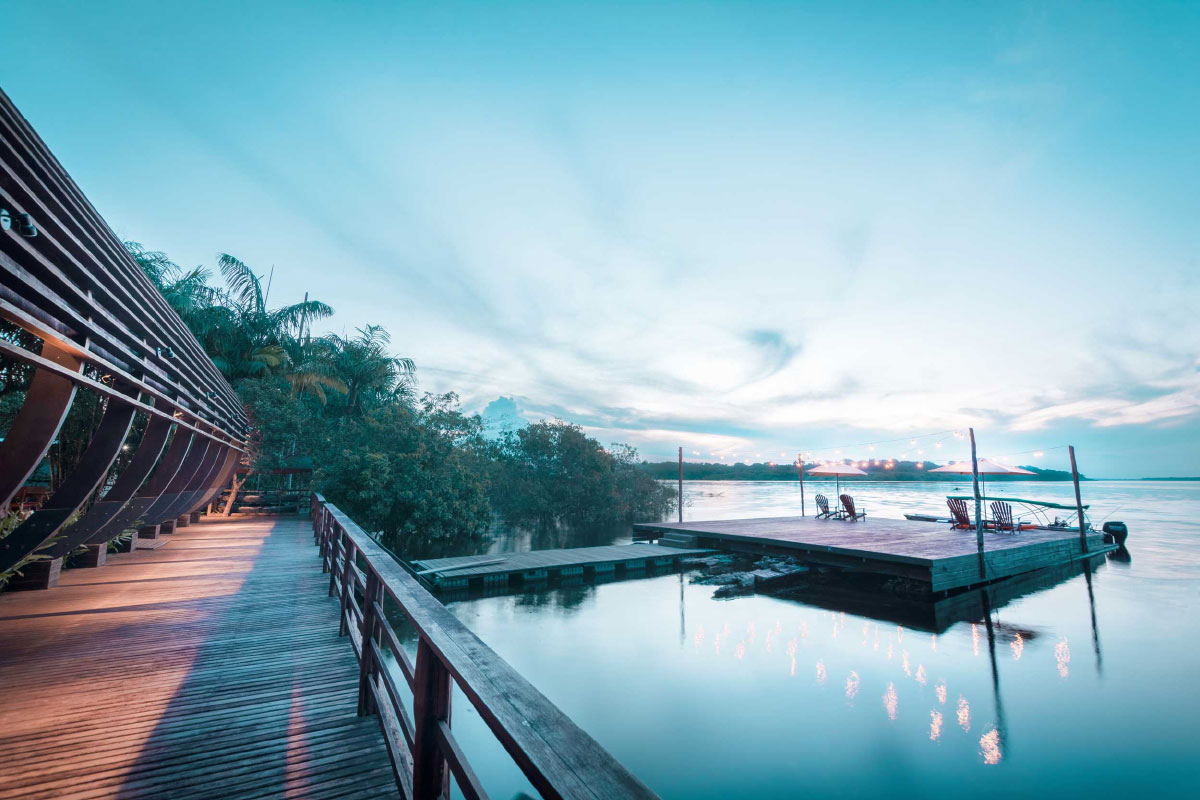
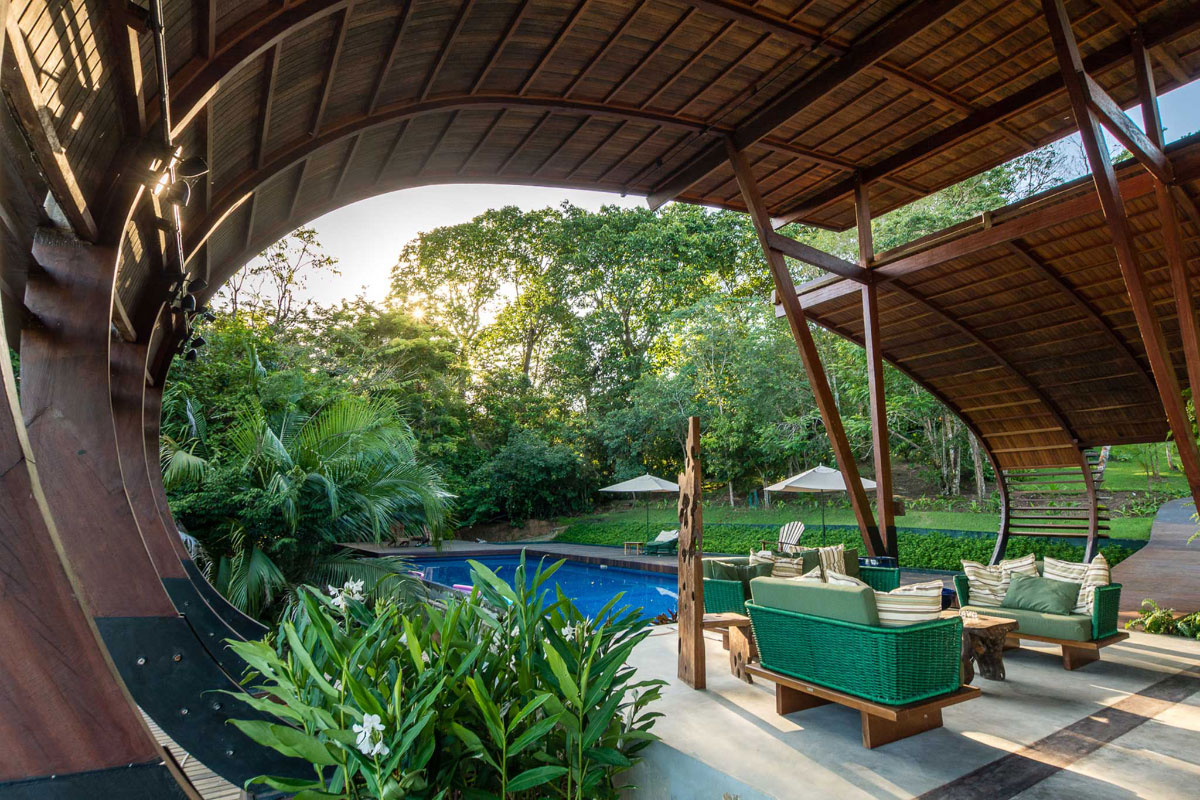
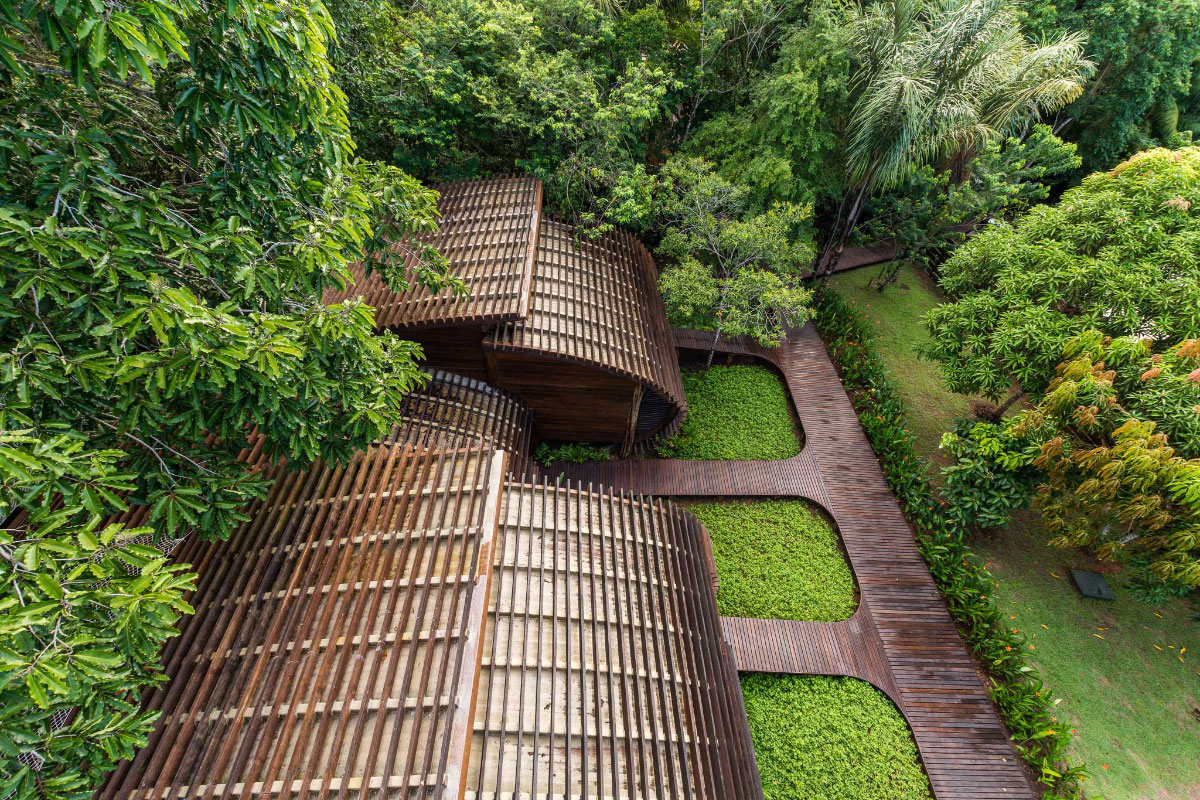
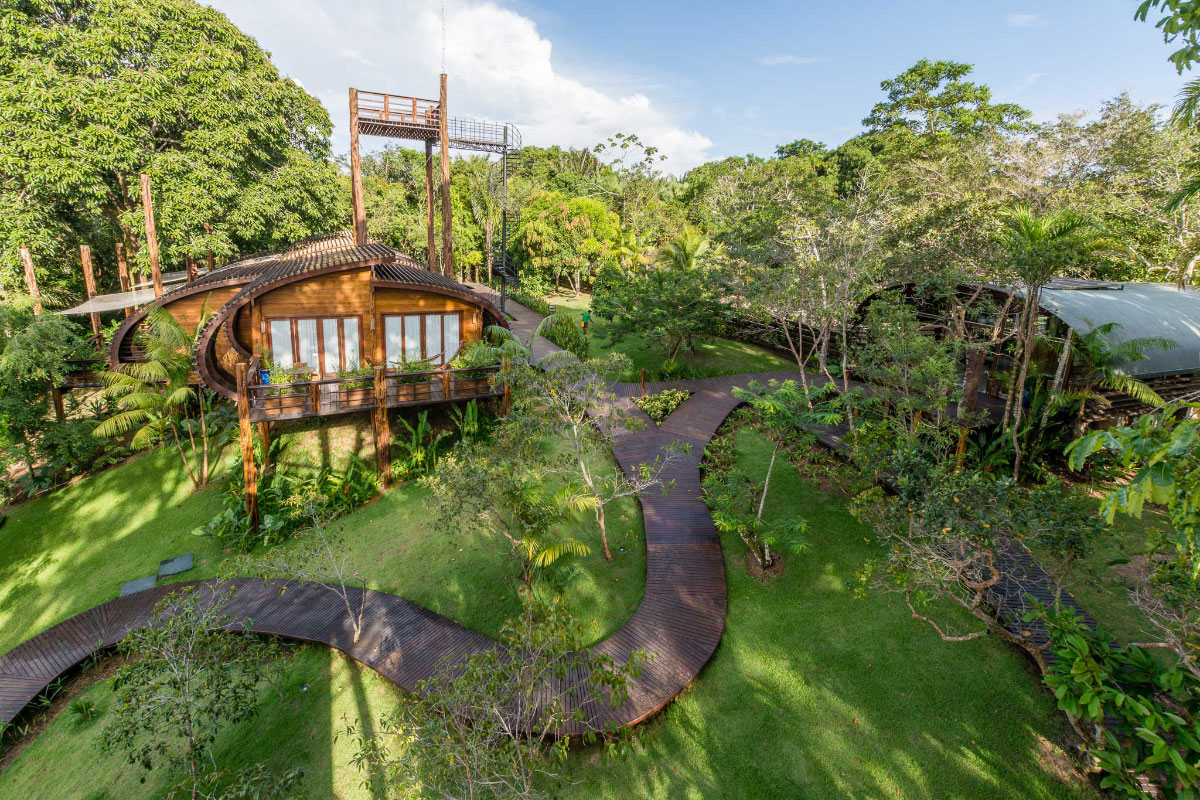
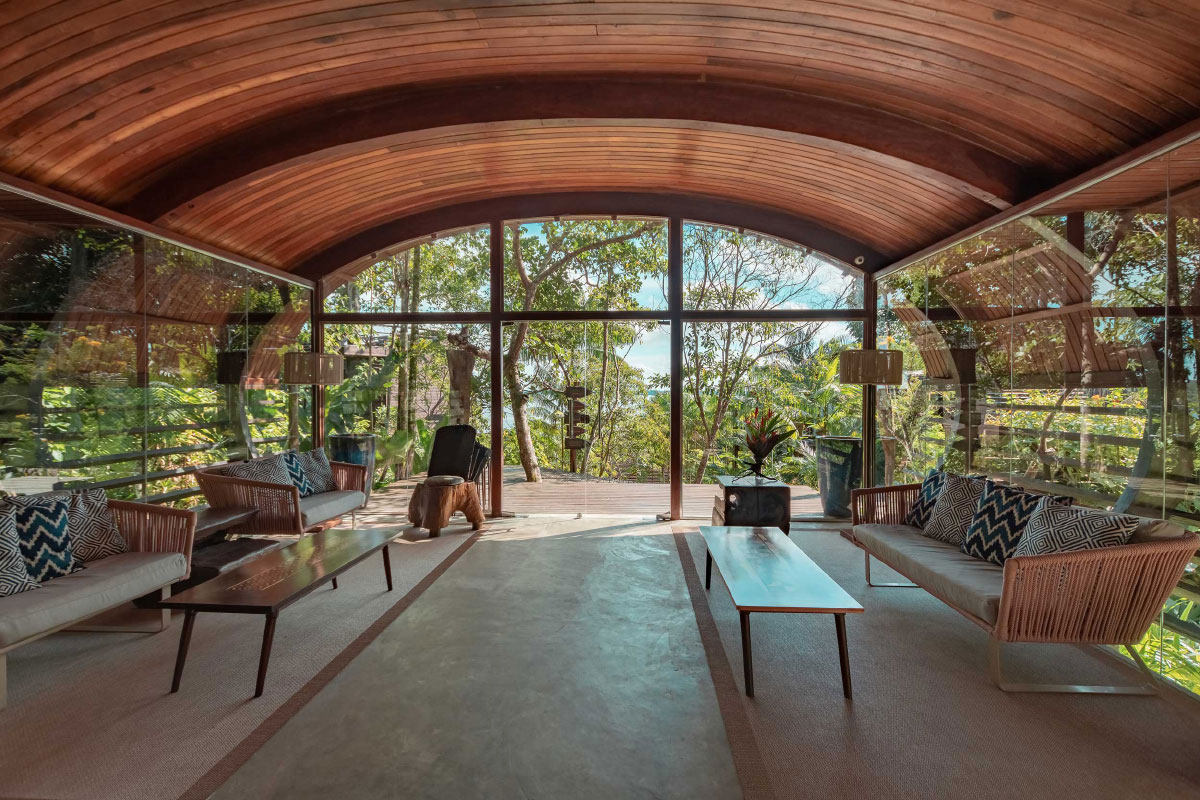
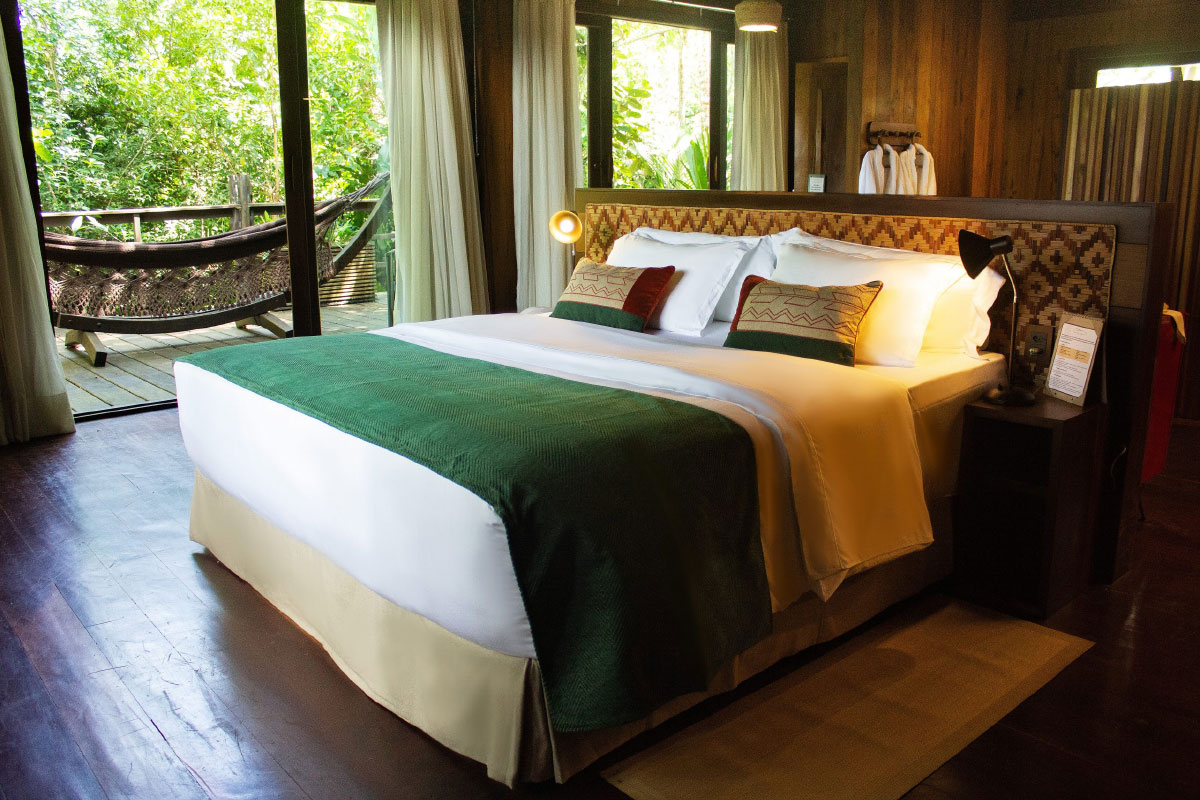
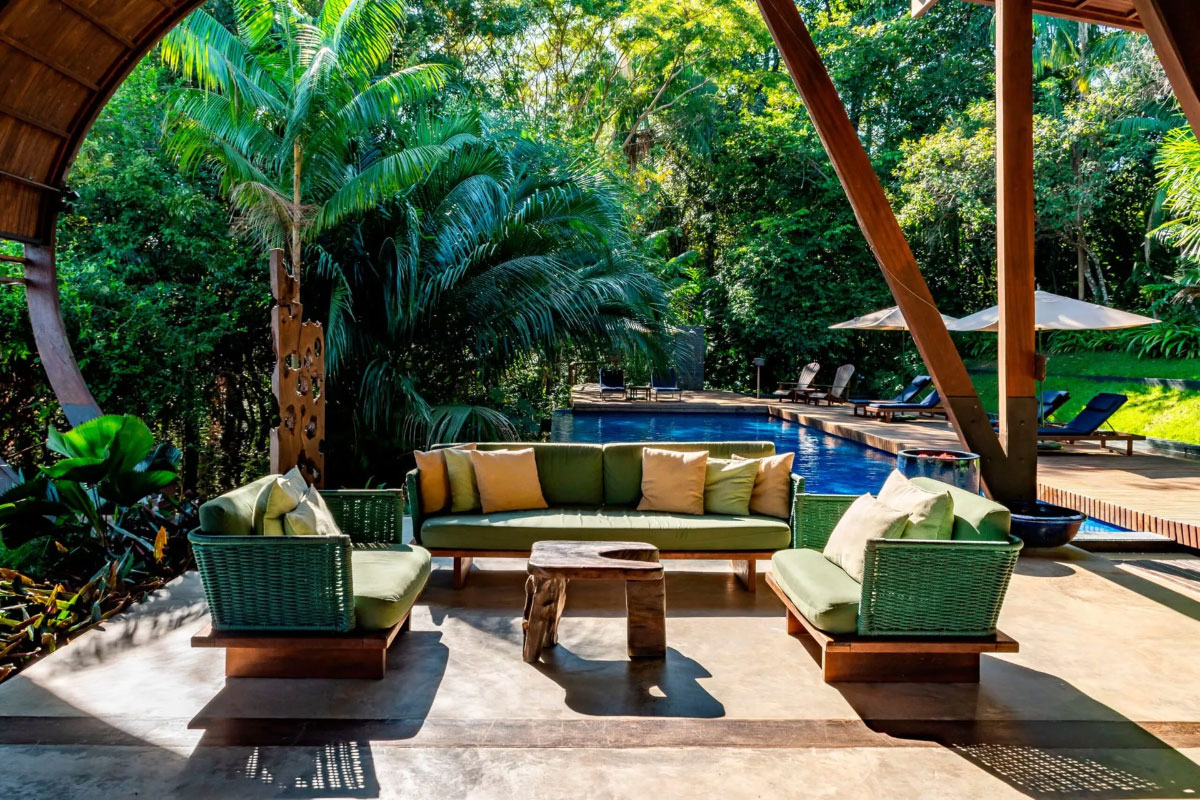
In 2019, Mirante do Gavião expanded to a total of 13 accommodation units. The restructuring included the creation of a lounge and a hammock and games area, as well as other leisure spaces, viewpoints overlooking the river, a swimming pool, and a restaurant. The hotel’s team is comprised of 45 people from the Novo Airão community, trained to provide a service that management describes as approaching international standards.
In 2025, Ruy Carlos Tone, a partner in the lodge, received the PURE Life Experiences Change Maker Award—the event’s highest honor—recognizing his work as a regional agent of change. Tone is the creator of the Educación Ribeirinha project, which has already built 23 schools in communities along the Rio Negro. The award underscores Mirante do Gavião’s core principle: education as the foundation for preserving the forest and ensuring a future for new generations.
The lodge also supports the Almerinda Malaquias Foundation, an organization that generates income for more than 40 artisan families through workshops on reusing wood scraps and recycling paper, as well as an environmental conservation school. The handicrafts made in this way are featured in the hotel’s interior design, along with natural fibre finishes and wooden furniture with marquetry details.
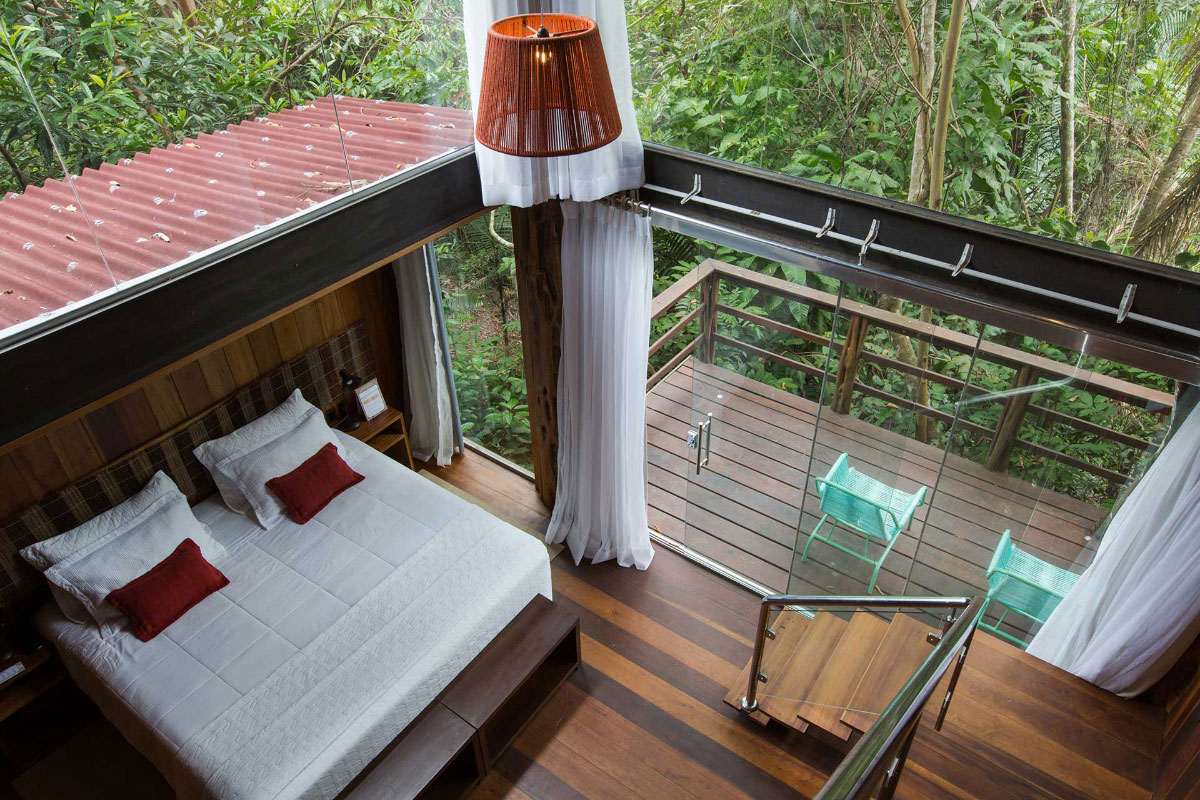
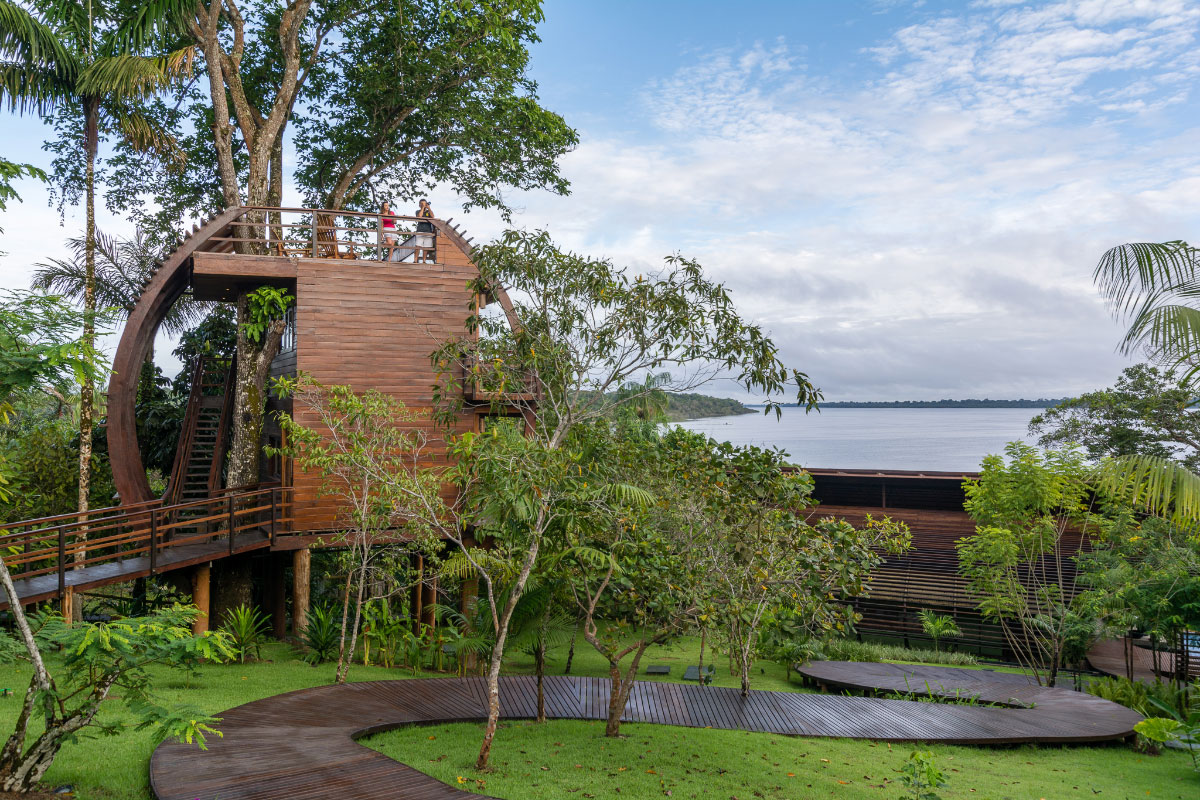
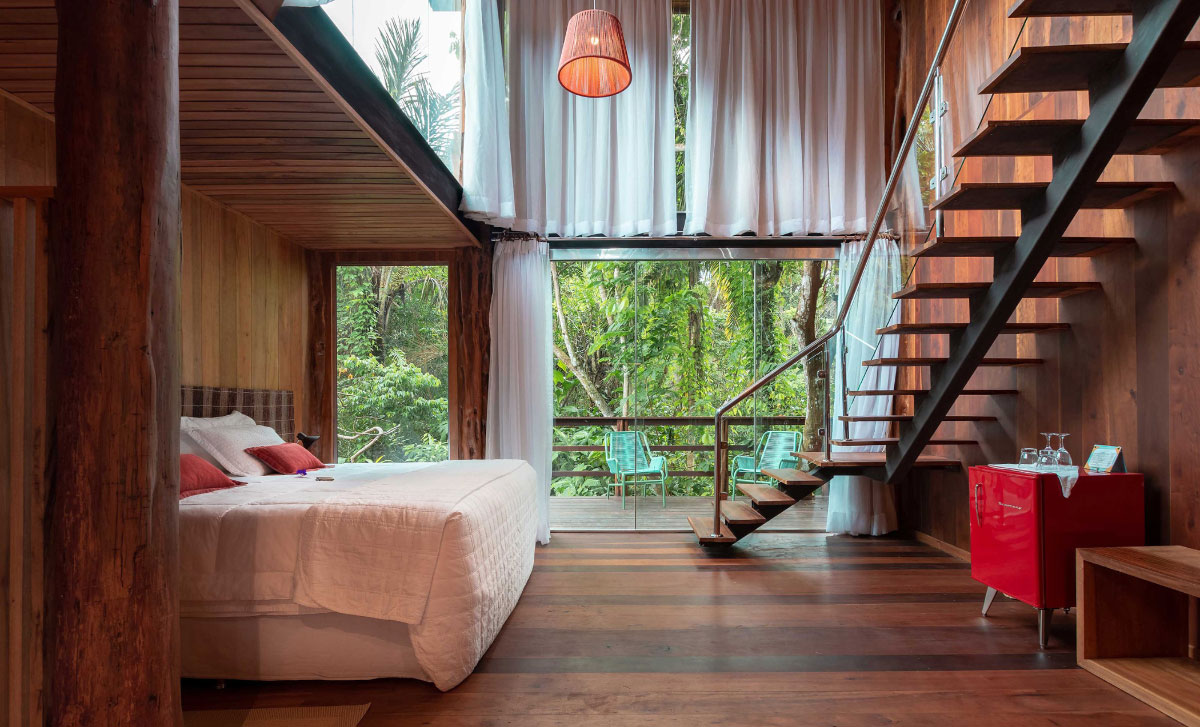
The name, Mirante do Gavião, or “hawk’s lookout,” alludes to the idea that the hotel, a conscious decision made during the design phase, offers guests an elevated vantage point more than 15 meters high from which to contemplate the rainforest and enjoy a memorable sunset over the Rio Negro and the Anavilhanas archipelago.
Sources: Mirante do Gavião, Atelier O’Reilly Architecture & Partners, Studio Clariça Lima, CNN Brasil.
Images: Mirante do Gavião and Atelier O’Reilly.