
An ingenious and fascinating — yet little-known — method enabled the architect Antoni Gaudí to visualise the distribution of forces within a structure, long before modern computers existed. This is the funicular model method or, more specifically, the polyfunicular model.
A polyfunicular model consists of an inverted representation of a building. Using a floor plan, Gaudí would hang strings and, at midpoints or other strategic points, attach small weighted sacks. Thanks to gravity, these tiny sacks naturally produced a series of force curves known as catenaries. These catenaries distributed the weight evenly and, by maintaining equilibrium, eliminated unnecessary stresses.
In that inverted position — that is, suspended — the strings were under tension and traced arches and vaults in the air. Gaudí would then place a mirror beneath the model — or, according to other sources, photograph it and rotate the image — so that the lines which had previously hung down were now transformed into arches and columns supported from below, as if they were under compression, exactly as stone or concrete would be.
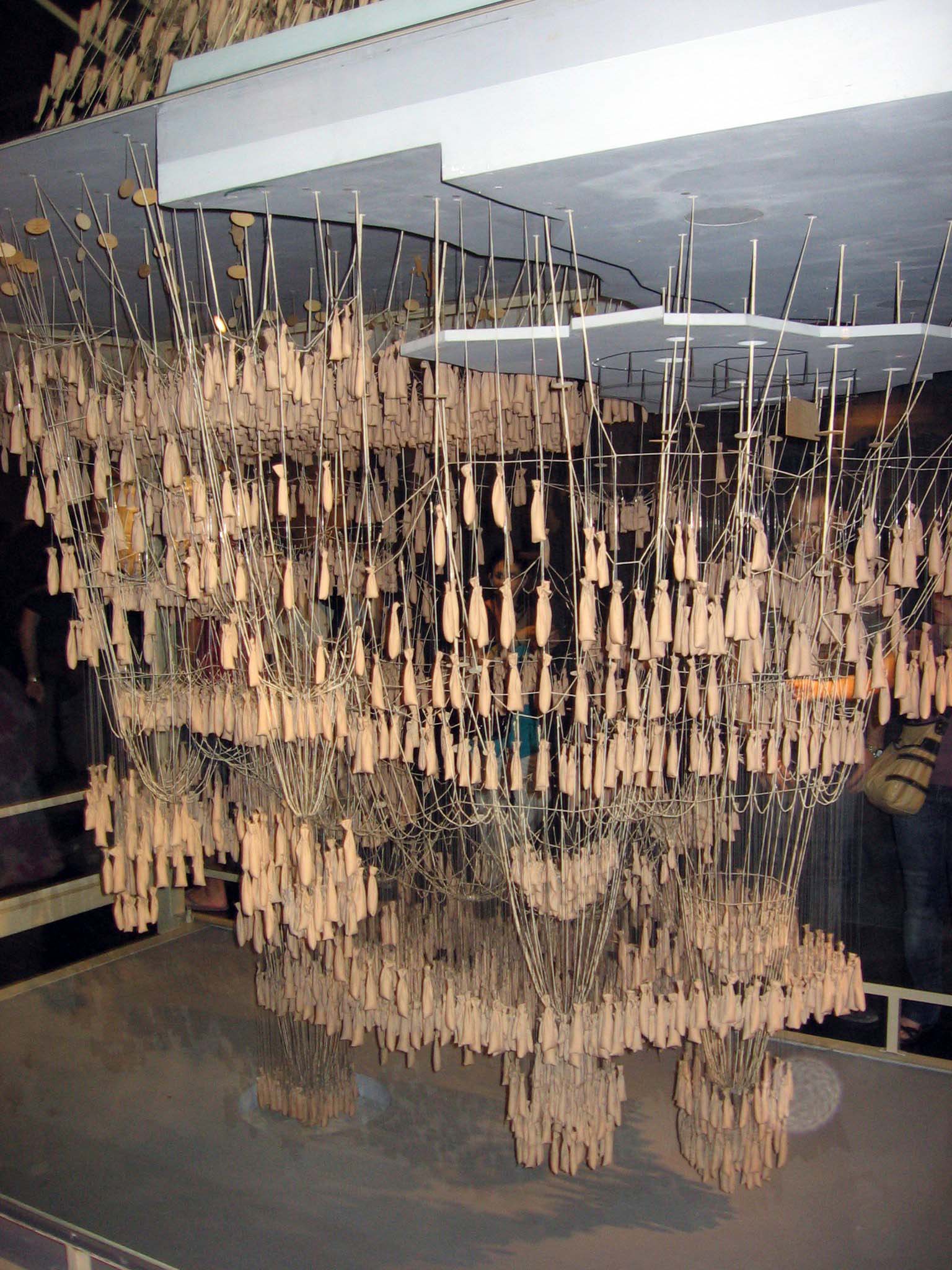
In this way, the Catalan architect achieved a highly stable and efficient structure without the need for complex mathematical calculations. As far as we know, Gaudí used the polyfunicular model method in the design of the church at Colonia Güell — of which only the crypt was ever built — as recorded in an old image. The experiment proved so successful that he subsequently applied the same principles to the design of the Expiatory Church of the Sagrada Família, the most monumental of all his works.
With his innovative method, the architect combined architecture and engineering in a way that no one had ever achieved before. When we look at some of his buildings, we cannot help but conclude that his method—the polyfunicular model—largely determined their form. Or, to put it another way, rather than imposing an arbitrary geometry on the material, he allowed the laws of physics themselves to determine the most suitable form for construction. Thus, his projects became as light and solid as they were original.
By Carlos Rodríguez, specialist in hydraulics and water attractions in the Architecture Department at Amusement Logic