
Unlike river or beach sand, whose grains have a rough texture that helps them bind with the cement, desert sand grains are fine and, due to wind erosion, lack any sharp edges or irregularities. It is for this reason that it is not used as a constituent of concrete in construction. At least until now, because recent scientific advances are opening up new possibilities and challenging this historical limitation.
The aim of these new advances is to make use of abundant local resources—rather than importing aggregates from hundreds of kilometres away—and, at the same time, to reduce the unsustainable extraction of sand from rivers and coastlines. After all, the latter is an activity that causes serious ecological damage, erodes riverbeds, destroys riverside ecosystems and generates social conflicts in many regions of the world.
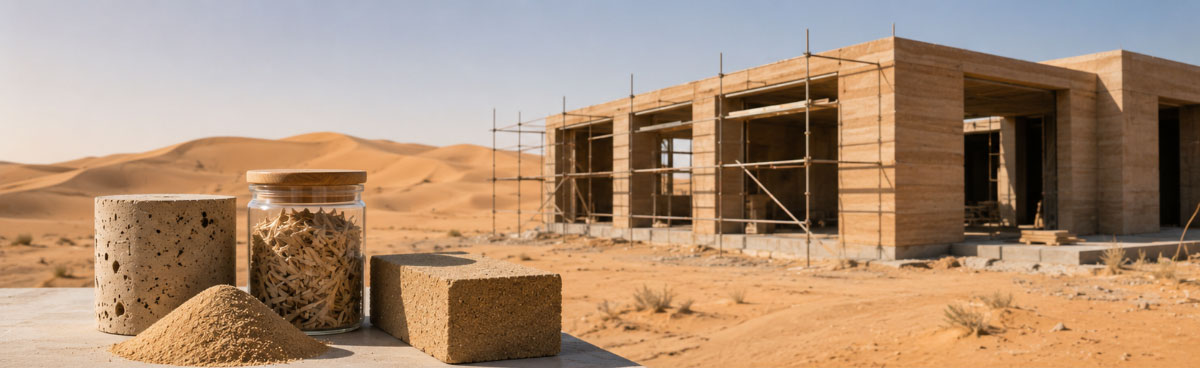
Recent research from Japan and Norway has led to the discovery of a new material called Botanical SandCrete. This new compound, which could well be described as plant-based concrete, is produced by subjecting a mixture of desert sand and wood powder to a combination of high temperatures and controlled pressure.
In this process, lignin—a natural polymer found in the cell walls of plants, responsible for their rigidity—acts as a bio-based adhesive that binds the grains of sand together without the need for conventional Portland cement. The result is a solid, cohesive material with mechanical properties that, in certain applications, can rival those of traditional concrete.
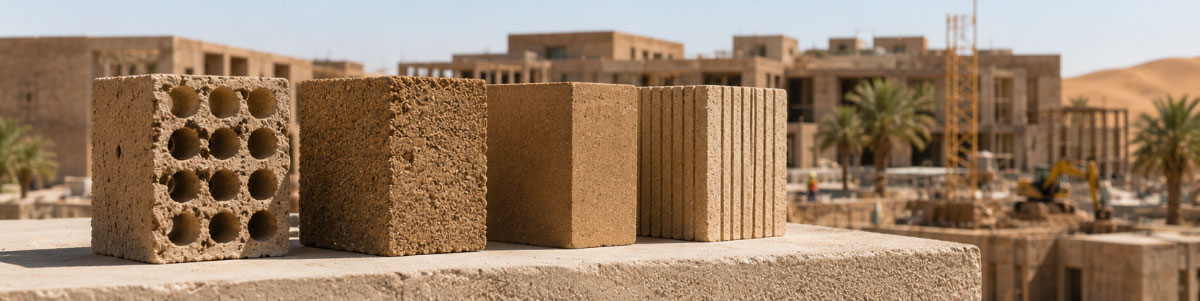
But that is not the only line of research being pursued regarding the use of desert sand. Some studies are exploring so-called ‘geopolymer bricks’. These are produced using alkaline activators that trigger inorganic polymerisation reactions from materials rich in aluminosilicates. Other research focuses on nanotechnology, which modifies the surface of the grains at a molecular level to improve their adhesion. Other approaches use biological processes, employing specific bacteria that precipitate calcium carbonate and naturally solidify the sand.
It is true that many of these technologies are still in the development or laboratory testing phase, and that there is a long way to go before they can be implemented commercially on a large scale. However, their potential is enormous. In the future, they could enable the construction of infrastructure in arid areas—from basic housing to roads or airports—in a much more sustainable way. This would make use of a material that is currently considered useless, but which is abundant in the regions that need it most.
By Pablo Vidal, senior architect in the Architecture Department at Amusement Logic