

Opening ceremonies, such as the recent one for the 2026 FIFA World Cup, have become an essential part of the experience of major events. Choreography, large-scale audiovisual content, special effects, spectacular lighting and perfectly integrated sound – all synchronised down to the millimetre – transform the minutes leading up to the first football match into an event that generates as much excitement as the match itself.
However, although they unfold in just a few minutes before the eyes of thousands of spectators — and hundreds of millions watching on television — in reality, opening ceremonies are the result of long and intense weeks of planning, design and technical work. Nevertheless, the challenge does not lie solely in the technology.
All the necessary set-up for the opening ceremony must be carried out without disrupting the venue’s normal operations — staff entry and exit, maintenance, scheduled activities — and, furthermore, within tight set-up deadlines. In many cases, this means that teams have to work within restricted time slots and with extremely precise logistics.
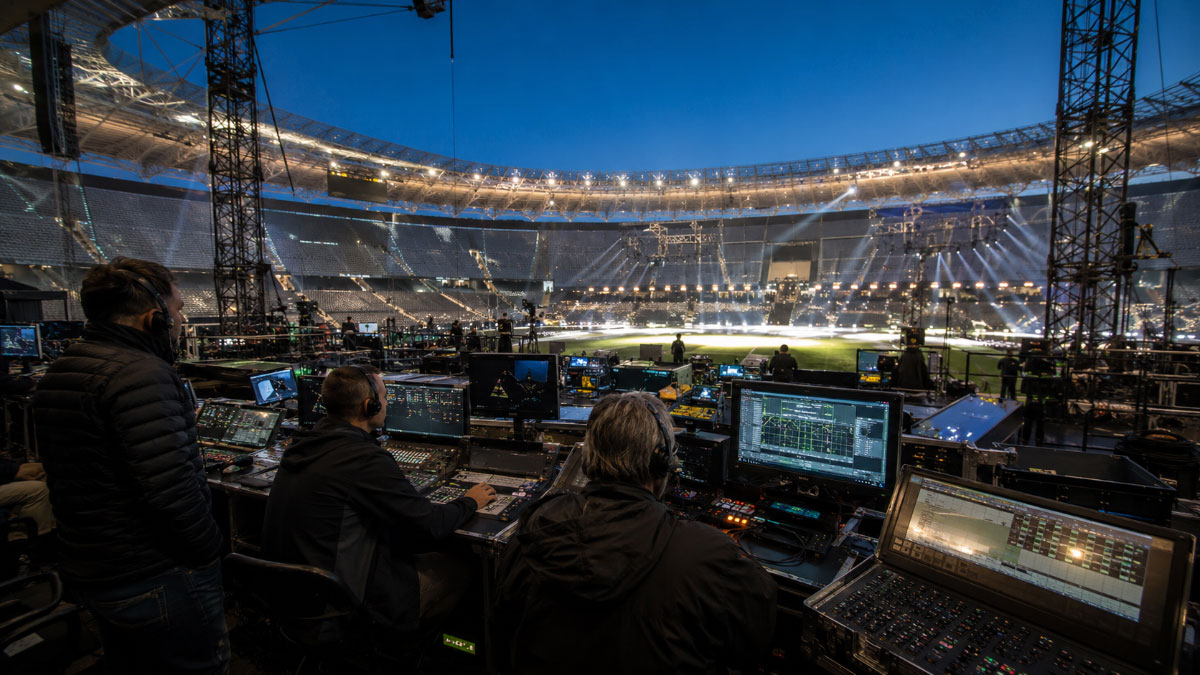
In short, behind monumental opening ceremonies lies much more than just lights, sound and visual effects. There is structural engineering, there is innovation, there is coordination between technical disciplines that traditionally work separately, but, above all, there are professionals who devote entire days to rehearsing every detail to ensure the experience is perfect. And that perfection, paradoxically, demands that all that work goes unnoticed. The audience should simply witness the magic that results from impeccable work.
By Francisco Lozano, MEP engineer in the Architecture Department at Amusement Logic