
In the Aragonese Pyrenees, Huesca, Spain, a few kilometres from the border with France and in the heart of the Canfranc valley, stands a building that defies conventional classification. It is not a train station, although it was. It is not a typical hotel either, although it has been operating as such since 2023. Rather, it is a testimony of stone, iron and glass to the dreams of connection between two neighbouring countries. Now, the remains of that dream have been transformed into a contemporary luxury retreat. We are talking about the Canfranc Estación hotel.
Barceló Hotel Group currently operates Canfranc Estación, under its Royal Hideaway brand. The establishment occupies the old Canfranc International Station, inaugurated on July 18th, 1928 with the presence of King Alfonso XIII and the President of the French Republic, Gaston Doumergue. Initially conceived as an ambitious railway passage through the Pyrenees, the station was one of the most important railway complexes in Europe in the first third of the 20th century. Its architecture is indebted to the Beaux-Arts style, close to that of nineteenth-century French stations such as the current Musée d’Orsay.
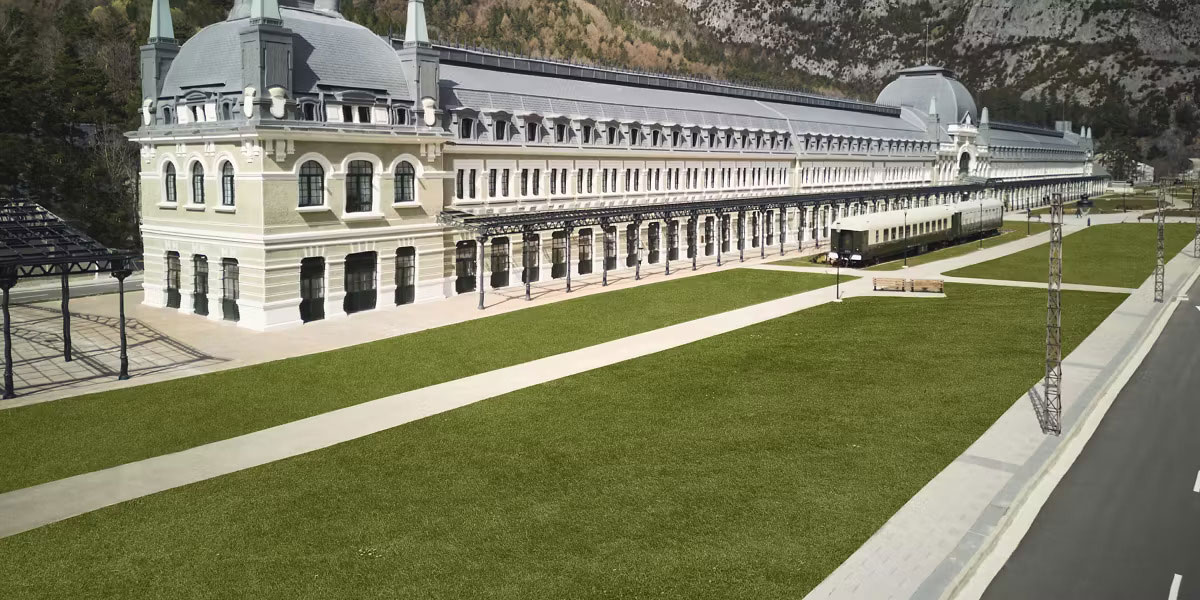
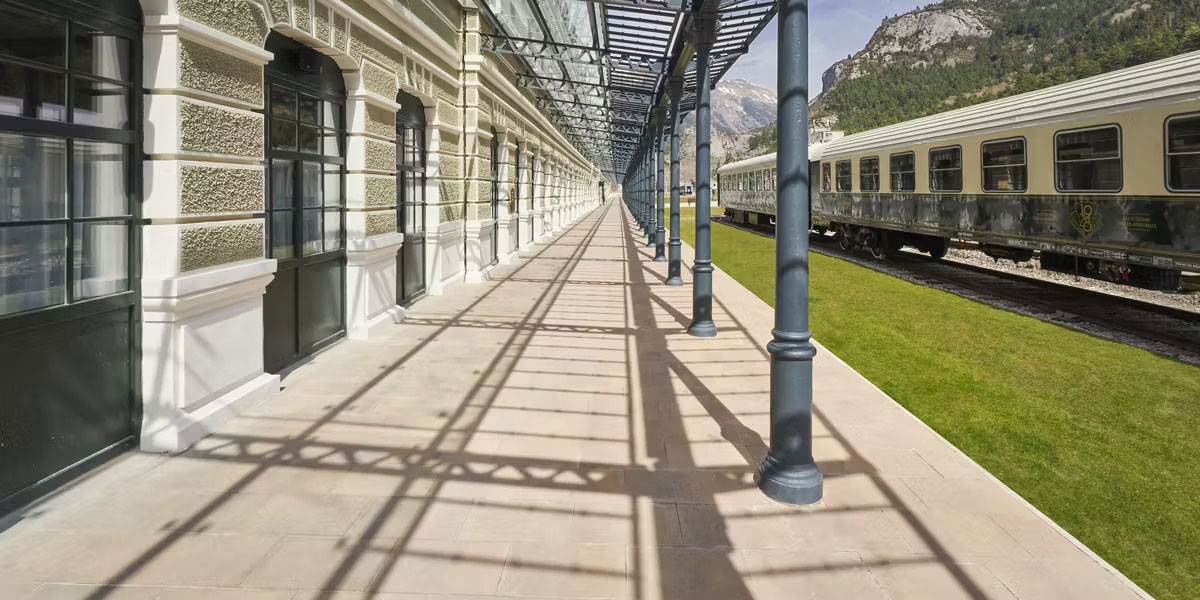
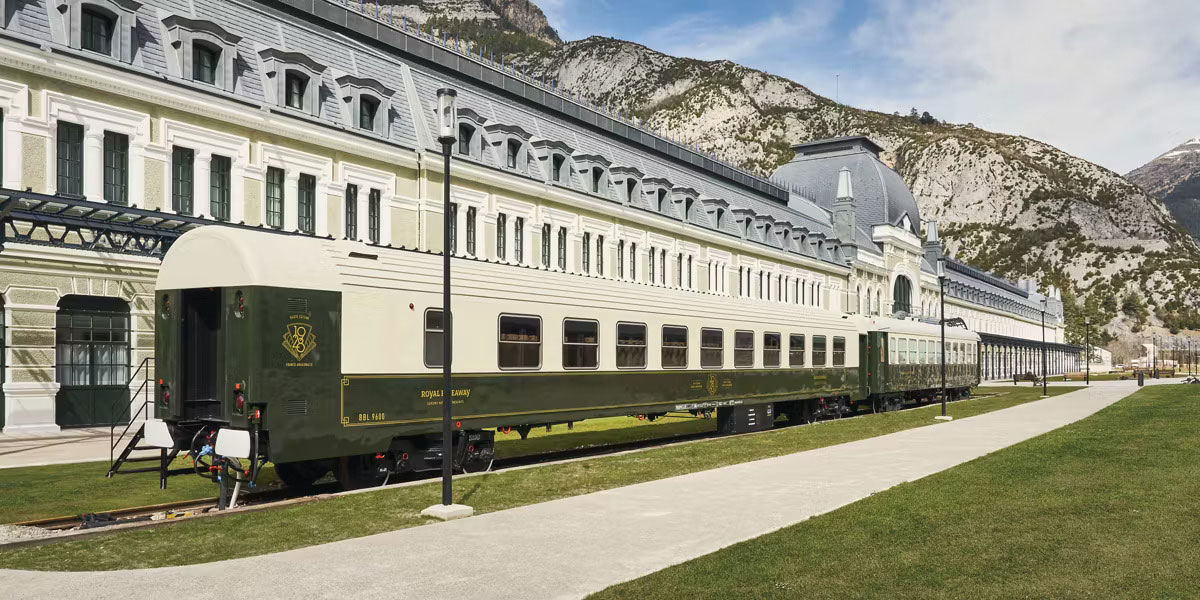
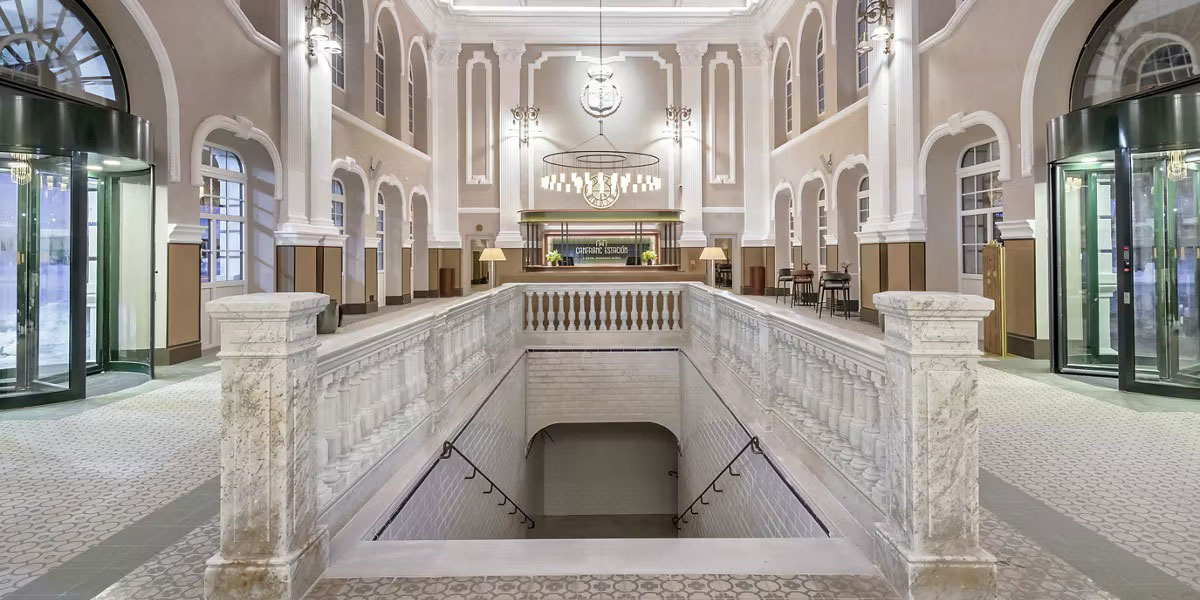
Due to its location in border territory, the Canfranc Estación building served as a shared border. Each country, France and Spain, occupied one of its halves and had its own ticket offices, customs and offices. Perhaps because it was conceived from the beginning as a border train station, the 241 m long building has 75 doors on each side. A large cast dome occupies the central axis. Finally, it is crowned by slate roofs and attics that evoke French palatial architecture.
However, Canfranc’s heyday was shorter-lived than expected. The 1929 crisis, a fire in 1931, and—above all—its closure to international traffic in 1970 (following the collapse of the L’Estanguet bridge on the French side) condemned the building to progressive deterioration for over 50 years. Yet the station’s story goes beyond its architecture. During World War II, Canfranc became a setting for major events in 20th-century history. Indeed, few European stations witnessed as many tales of espionage, smuggling, and escape as Canfranc—a dramatic, novel-worthy setting that has inspired books, documentaries, and films. The monumental station building finally received well-deserved recognition when the Government of Aragon’s Department of Culture and Tourism declared it an Asset of Cultural Interest in 2002, and subsequently acquired it to launch an ambitious restoration project in 2013.
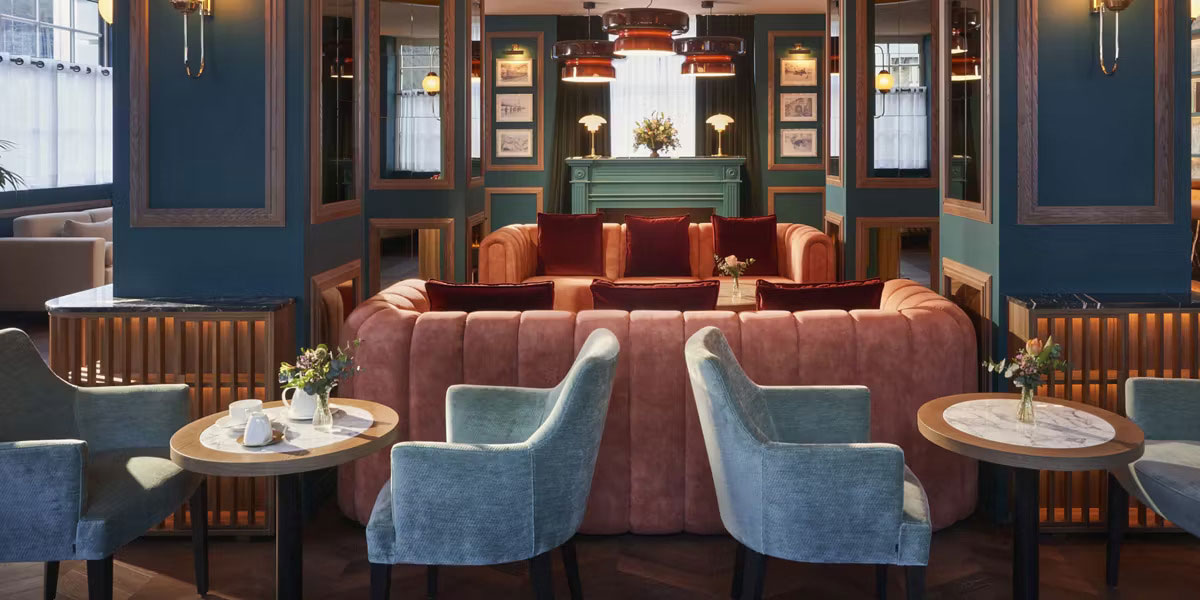
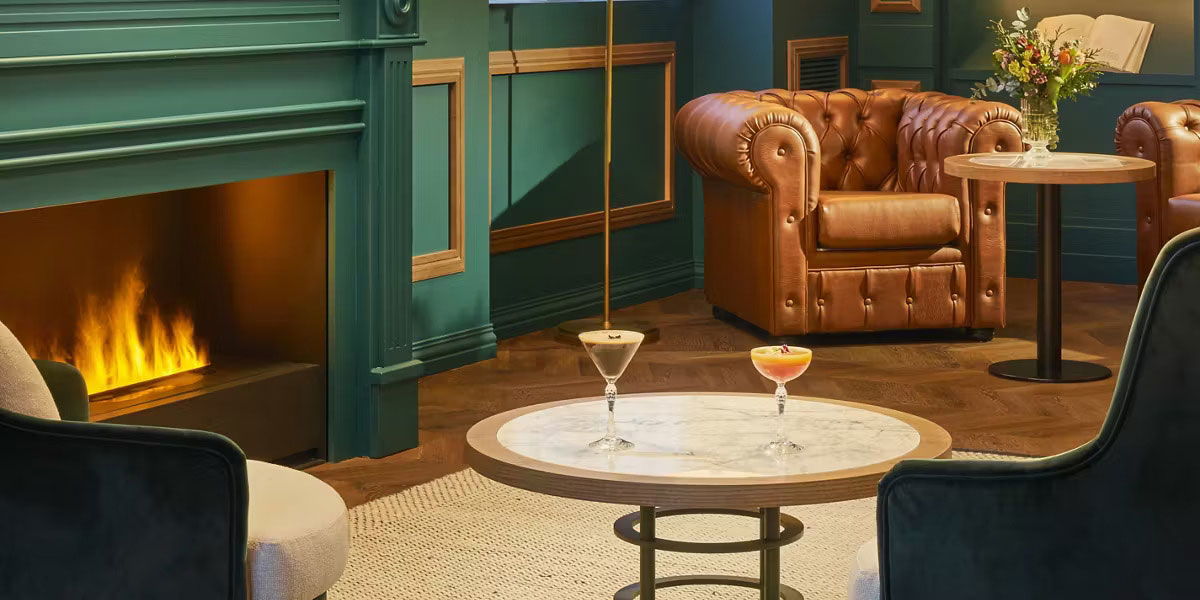
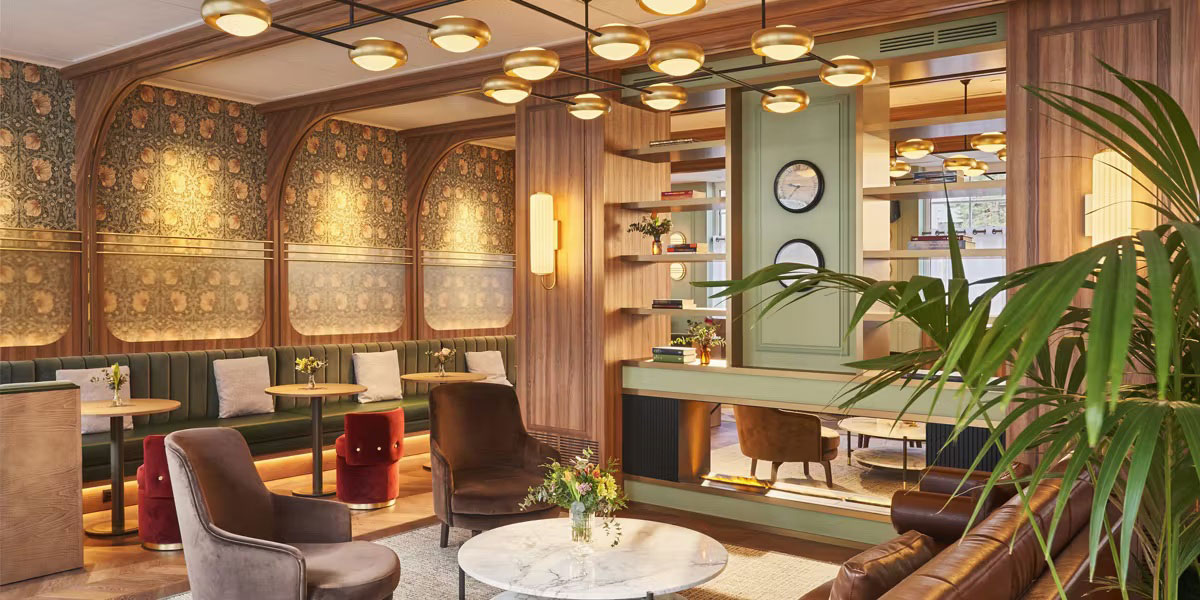
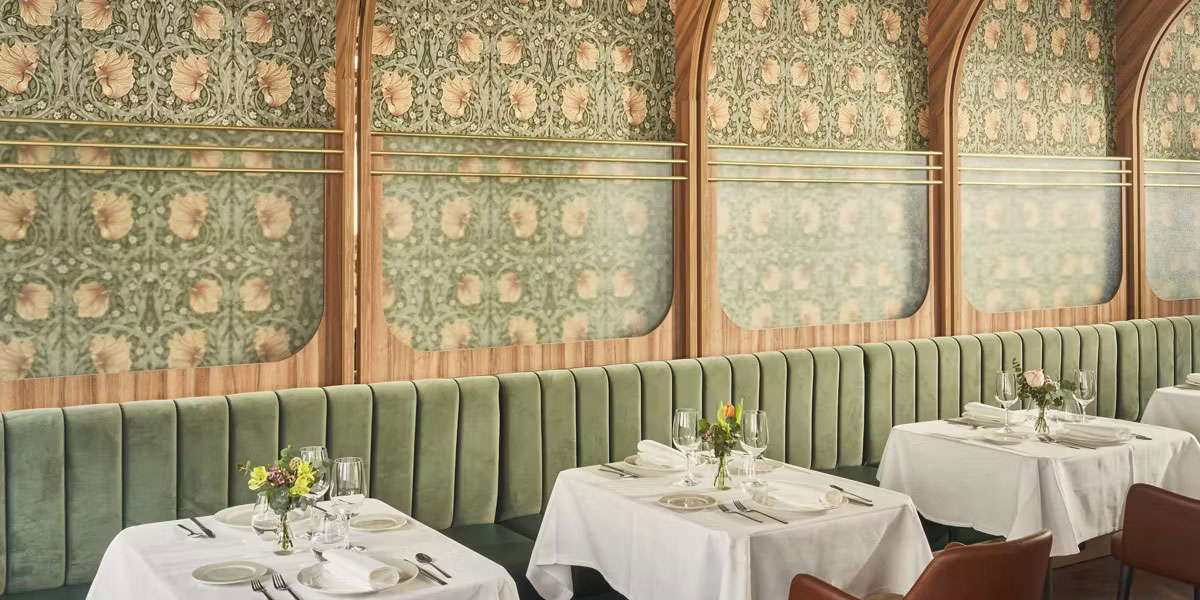
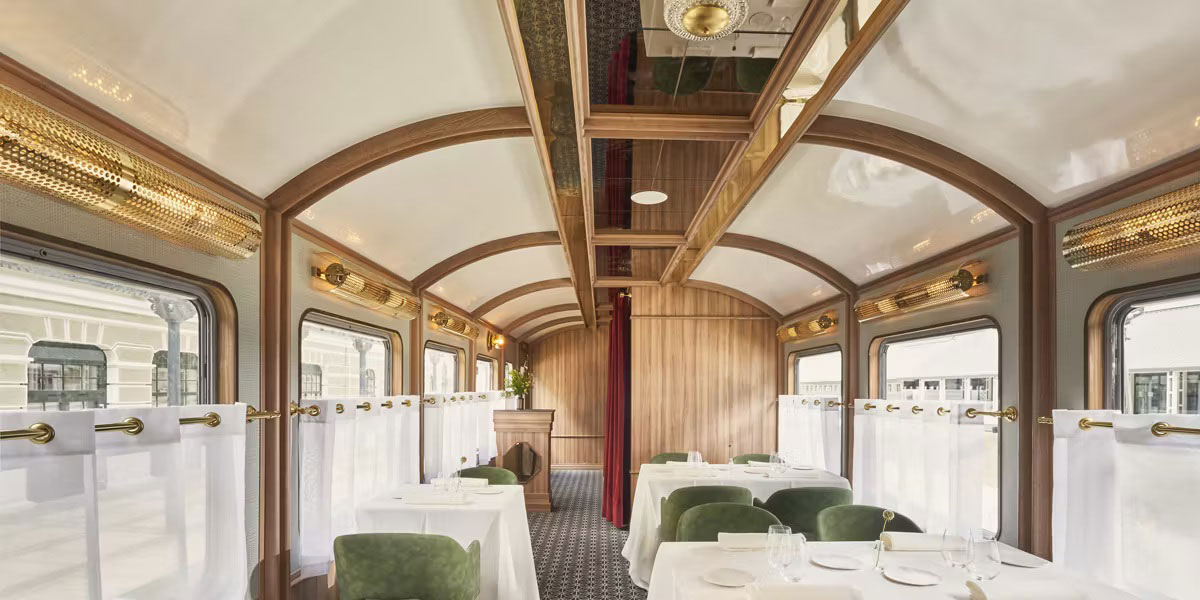
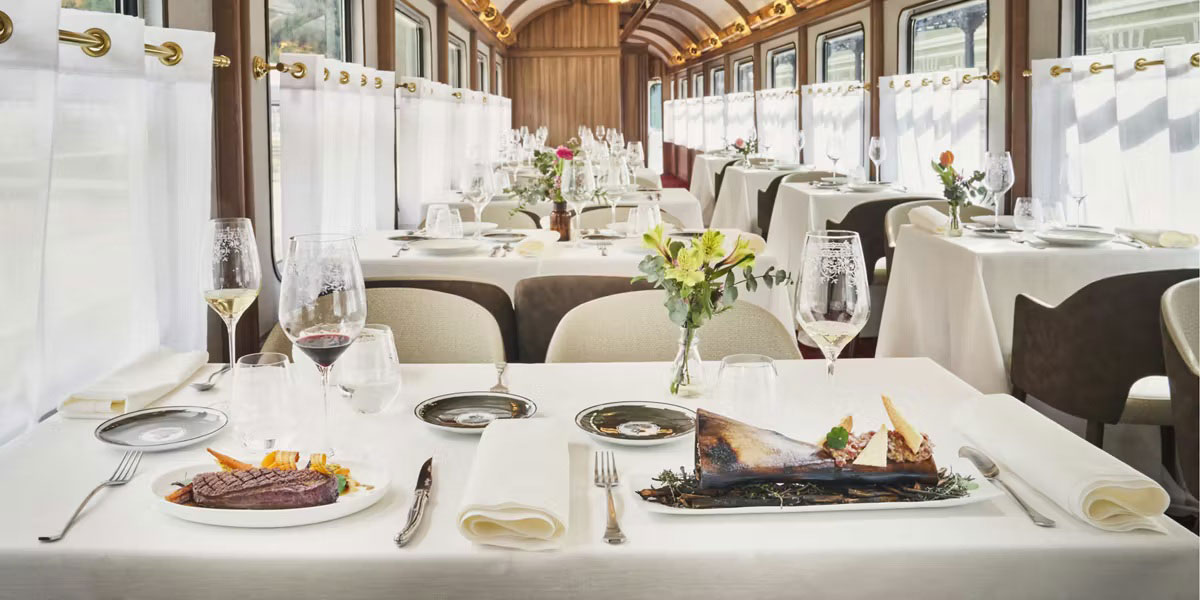
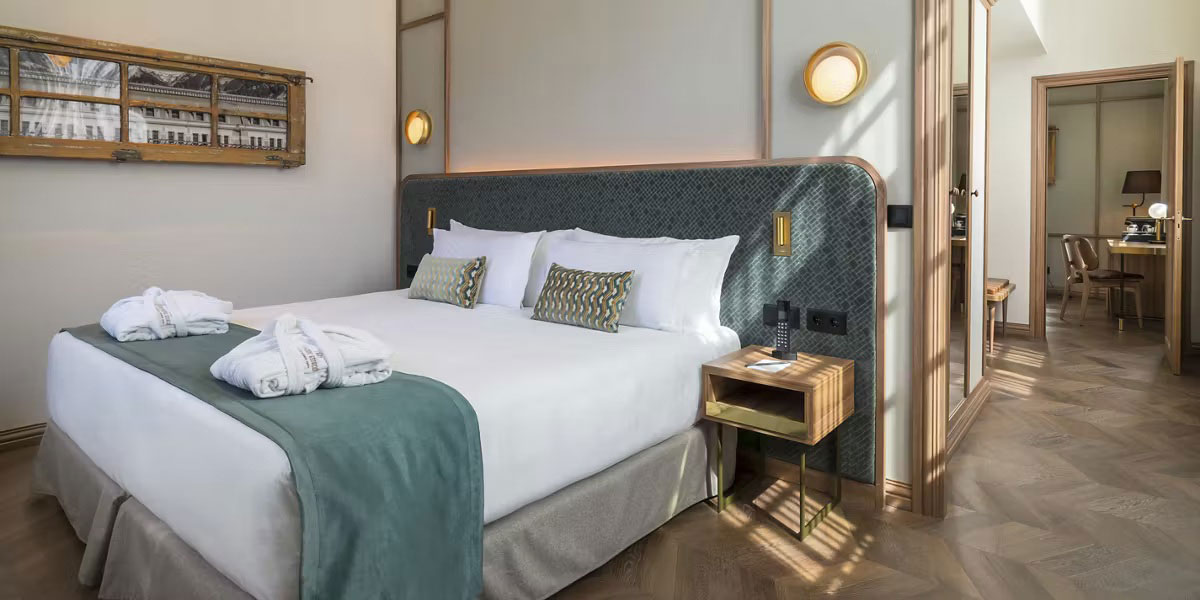
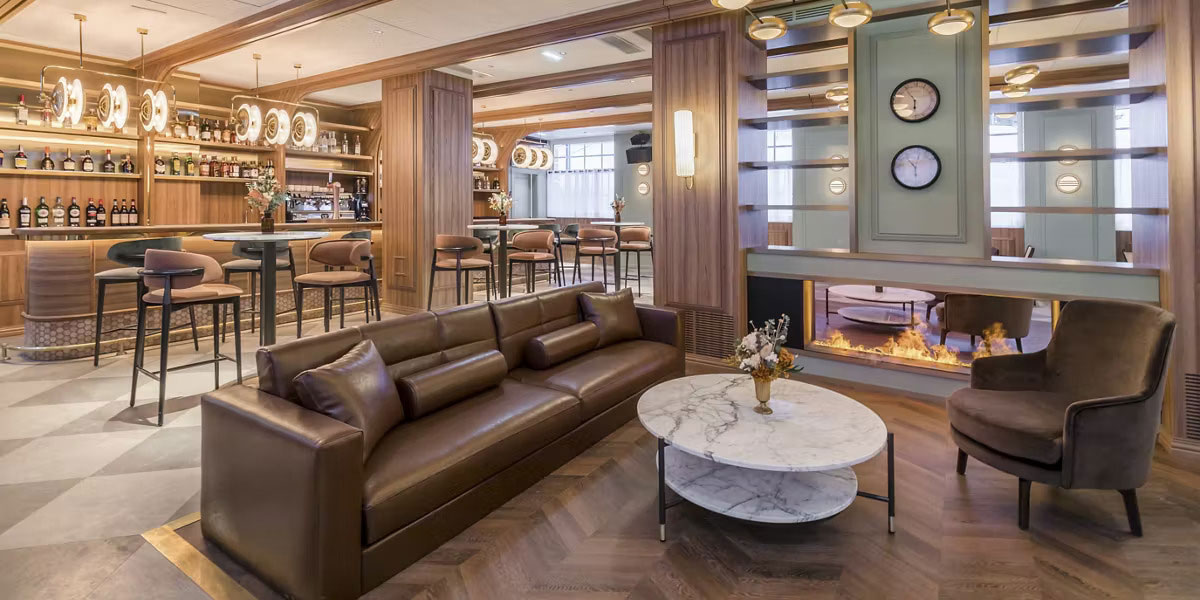
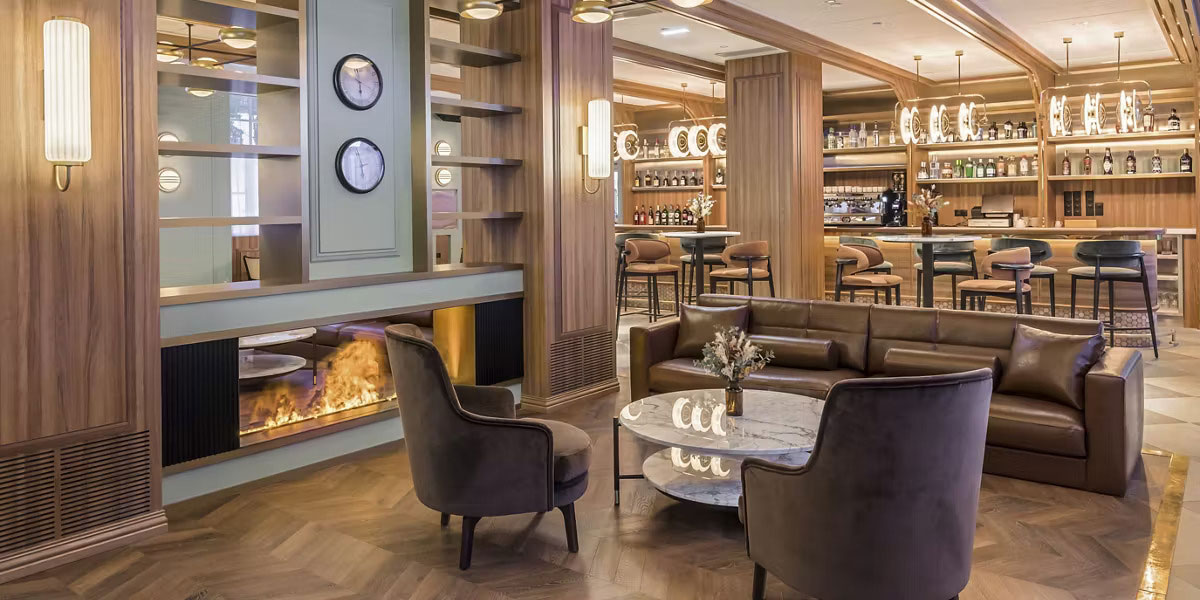
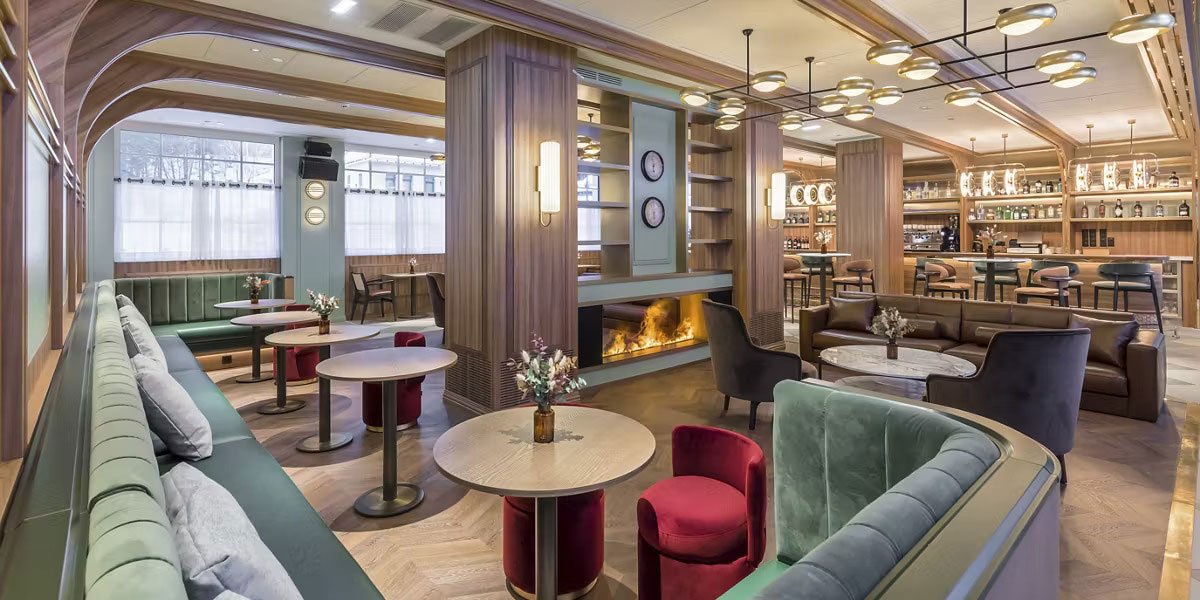
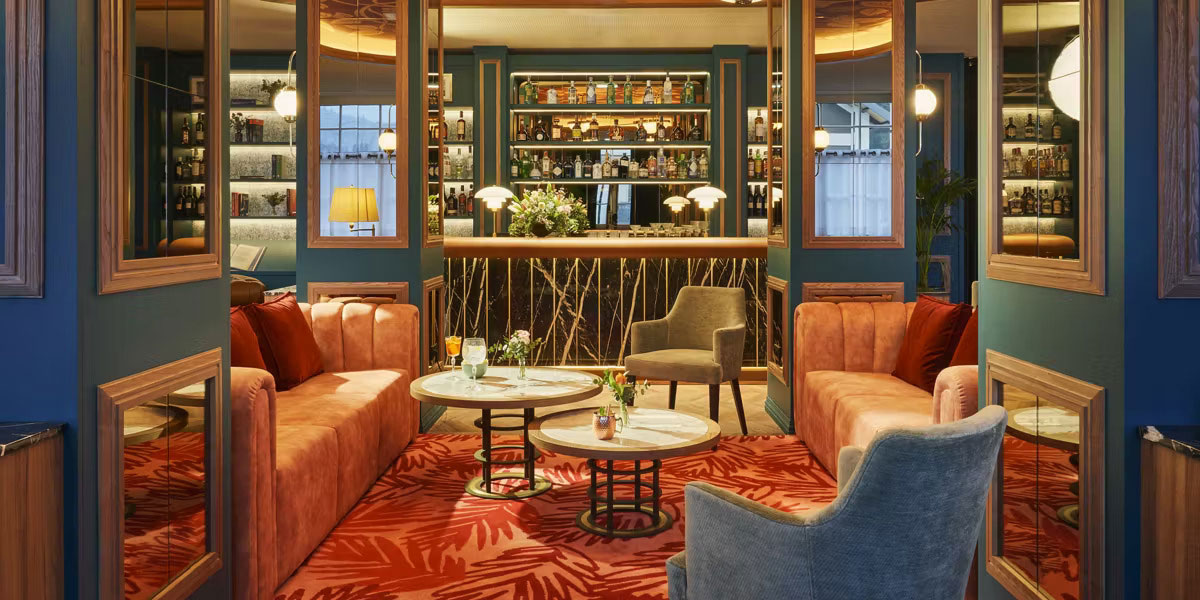
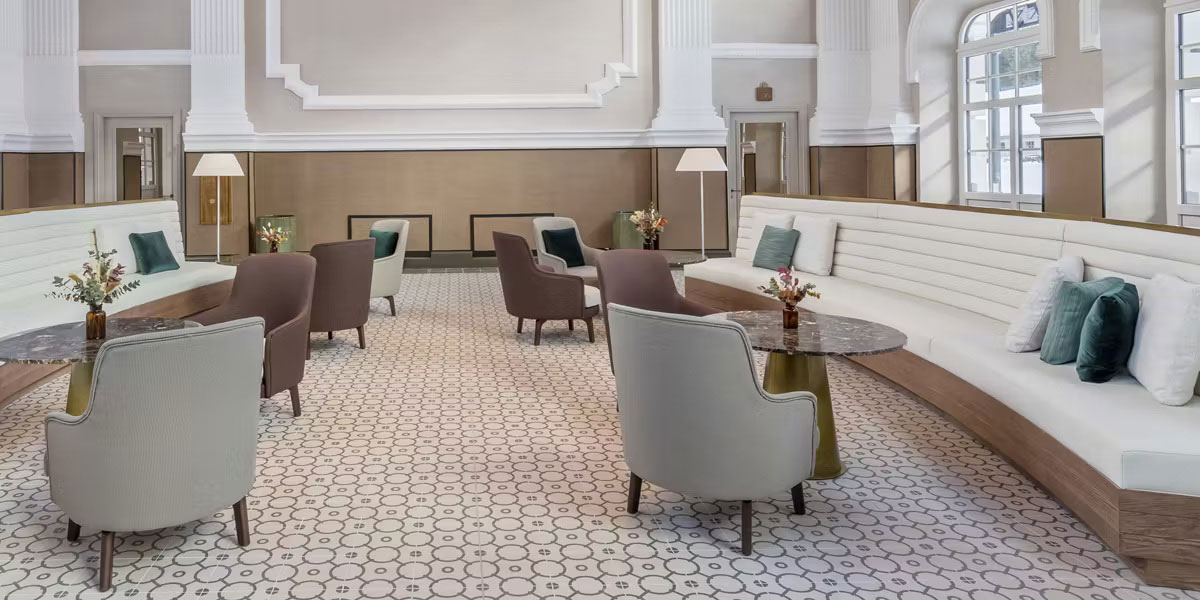
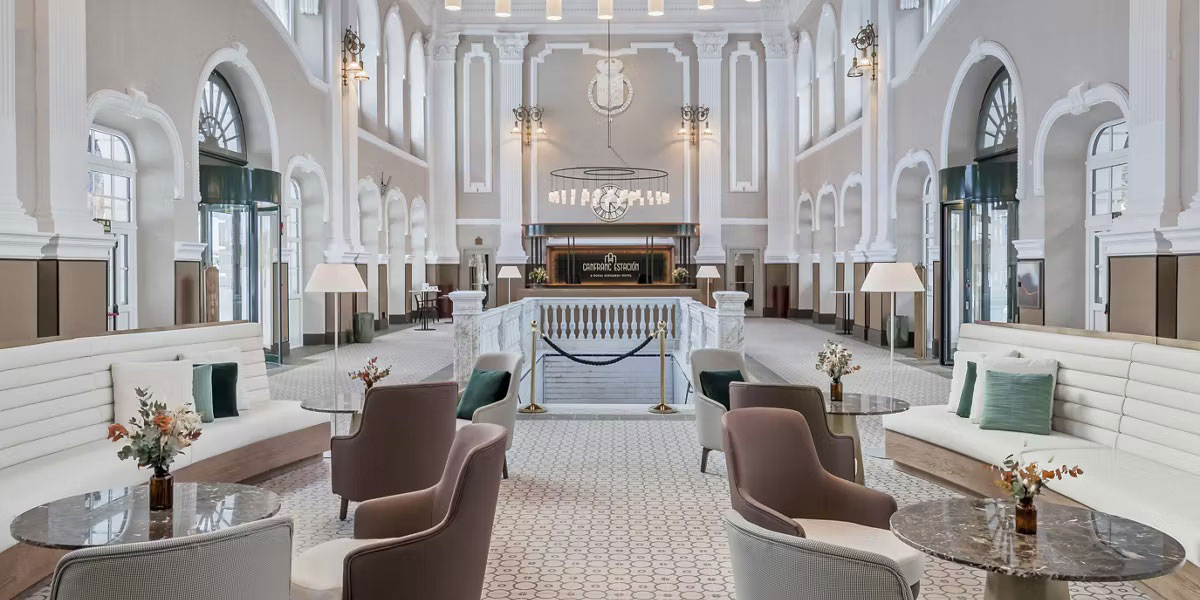
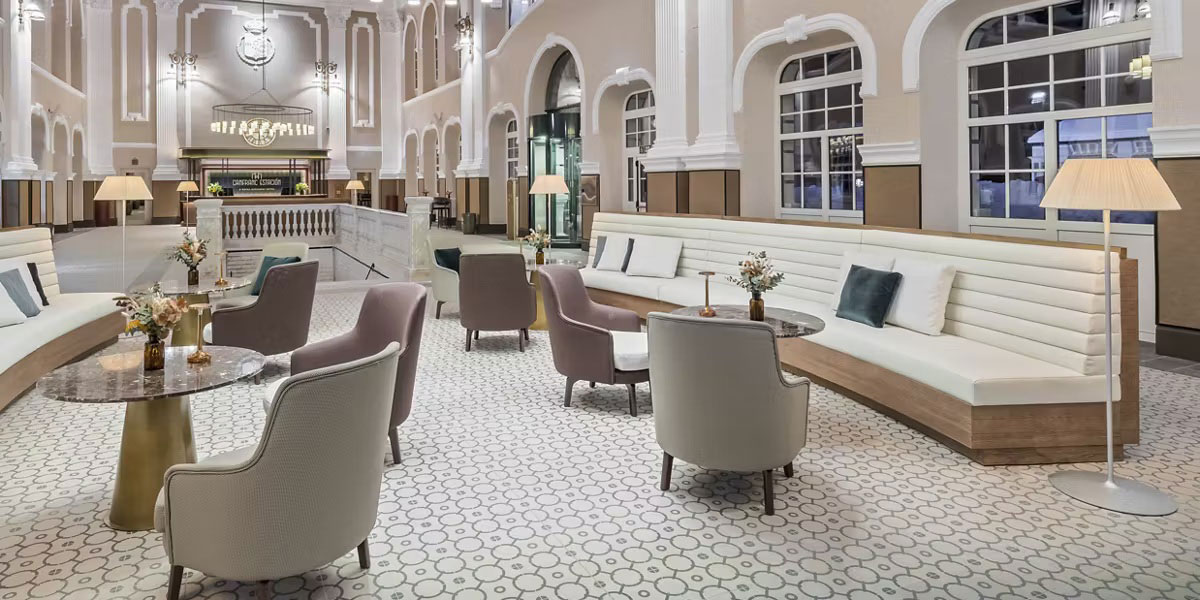
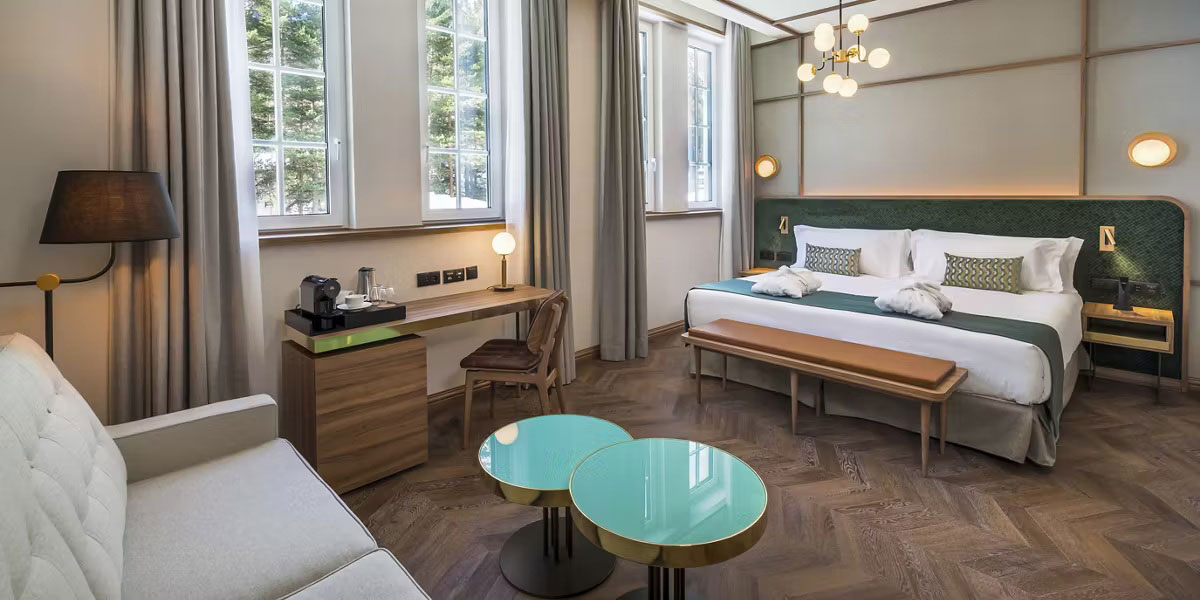
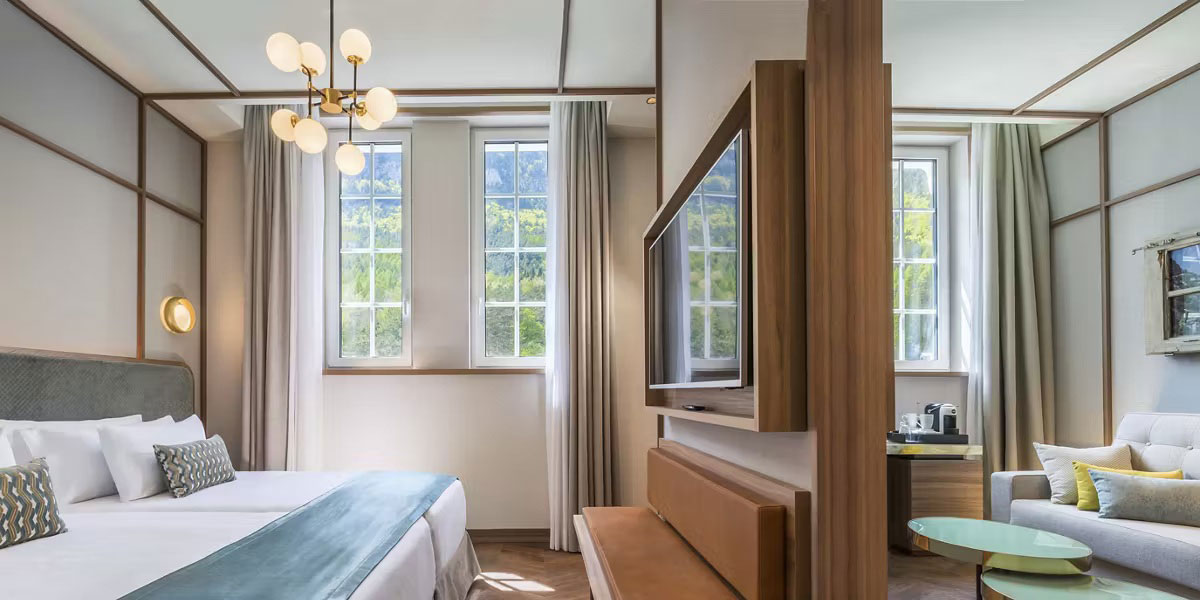
The task of transforming the interiors was entrusted to the interior design studio ILMIODESIGN. The design drew inspiration from the grand luxury trains of the 1920s and the building’s own history. The restoration work scrupulously respected the original architecture—featuring its striking façades, prominent dome, and expansive windows—whilst the interiors combined premium materials such as wood, brass, and velvet with a colour palette evoking the golden age of rail travel. Furthermore, the restoration project was honoured with the Re Think Hotel award for the best hotel renovation in Spain. Today, the Canfranc Estación hotel preserves its historic roots, albeit adapted to meet the standards of a luxury 5-star hotel.
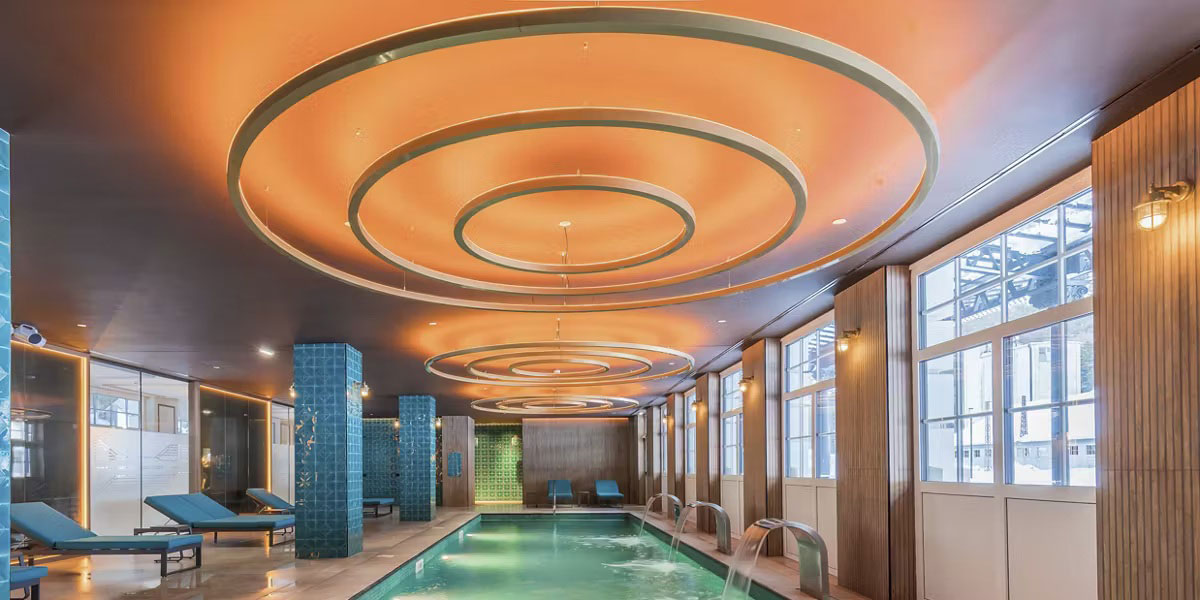
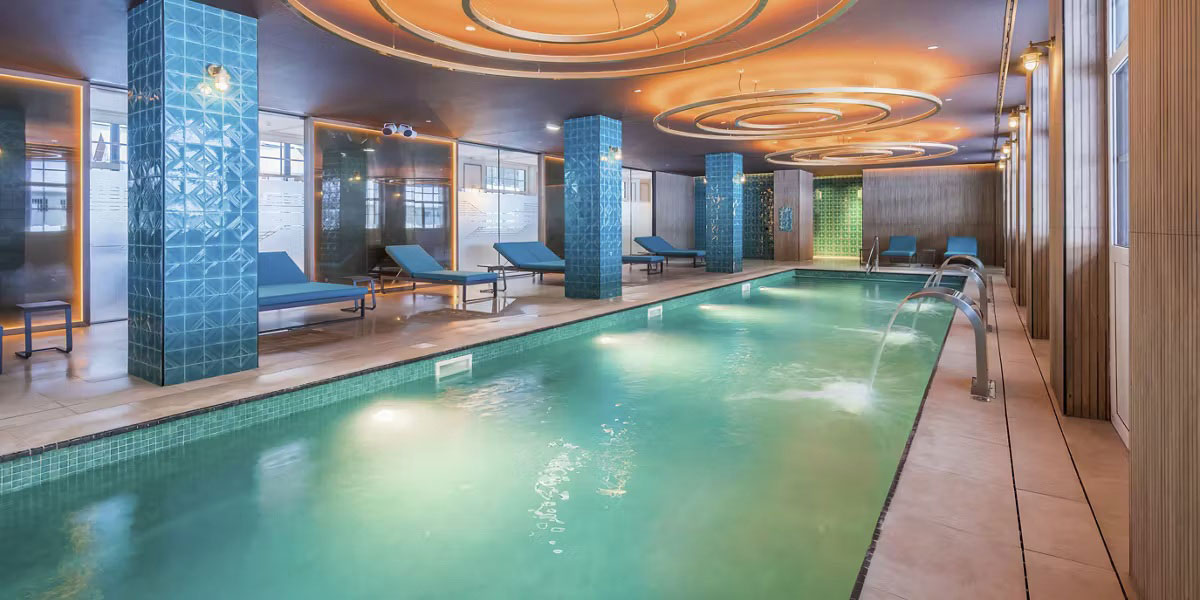
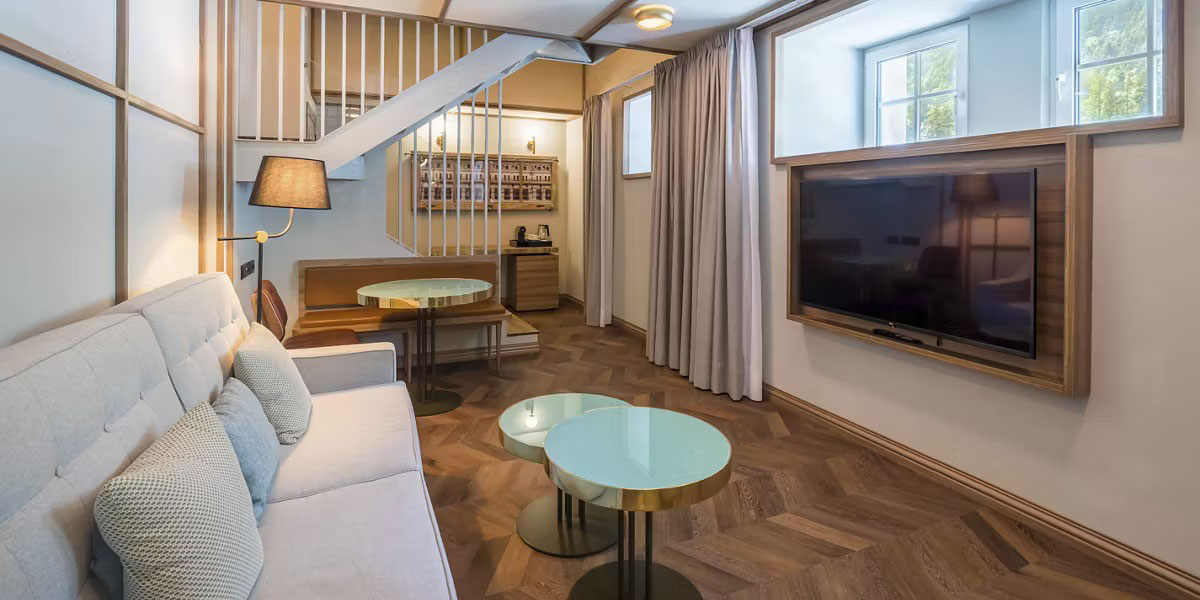
It features 104 rooms and suites designed in a contemporary classic style with Art Deco touches, all offering views of the mountains or the old railway tracks. Hotel highlights include a wellness area—complete with a heated pool, gym, and treatment zone—and an impressive library that doubles as a cocktail bar. Gastronomy is another cornerstone of the project. The hotel houses three restaurants: Canfranc Express, which holds a Michelin star and a Repsol Guide “Sol” award; here, Chef Eduardo Salanova and Dining Room Director Ana Acín reinterpret Aragonese culinary traditions using avant-garde techniques. Meanwhile, 1928—uniquely situated in a restored historic train carriage—pays homage to the station’s inaugural banquet with a menu featuring French cuisine and locally sourced ingredients. Finally, El Internacional offers a more casual dining experience with classic and international dishes.
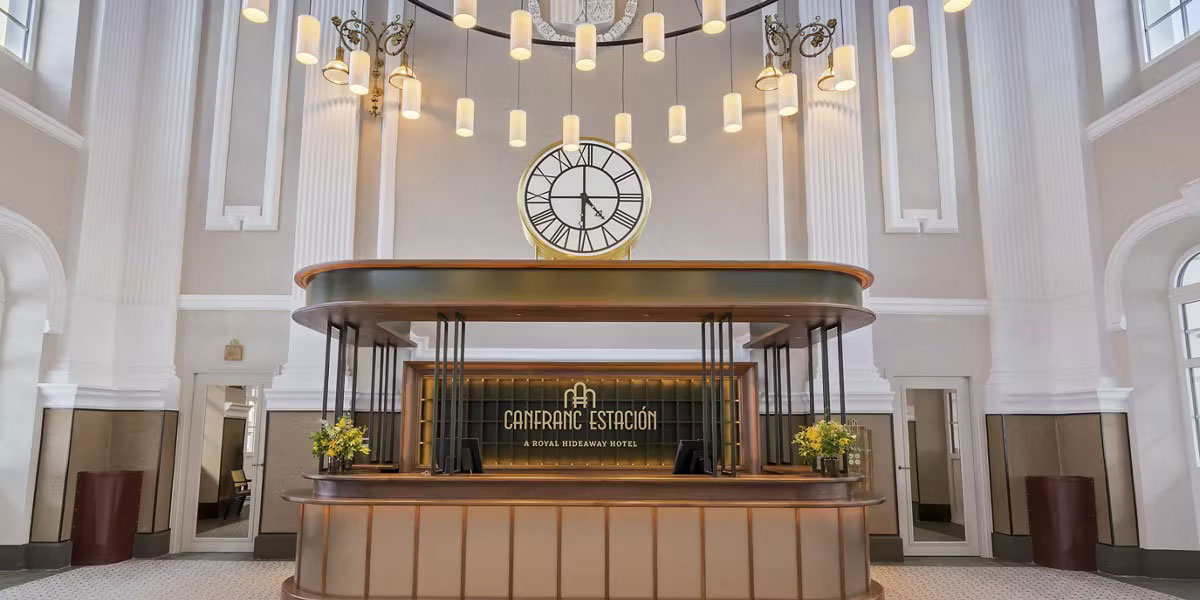
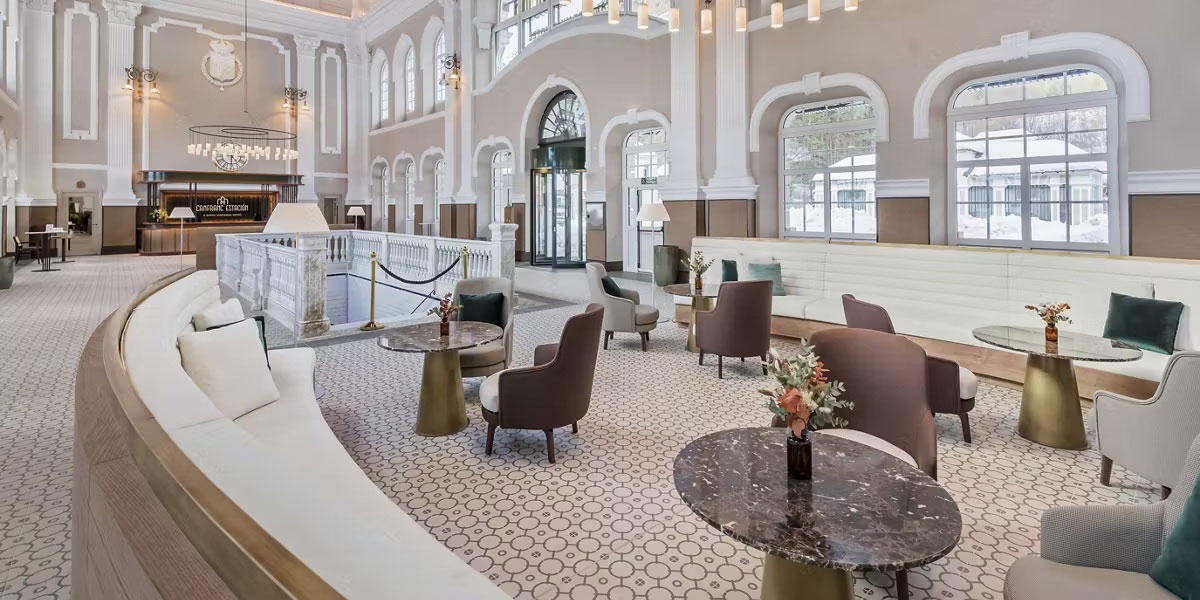
In 2024, the Michelin Guide recognized Canfranc Estación with a “Key” for its unique qualities as a hotel. A year later, in 2025, the hotel received its second Michelin Key, becoming the only hotel in Spain to move up a category in that edition. Its manager, Alain Lago, celebrated the honour, noting that it established the hotel as “one of the world’s most exceptional properties, combining character, personality, charm, unique architecture, and a truly unforgettable experience.”
Canfranc Mayor Fernando Sánchez—the driving force behind the building’s restoration—asserted that the property “is and will remain public” (despite its operation as a hotel) as a heritage asset that transcends private use. Canfranc Estación—whose opening was hailed by the Financial Times as “one of the best openings in the world“—is now a destination in its own right, a place where contemporary luxury blends seamlessly with railway history and industrial architecture. In short, it offers a journey back to the 1920s, yet with all the comforts of the present day.
Sources: Barceló Hotel Group, Wikipedia, NAN Arquitectura, Guía Michelin, Cadena SER, Diario del Alto Aragón.
Images: Canfranc Estación Hotel.