
In the field of nuclear fusion—a process that mimics the reactions occurring inside the Sun—an extraordinarily promising fuel is being explored: helium-3. Unlike others—such as those used in nuclear fission—helium-3 would produce energy in a much cleaner way and without radioactive waste.
Helium-3 is a light, stable and non-radioactive isotope of ordinary helium. Whilst the atomic structure of the latter combines two protons, two neutrons and two electrons, that of helium-3 is different: it contains two protons and a single neutron. This seemingly minor difference nevertheless gives it unique behaviour in fusion reactions. For example, one of its advantages is its high energy density. In other words, a huge amount of energy is generated from small quantities of the gas. This makes it an extraordinarily efficient fuel.
However, the main problem researchers face is that there are hardly any deposits of helium-3 on our planet. This is because the Earth’s magnetic field repels the solar wind, which carries particles of this isotope. The Moon, on the other hand, lacking a protective magnetic field, has been directly exposed to the solar wind for billions of years. As a result, helium-3 accumulates on its surface, trapped in abundance within the regolith grains.
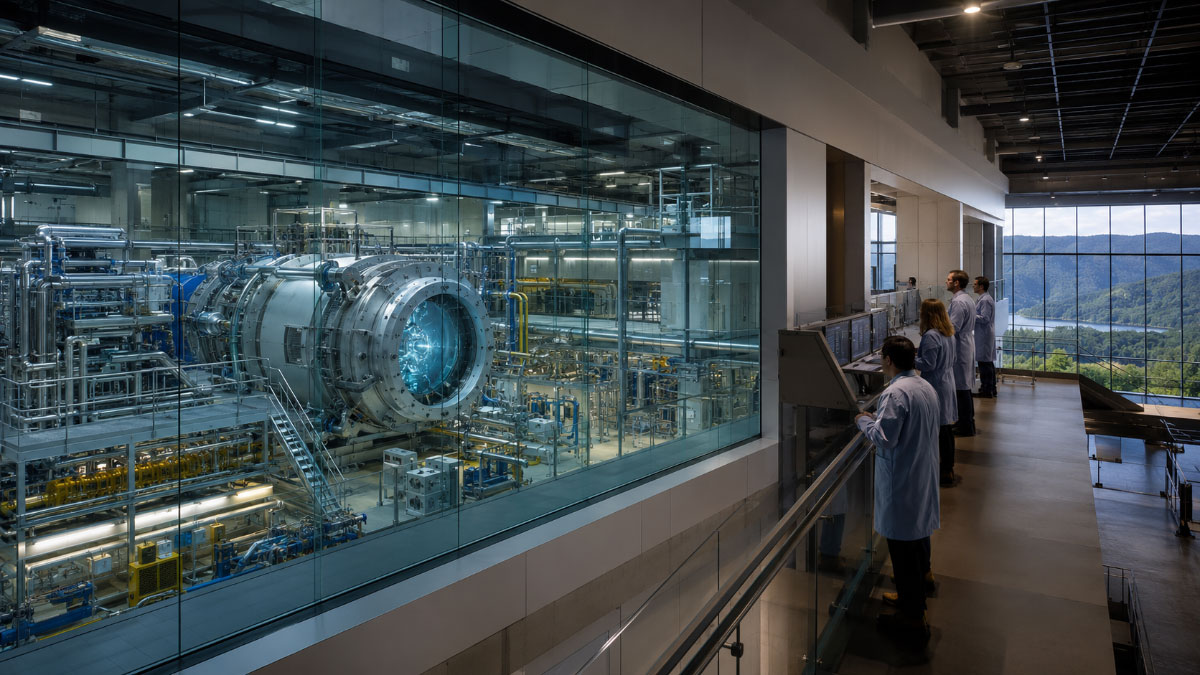
Despite this obstacle, many scientists and space agencies are investigating methods for extracting helium-3 and ways of using it as fuel in fusion. Given its abundance on the Moon, some are considering the possibility of transporting heavy machinery to the Moon to process its soil, extract helium-3 and bring it back to Earth to produce energy through fusion.
In any case, until these technological—and economic—barriers are overcome, helium-3 cannot become a viable source of energy, however clean and sustainable it may be. Will we see developments in the field of lunar mining over the coming decades? No one knows. After all, helium-3 lies buried in the Moon’s grey dust, a quarter of a million kilometres away.
By Carlos Rodríguez, specialist in Hydraulics and Water Attractions in the Architecture Department at Amusement Logic