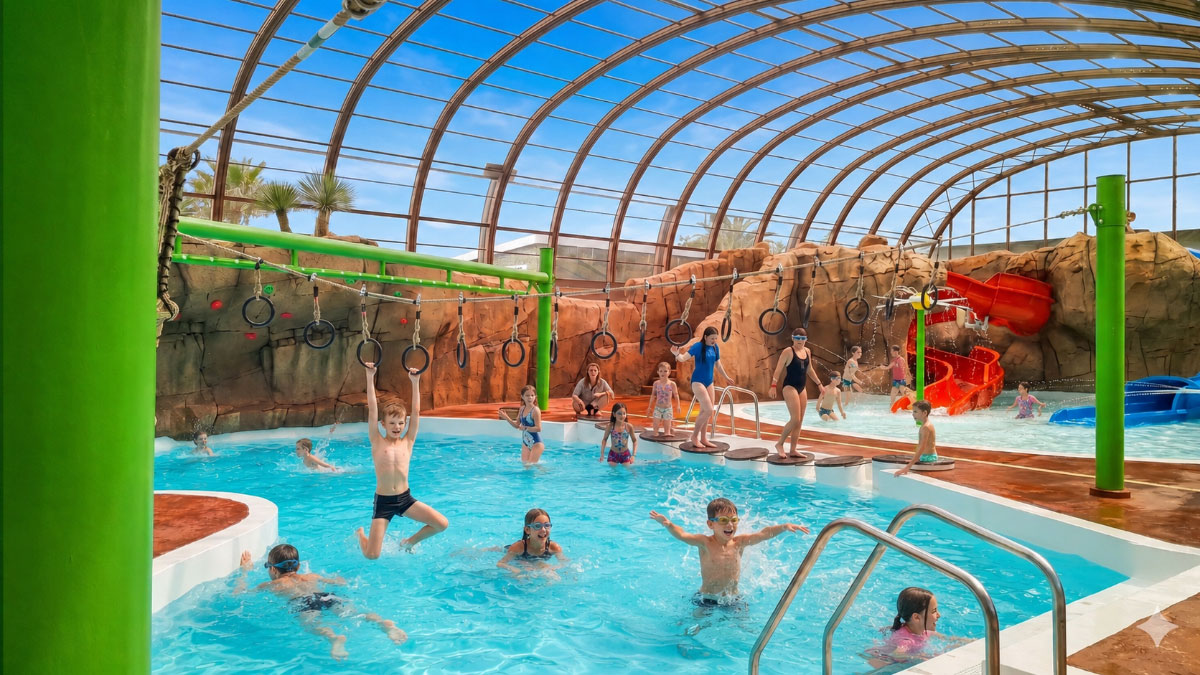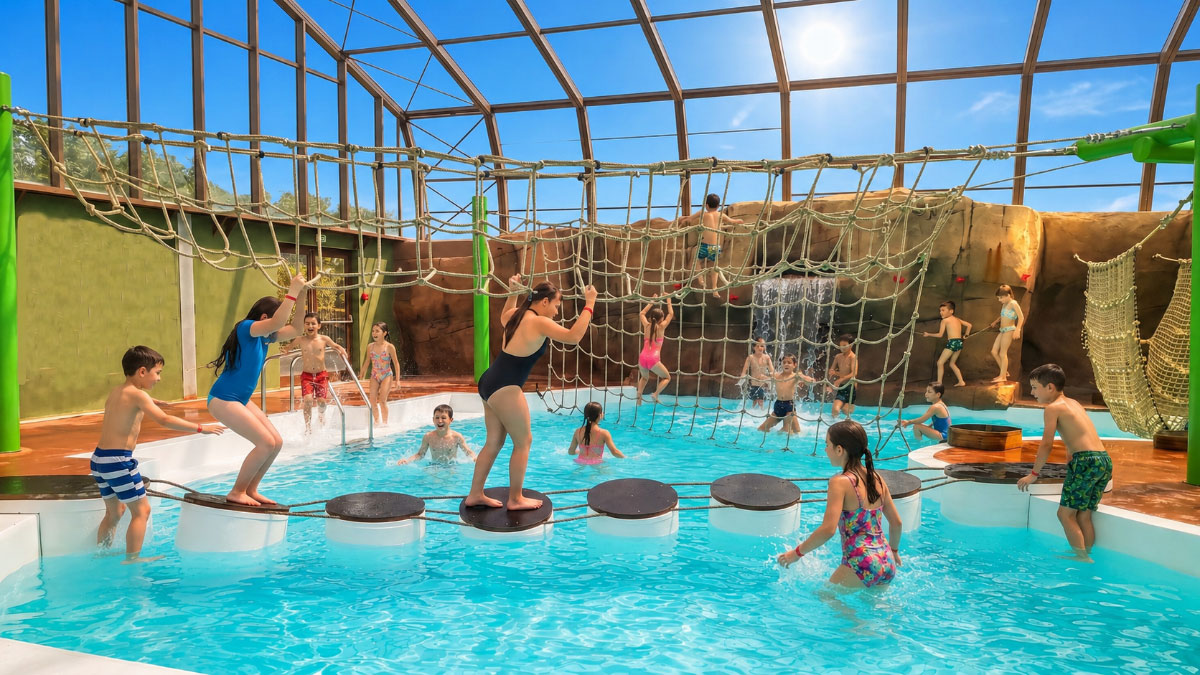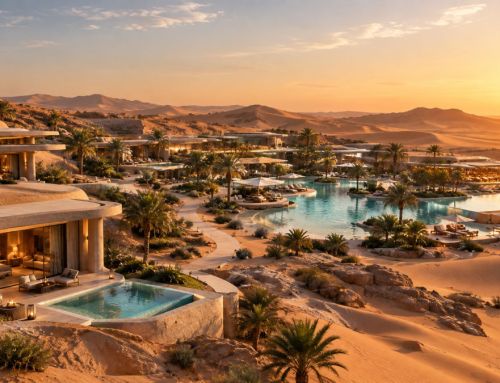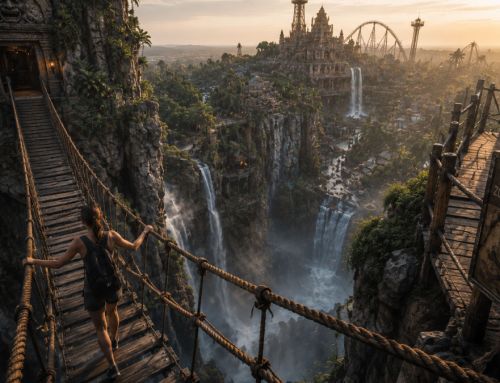

During three decades of professional experience in the design and construction of leisure and tourism spaces, the Amusement Logic team has learned that successful parks are not necessarily those that invest the most in the height of their rides or the speed they reach. On the contrary, parks that anticipate and better understand the public’s desires tend to be the most prosperous. In this regard, and with an eye on the 2026-2030 horizon, three trends will determine the chances of a water park or theme park becoming a benchmark in the sector. Let’s take a look at them.
Visitors seek nature, not just excitement.
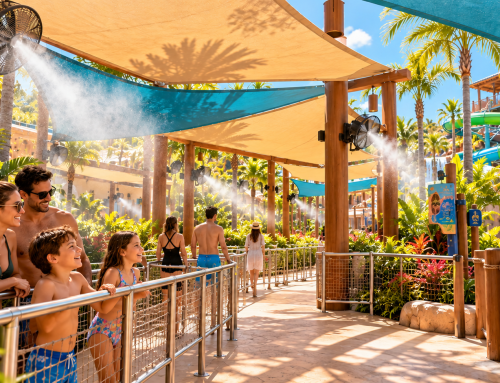
The first trend we foresee is biophilia. This trend consists of integrating vegetation, water, and natural light as an active part of the design from the very first sketch. The parks of the near future will be places where the boundary between attractions and the landscape easily blurs.
Shaded areas will be calculated to reduce visitor heat fatigue and, consequently, energy consumption. Pedestrian paths will be curved to avoid cutting down existing trees. Wave pools and lazy rivers will be integrated with terraced slopes that mimic natural formations.
In arid or tropical climates, this abundance of green spaces will not be a mere aesthetic luxury, but a functional necessity so that people want to and can spend more time in the park. After all, a visitor who feels comfortable with their surroundings spends more time and money there. Biophilia, when properly implemented, is not just decorative ecology. It’s practical economy.
Energy and water efficiency
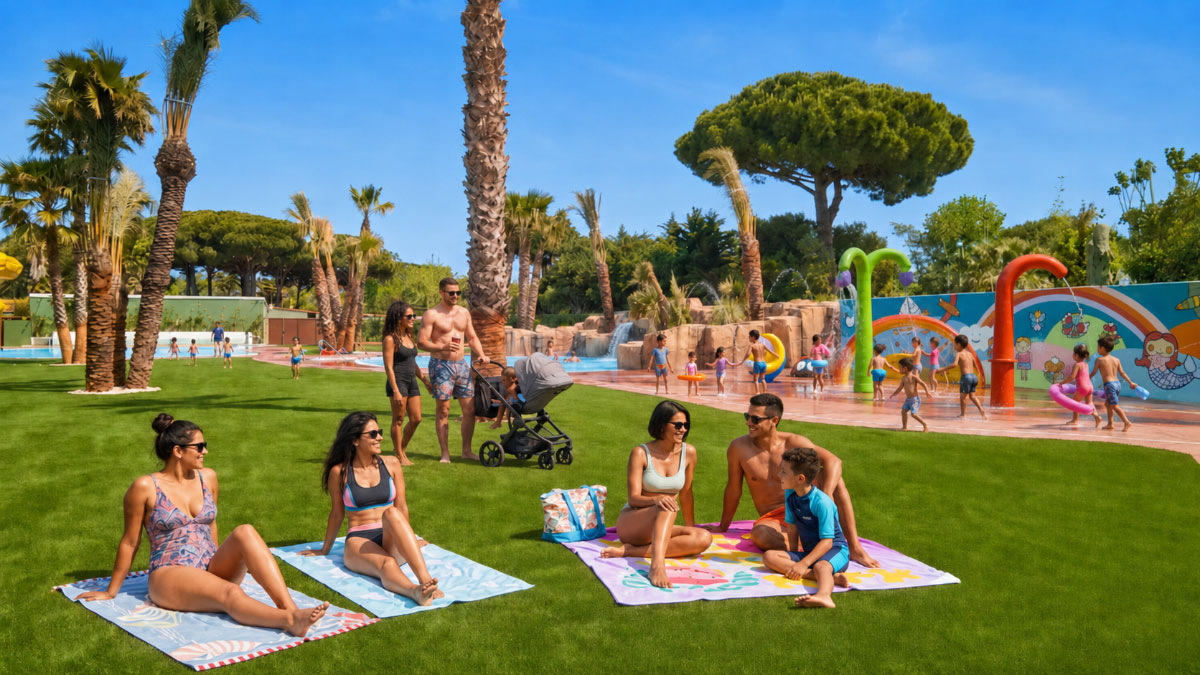
The second trend directly affects water parks, but also leisure and tourism attractions in general. The model of water management and energy use based on indiscriminate and unconcerned consumption is over. In the second half of this decade, water and energy efficiency will be as important a design criterion as structural safety.
We are talking about energy-saving systems and adapting energy demand to actual usage. We’re talking about sustainable and environmentally friendly energy sources. We’re also referring to water treatment and recirculation systems that lose less than 5% to evaporation and splashing. To recycling systems; to water slides designed with profiles that minimize water runoff; to sensors that adjust the flow rate in real time according to visitor numbers. And, above all, we’re talking about parks that explain to their visitors how much energy and water they save each day—because the public is asking this question more and more.
But efficiency doesn’t mean skimping on fun. It means designing attractions that use just enough water to generate the same excitement with fewer resources. In water-stressed regions, this capability will be the difference between obtaining an operating license or remaining on paper.
The visit as a progressive adventure
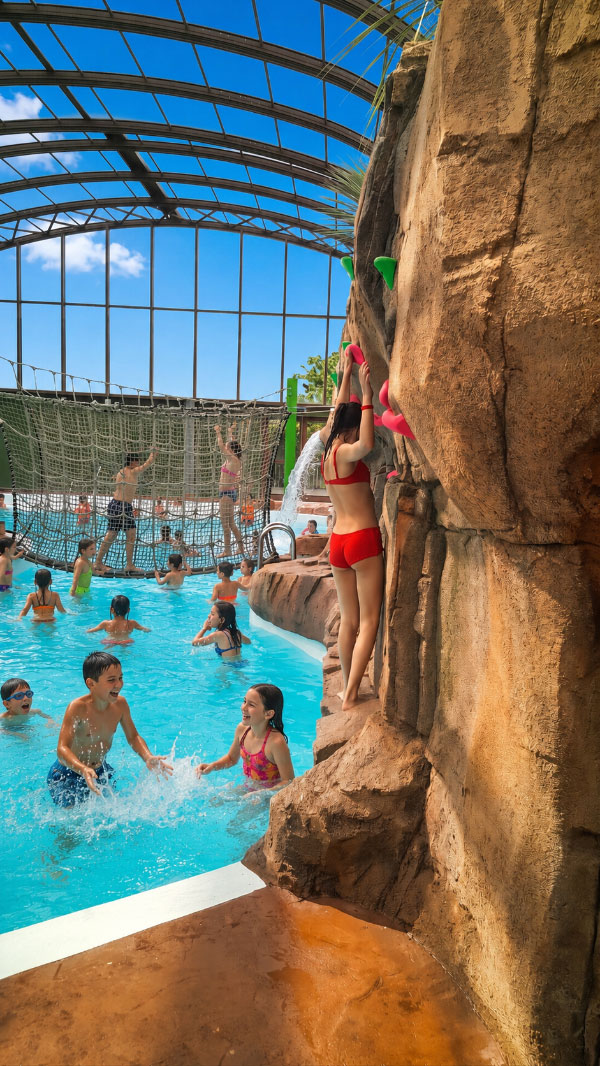
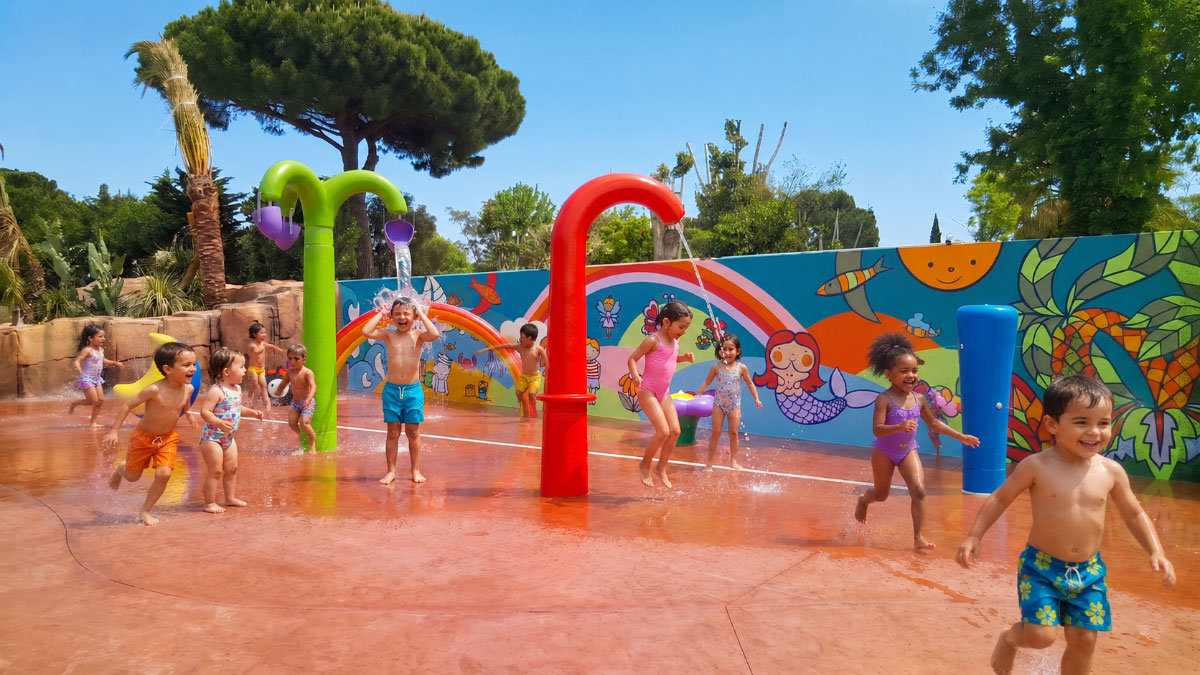
Let’s call the third trend “gamification.” When visitors or tourists arrive at a water park, amusement park, or theme park, they typically queue up, ride an attraction after waiting, and perhaps go on it again. However, in the 2026-2030 model we’re considering here, that same visitor will use a dedicated park app and/or wear an RFID (Radio Frequency Identification) wristband.
Thanks to the app and/or the RFID wristband, for example, each attraction visitors complete will add points to their profile. Upon accumulating ten points, they’ll level up. Reaching a certain rank will grant them priority access to a fast-track line. Daily missions—for example, “go down three water slides before 2 p.m.”—will offer small rewards: an ice cream, a discount at the gift shop, a free photo, and so on.
The idea is to transform a park visit into a rhythmic experience with objectives and rewards. But these rewards don’t have to be expensive for the park operator. Priority access, a reserved seat at a show, or public recognition on an entrance screen cost very little and generate enormous visitor satisfaction. The result of this playful layer of the experience is measurable: visitors spend more time inside, try attractions they would otherwise ignore, share their achievements on social media—which translates into free marketing—and, above all, want to repeat the experience and return to beat their own record.
Perhaps less obviously, gamification also allows for the distribution of visitor flow. The system would award more points for less popular attractions, thus reducing congestion. Furthermore, it would collect behavioural data to help adjust opening hours, staffing levels, and food and beverage offerings.
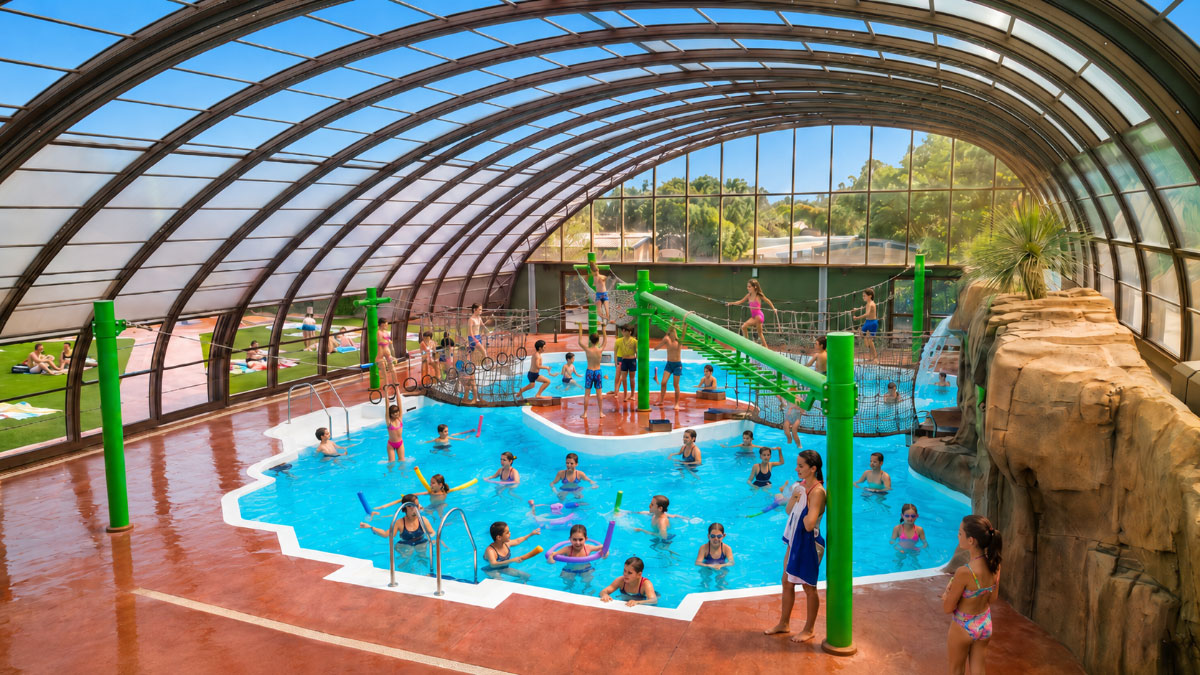
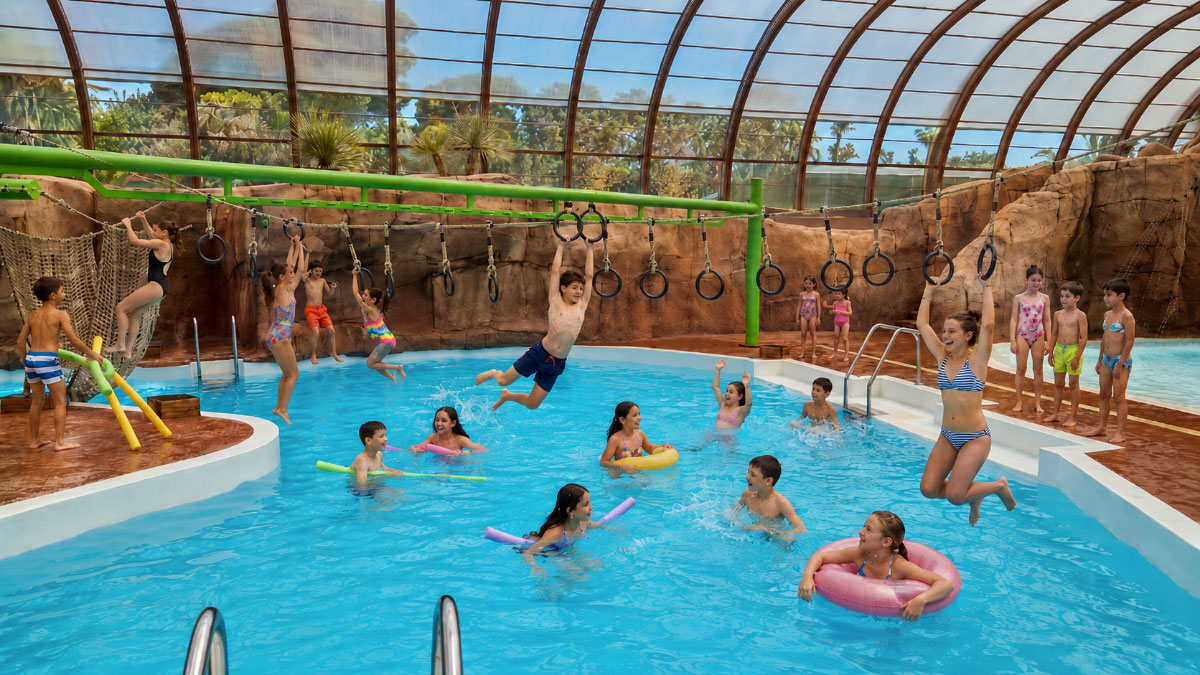
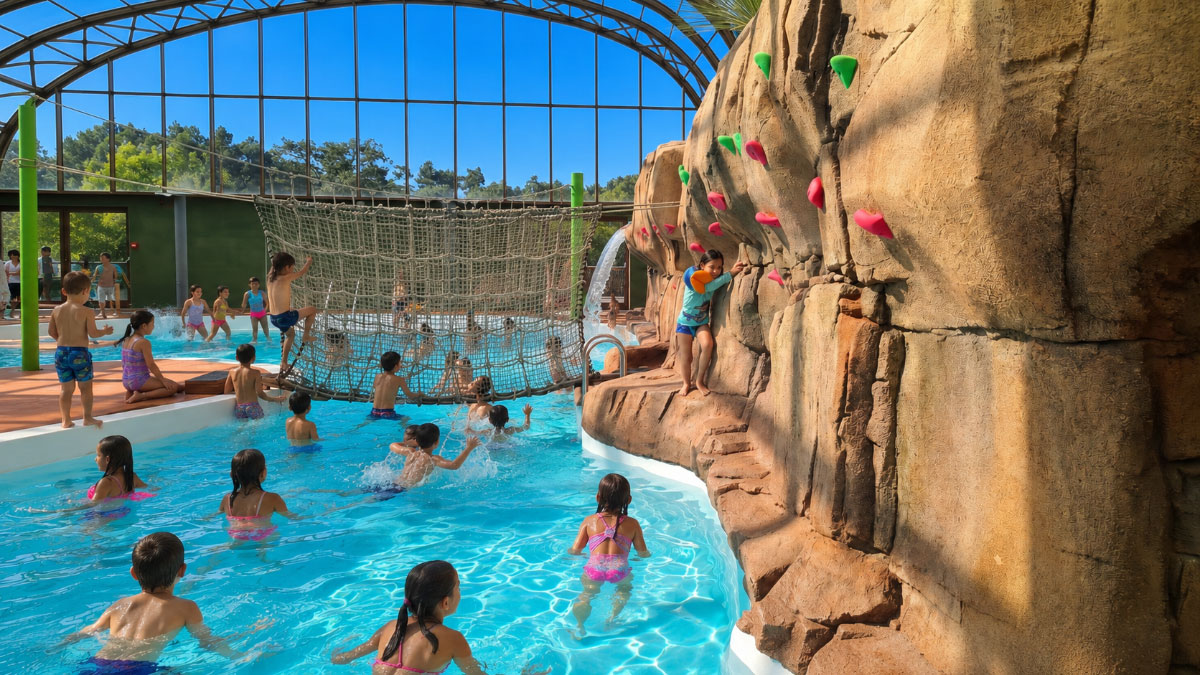
These three trends work together.
These three lines of action are not mutually exclusive. A biophilic park, with integrated planting and natural shade, is the perfect setting for a gamified experience, making visitors feel like active participants. On the other hand, water efficiency frees up economic resources for reinvestment in the same sensor and wristband technology, or for any other need.