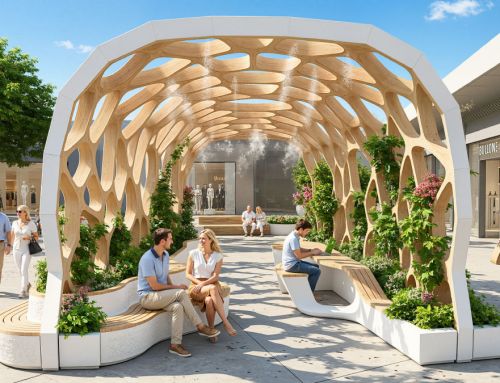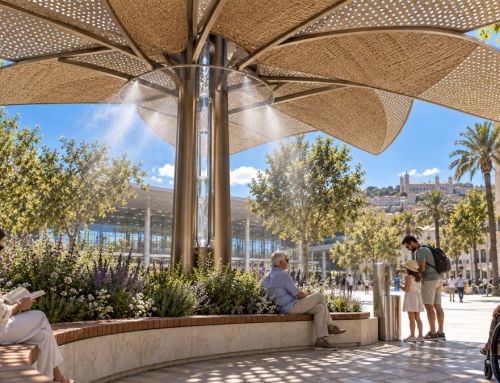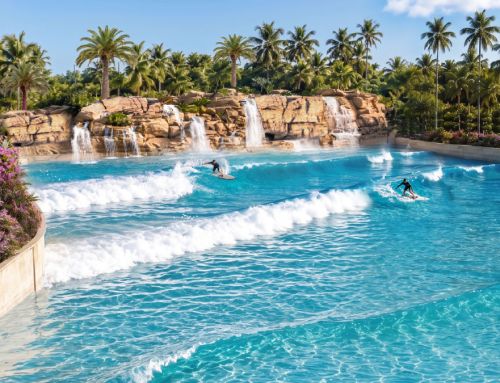

When a tourist, camper or traveller enjoys an attraction at a water park, campsite, or a hotel or resort, they rarely give a thought to what lies behind it. Whether it is a spectacular swimming pool, a waterfall, water slides or any other type of facility, although it may appear to operate naturally and effortlessly, somewhere hidden away there is a complex mechanical heart that brings it to life. Indeed, one of the challenges in designing these leisure and tourism projects is to make that technology invisible.
The intensive technical planning involved in developing tourist complexes such as those mentioned—which usually takes weeks—culminates in an engineering project whose success is measured in part by this ability to conceal the technology. For example, any kind of pipework—take, for instance, that of the water filtration system—must remain invisible to preserve the ‘belief’ of the tourist, camper or traveller.
To ensure this sense of realism – that is, that the bather, for example, believes the water falling on them comes from a real waterfall – the use of artificial rocks is one of the techniques employed. So, decorative features and rockeries cease to be mere ornaments and become technical sets that house the hydraulic systems. At the same time, as they operate out of sight, these systems do not disrupt the visitor’s complete immersion in the experience.
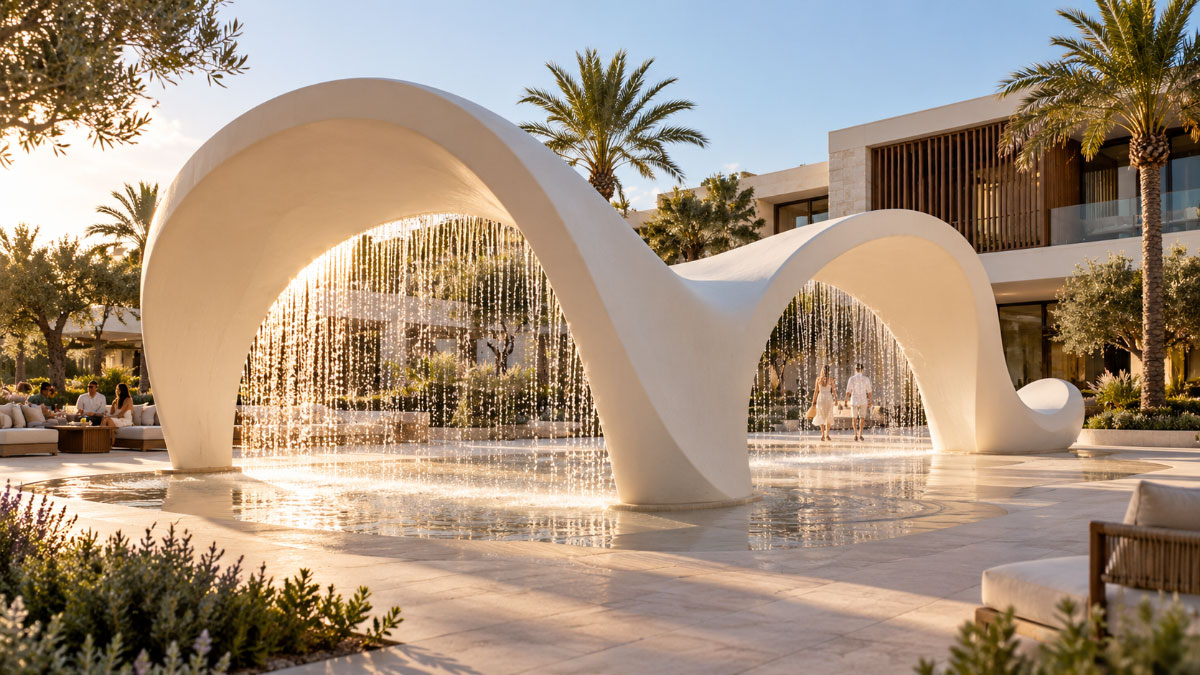
An example of this approach is an urban attraction developed by Amusement Logic’s Design Department: Urban Wave. This consists of aquatic street furniture—structures similar to fountains—which house the hydraulic circuit within their own structure.
Integrating engineering, architecture and theming with the free and unhindered excitement of the experience — supported, of course, by methodologies such as BIM (Building Information Modelling) — ensures that infrastructure is not only efficient but truly extraordinary.
If you’d like to find out more about Urban Wave, we invite you to read the design article that introduces it:
By Raúl Soriano, senior modeller in the Architecture Department at Amusement Logic