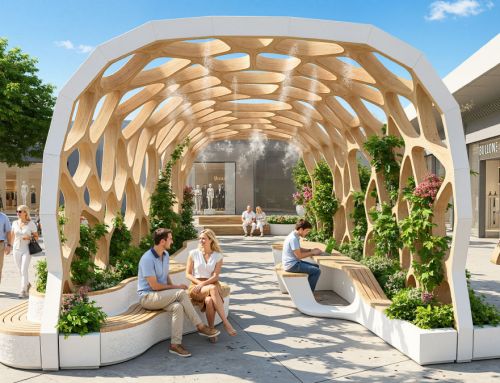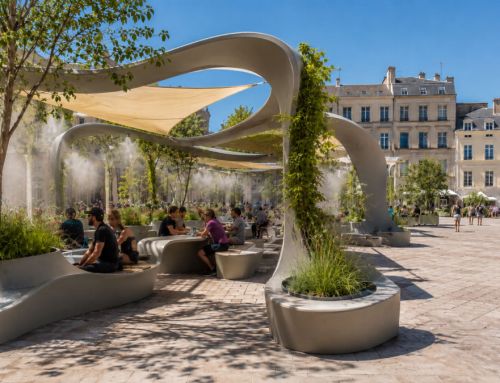

We present a new design for urban furniture, a proposal by Amusement Logic. For those urban spaces where natural shade is insufficient or where it is not feasible to plant large trees, the Design Department proposes a solution. And it takes its inspiration precisely from large trees. This is Rain Tree.
A tree casts dense shade beneath its canopy, regulates humidity and provides at least partial protection from the rain. Rain Tree does the same. At its upper section, large overlapping surfaces evoke the leaves of a plant canopy and cast broad, changing shadows. These surfaces adopt different inclinations, designed to channel rainwater towards the centre of the structure.
During rainfall, the collected water flows through gutters towards the central trunk and, through it, into a tank located beneath the paving or integrated into the base. The water in this circuit can even be made visible, through transparent pipes and trunks, turning the technical process into a small urban spectacle.
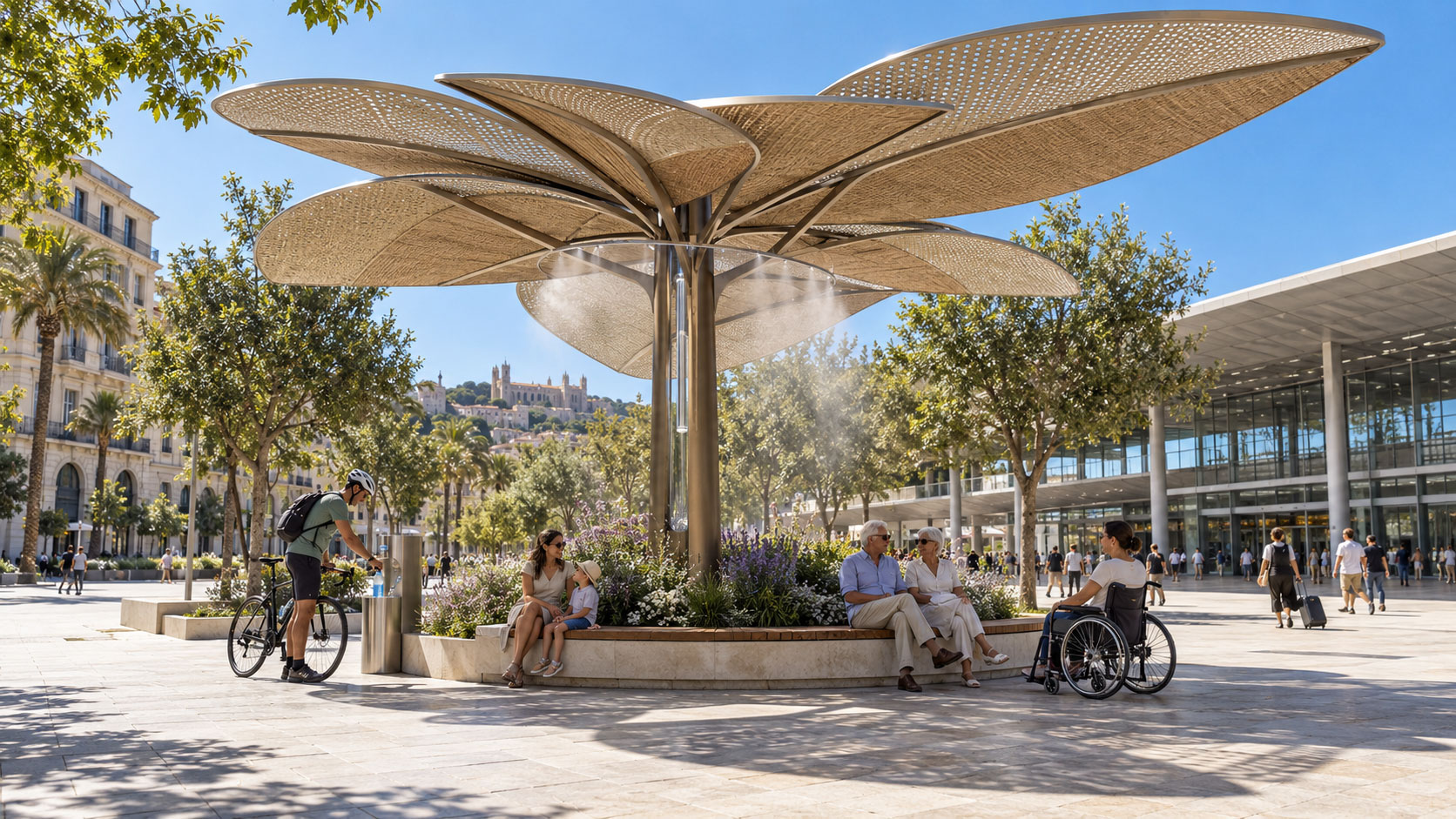
The stored water can then be used for irrigating vegetation, cleaning the area or supplying a mist system. When the climate requires it, a ring of micro-diffusers generates a fine mist beneath the canopy that cools the environment without wetting the benches or circulation areas. Temperature, humidity and presence sensors serve to automatically regulate its operation and limit energy consumption.
The base of Rain Tree incorporates a continuous bench that invites people to rest, talk or wait in the shade, and integrates indirect lighting, charging points or drinking fountains. At the centre, around the trunk, a rain garden brings together species suited to the local climate, which receive part of the water and create a feeling of freshness.
The scale of Rain Tree —that is, the number of leaves and the diameter of the associated seating area— is adapted by design to the surface area of the intervention and to the expected intensity of use, whether in squares, parks, seafront promenades, commercial areas, entrances to stations, tourist complexes or large public facilities. At the same time, it can be installed as an independent single unit or several units can be grouped together into a network of climate shelters.
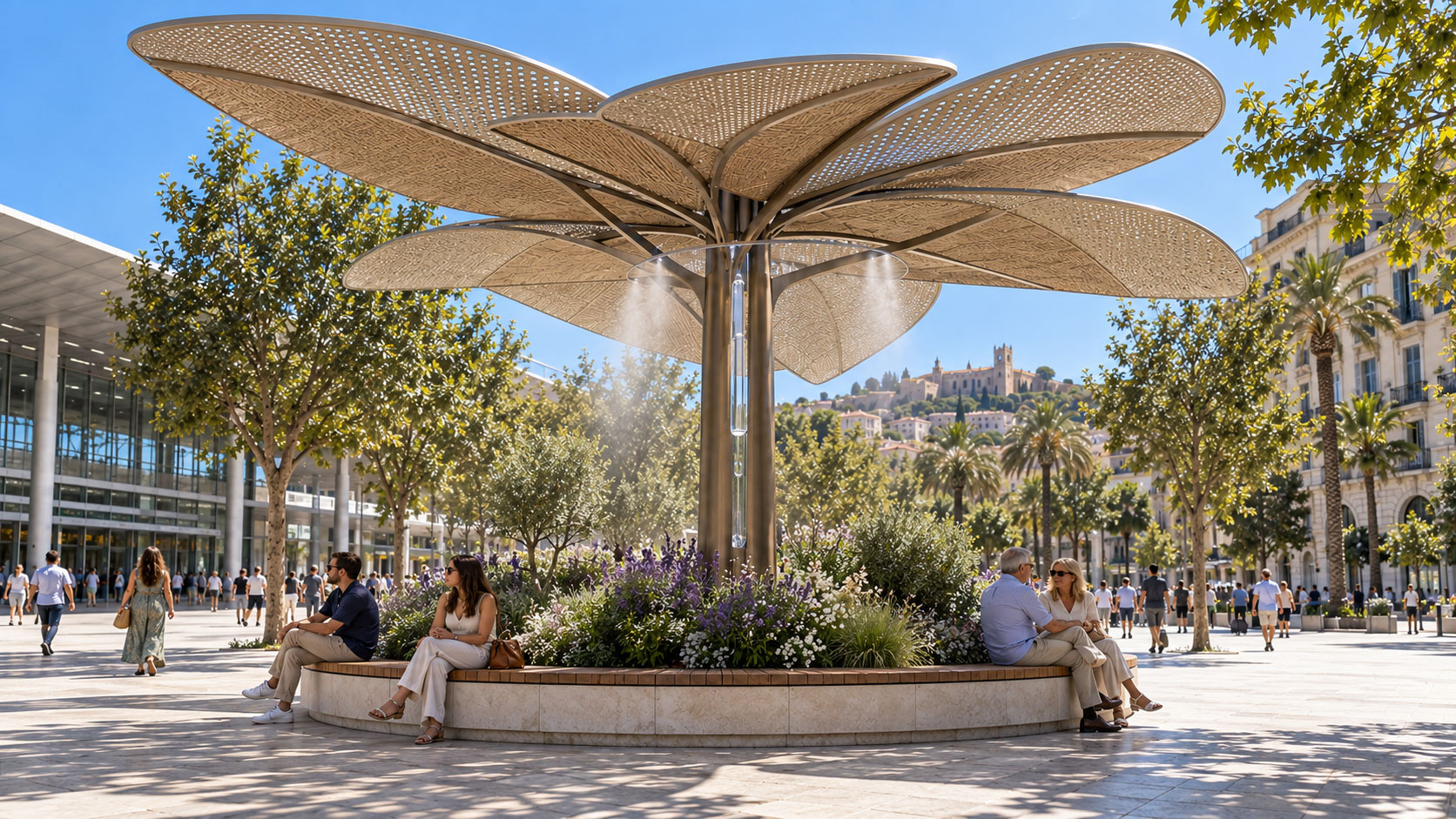
Rain Tree represents a different way of understanding urban furniture: instead of installing disconnected technical equipment, it integrates several functions into a single design element. Shade becomes a space for meeting, rain becomes a visible resource, vegetation becomes part of the water system, and technology becomes a discreet tool at the service of citizens.
By José María Reyes, designer in the Design Department of Amusement Logic