
When designing tourist attractions such as water parks or theme parks, it is necessary to incorporate, alongside criteria relating to safety, functionality and operational efficiency, new criteria that take into account recent changes in climate. Waiting areas sheltered from the sun, pleasant walkways and indoor spaces that maintain suitable environmental conditions have a direct impact on the experience of families and tourists visiting these attractions.
The orientation, layout and relationship between outdoor and indoor areas must therefore be tailored to the site’s climatic conditions. Sun exposure studies and thermal simulations enable us to anticipate where heat will accumulate, how shade will shift, and which areas of the water park or theme park will require greater protection during peak visiting hours.
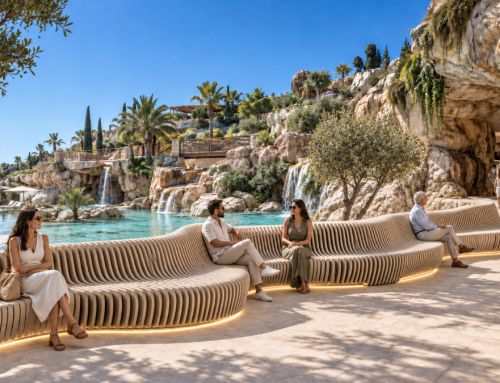
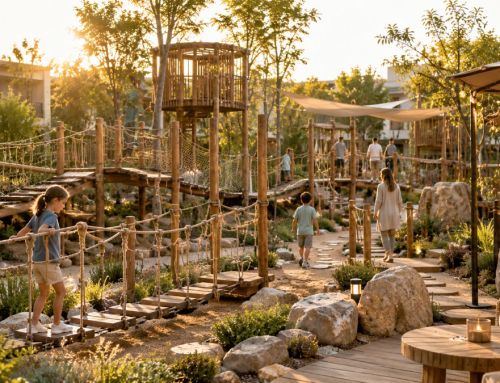
Outdoors, shading systems form part of the infrastructure. Pergolas, vegetation and canopies should provide sheltered routes between attractions, catering facilities and rest areas. Queues require special attention due to the length of time people spend there and the concentration of people. In water parks, this consideration extends to pool decks, steps and exit platforms. Finally, the choice of paving and surfaces must take into account how much they heat up in the sun, particularly where people walk barefoot.
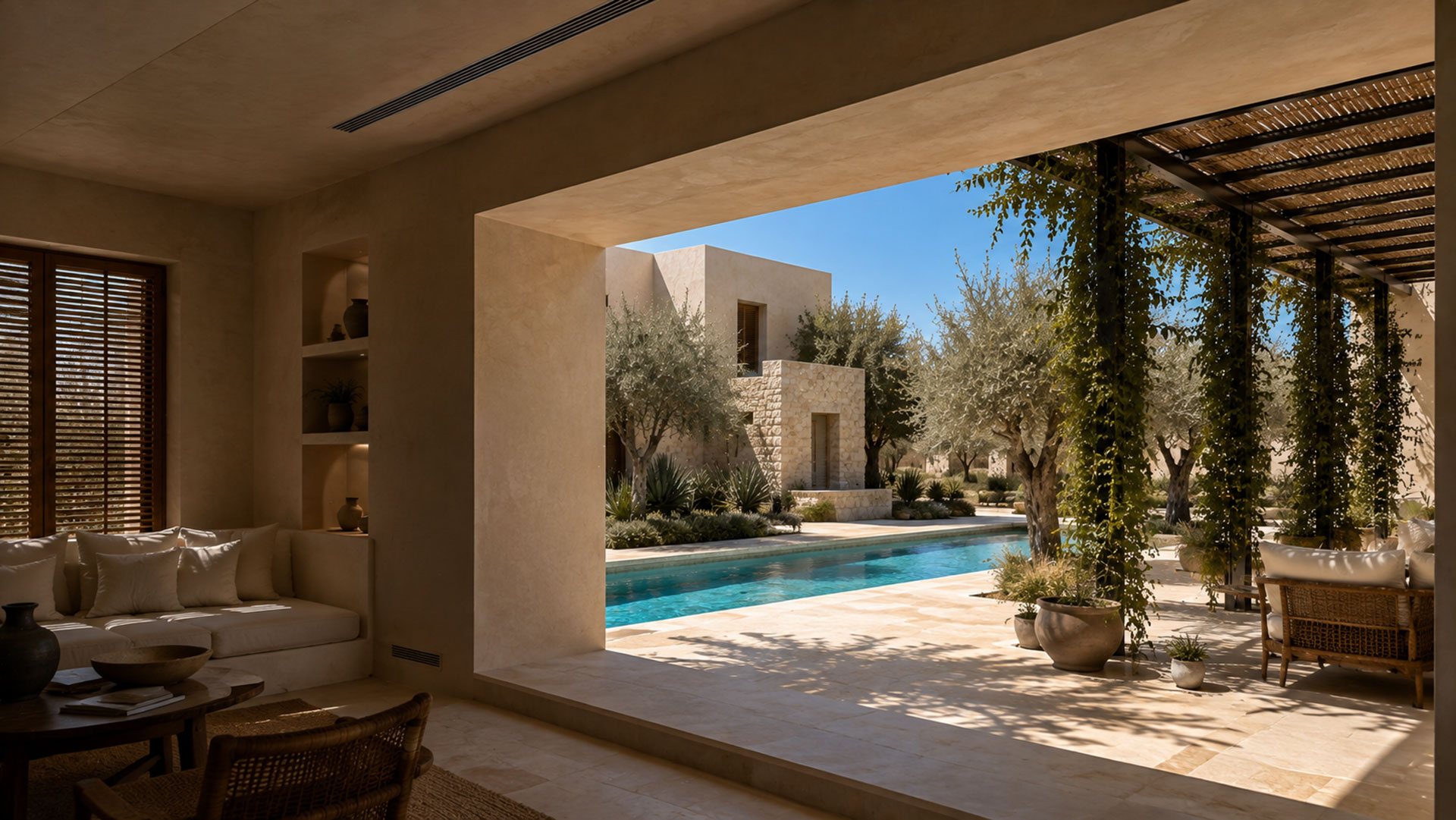
Indoor spaces, for their part, provide continuity to the experience during the busiest hours. Their location and capacity must allow for a balance between indoor and outdoor activities. External sun protection, insulation and control of air infiltration help to limit thermal loads. Entrances warrant specific analysis to reconcile high visitor flows with stable indoor conditions.
This planning is carried out in conjunction with the MEP (mechanical, electrical and plumbing) systems. The HVAC design must take into account peak occupancy, solar gains, equipment loads and future climate scenarios. When selecting equipment, it is necessary to verify its capacity and performance at high outdoor temperatures, as well as to provide for zone control and access for maintenance. Meteorological data enables these conditions to be assessed from the earliest stages.
In indoor aquatic centres, ventilation and dehumidification must be coordinated with water and air conditions to control humidity and condensation. The electrical design must assess the simultaneous demands of cooling, pumping and attractions. Water systems must take into account peak consumption, leak detection and efficient resource management.
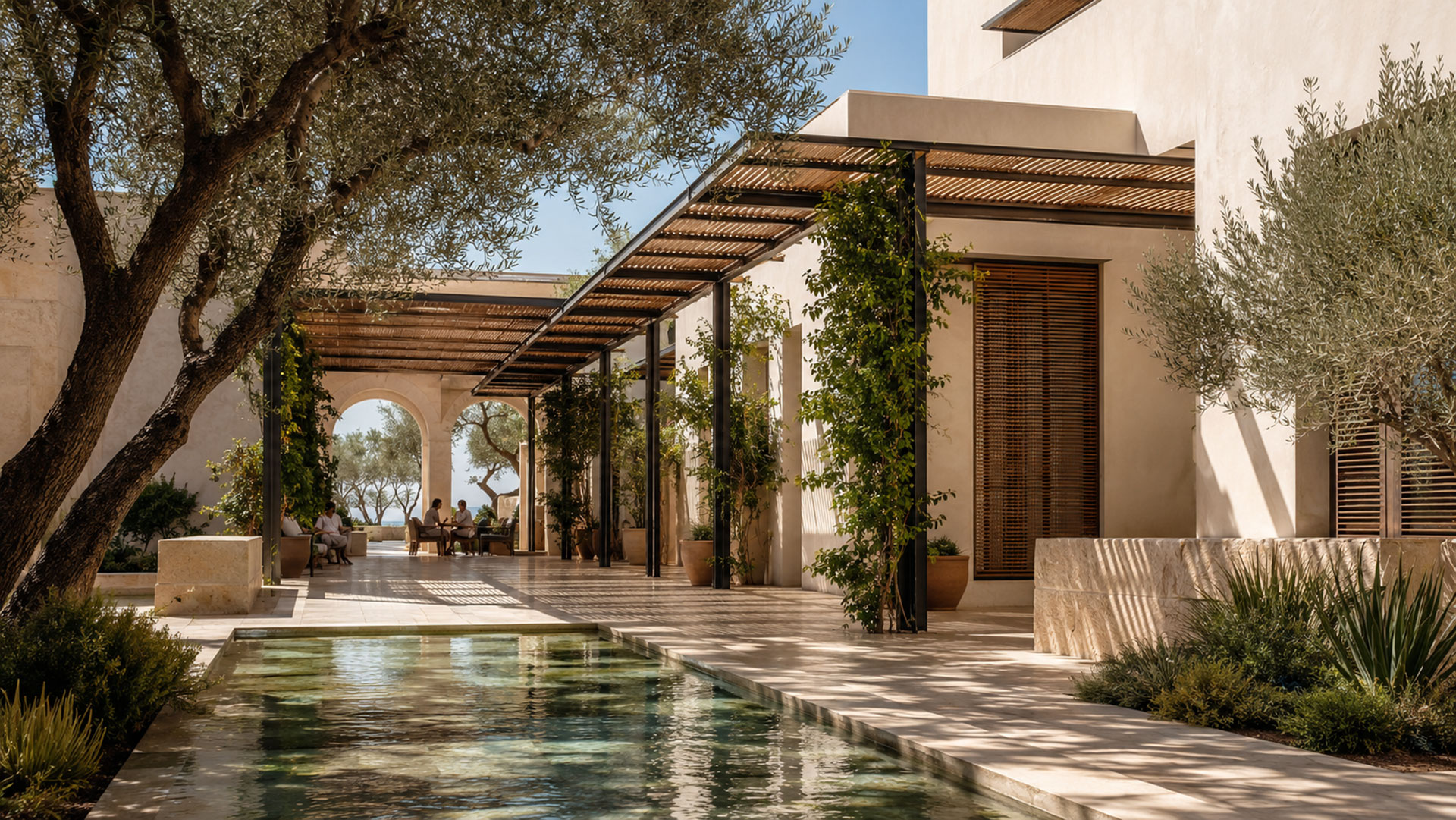
These lessons result in a shared design framework across architecture, landscaping, engineering and operations in water parks and theme parks. Incorporating them from the outset of a project ensures that comfort, service continuity and resource consumption form part of a single strategy.
By Francisco Lozano, MEP engineer in the Architecture Department at Amusement Logic