
Private islands in the Caribbean have become one of the main testing grounds for a new approach to tourism. These islands, traditionally associated with relaxation, idyllic landscapes, turquoise waters and a chance to disconnect, have evolved to accommodate dynamic models of leisure and entertainment. The development of water parks in locations such as Great Stirrup Cay, Norwegian Cruise Line’s private island in the Bahamas, is a clear example.
At these kinds of destinations, tourists find a carefully balanced combination of nature and high-intensity leisure activities. Large-scale water slides, water play areas, family-friendly spaces and adults-only zones, coexist alongside white sandy beaches and crystal-clear waters. All in all, it is a versatile experience that caters to a range of tourist profiles, from families with children, to couples seeking moments of tranquillity.
The model does not exhaust the essence of the island destination, but rather expands and enriches it. Tourists can alternate leisure activities with moments of relaxation by the sea, take part in water sports or enjoy the restaurants – all within walking distance and in complete comfort. In this way, they find a comprehensive and cohesive experience all in one place.
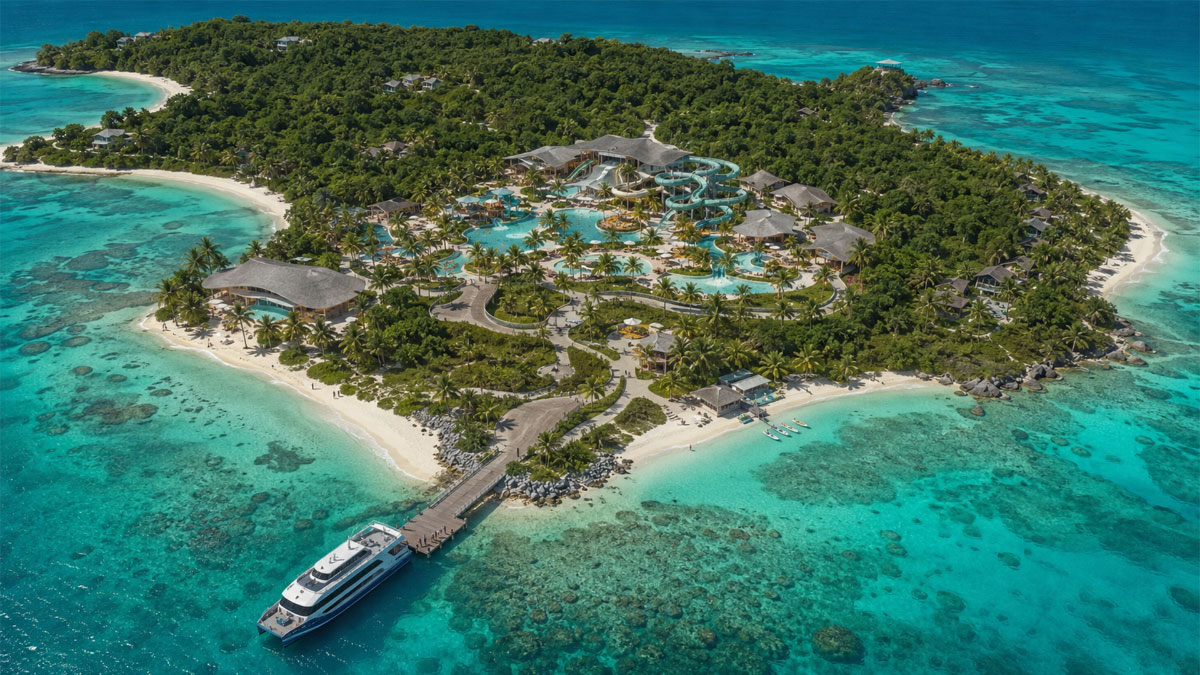
With these new destinations, cruise stopovers become days of enjoyment, with no other aim than to take part in a variety of leisure activities in a single location. In this context, a water park fits into a private island like a strategic cog around which all other activities revolve. With it, the value of a destination where layers of experience overlap, grows significantly, allowing tourists to enjoy them all without having to compromise on anything.
By Tianshu Liu, senior architect in the Architecture Department at Amusement Logic