
We’d like to introduce you to our next guest in our interview series. He is a professional who approaches leisure and tourism projects from a strategic perspective. Although he’s relatively new to the industry (2017), he knew from day two that this was where he would build the career of his life. And it’s all because of the excitement visitors experience at the destinations he creates. Especially the excitement of his wife and son, who are the ultimate judges of the projects he develops. By the way, he has already worked in more than 20 countries. Among them are Saudi Arabia, the United Arab Emirates, Canada, the United States… But you’d better see for yourselves. Read more here:
Amusement Logic: You’ve designed water parks, operated attractions, developed destinations, attracted investors, and now you lead a company that creates experiences. What do you actually tell your kids when they ask you what do you do, or when you’re at a dinner party, or what’s your job?
Travis Kline: I think about it this way: when somebody chooses to spend their time away from the office, away from work and away from home, what do they do with it? Time is probably the most valuable currency we have. So, when someone asks what I do, I tell them I create the places where families make the memories that eventually become the photographs sitting on the mantel or on someone’s desk at work. Those are the places and experiences I get to help create.
A.L.: You’ve actually worked behind the scenes in some incredible projects. What’s the one thing visitors would never imagine goes on before they enjoy the perfect day?
T.K.: I think people would be amazed by just how much goes into creating something that, as a guest, should feel completely effortless. Take a water park. You arrive, put on your swimsuit and have a great day. But behind that experience are hundreds of decisions and countless people with completely different specialties.
When you build an entertainment, leisure or tourism destination, you’re essentially building a small city. You have to think about circulation, health and safety, food and beverage, operations, staffing, restrooms, even how many toilets and urinals you need. You have to think about absolutely everything. The irony is that if we’ve done our jobs properly, the guest shouldn’t notice most of it. They should just have a great experience.
A.L.: And what is actually what makes people remember a place, say, 20 years later?
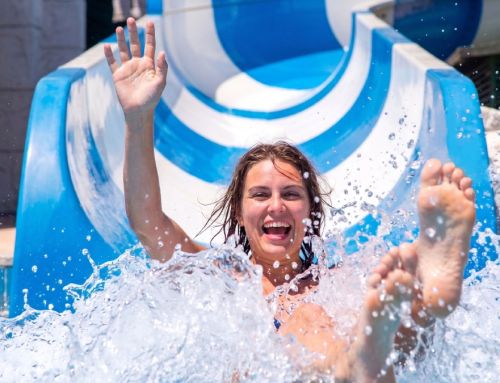
T.K.: It’s the feeling. It’s creating an emotion you don’t experience every day. My son is a huge fan of water parks. My wife, not so much. But every once in a while, we’ll be at a water park together and everyone is genuinely having fun, even my wife can’t hide the smile on her face. Those are the moments I look for.
I actually judge a lot of what I do by them. If my wife and son are both having a great time, I know we’ve probably nailed it. They’re my two toughest critics, so if I can win both of them over, I figure we’re doing something right.
A.L.: You’ve worked in the UAE, Saudi Arabia and the US. So, if each country were a different personality in the tourism industry, how would you describe them?
T.K.: I’ve now worked on projects in more than 20 countries, and every country has its own personality, its own unique qualities and its own challenges, or, as I prefer to call them, opportunities. I’d describe the United States as the older brother or sister of the amusement and leisure industry. It’s established, it’s experienced, and sometimes it thinks it knows everything.
Then you have the UAE, which has essentially created a land of superlatives: biggest, best, strongest, longest, fastest, you name it. That completely rewired people’s expectations. When you arrive at a major attraction in the UAE, you almost expect something record-breaking or world-class.
And then Saudi Arabia is like the ambitious younger sibling looking at all of that and saying, “I want to do that, but I want to do it even better.”
A.L.: And what you’re doing in Saudi is Al Ula, which is the opposite of a water park, right? It’s a completely different experience. How do you approach that?
T.K.: Regardless of whether I’m working on a water park, an attraction or an entire destination, I always think about the complete guest experience. The exciting part about working in such diverse places is identifying what makes each destination unique. Sometimes you’re creating something that wasn’t there before. Other times, your job is to reveal and positively amplify something extraordinary that is already there.
Look at Qiddiya, for example. I was there very early on, when you looked out and only saw desert. Just recently, I was able to return and experience what had been created. That’s an incredible feeling because you’re witnessing something almost entirely man-made that simply didn’t exist before.
Al Ula is completely different. You’re dealing with an extraordinary landscape and a UNESCO World Heritage Site. Your job isn’t necessarily to create the attraction; it’s to help people discover, understand and experience what’s already there. That’s what I love about places like Al Ula. You’re revealing rather than manufacturing the experience. And, as far as I’m concerned, Mother Nature wins every time.
A.L.: So, imagine you had an unlimited budget, but only one chance to create the most extraordinary visitor experience on Earth. Where would you build it?
T.K.: The first thing I’d look for is somewhere that simply couldn’t be replicated anywhere else in the world. Then I’d try to create an arrival experience where you almost couldn’t tell that humans had touched the place. Maybe the accommodation is built into a hillside or underground, something that allows you to experience the destination without damaging or competing with the natural environment.
Places like Cappadocia or Matera fascinate me for exactly that reason. Humans looked at what nature had already provided and figured out how to inhabit it rather than overpower it. For me, the ultimate experience wouldn’t be about spending an unlimited amount of money to build the biggest thing imaginable. It would be about using that investment to make something extraordinary feel almost untouched.
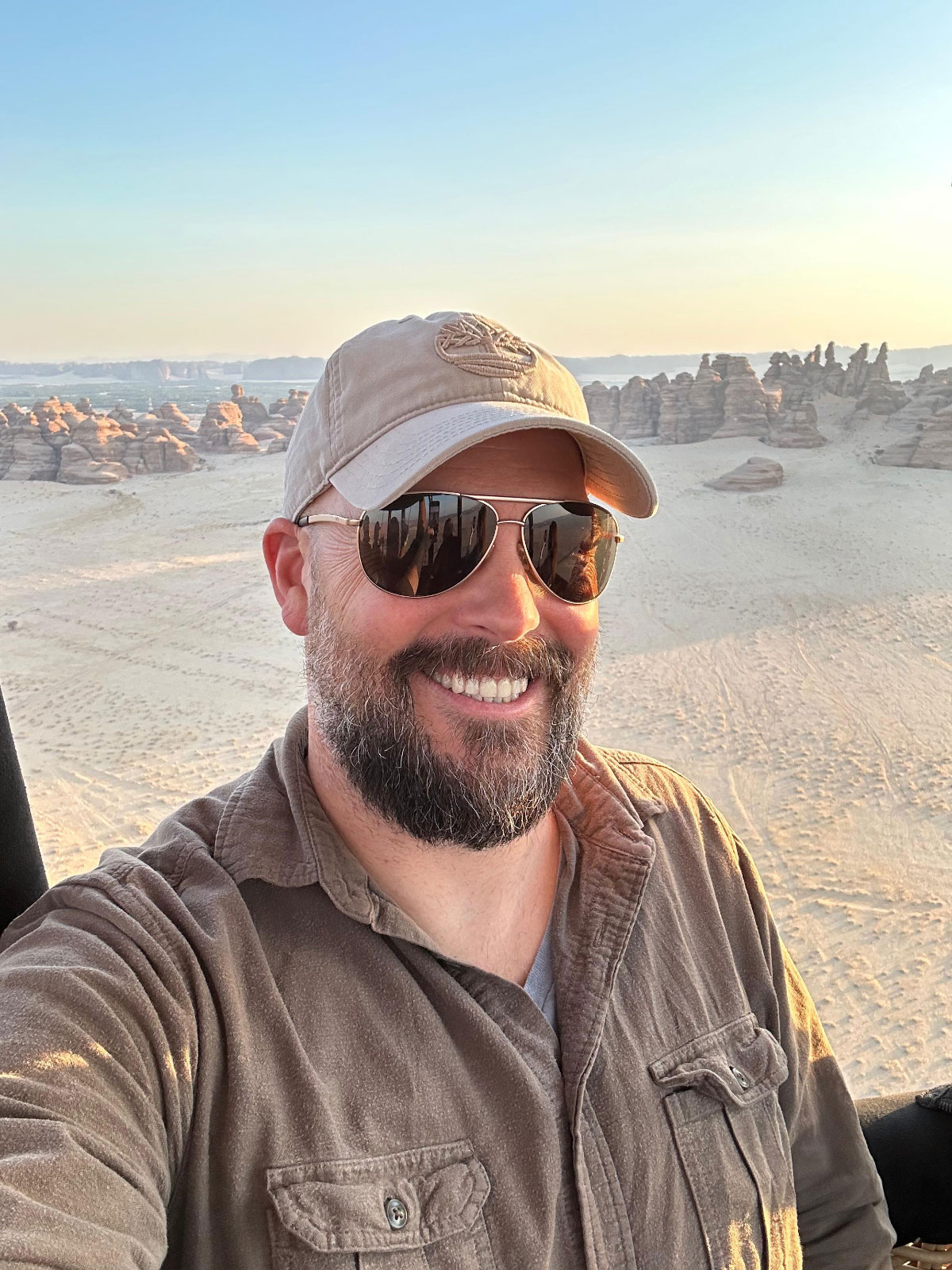
A.L.: What do you think about the Saudi projects?
T.K.: When you look at a hospitality or accommodation project like Desert Rock in the Red Sea, it’s a great example of understanding the absolutely beautiful geology and incredible terrain first, and then designing into it so that it becomes truly experiential. I’ve been fortunate to visit a lot of incredible places around the world, but there are still a few that genuinely shock me, in a good way. Desert Rock was one of them. I’d seen the photographs and done my research, but when I arrived, it was actually better than I expected. That’s rare.
When you look at places like Petra or Hegra and see what the Nabataeans were able to create within the landscape, there’s something interesting about seeing a modern interpretation of that philosophy today. NEOM also has an incredible heritage to it, alongside all of the new things being built. The diversity of Saudi Arabia is genuinely surprising in a very positive way.
I think the next big opportunity is connecting those assets. Right now, many incredible destinations are still being developed independently. The real opportunity is to create transformative itineraries that connect them and give international travellers a reason to come from very far away, stay longer and experience the diversity of the country as a whole.
A.L.: What’s the biggest mistake you’ve made and what did it teach you?
T.K.: That’s a difficult one to admit. I’ll answer it in reverse: the thing I’ve been taught time and time again is patience. I’m an eternal optimist. I love believing that we can make things happen and create great things. My mistakes have been underestimating how much time it takes to actually make those things happen.
Wild Rivers Water Park in Irvine, California, in the Great Park is a good example. There was an enormous amount of relationship-building involved. We were partners on that project for years before we ever put a shovel in the ground. The park was designed, redesigned, ready to go, and then something would happen and we’d have to wait again. Ultimately, it took around five years and two different fully designed sites before it opened to the public.
That’s the reality of major projects. They’re hot, then they’re cold. It’s hurry up and wait. Sometimes it’s two steps forward and five steps back; other times you suddenly make enormous progress. Sometimes it feels like Sisyphus pushing the boulder up the mountain.
So, patience is probably the biggest lesson I’ve learned. Great projects can and do happen, but rarely overnight, and almost never in exactly the order or at the speed you originally expected.
A.L.: Now we’ve got AI, immersive media, mixed reality, all these things. Which of these trends actually excites you and which ones do you think is mostly hype?
T.K.: I’ll take the hype question first. There’s obviously a lot of conversation about AI replacing jobs, and yes, AI can absolutely make businesses and projects more efficient. But when it comes to the overall guest experience, I don’t believe anything will replace true operator mentality. The way you’re greeted, the way someone makes you feel welcome, the way safety is communicated and the way people engage with you, that human connection matters. I hope we never reach a point where the digital experience becomes more important than the physical one.
Where AI really excites me is efficiency and learning. One thing our industry doesn’t always do particularly well is stop after a project and really analyse what happened. What worked? What didn’t? What could we have done faster or better? We’re often too focused on the next shiny thing. We finish one project and immediately move on to the next, saying we’ll come back and properly debrief later. Usually, later never comes.
AI gives us an opportunity to make that debriefing process faster and more useful, to capture what we’ve learned and actually apply it to the next project. If we use it that way, I think it can make us considerably better at what we do.
A.L.: You’re responsible for creating experiences for visitors but, when you are a visitor, what experience has had the biggest impact on you?
T.K.: For me, it’s absolutely not something I’ve built. It’s UNESCO World Heritage Sites and experiencing places created by people who lived hundreds or even thousands of years before us. I’m fascinated by seeing what humans were capable of with what we consider primitive technology, or, in some cases, lost technology and knowledge that simply no longer exists. Standing somewhere and asking yourself, “How did they actually do this?” is still one of the most powerful visitor experiences for me.
A.L.: Looking back, what was the moment when you realized this wasn’t just a job anymore? It’s the industry where you wanted to spend your life in?
T.K.: Oh boy, probably day two. I started in the industry in 2017 with Aquatic Development Group (ADG). My boss at the time was Jim Dunn, who’s an industry legend. Jim wasn’t in the office when I started because he was working on a project in Brampton, Canada, near Toronto. So, on my second or third day, I drove out to meet him. I arrived and Jim was fully immersed in a filthy drain pipe. Jim was hands on with everything: pipes, wires, plumbing, whatever needed to be done. He looked at me and said, “Are you the new guy?” I said, “Yeah, I’m the new guy.” And he basically said, “All right. I hope you brought your boots.” I loved that mentality. You just make it happen.
Once I understood the full scope of what the company, and really the entire industry, was capable of creating, and the memories and moments we could give people and families, I was hooked. Absolutely.
A.L.: Let’s think about the future now. So, if we’re having this conversation in 10, 15, 20 years, what has to happen in the industry for you to think I’m proud of what we’ve built?
T.K.: I’d come back to something I mentioned earlier: the opportunity to link experiences rather than continuing to create everything in isolation. People now have immediate access to almost anywhere in the world through social media. Before they’ve even arrived, they’ve seen the photographs, watched the videos and developed an understanding, at least digitally, of the destination. It’s becoming harder to create that genuine sense of awe. That’s why I think the future is about creating unique and authentic journeys, not simply individual attractions.
We need to think more about itineraries and how different experiences connect with one another. A great journey should almost be an emotional roller coaster, where people experience different emotions and feelings because of the diversity of the itinerary we’ve created for them. If we can connect those experiences while still genuinely surprising people despite everything they’ve already seen online, then I think we’ll have built something worth being proud of.