
A recent study carried out by researchers at the University of Girona (UdG) on behalf of the Girona Campsite Association (ACG) takes the pulse of tourists who spend their holidays at campsites in the region. The research, entitled ‘The economic and social profile of camping tourism in Girona: beyond the summer’, was presented as part of Girocamping PRO 2026, an event held on 23rd September in the town of Castell d’Aro, in the province of Girona (Spain). The study draws conclusions from a series of surveys carried out among tourists and campers staying at campsites in the Girona region during July and August of this year.
Tourists with studies and relative purchasing power
One of the figures that caught our attention at first glance is the high overall level of education amongst campers and tourists who spend their holidays at campsites. Indeed, nearly half of those surveyed – 44.92 per cent – have a university education, whilst a further 39.08 per cent have completed secondary education. As regards income, the study indicates that 45.5 per cent earn over €3,000 a month and, of these, 25 per cent earn more than €4,000. Those on low incomes, below €1,500, account for barely 5 per cent of the total.
As for average spending per person per day, we see that it stands at €53.99 on the Costa Brava and rises to €60.29 at campsites in the interior of the province. To put this into perspective — according to data from the Spanish National Statistics Institute — we must bear in mind that the average daily spend by tourists visiting Spain in 2025 was, overall, €167 — and €184 for foreign tourists visiting Catalonia.
In other words, a camper staying at a campsite in Girona spends around a third of what the average tourist spends in Spain, and just under a third of what a tourist visiting Catalonia spends. However, there is an explanation for this difference: at a campsite, accommodation accounts for a smaller proportion of the budget than it does at a hotel. Therefore, what really determines a camper’s daily expenditure is not what they pay for accommodation, but what they spend on food, activities and shopping in the vicinity of the campsite.
To the picture painted above, we must add a further detail: the average length of stay for campers at campsites in Girona is 16.5 days on the Costa Brava and 13.7 days in inland areas. As for their nationality, just over half of camping tourists are Spanish (51.52 per cent), followed by the Dutch (25.76 per cent) and the French (16.67 per cent). We shall add one final detail to the picture of the sector: 29 per cent of those surveyed were visiting the destination for the first time, which suggests that camping not only builds loyalty amongst its existing customers (that 71 per cent), but also attracts new enthusiasts.
Customer loyalty: a real treasure
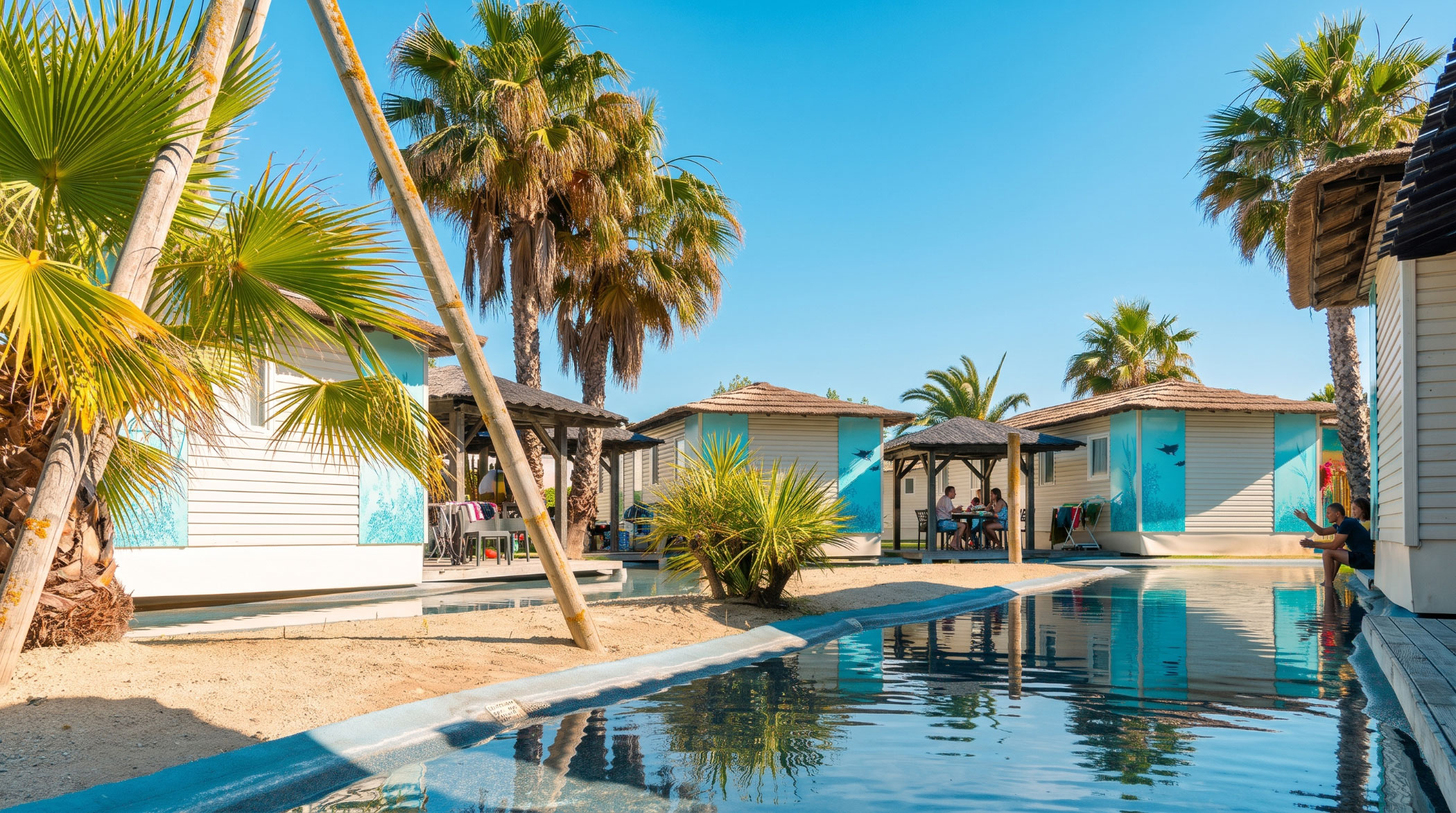
Indeed, if the study’s authors were to highlight one figure above all others, it would be that of customer loyalty. 92 per cent of respondents said they would repeat the experience, and 94.5 per cent would recommend their stay. Among those who were already familiar with the destination, 55 per cent felt that their opinion of it had improved over time. These figures reinforce a picture that was already quite encouraging. Furthermore, the overall rating for the stay is 4.06 out of 5, and that for the accommodation is 4.13. The most highly rated aspects are the sun and the weather (4.27), the beach (4.16) and the landscape and surroundings (4.09). Value for money scores 4.02, and safety 3.91.
The sector’s importance in Girona
To view the same picture in a slightly different light, it is worth focusing on the economic impact of camping in the province. In 2025, Girona welcomed 8.18 million tourists and recorded 28.38 million overnight stays. Of these overnight stays, 11.5 million were at campsites, making the sector the second most popular type of accommodation in the province, behind hotels (13.8 million) but well ahead of holiday flats (2.7 million). In other words, far from being a marginal sub-sector, camping accounts for almost 40 per cent of total overnight stays in Girona.
Areas for improvement
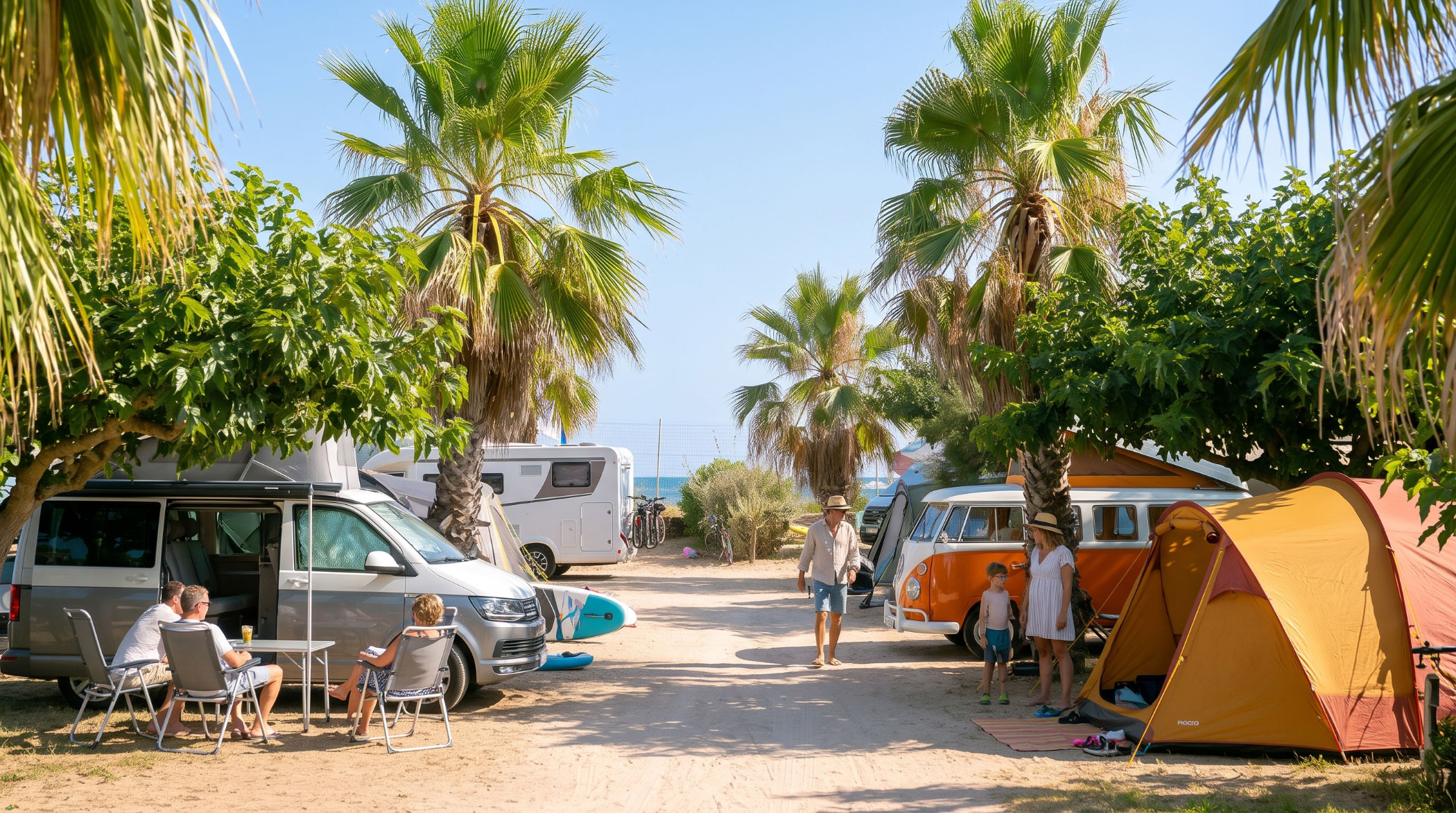
The study also highlights areas of weakness. Public transport received the lowest rating from respondents, at 3.56 out of 5. The president of the ACG, Miquel Gotanegra, explained this in comments reported by Diari de Girona: “We must adapt public transport to the current reality, because it is unacceptable that it should take a tourist just as long to get from their home to Girona Airport as it does from the airport to l’Estartit” —the latter cited as an example of a destination— and he added, “we must improve connections between these major centres and the wider region; this is urgent and we need to step on the accelerator in this regard”.
Furthermore, there is also scope for attracting visitors through digital channels. The internet is the main channel for discovering the destination, according to the UdG survey, for at least 29.36 per cent of tourists. By contrast, recommendations from family members account for 28.13 per cent — which is by no means negligible either — and those from friends for 22.02 per cent. Attracting attention via social media, where applicable, accounts for no more than 12.84 per cent.
Sources: ACG, Camping Profesional, Diari de Girona, INE.
Images: Amusement Logic Projects