
The technology and engineering that make immersive experiences possible are always invisible to the visitor enjoying them. After all, such experiences depend largely on an illusion that any visible technical element would inevitably shatter. However, these technical elements – such as spectacular waterfalls, artificial mountains, themed lakes or complex lighting systems – require a highly sophisticated infrastructure.
Consequently, one of the greatest challenges in the design of theme parks and other leisure venues is to integrate technical installations, structures and operational systems into the architecture and theming itself. The ultimate aim is for the visitor, tourist or guest to perceive only the end result.
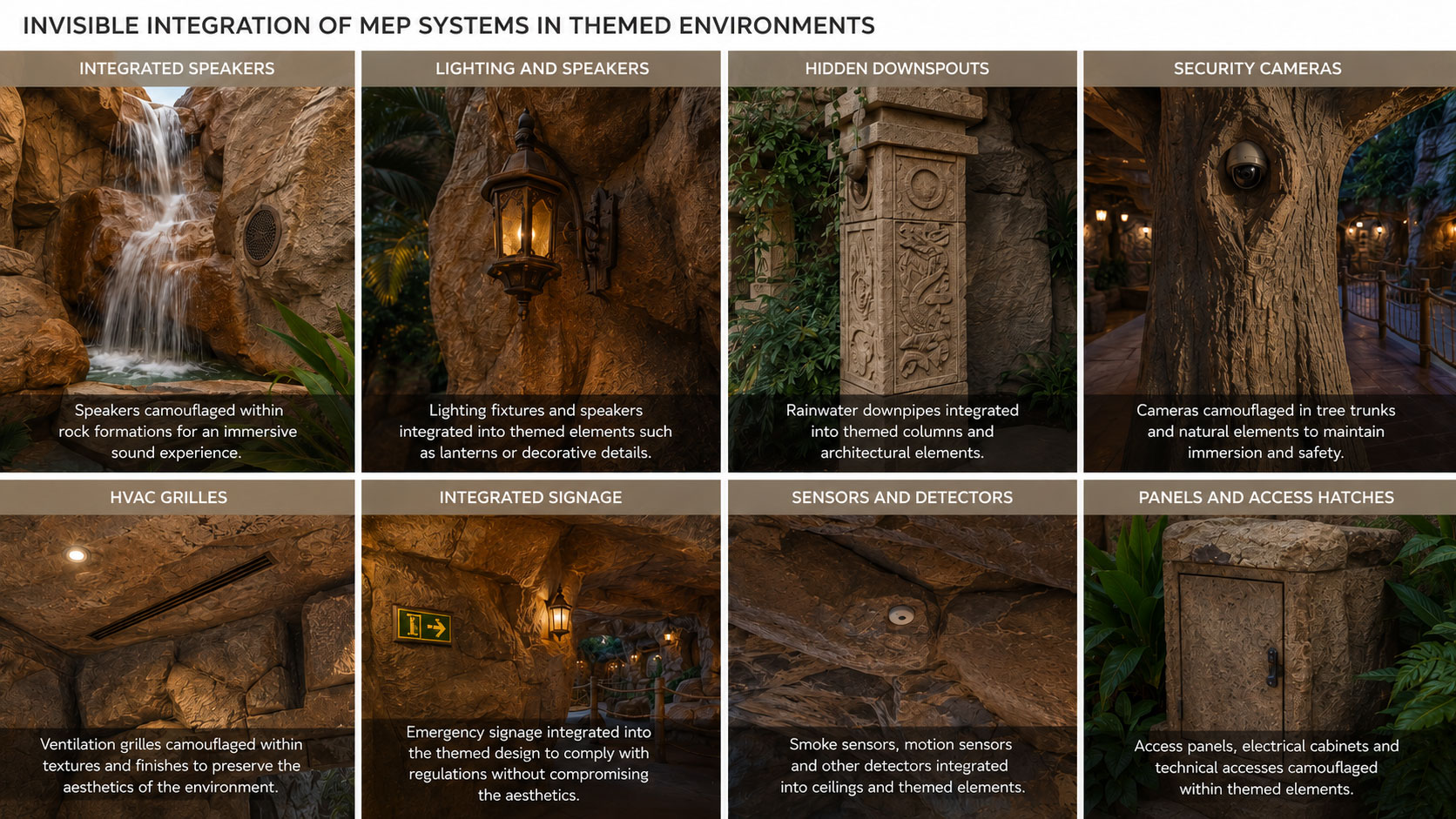
Theming techniques play a fundamental role in the process of designing and constructing immersive experiences. Artificial rockwork, strategically placed vegetation, dual-purpose architectural elements, and scenic features—such as false ceilings and decorative panels—serve to conceal technical access points, ducts, utility hatches, and maintenance equipment without compromising operational functionality. All this is achieved while ensuring that infrastructure remains accessible for technical staff to carry out necessary maintenance and repairs.
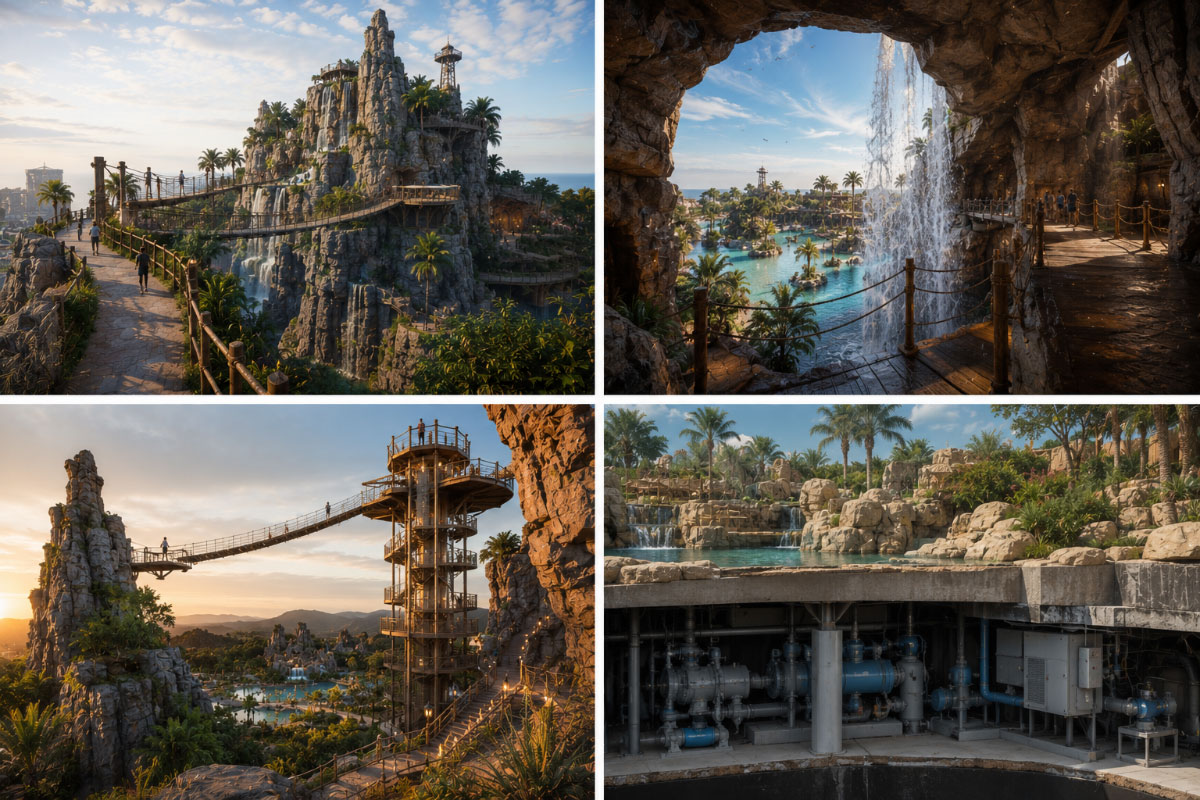
The same applies to water parks: waterfalls, lagoons, interactive fountains, and themed rivers require complex water pumping, filtration, and recirculation systems that must operate efficiently without disrupting the natural look of the surroundings. Proper design ensures that visitors, travellers, and tourists perceive only the movement and sound of the water.
Lighting offers another significant example: lighting systems completely transform the perception of a space, yet their effectiveness relies heavily on their unobtrusiveness. Fixtures carefully integrated into the architecture or theming create immersive atmospheres without revealing the source of their visual effects.
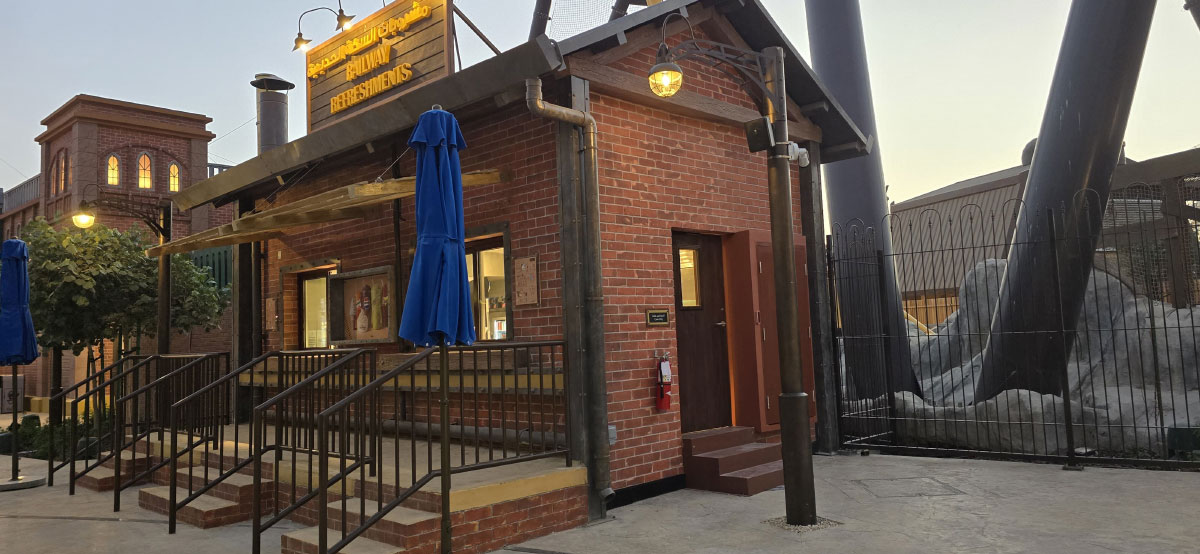
Only this multidisciplinary integration of architecture, engineering, and thematic design makes it possible to create environments where technology operates silently, allowing the experience, emotion, and narrative to take centre stage.
By Cristina Uchán, Senior Architect in the Architecture Department at Amusement Logic.