
Thermochromic paint introduces a new capability in architecture, specifically in relation to building façades: it makes temperature visible in real time through changes in colour.
Thermochromic paints contain pigments that react to heat; when they reach a certain temperature, they become transparent and reveal an underlying layer of a different colour. The result is a surface that changes appearance without the need for sensors or electronics.
However, the usefulness of this type of coating goes beyond its aesthetic effect. On the one hand, it serves as a visual diagnostic tool: it makes it possible to identify thermal bridges, areas of heat accumulation, or points of greater solar exposure on the façade. In terms of safety, it can also detect overheating in roofs, ducts or equipment before it becomes a problem.
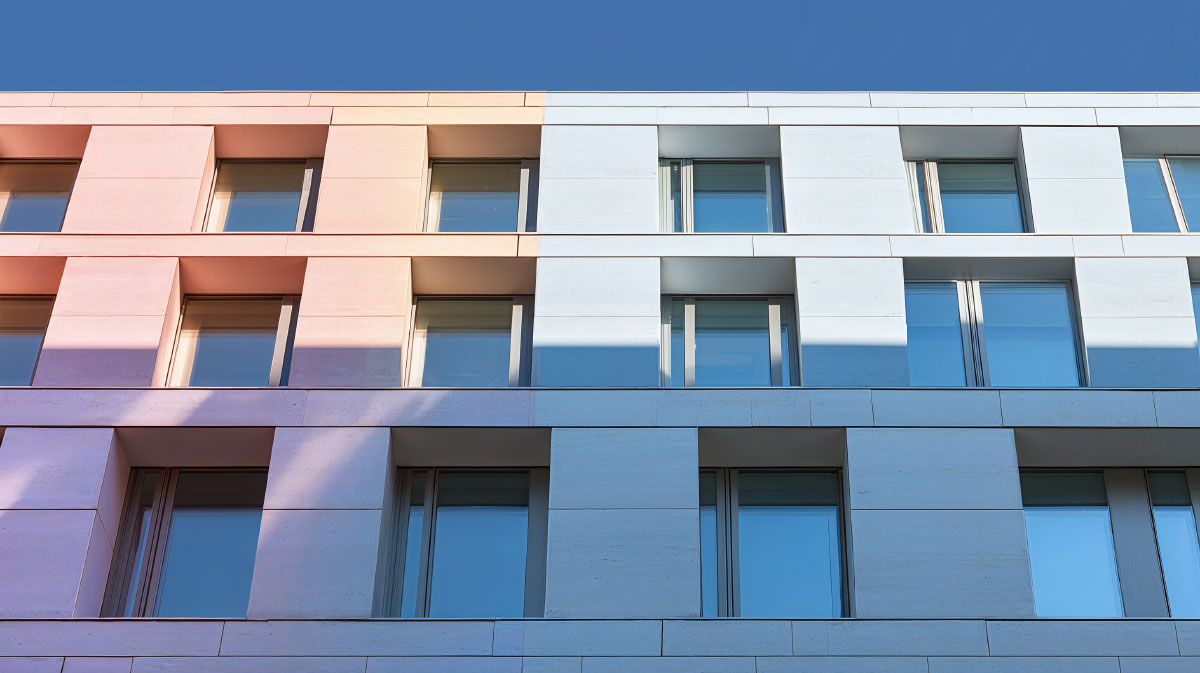
Nevertheless, applying thermochromic paints to façades requires certain precautions. Their service life is shorter than that of conventional coatings, as ultraviolet radiation degrades the pigments over time — particularly in outdoor applications — and therefore protective sealants are required.
By Ángel Ibáñez Pérez, Senior MEP Engineer in the Architecture Department at Amusement Logic