
Don William Rodríguez López, Costa Rica’s Minister of Tourism, has built up extensive experience in the public sector—within state banking institutions and the Costa Rican Tourism Board—as well as previously in the private sector, including hospitality, airlines and advertising. In this interview, Mr Rodríguez outlines the major changes in Costa Rica’s tourism strategy, its commitment to investment in infrastructure and air connectivity, and its firm defence of high-quality tourism over mass tourism. With a focus on regenerative tourism and a clear orientation towards high-value segments, the minister reaffirms Costa Rica’s commitment to sustainability and balanced development.
Amusement Logic: With a broad career path—first as a manager at United Airlines, then in hotel management and more recently as a consultant and CEO at Rod-Mann Corp.—how did you come to the public sector and to leading Costa Rica’s tourism industry as minister?
William Rodríguez López: In reality, my first job in Costa Rica was in the hotel sector. I emigrated to Australia, where I also worked in hospitality, and later, when I returned to Costa Rica, I joined the Costa Rican Tourism Board (ICT). I was there for 10 years and finished as head of the marketing department. Afterwards, I returned to the private sector, to the airline industry. At that time, Costa Rica had its own airline, which is no longer very common in small countries. I spent six years with LACSA, as the company was called. I then moved into the world of advertising agencies, specifically the agency handling the accounts for both LACSA and the ICT.
I will not go further into my career history, but to answer your question directly, I had already worked in the public sector and later served as a board member of public institutions, specifically in the banking sector. As you know, Costa Rica has a nationalised banking system, with state-owned banks; I served on their boards. So the public sector is by no means unfamiliar to me.
A.L.: At ITB Berlin 2026, Costa Rica presented its new tourism campaign “Start Living” for the European market. What does this strategic shift represent for promoting the country?
W.R.L.: I would say that this major strategic shift is not the only one—there are three. The first is that we will stop making individual efforts for each of the six European countries we target for tourism: Germany, France, the United Kingdom, Spain, the Netherlands and Switzerland. Instead of separate communication strategies, we will adopt a single strategy for all six countries, built around the leitmotif that we are a country for reconnecting. Through research carried out by a Spanish firm called Too Much, we determined that this is how Europeans see us: a place people leave feeling rejuvenated.
The second major change is that, although we will not develop communication strategies by country, we will carry out activations in each one. For example, last year we staged an activation in Madrid featuring a sloth appearing to surf in a Costa Rican setting.
The third major change is that we have defined four very specific target audiences—groups of people who have the potential to come and enjoy the value Costa Rica offers: a society that respects the environment and possesses a series of attributes that lead Europeans to see us in this way. These four groups are: senior travellers who no longer have time constraints and can travel at any point in the year; adventure-focused travellers, which is one of our distinguishing features; people seeking a reset—since we have observed that in Europe, the United States and Canada people are deeply immersed in work and need to reconnect with their inner selves; and finally, honeymooners, those wishing to spend their honeymoon in a place entirely different from their usual surroundings.
A.L.: You have referred to the need to “innovate” and target “new tourism niches”. Beyond the European campaign, which emerging markets and types of tourism is your administration focusing on to diversify visitor arrivals?
W.R.L.: Our main market, without a doubt, is the United States, which accounts for around 60% of tourists visiting Costa Rica. The second major market is Canada, with between 12% and 13%, a market that has grown significantly in recent years. The third major market is Mexico. Then come the European markets: Germany is fourth, France fifth, and Great Britain sixth. This year, the Argentine market has made a significant leap; it was already important to us, but not to the extent we see today. Spain ranks eighth, where we consistently work with Iberia and Iberojet, the two airlines that fly directly to Costa Rica. We have made considerable efforts and ended 2025 with a very positive trend, which has been confirmed in the first two months of this year, and I am confident that March will show similar figures.
Traditionally, Spain was our most important European market, but after the pandemic there were significant changes: the German and French markets gained considerable momentum. Naturally, we are very interested in ensuring that Spain remains one of our key markets, and we are clearly focused on improving its ranking.
A.L.: Infrastructure and connectivity are key to travellers’ experiences. Which initiatives are being prioritised to improve these aspects?
W.R.L.: For us, air connectivity is fundamental. We devote a great deal of time and effort—each time we travel to Europe, around five or six times a year—meeting with airlines, both those already flying to Costa Rica to encourage them to increase their services, and others that do not yet operate direct routes.
We are currently focusing on the Portuguese market. At present, it is served via Madrid, which is not ideal, as people prefer to depart from their place of residence and arrive directly at their destination; connections are less desirable. We are also focusing on Scandinavia, as Scandinavian countries greatly appreciate the type of product we offer. We have been in discussions for some time with Scandinavian Airlines System.
We have also held detailed discussions with the Italian airline ITA, as Italy is the European country not directly served that provides the largest number of tourists to Costa Rica after the six already mentioned—it ranks seventh in Europe. We are convinced this should be our next market. Additionally, the Israeli market has traditionally been very interesting for us, and we have held discussions there too, although the situation in the region has caused interruptions. At present, we are negotiating with Argentine airlines, as we do not yet have non-stop flights from Argentina to San José. The distance is similar to Madrid—around nine hours. We are in talks with Aerolíneas Argentinas and Avianca to establish a non-stop service. Currently, we have direct flights that include a stop in Ecuador: passengers travelling to Costa Rica remain on the aircraft, while only those bound for Ecuador disembark, after which the flight continues. This differs from connecting flights, where passengers must disembark and reboard.
In terms of infrastructure, our main objectives lie in two areas. First, expanding services at the two largest international airports: Juan Santamaría Airport in Alajuela and Daniel Oduber Airport in Guanacaste. We do not want either the first or last experience of our visitors to be negative. In May, we expect to inaugurate the expansion of Juan Santamaría, increasing areas for check-in counters, immigration and customs. In Liberia, Guanacaste, we are focused on aircraft operations: ramps and boarding bridges. We aim to increase from six to ten boarding bridges and expand the airport ramp by an additional 20,000 square metres. Liberia is where luxury and ultra-luxury hotels such as Waldorf Astoria, Ritz-Carlton, Four Seasons and the upcoming St. Regis have been established, and their clientele often arrive by private aircraft, so we must provide adequate space.
In addition, we are in the early pre-engineering stages of building two new airports in the southern Pacific region and expanding Limón International Airport in the Caribbean, which currently has significant limitations. We are also improving road infrastructure serving tourist areas—bridges and roads that had not been upgraded for many years are now beginning to show improvements.
A.L.: The arrival of new luxury hotel chains is clearly a reality. How does your ministry balance promoting these high-end investments with supporting small and medium-sized tourism businesses, which form the backbone of many rural communities?
W.R.L.: Let us start with a key point: the fastest-growing segment worldwide—not just in Costa Rica—is luxury and ultra-luxury tourism. Some theorists say that after the pandemic, many people decided they would not be caught again with money sitting in the bank but would instead spend and enjoy it. This has led to a surge in this segment.
When we attract such investments, we aim to achieve two things. First, that investors understand our idiosyncrasy: we are interested in tourism that does not exploit but rather appreciates what the country offers. This is not difficult, as hotels such as Four Seasons, Ritz-Carlton or the upcoming St. Regis, with nightly rates of $2,000 or $3,000, focus on service quality rather than mass tourism.
The second aspect, which is more complex, is developing a network of local suppliers for these hotels. They require products such as fresh vegetables and various additional services that are not always easy to source. We have observed that, due to these challenges, hotels in the same area sometimes compete for suppliers, offering slightly higher prices and causing suppliers to shift from one hotel to another. Our main task is to ensure that these investments integrate properly into the local economic fabric.
A third key element is the workforce. These hotels require staff who are ready from day one to deliver the level of service expected. As part of global chains, they provide training according to their standards, but they also need a base of personnel familiar with the tourism sector and how it operates in Costa Rica. For this reason, we work with two state institutions. On one hand, the National Training Institute provides basic courses—bartending, English language skills, among others. On the other, the Ministry of Labour runs a specific language programme that now extends beyond English to other languages. Additionally, the Costa Rican Tourism Board offers its own training programme, with 314 online and in-person courses on customer service and operational aspects of hospitality.
Together, these three institutions make a significant effort. However, as I always say, training involves two sides: the availability of courses and the willingness of people to participate. In remote areas, far from the country’s centre, this is not always easy—single mothers may have household responsibilities, or internet connectivity may be limited, making access to online courses difficult. We are aware of these constraints, but they do not deter us from trying.
A.L.: Costa Rica is a global benchmark for sustainable tourism. How do you maintain that leadership in the face of emerging destinations that are also focusing on sustainability?
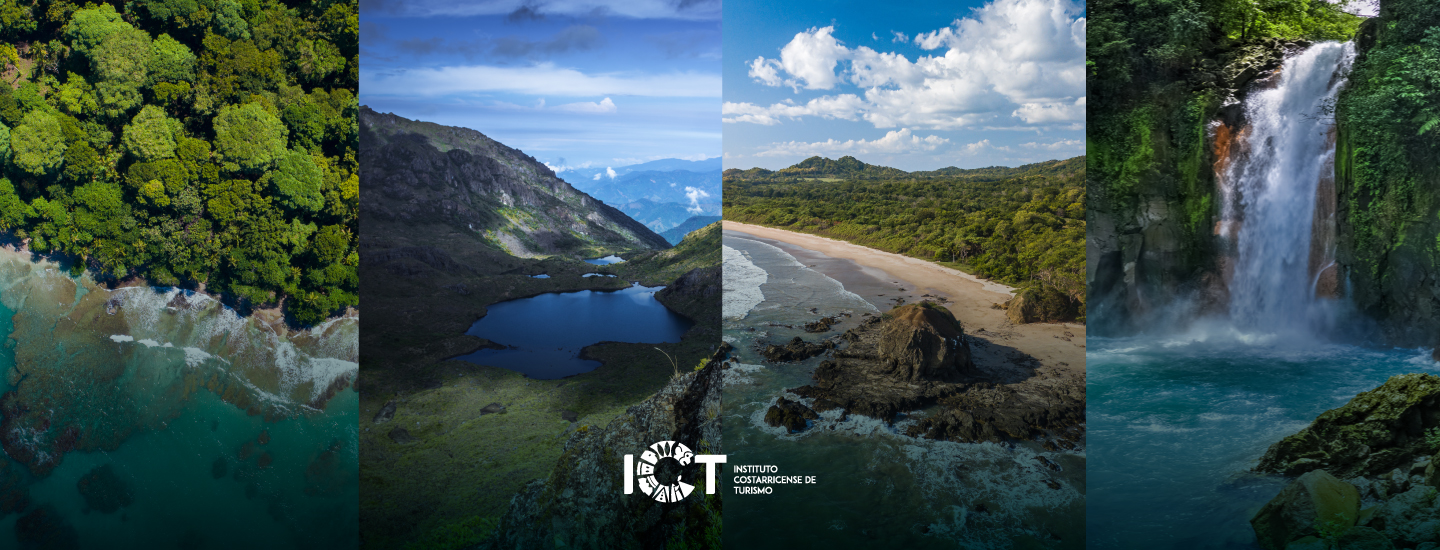
W.R.L.: If there is one thing that has characterised my communication since I took this position nearly four years ago, it is that we do not want quantity; we want quality. I am very clear about this: we do not want to be a mass destination. We do not want what has unfortunately been seen in some places in Spain, where local populations say, “no more tourists”. That would be a contradiction for us, as our raw material is precisely nature. If we bring in visitors indiscriminately, we will damage that nature, which is our main asset. More than 25% of our national territory is under some form of protection—national parks, biological reserves, and so on. This is not just a commercial strategy; it is something we genuinely believe in. At times we clash with the private sector, which always seeks more visitors, but that is not our path.
We are widely recognised for sustainability and resilience, and now we are advancing towards a more evolved concept: regenerative tourism. It is not just about leaving places as we found them, but about leaving them better. UN Tourism has recognised us, and we currently chair its Tourism and Sustainability Commission. This gives us a position we greatly value—not only to be seen as a sustainable destination, but as a leading one, capable of contributing knowledge to other countries.
What must we do to maintain that leadership? Carefully select our target audiences. To put it plainly—perhaps not politically correctly—we do not target lower-income segments. Our strategic communication is aimed at upper-middle and high-income travellers: people with education and sufficient means to stay in the country. Europeans, for instance, stay an average of 17 days in Costa Rica—one of the longest stays worldwide for such a small country.
Let me add another interesting figure: out of every ten tourists who visit us, six return. Of those six, three return seven times or more. This means we must be creative and innovative to ensure that repeat visitors always find something new. That is why we are committed to developing, in a positive sense, regions such as the southern Pacific and the Caribbean, so that the entire country benefits from tourism.
A.L.: When you are not serving as minister, what kind of traveller are you? Do you seek adventure, complete disconnection, or do you use travel to study tourism models that could be applied in Costa Rica?
W.R.L.: Perhaps due to my age, I am not particularly drawn to adventure. I do have a problem, though: when I travel, I tend to analyse the tourism model of the destination, which I really should not do. I should travel to enjoy myself, not to act as a consultant.
The year before last, I went on holiday with my family to a very fashionable destination in Asia. By the second day, I told my wife and son it was not the kind of place I liked. There were crowds everywhere; to enter a temple or any site required queues of two hours or more. I prefer places for relaxation and tranquillity, where I can do things I rarely have time for now—talk calmly, read a book. These are the kinds of pleasures one values more at this stage of life.
Of course, my son sometimes encourages me to take part in adventurous activities, and I still give them a try. But it is not really my strength as a traveller.
A.L.: That brings us to the end of our questions. Would you like to add any further comments?
W.R.L.: Let me make a couple of additional points that I consider important. Allow me to elaborate, even if it sounds repetitive: we are not focused on quantity; we are focused on quality. We want visitors who come, enjoy, and contribute more revenue to the country. We are clear about the path we must follow.
That is why our main competitors are not in Latin America. With all due respect to our neighbours, our competitors are countries such as Indonesia, Thailand, the Maldives or the Seychelles, which offer products very similar to ours. Sometimes it is difficult even for our own citizens to understand this.
Secondly, I would like to reiterate that we must be doing something right. By preserving our natural and cultural resources, we are attracting a certain type of tourism: celebrities who choose us as their destination, from the world of sport to the film industry. That speaks for itself, but it also conveys an additional message: it shows that we are a safe country. These individuals will not travel to a destination where they do not feel secure, and many of them mingle with local communities and enjoy that interaction. These are important aspects that, although not always easy to communicate directly, send a powerful underlying message that has been well received in our key markets.