
In a theme park, the experience does not begin the moment visitors board the attraction, but rather extends —or should extend— from the moment the visitor crosses the entrance gates into the world of imagination and wonder that it represents. By the same token, the experience should maintain continuity during waiting times, in the queues. From this perspective, the space intended to accommodate them should not be understood merely as a functional element, but as another part of the experience.
The waiting areas of a theme park prior to the attractions are zones of transition from the general space into the particular universe of the attraction. They should serve to prepare visitors and lead them towards a level of immersion that excites and amazes them. The architecture, materials, lighting, vegetation, graphic elements —everything should help build that progressive narrative.
The queue route itself should contribute, through its carefully measured design, to the immersive storytelling. Precisely concealing or revealing elements to create expectation, guiding visitors past scenic elements or providing a partial view of the attraction all contribute to the overall experience. Theming, as part of the narrative, plays a fundamental role in waiting corridors when these are conceived as part of the experience of the theme park. They provide an overall vision, immersion and context for the experience that follows.
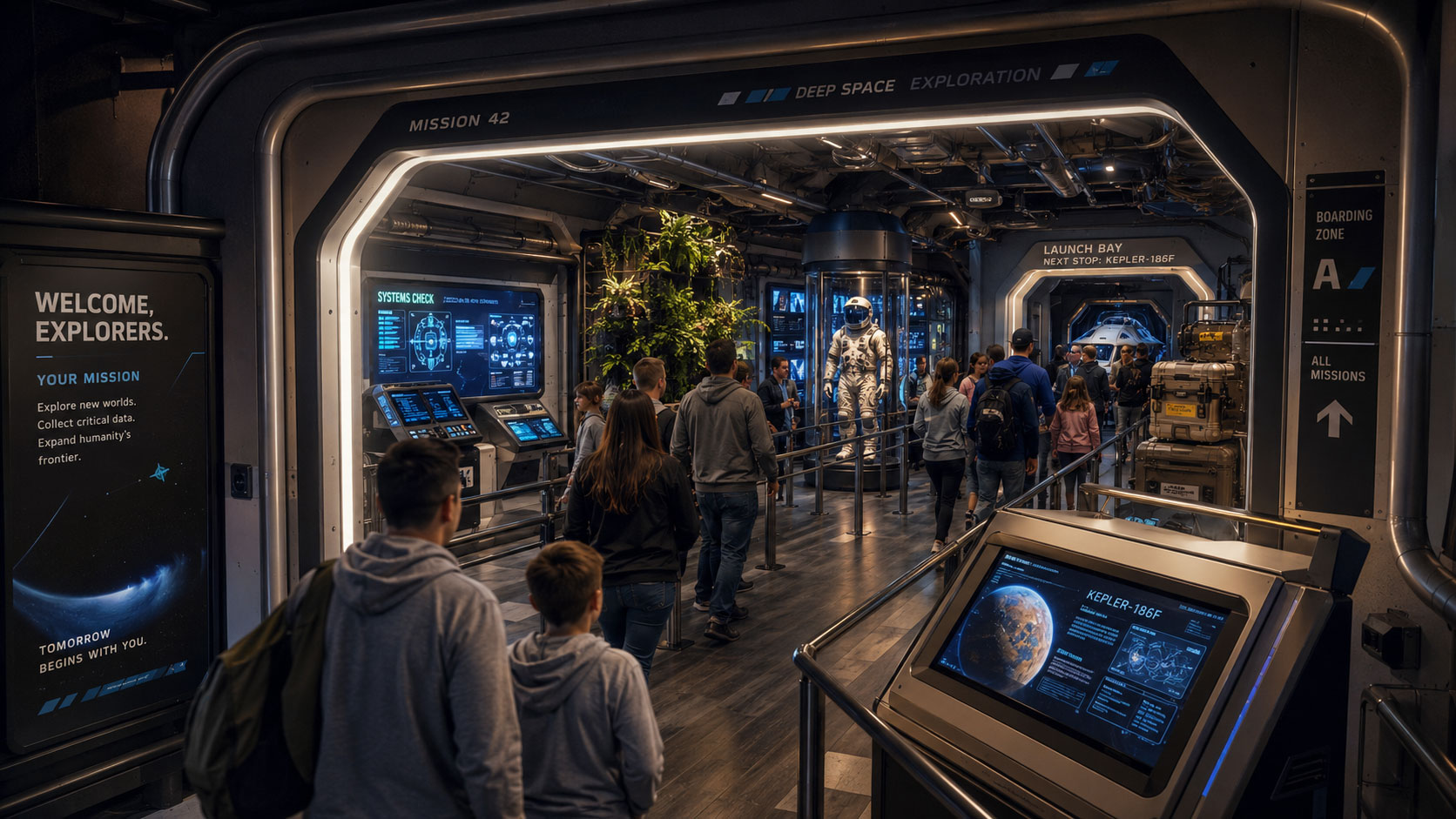
However, the design of a good waiting area should not rely solely on narrative. Comfort and convenience are equally essential. Shade, sheltered areas, vegetation, ventilation and rest areas directly influence the overall perception of the theme park. A comfortable wait in a visually stimulating environment will be perceived as considerably shorter than one of the same duration in a monotonous and uncomfortable setting.
Therefore, queue design in theme parks consists of determining timing, perception and expectations. When every element along the route has an intention, the wait ceases to be an interval between two moments and becomes the first act of the attraction.
By Lucía Ghersi, designer in the Design Department of Amusement Logic