
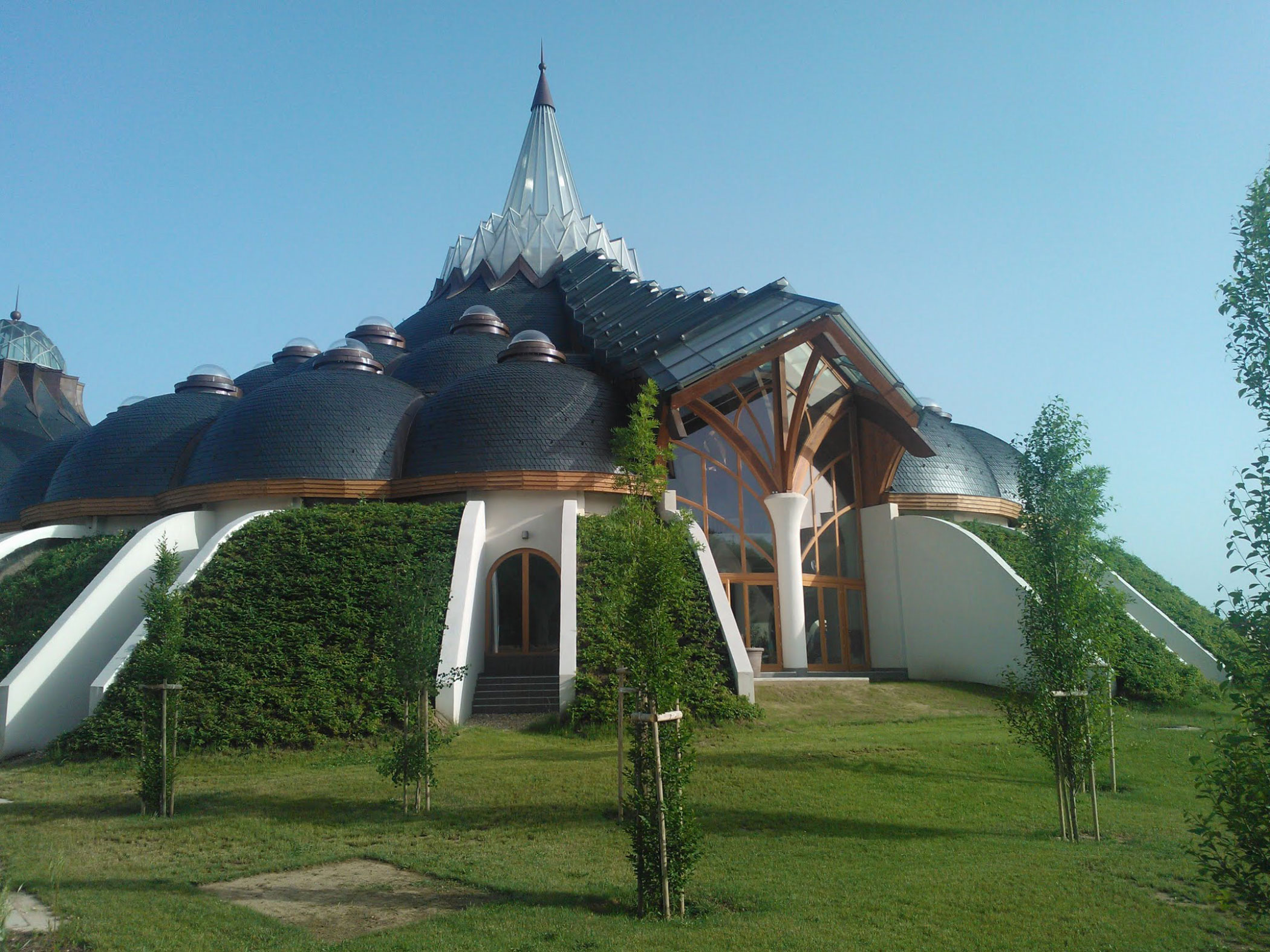
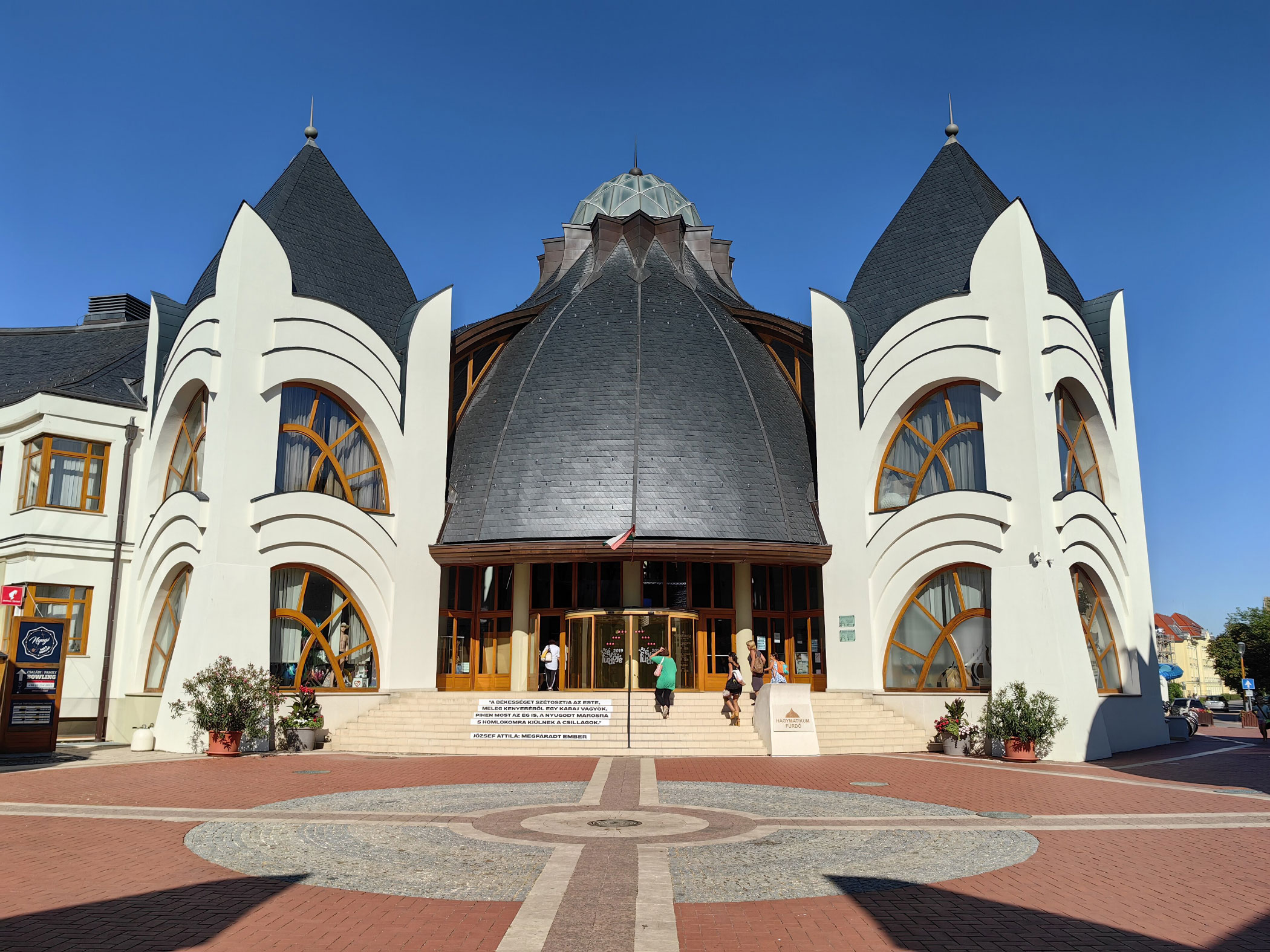
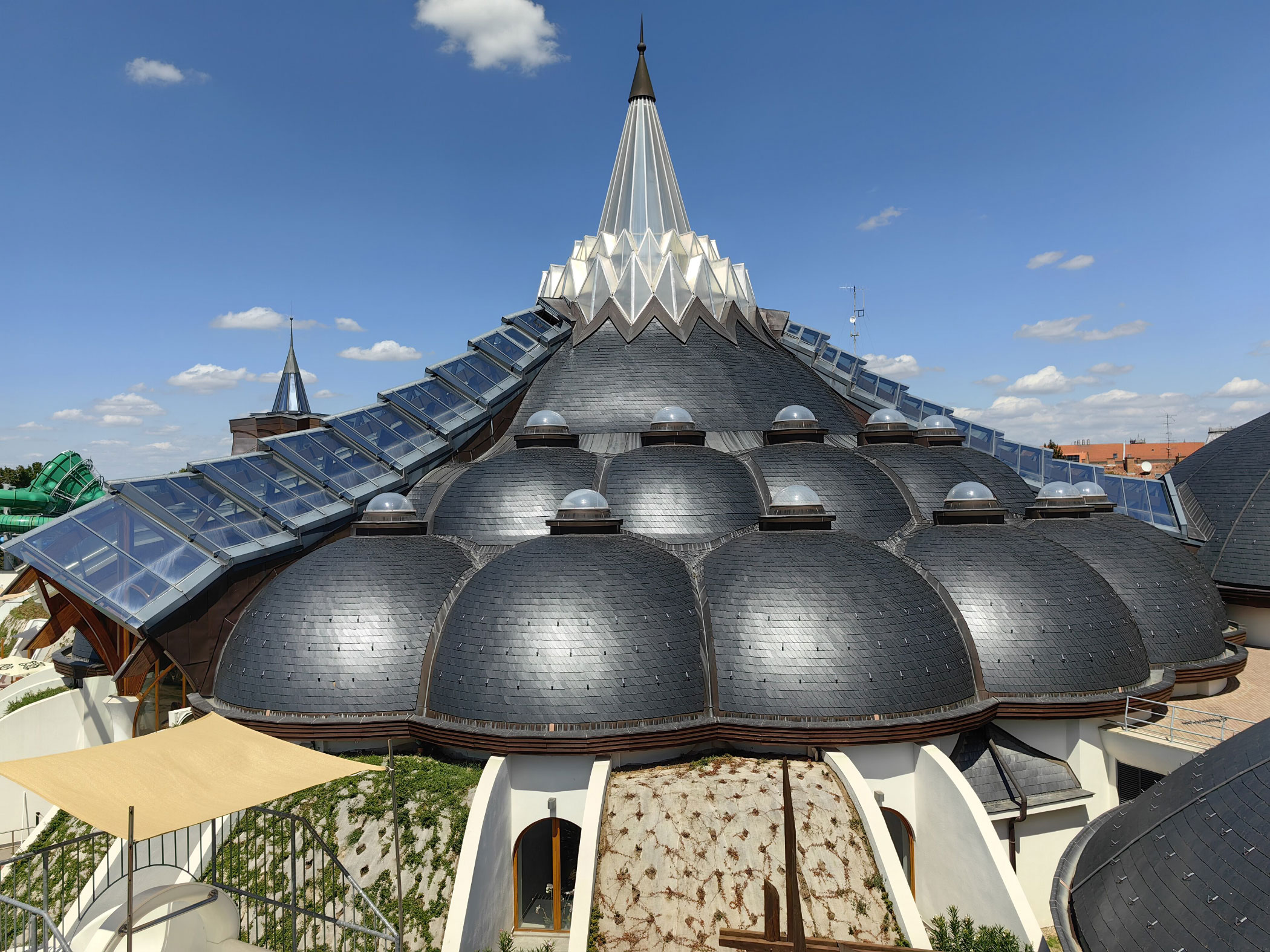
On the northern bank of the Maros River —which forms part of the border between Hungary and Romania—, 33 km east of the city of Szeged, lies the small Hungarian rural town of Makó. Surrounded by fields, the town is known for the cultivation, among other vegetables, of onions by the tonne. There would be little point in mentioning this detail were it not for the fact that onions have a direct connection with the project to which we devote these lines. In Makó, an onion-shaped building has become one of the town’s defining landmarks.
It is the Hagymatikum, a thermal and medicinal spa whose name, like its form, also pays tribute to the town’s most famous product. “Hagymatikum” is a compound word that plays on the term hagyma (“onion” in Hungarian) and the ending of hungarikum (a word used to designate typically Hungarian products). We could translate it as “Onion-icum”… No, better to stick with Hagymatikum.
The history of Hagymatikum began in 1956, when an oil drilling operation, upon reaching a depth of 993 m, struck not oil, but thermal water at 41°C. From that moment on, what was initially used as a temporary pool for hygienic purposes —affectionately called “néplavór” by local residents, something like “the village washbasin”— gradually gained importance. In 1963, the first bath building was officially opened, with a tower and a clock that became a characteristic landmark of Makó. In 1982, the hygiene pools gave way to a medical department and, in 1991, the spa was granted the status of District Medicinal Spa.
HAGYMATIKUM-2
HAGYMATIKUM-3
HAGYMATIKUM-6
HAGYMATIKUM-11
However, the real leap —or perhaps we should say splash— came with the turn of the century, when the authorities realised that thermal tourism could become an economic engine for the town. They then commissioned the design of the new thermal complex from Imre Makovecz, the most internationally renowned Hungarian architect, a leading exponent of organic architecture and, among other works, designer of the Hungarian pavilion at the 1992 Seville Expo. In fact, Makovecz had already designed as many as 14 public buildings in Makó.
The project, however, was not without difficulties. The initial estimated cost soared, the public tender received no bids, and the programme had to be scaled back: the 25 m indoor swimming pool, the family area and the activity pool with outdoor access were removed. In addition, in August 2011, a fire destroyed part of the dome’s timber structure, which was then under construction. This forced the team to redouble its efforts in order to meet deadlines. Sadly, Makovecz died in September of that same year, without seeing his work completed. Hagymatikum opened its doors on 20 January 2012.
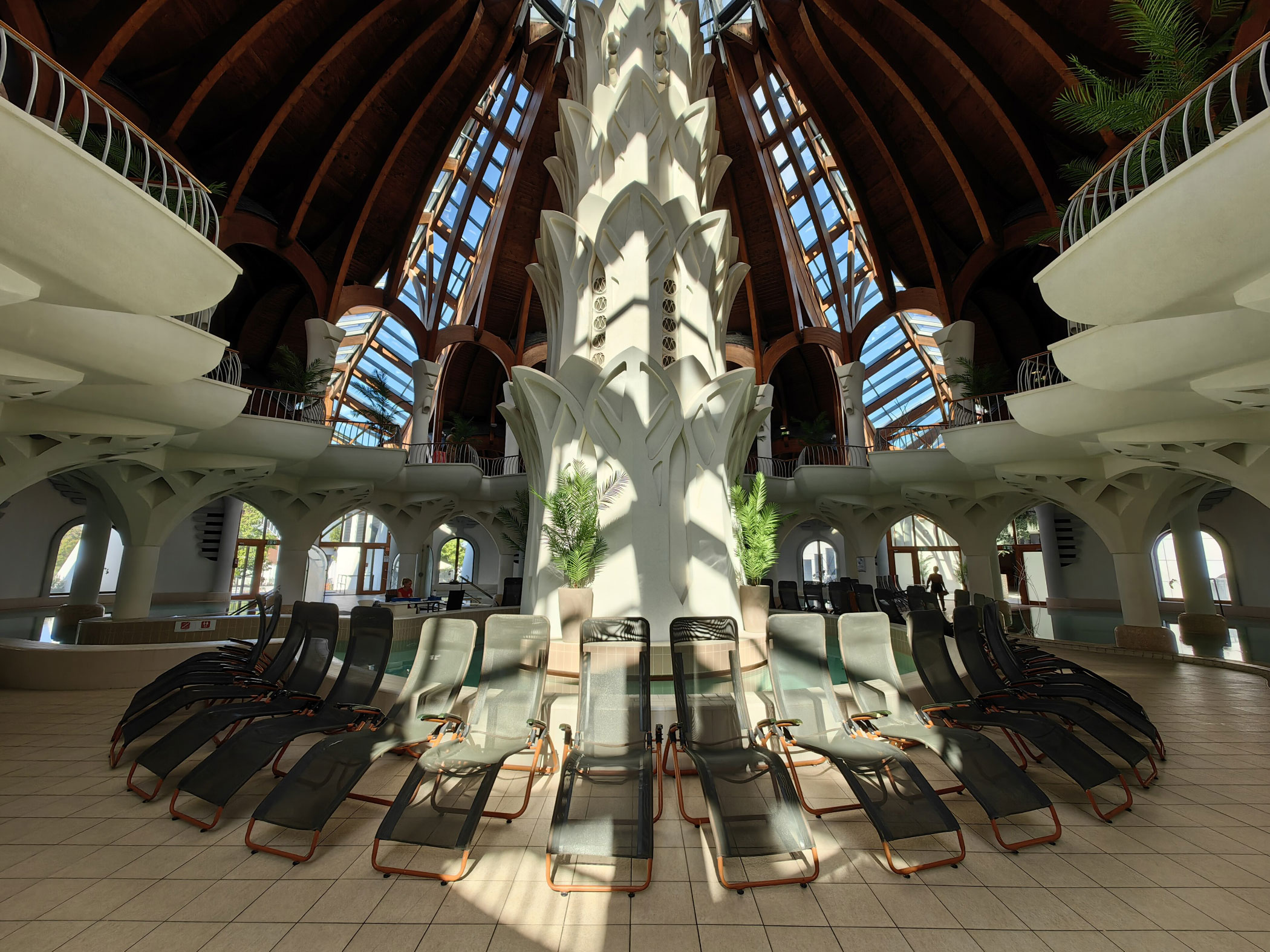
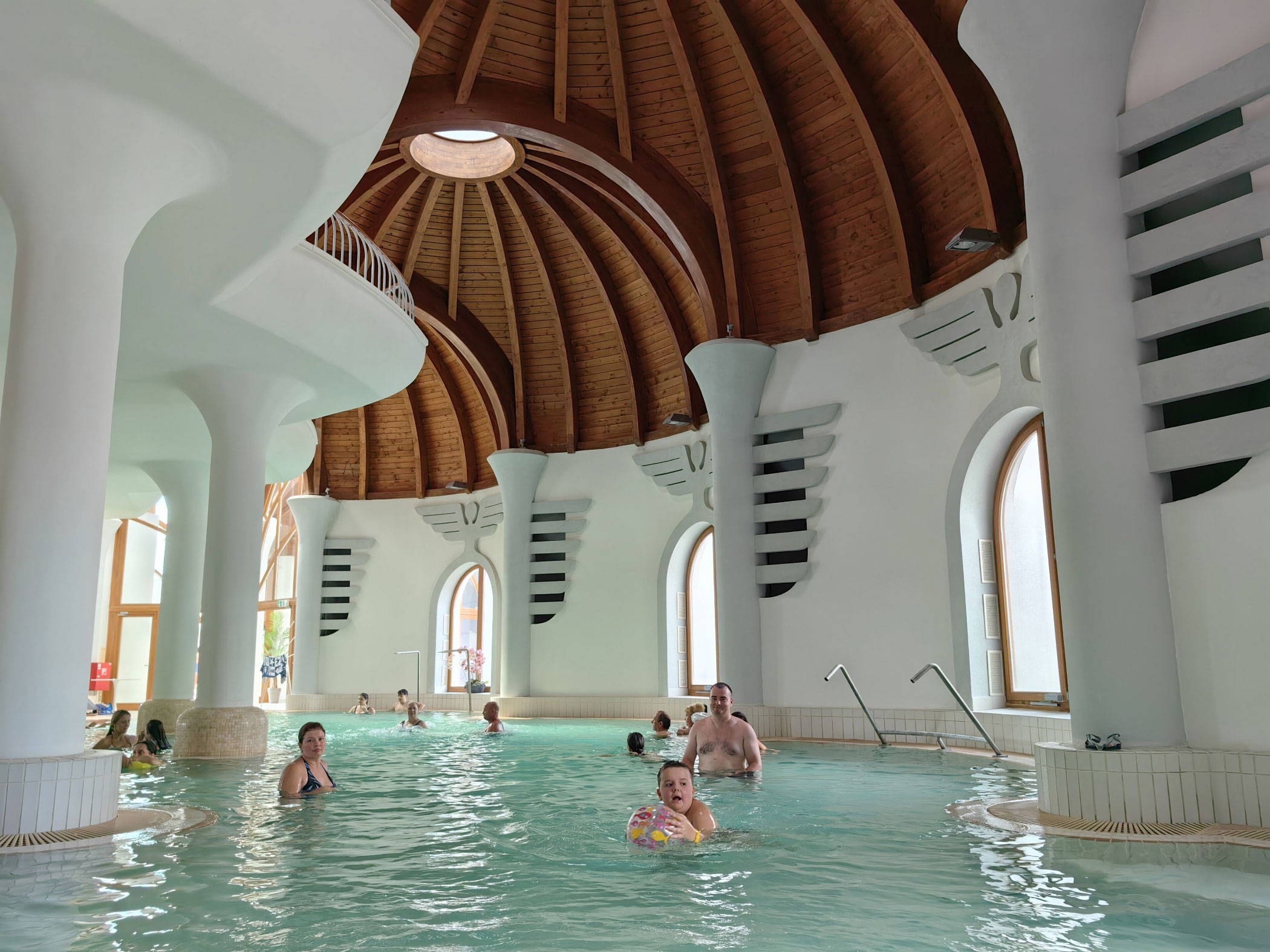
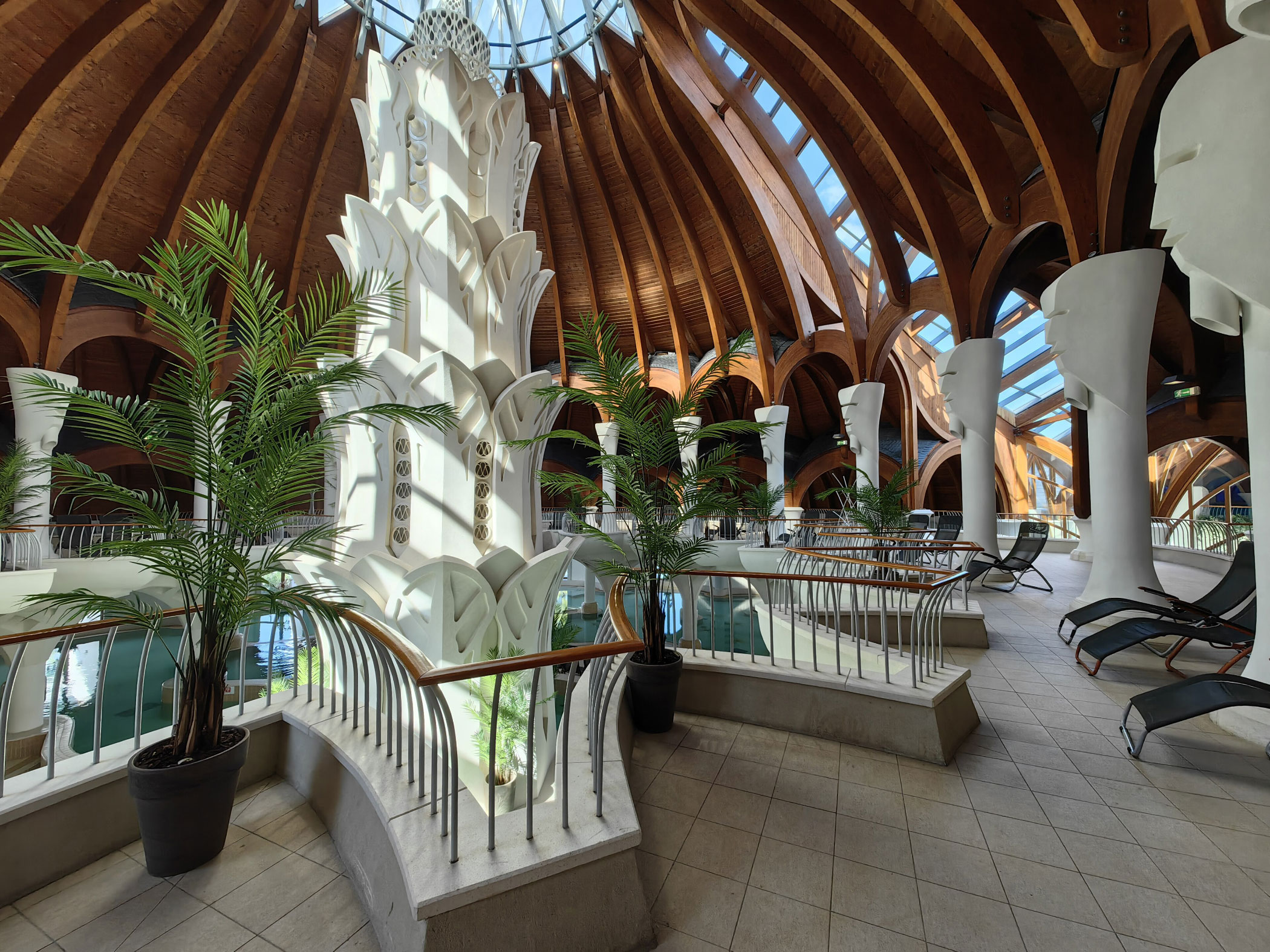
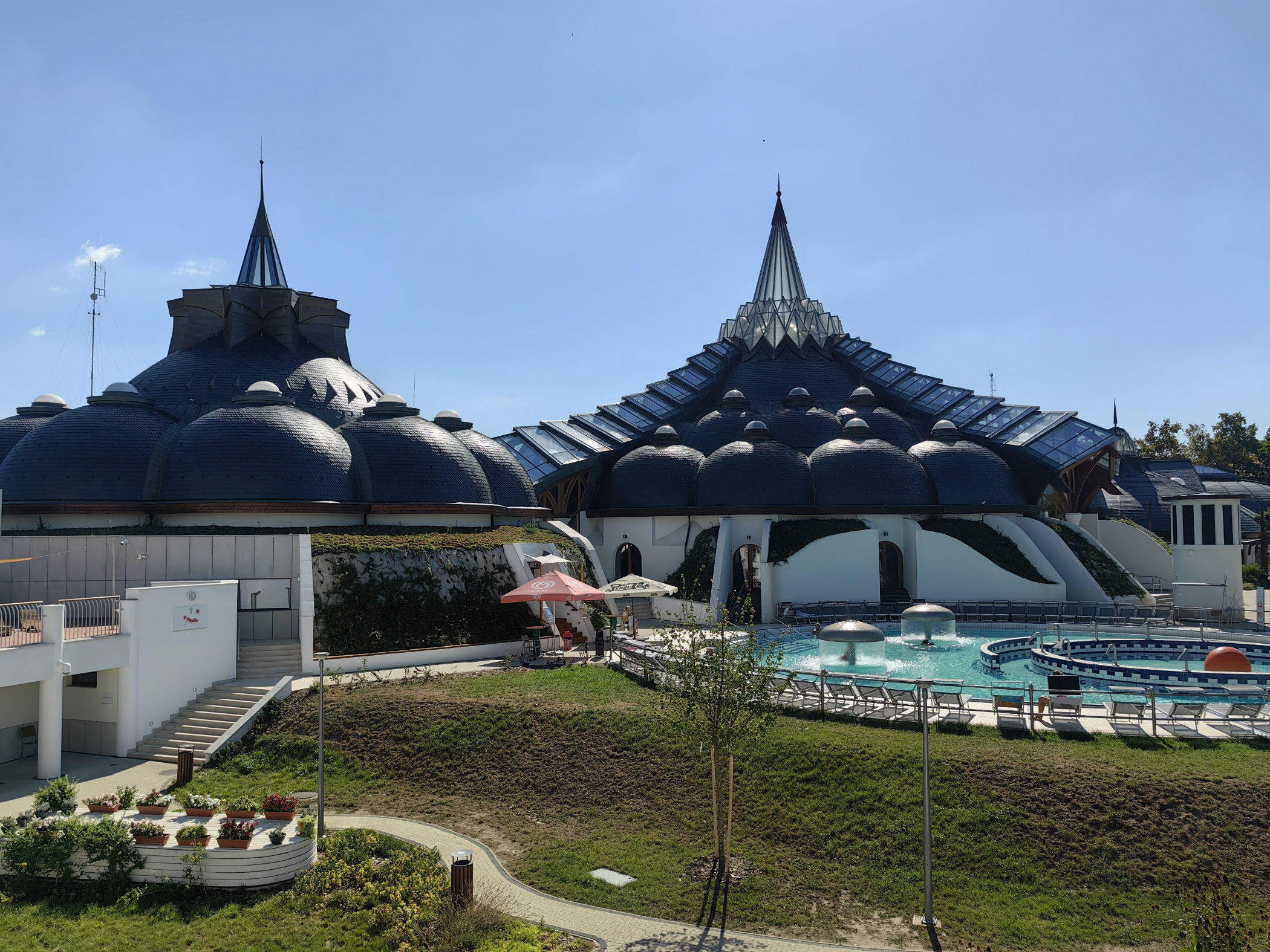
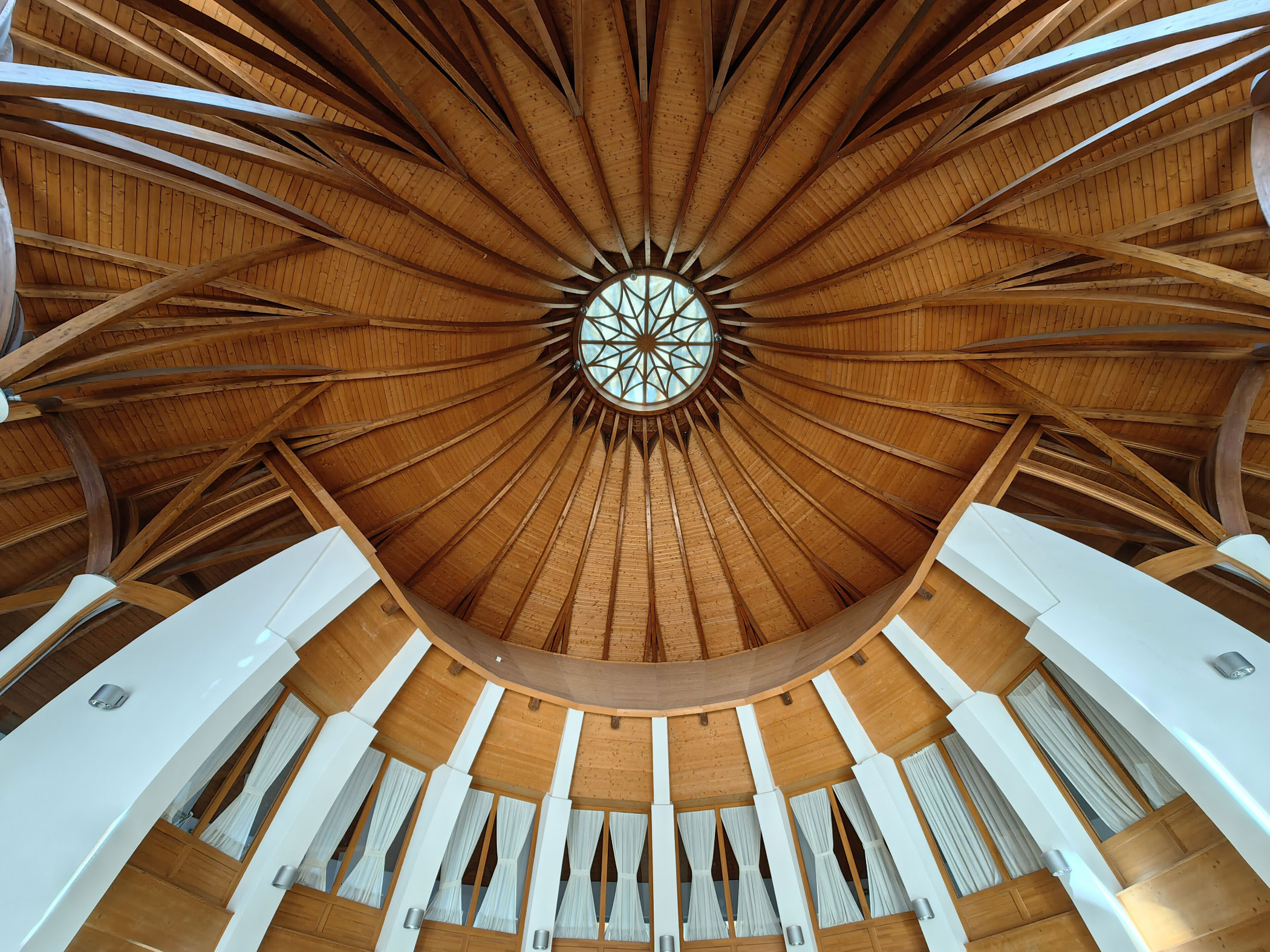
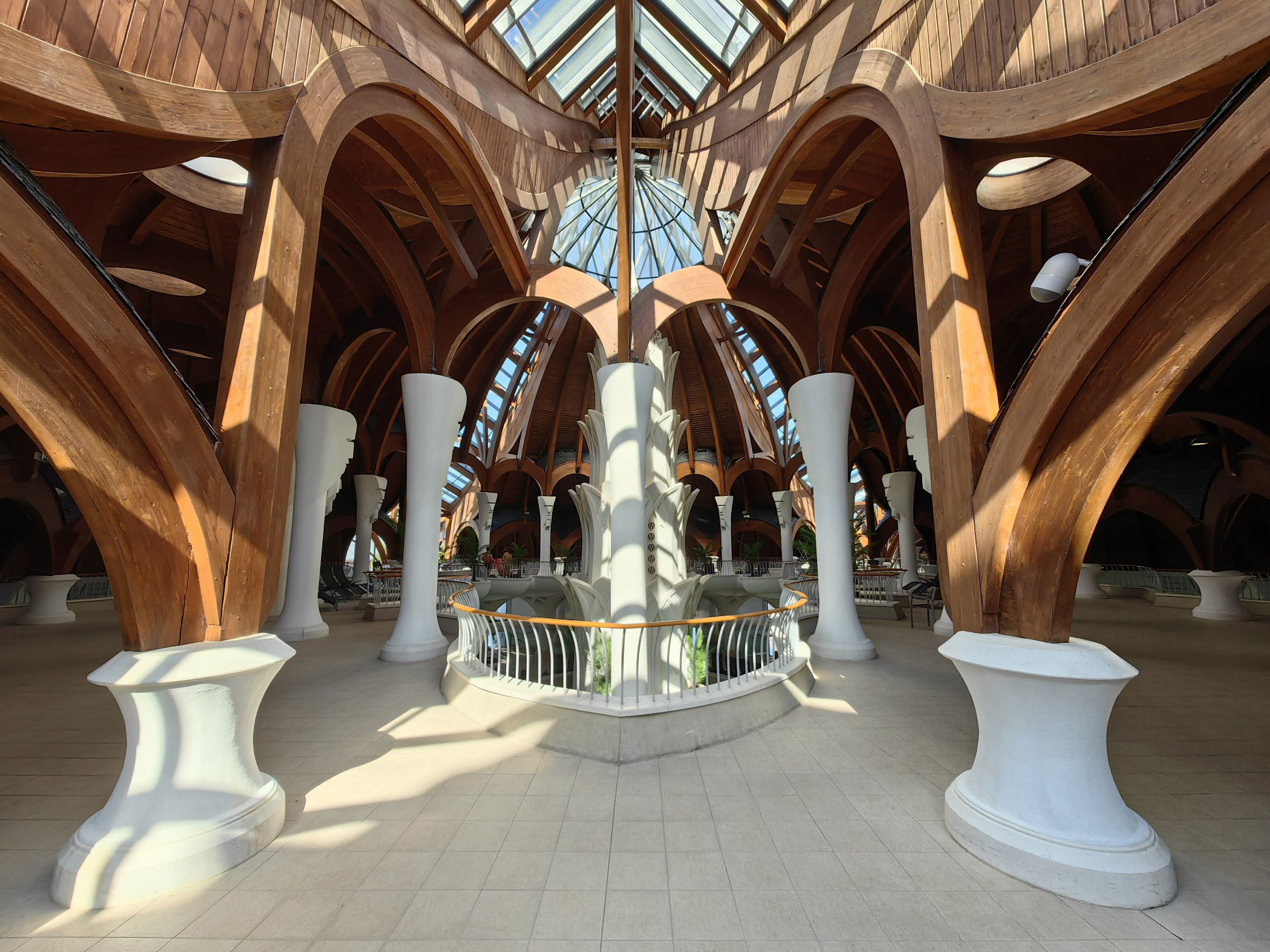
The building is, in Makovecz’s own words, the culmination of his search for architecture as a “harmonious union of building and surroundings”. Its exterior form, with its bulbous domes, inevitably evokes the onions of Makó, but also the domes of Turkish baths and the organic forms that characterise his style. In total, 29 domes of different sizes are distributed throughout the complex. The interior, decorated with angel wings, stylised human heads, flowing plant motifs and an abundance of wood in the roof structures, has something of a sanctuary about it, or even a church in which health and well-being are worshipped.
Its thermal waters, with an alkaline hydrogen-carbonate composition, are suitable for the treatment of joint and spinal conditions, arthritis, neuritis, nerve pain and muscle atrophy. Added to this is the medicinal mud from the Maros River, one of only five products of its kind registered in Hungary, with properties for dermatological, neurological, chronic musculoskeletal conditions and gynaecological inflammation.
HAGYMATIKUM-12
HAGYMATIKUM-4
HAGYMATIKUM-14
HAGYMATIKUM-5
HAGYMATIKUM-10
HAGYMATIKUM-8
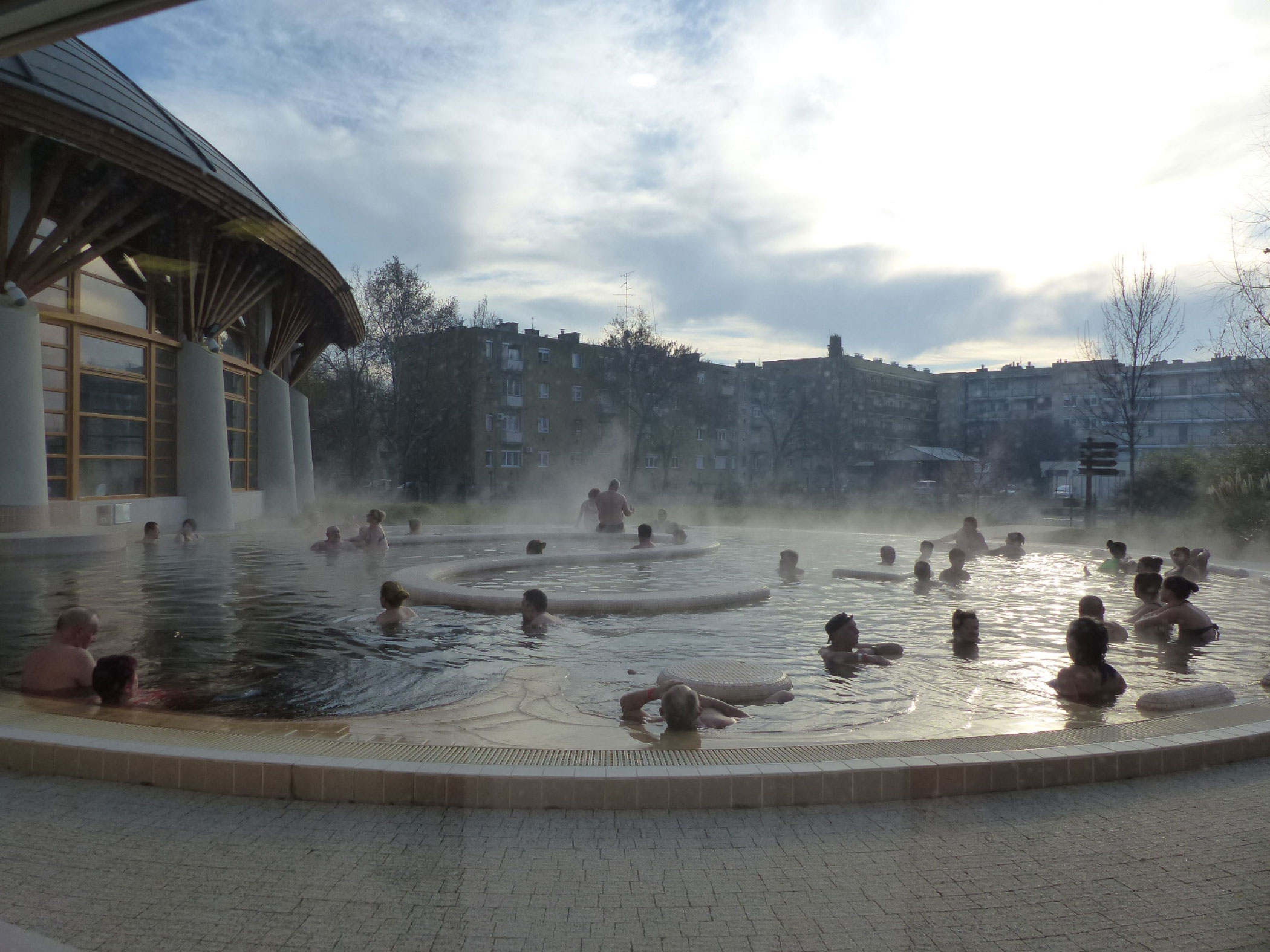
The sauna area is one of the largest in the country, with steam cabins, an intimate sauna, light sauna, herbal sauna, aroma sauna, infrared cabin, the Makó sauna —decorated with the local onion—, among others. A plunge pool, ice dispenser, experience showers and a children’s area, including a small adventure park, are added to the attractions of the thermal park. In 2024, the complex was expanded with a new wing of almost 2,500 m², featuring a family and aquatic adventure area, a water slide tower with starts from a height of 12 m, a partially covered thermal pool, an in-pool bar and a sunbathing terrace.
Hagymatikum offers leisure and tourism professionals —ourselves included— an interesting lesson: a singular building, with a strong visual identity and a story that intertwines heritage, health and architecture, has transformed a small town into a tourist destination of significance.
Sources: Hagymatikum, Wikipedia, Visit Hungary.