
The specialised magazine Park World Magazine, in its March (2026) edition, dedicated an extensive feature to the work of the Amusement Logic team at the Six Flags Qiddiya theme park in Saudi Arabia. Park World Magazine is one of the longest-running trade publications in the international leisure sector. It has a worldwide readership, including professionals, operators, and suppliers of amusement, water, and theme parks, among others. The magazine is published in English 11 times a year, in both print and digital formats.
The feature was published with the subtitle: “ How Amusement Logic translated narrative, engineering and extreme conditions into one of the world’s most ambitious theme parks.” Its title is: Theming at Scale: Delivering Six Flags Qiddiya. In addition to the details of the project, the article includes testimonials from some of the company’s technicians and professionals. For those of you who haven’t yet read it, we’ve included the full article below:
——-> Amusement Logic, an international design, architecture and construction company specialising in leisure and tourism, was appointed in 2022 to deliver theming works for Six Flags Qiddiya. Over a three-year period, a team of more than 350 professionals was dedicated to the project, undertaking the design, production and installation of themed elements across three of the park’s six lands.
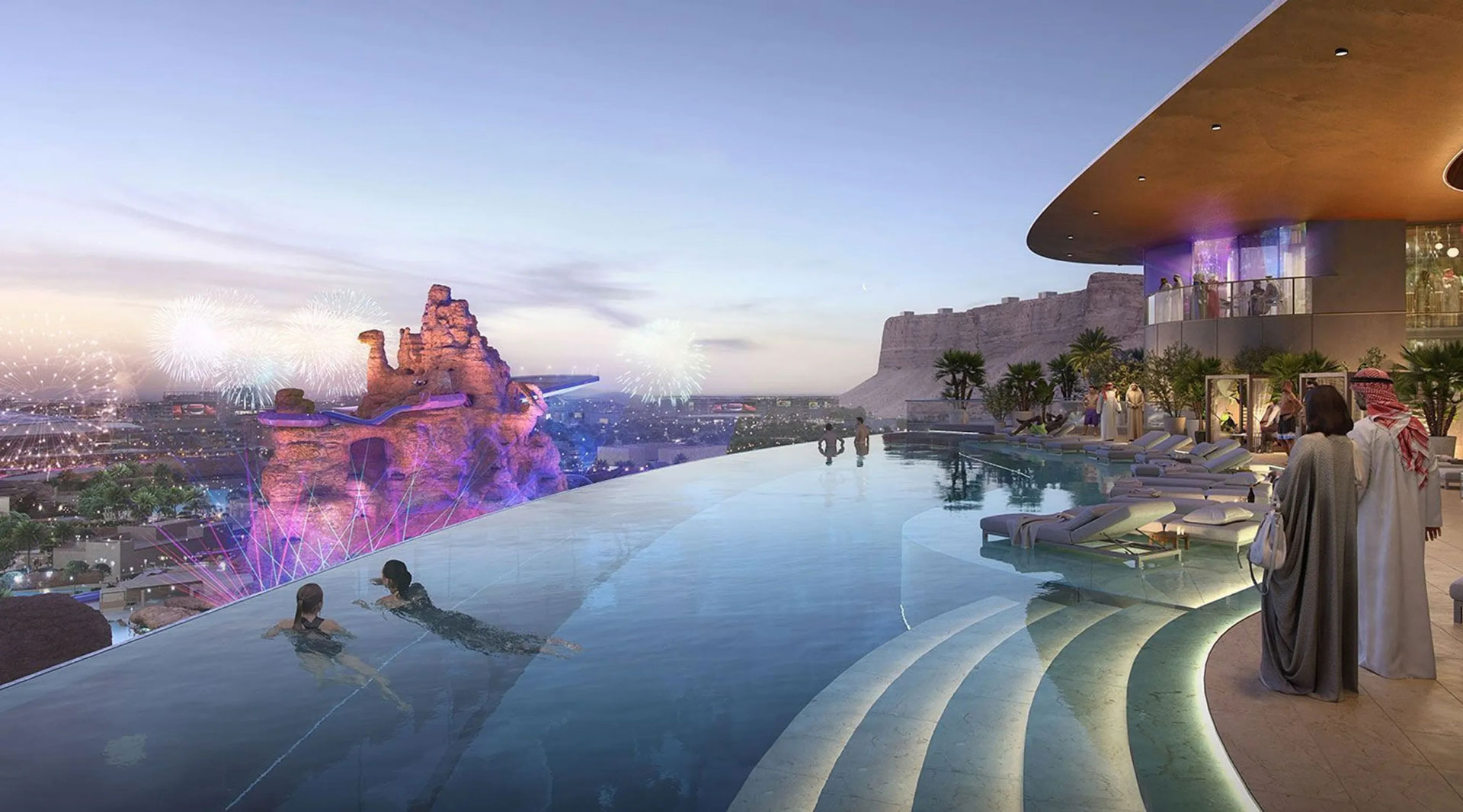
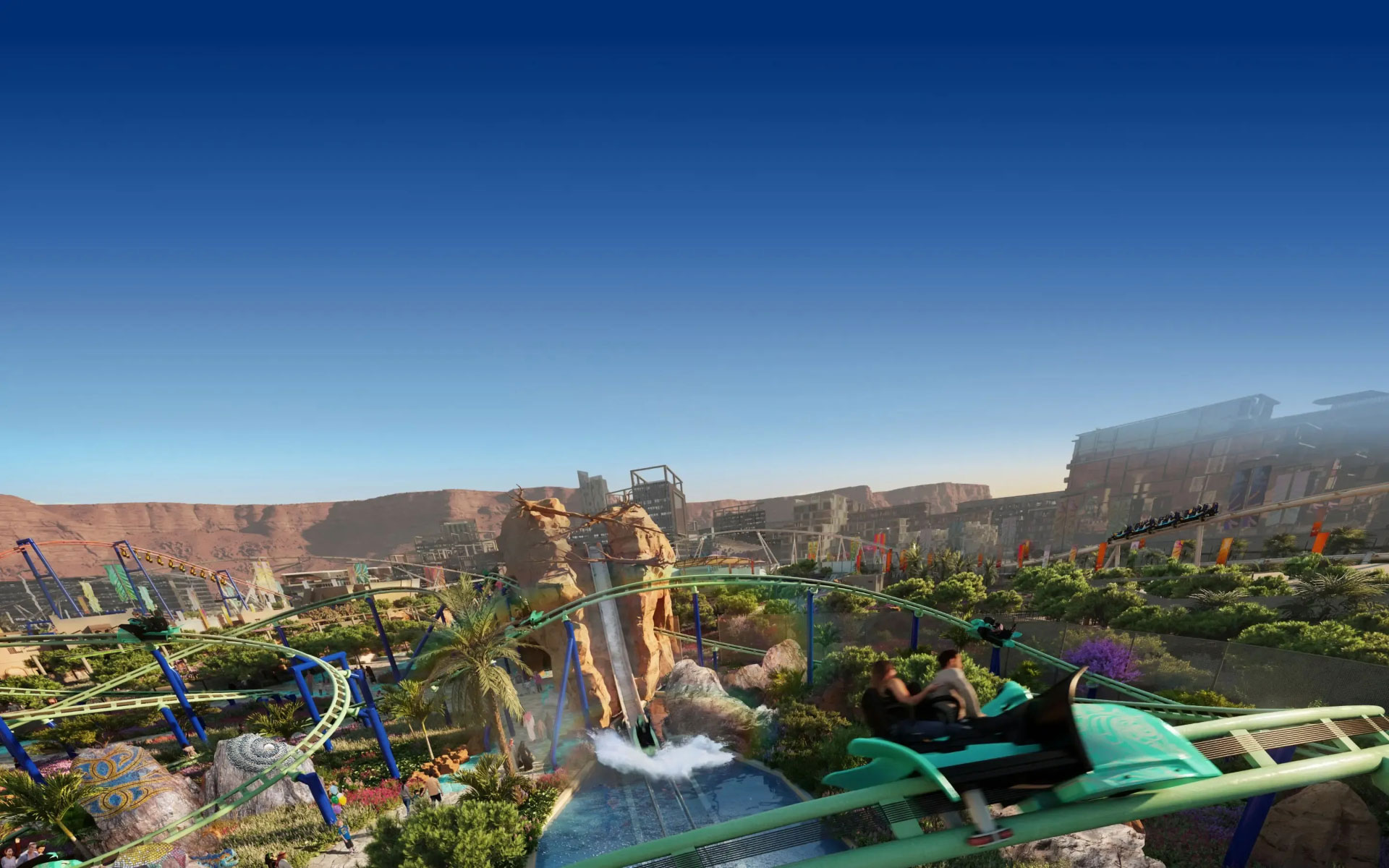
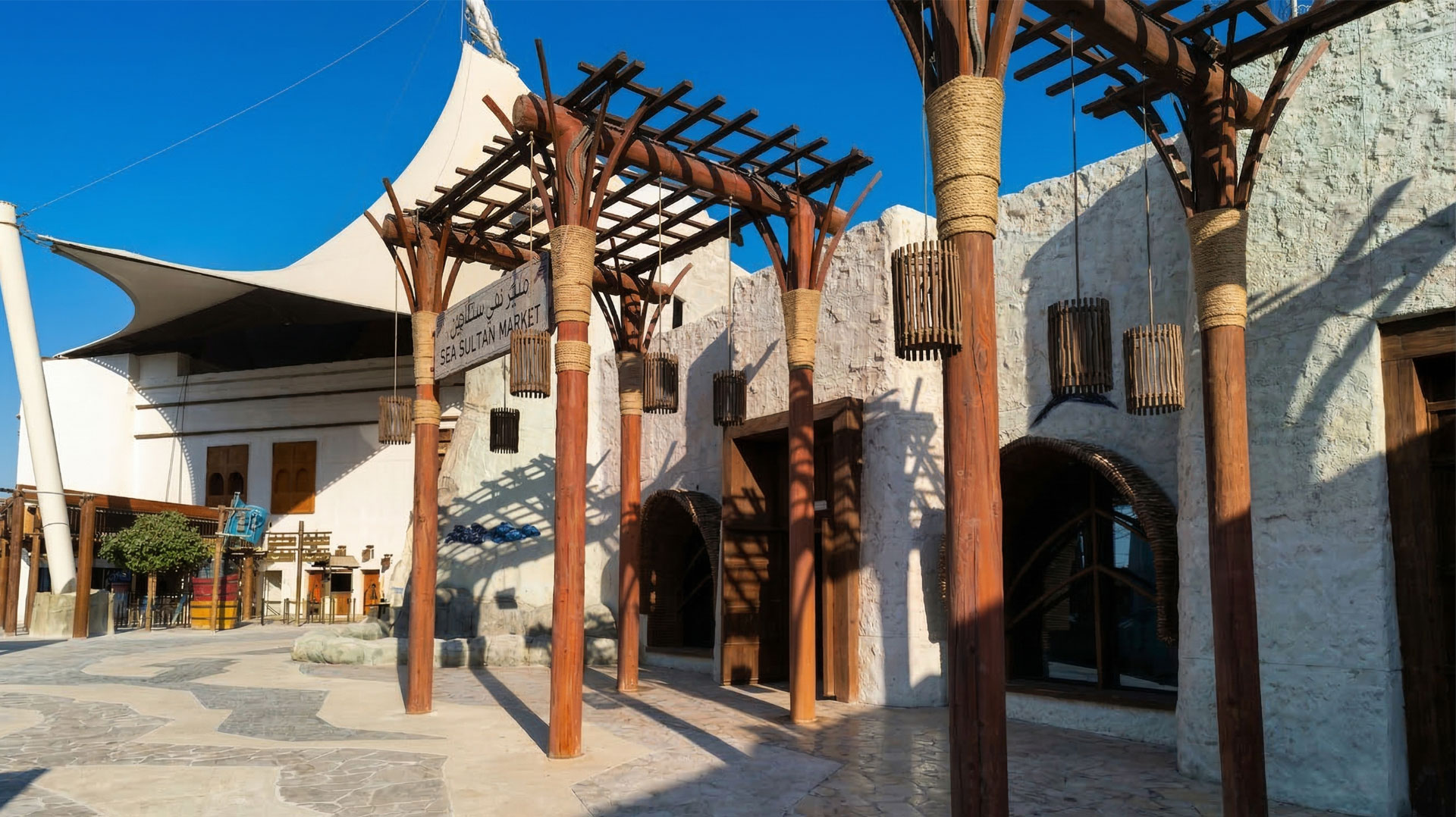
Scheduled to open in late 2025 as part of Saudi Arabia’s Qiddiya City gigaproject, Six Flags Qiddiya represents one of the most ambitious entertainment developments currently underway worldwide.
The scope of work included detailed design, engineering and on-site execution of a wide range of themed elements: artificial rockwork, façade cladding and decorative features, props, canopies and balustrades. These works required translating three distinct narrative identities into physical environments, each with its own material palette, construction systems and visual language.
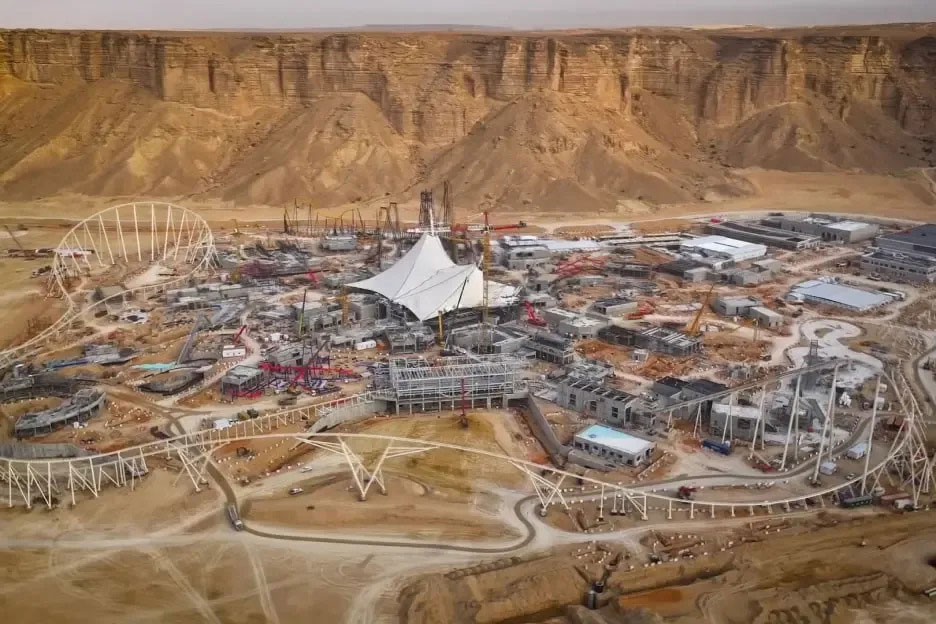
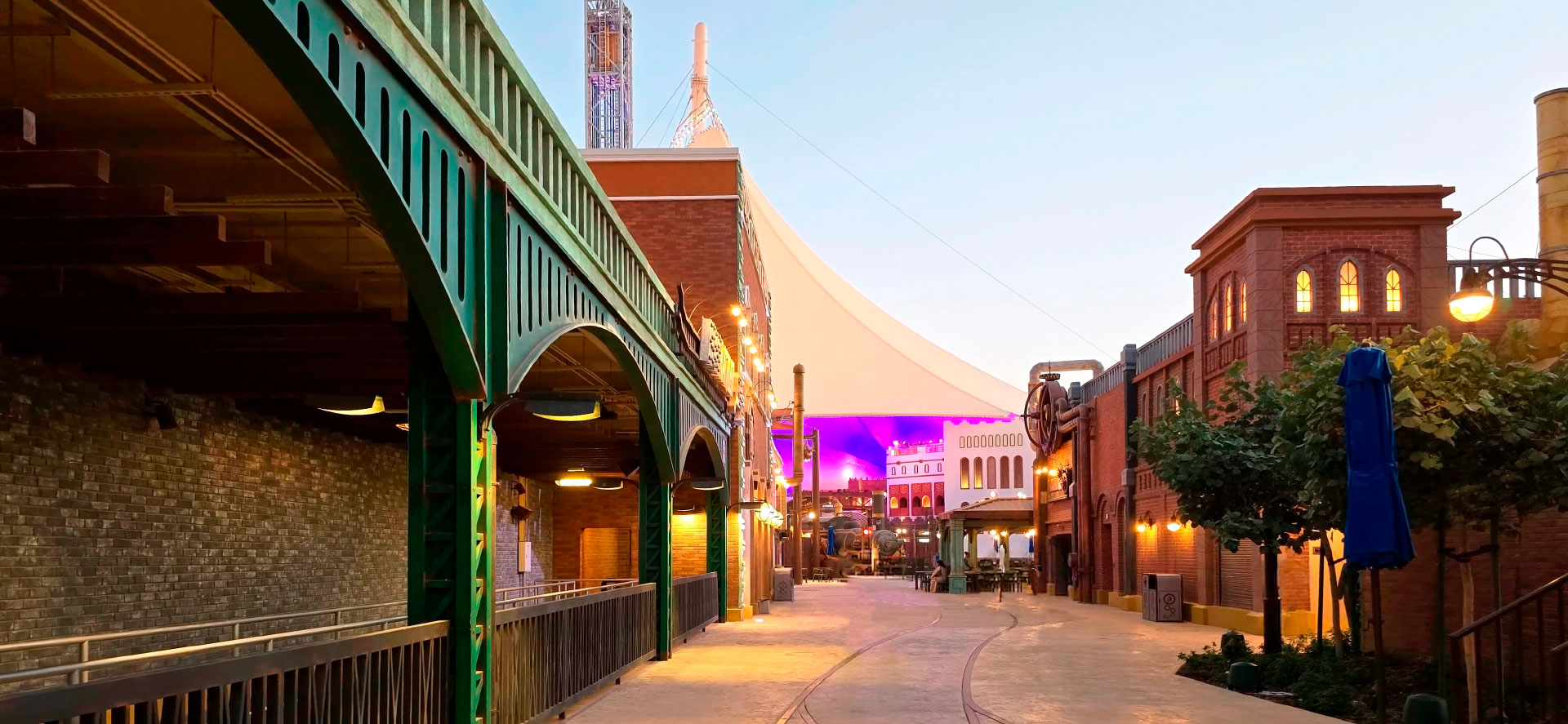
“Every object, façade and surface had to maintain the colour, texture and appearance defined in the design,” explains Enrique Zabala, Design Director at Amusement Logic. “It was a process of constant adjustment.”
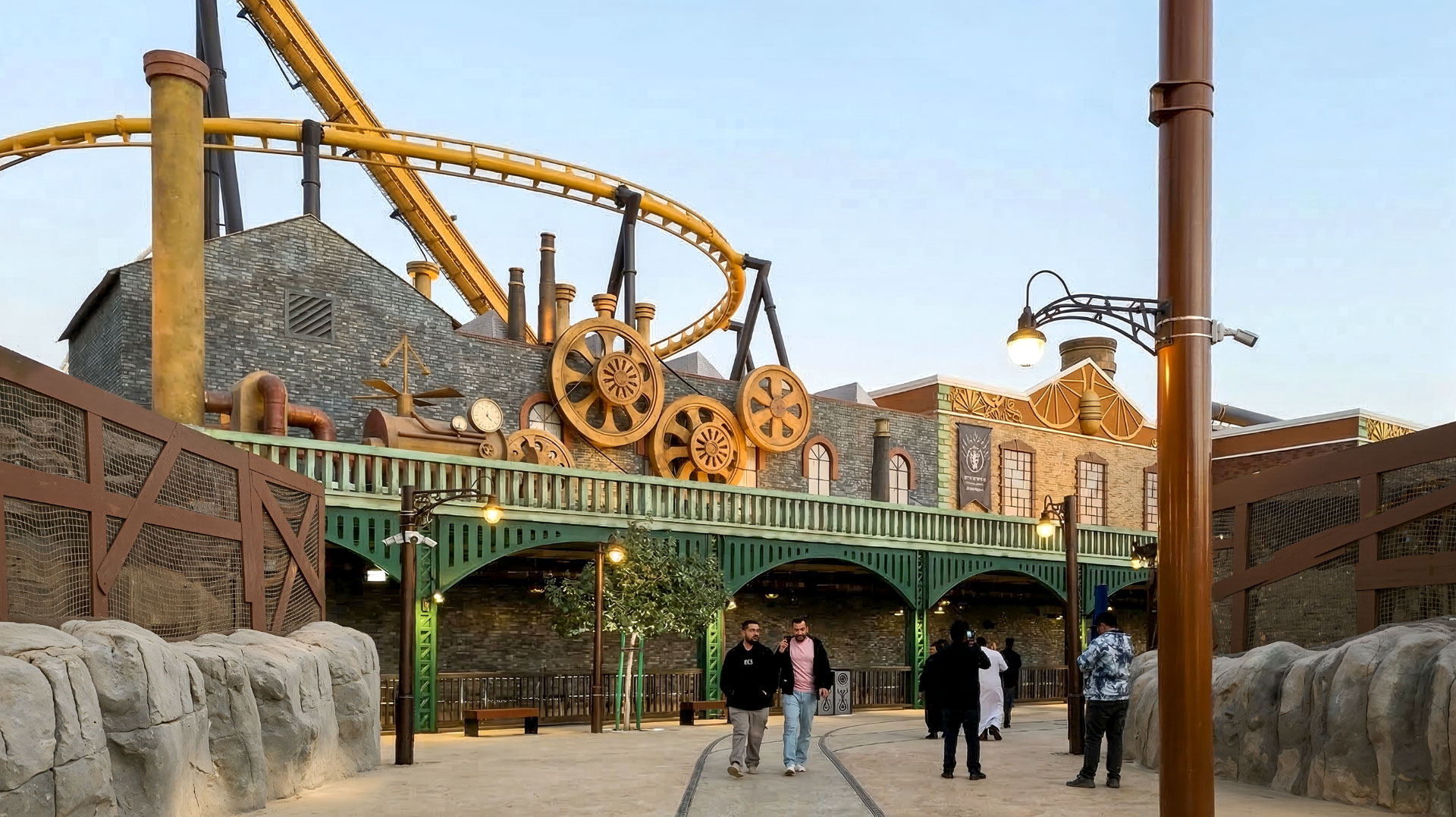
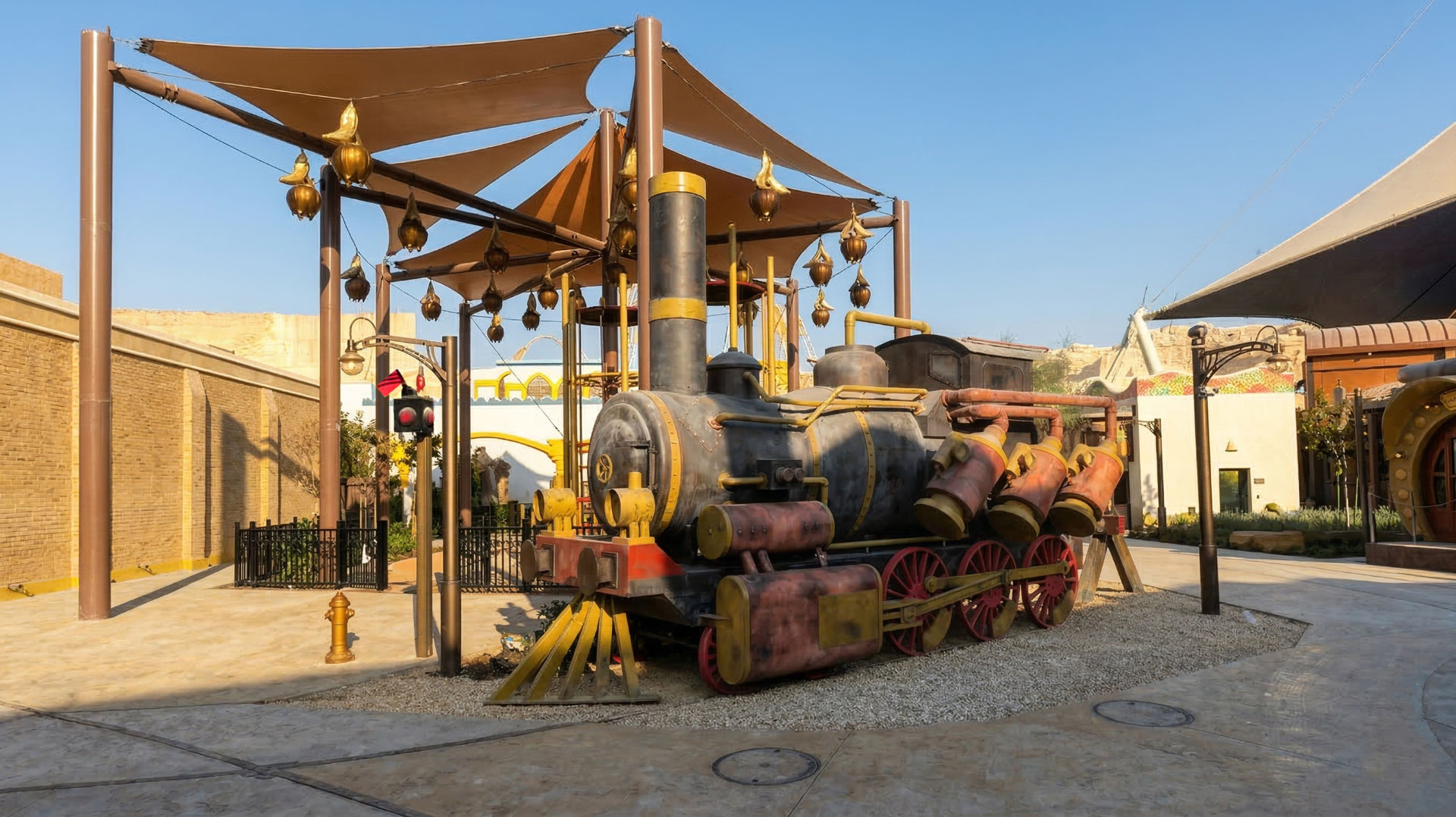
Steam Town, one of the themed areas, called for industrial finishes and aged textures to evoke a steam-powered world where past and future intersect. In Discovery Springs, conceived as an environment for water-based adventures, the team developed immersive landscapes of caves and rocky canyons. The third area, Basecamp, forms the main entrance to the park, introducing visitors to its thematic atmosphere from the very first moment.
However, the diversity of environments was only one of the challenges. Cristina Uchán, on site Design Director and Technical Coordinator, describes Six Flags Qiddiya as “a major professional and personal challenge: a demanding process combining the pursuit of creative excellence with logistical, technical and operational complexities”.
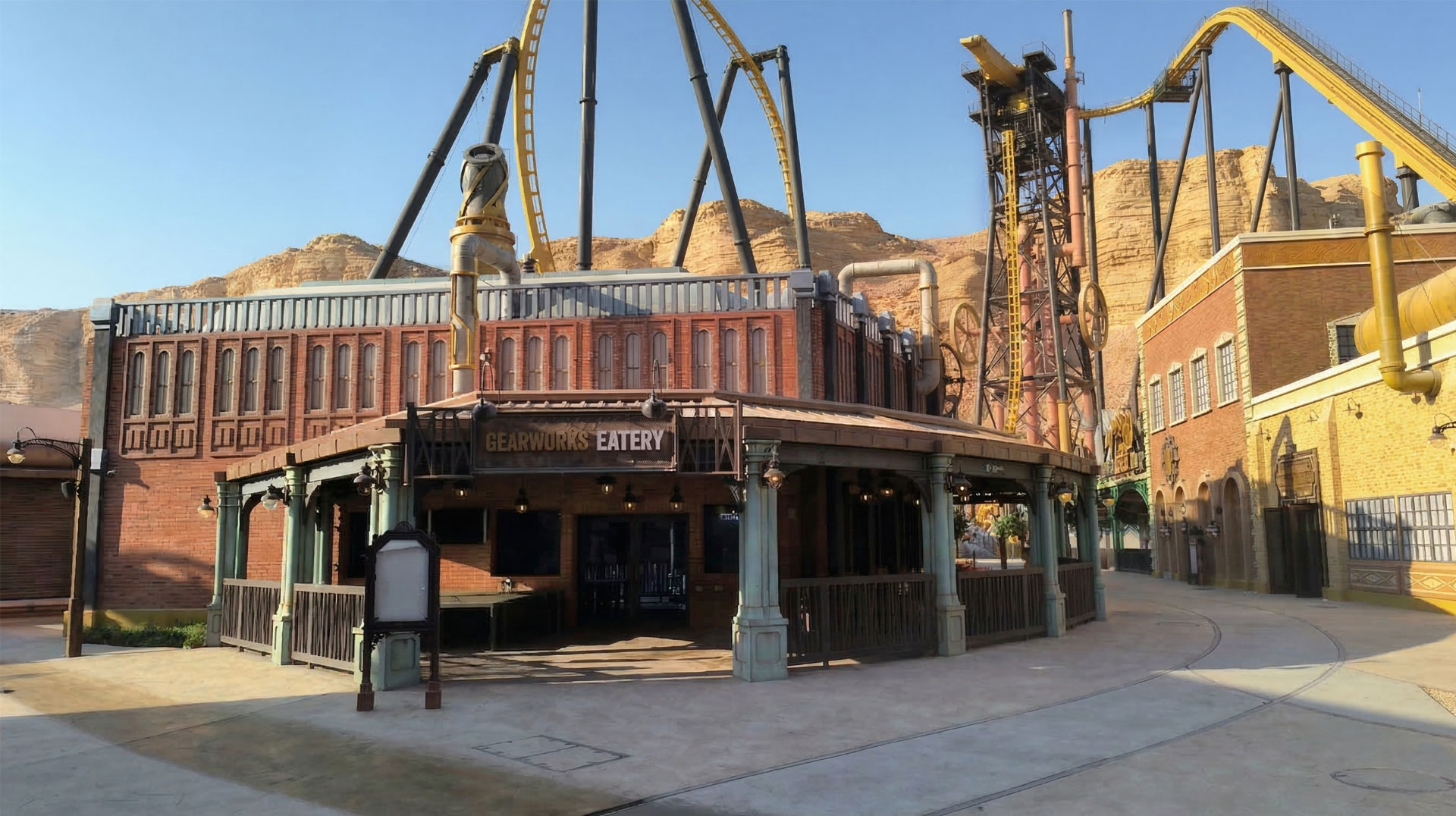
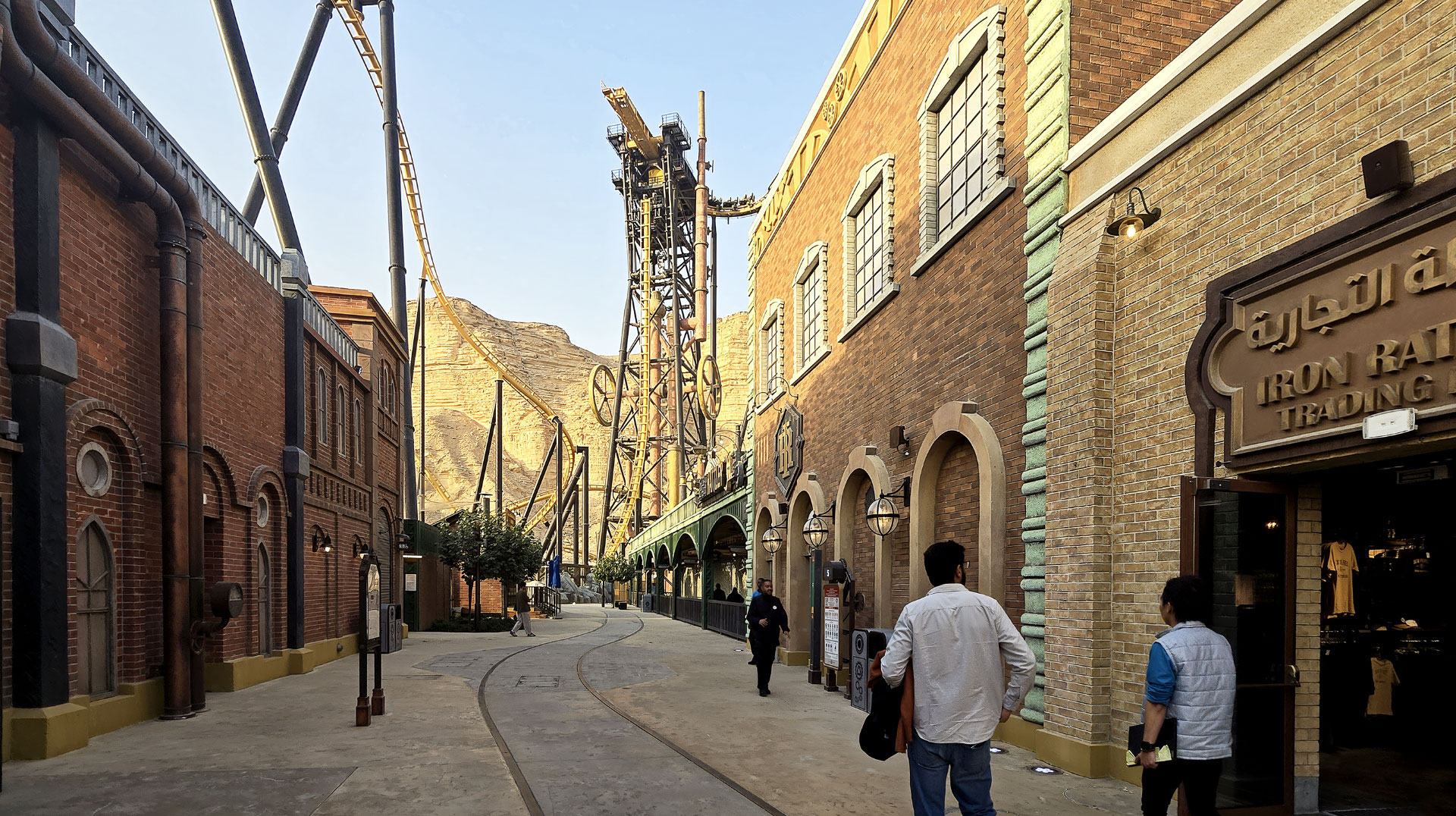
Among these complexities, the desert climate of the site required the development of specific materials and techniques to ensure durability under extreme environmental conditions. In parallel, the scale of the project demanded close coordination with numerous contractors working simultaneously across the park.
The integration of theming within large-scale attractions added another layer of complexity. Some themed elements had to be incorporated into rides of record-breaking dimensions, requiring precise alignment between design intent and structural and safety requirements.
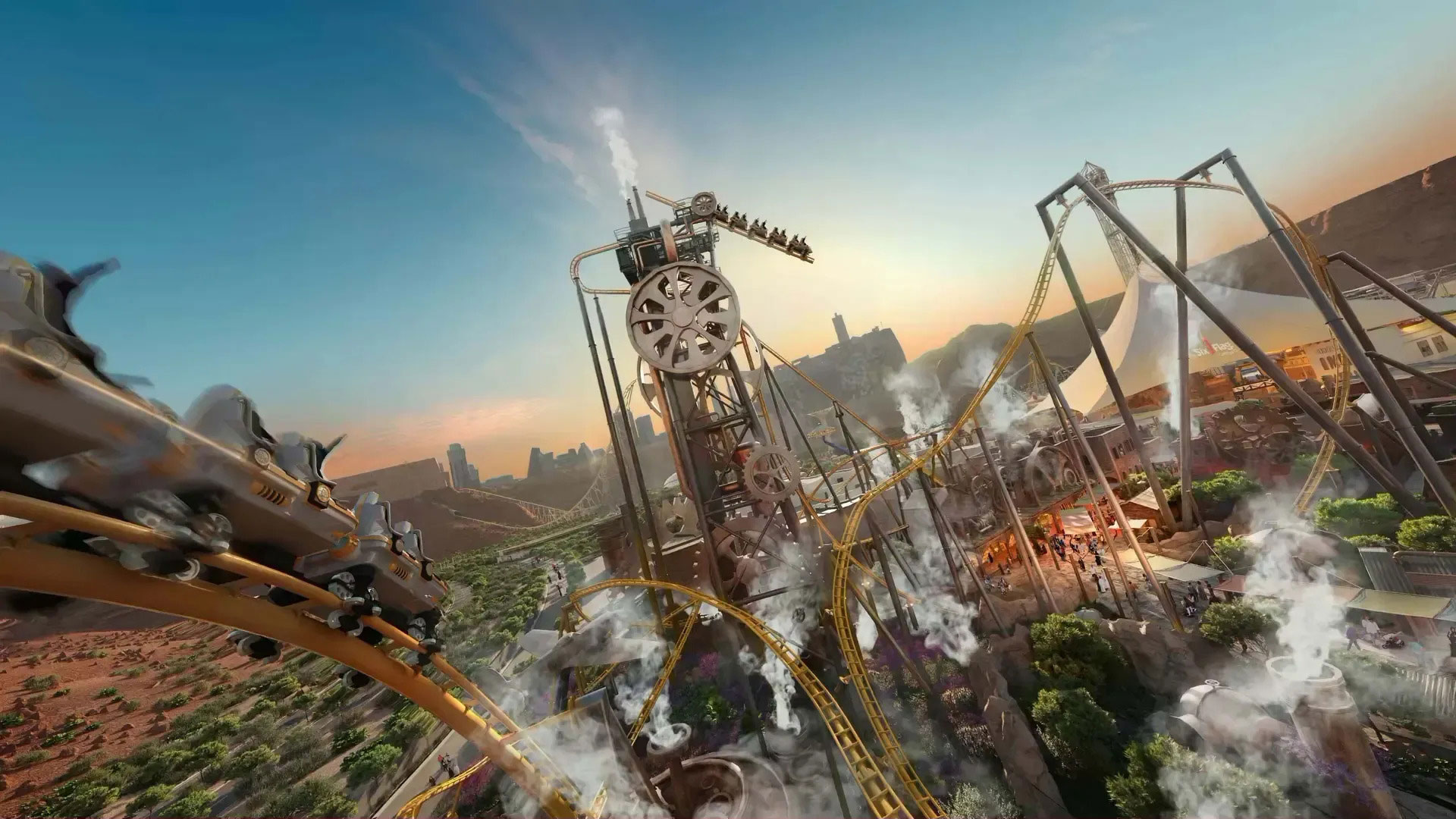
One notable example is Iron Rattler, one of the park’s flagship attractions. Its theming involved the installation of monumental scenographic elements, including a steam piping system exceeding 60 metres in length along the lift tower, as well as an underground tunnel designed to simulate an abandoned mine.
“Understanding the artistic intent of the project and turning it into reality has been a titanic task,” says Project Director Hernán Spaccesi. Working within a development of the scale of Qiddiya City —backed by Saudi Arabia’s Public Investment Fund as part of Vision 2030— also required meeting tight deadlines while maintaining international quality standards.
“Six Flags Qiddiya has been more than a theming project,” adds Spaccesi. “It has been the convergence of creative design, engineering, wit and resilience. Given its scale and location, it was only possible thanks to the commitment of a highly skilled and diverse team.”
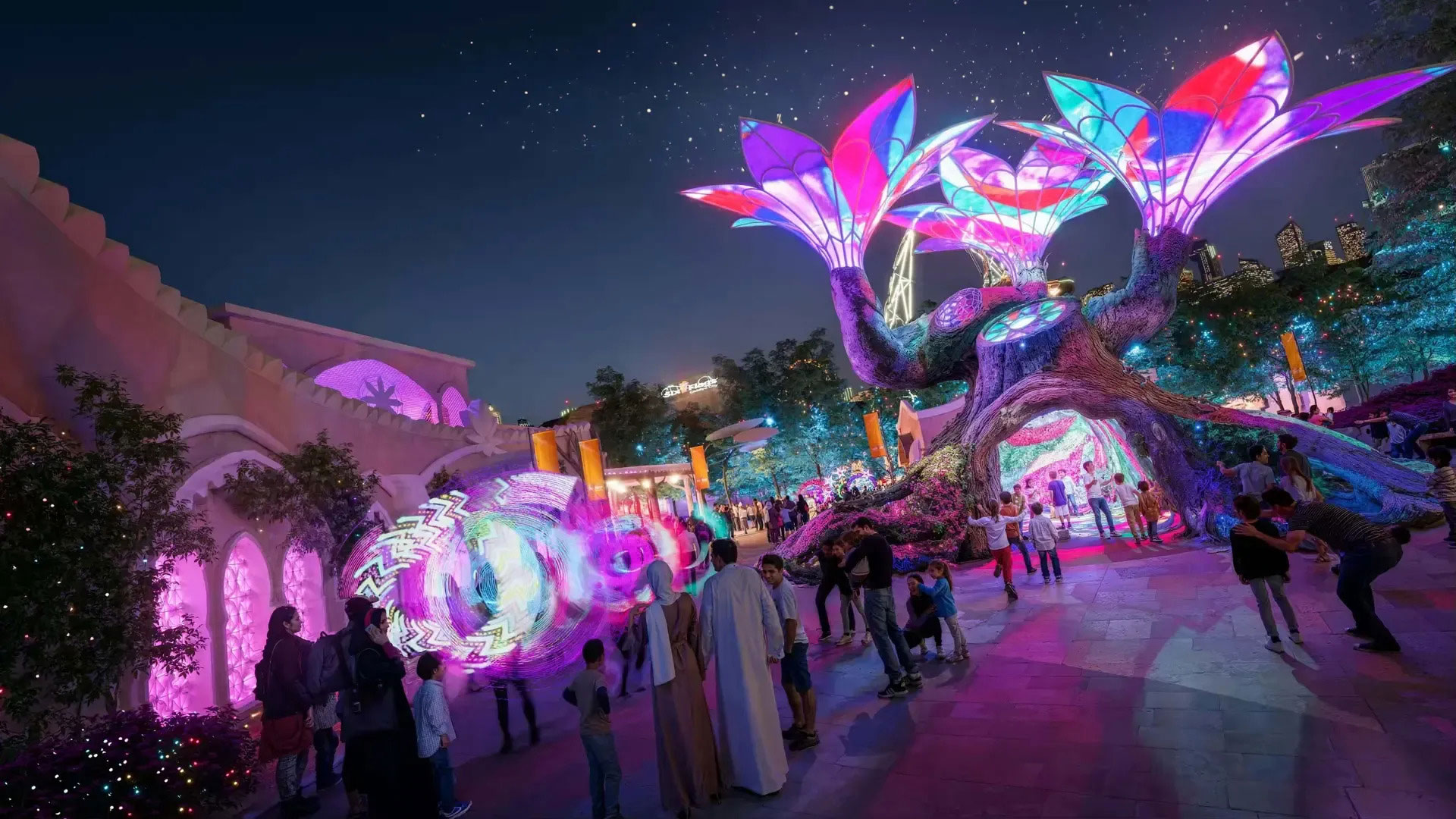
All themed elements were specifically developed for the park through controlled processes of prototyping, validation and production. This approach ensured both technical performance and visual consistency across the different areas. Beyond the satisfaction of delivering the project to the client, the team highlights the importance of the final user experience. As Spaccesi concludes, “our real reward is seeing visitors enjoy the attractions immersed in a world we helped bring to life”.
For industry professionals, Six Flags Qiddiya offers a valuable case study in large-scale theming for new-build developments. Starting from a blank canvas made it possible to integrate themed elements with architecture and engineering from the earliest stages of the project —a key factor in achieving narrative coherence. In projects of this nature, theming moves beyond decoration to become a form of narrative infrastructure, shaping how visitors perceive and experience the environment.
The six lands of Six Flags Qiddiya are now set to operate as a cohesive whole, delivering unique experiences to visitors from around the world. At the same time, the design and construction process has generated valuable knowledge that will inform future developments, particularly in the production of non-standardised elements, multidisciplinary coordination and the integration of theming within next-generation attractions. As Cristina Uchán reflects, “through commitment, passion and continuous effort, we achieved a true symbiosis between art and construction, creating a unique immersive experience”.