
Although riding a motorbike on the road, having a shower after exercising or sliding down a water slide are completely different activities, all three are linked to the movement of fluids and the forces they generate. Let’s look at how and why.
Air and water, despite their differences, share some fundamental physical laws. One of the best known is Bernoulli’s principle, which establishes a relationship between the speed, pressure and energy of a moving fluid. This principle states that, under certain conditions, when a fluid increases in speed, its pressure decreases.
Now, let’s imagine we’re riding a motorbike and a vehicle overtakes us at high speed and at very close quarters. It’s quite possible that, in that situation, we’ll experience a lateral force pulling us towards it. This is because, when two vehicles are travelling close together, the air flowing around their bodies interacts and creates differences in pressure. If the pressure in the space between the two vehicles is lower than on the opposite side, a resultant force arises that tends to bring them closer together.
Another example occurs when we take a shower. Why does a light shower curtain tend to be drawn inwards and stick to our legs? Although it may seem surprising, the explanation is also linked to the movement of air and pressure differences. The water droplets coming out of the shower drag the surrounding air with them and create circular movements inside the shower. These movements sometimes form a vortex with a region of lower pressure, which causes the curtain to be drawn inwards. It is a complex phenomenon involving the movement of water, air circulation and pressure differences.
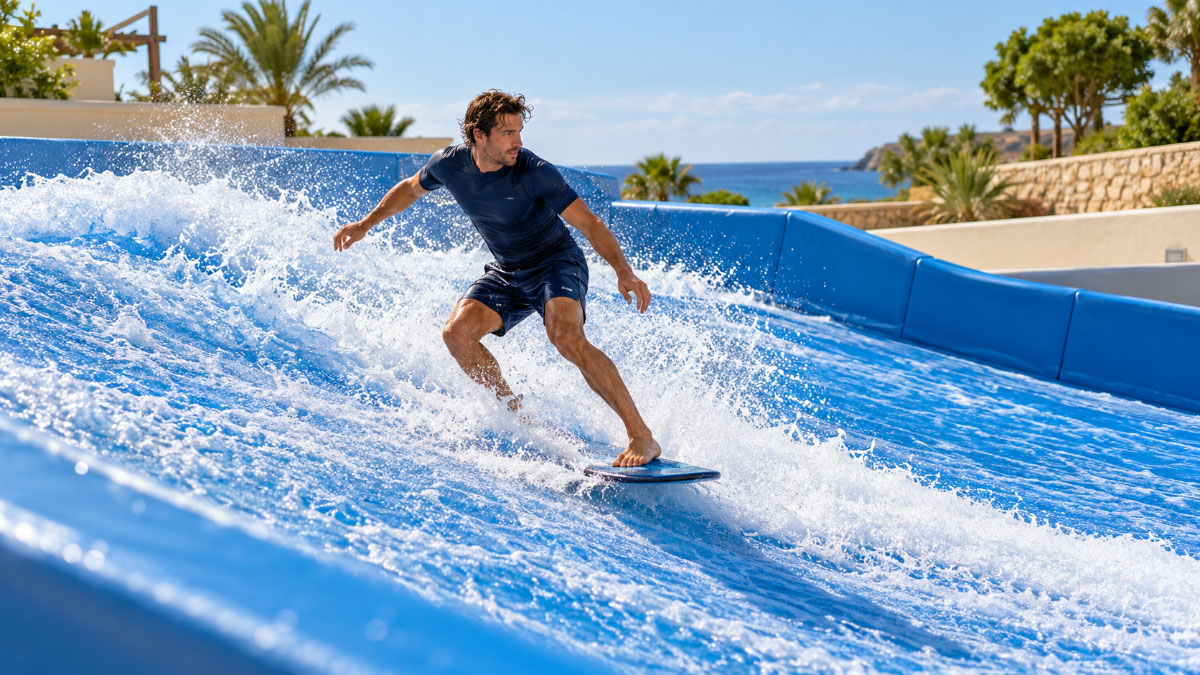
These same principles also play a fundamental role in the design and operation of water parks. On water slides, the water accelerates and decelerates as it travels down different gradients, through bends and along changes in cross-section. These variations in speed are linked to changes in pressure and the transformation of energy. Understanding these phenomena enables the design of slide routes, the sizing of water supply systems and the analysis of the hydraulic conditions required to provide a safe and thrilling experience.
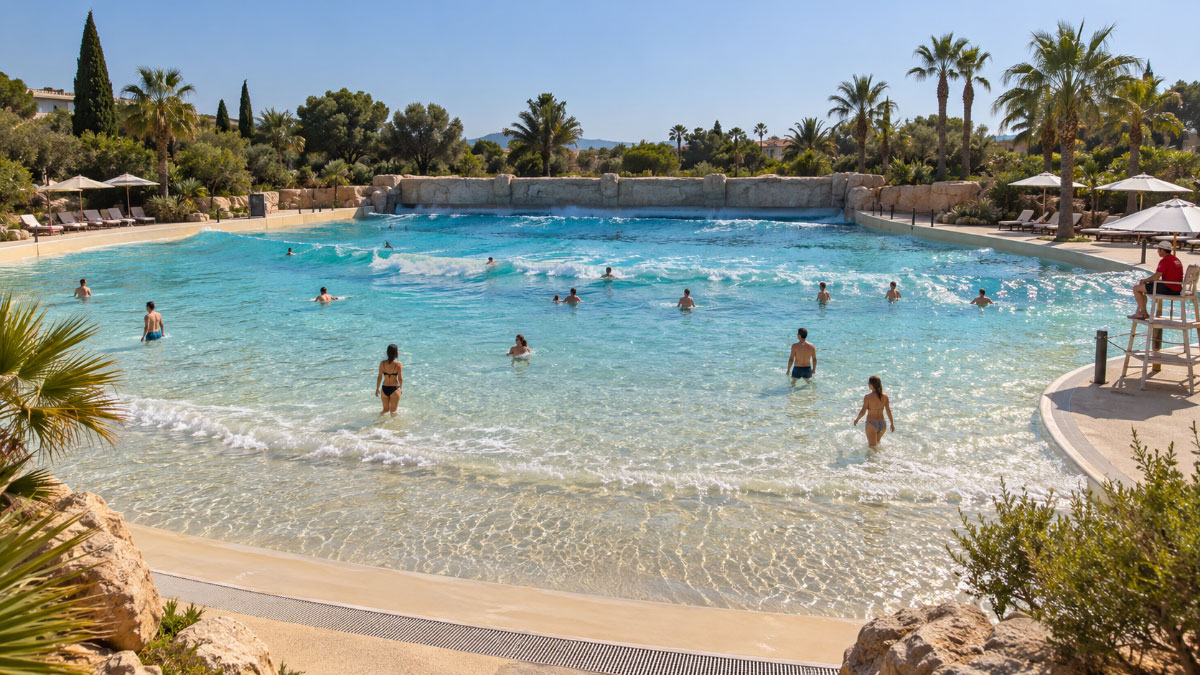
In wave pools, for example, pneumatic systems use controlled variations in air pressure to displace large volumes of water and produce waves with different characteristics. In this case, pressure is directly converted into a tool for creating waves and, consequently, the experience they provide for bathers.
In lazy rivers, the geometry of the course, pressure differences and propulsion systems determine how the water flows. An optimised hydraulic design makes it possible to achieve relatively uniform speeds, avoid areas of stagnation and generate currents that gently carry bathers along the course.
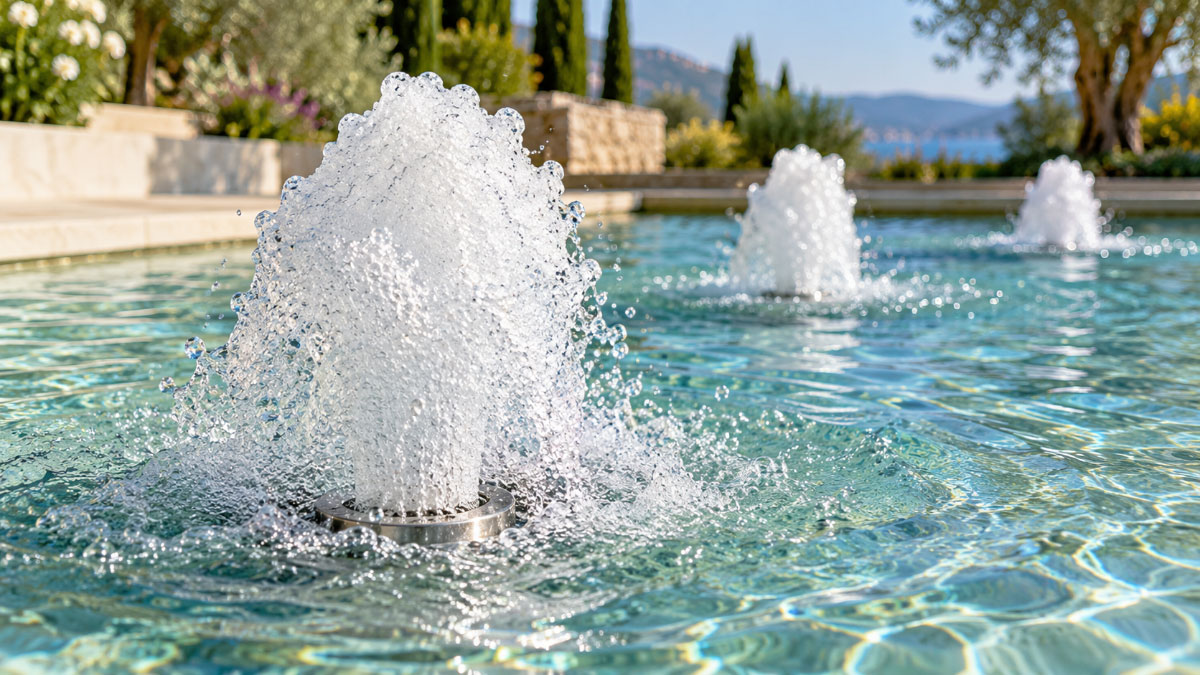
Another particularly interesting example of the interaction between fluids and the forces they generate is the Venturi effect: when water passes through a constriction, its velocity can increase whilst its pressure decreases. This property is utilised, amongst other applications, in devices that allow air to be incorporated into a water current, thereby generating an aerated spray, bubbles and certain visual effects.
By Carlos Rodríguez, specialist in Hydraulics and Water Attractions in the Architecture Department at Amusement Logic