
Memorable experiences have become one of the main objectives in the design of attractions for theme parks and adventure parks. To achieve them, it is necessary, in part, to convey to users a sense of risk —or any other emotion related to adventure and curiosity— under conditions of maximum safety. In other words, the key to achieving that objective lies in ensuring that the emotion arises from the visitor’s perception of the attractions and not from any real danger.
Effective resources for producing emotions within this spectrum are height and depth. Elevated viewpoints, suspended walkways, bridges, routes over artificial rocks or panoramic balconies introduce an emotional dimension associated with vertigo and adventure. Although these structures comply with strict safety criteria, they nevertheless activate psychological mechanisms linked to exploration and challenge.
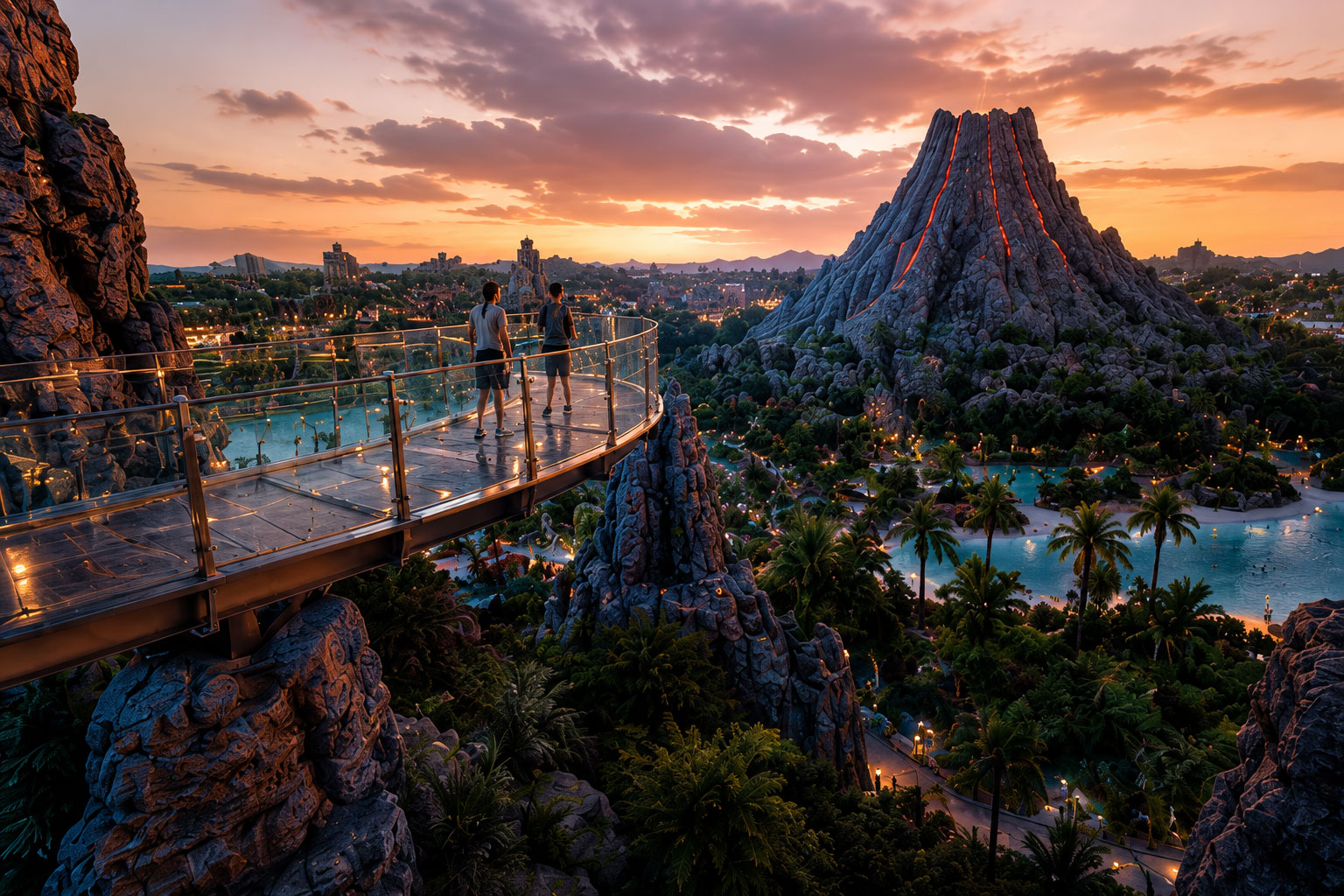
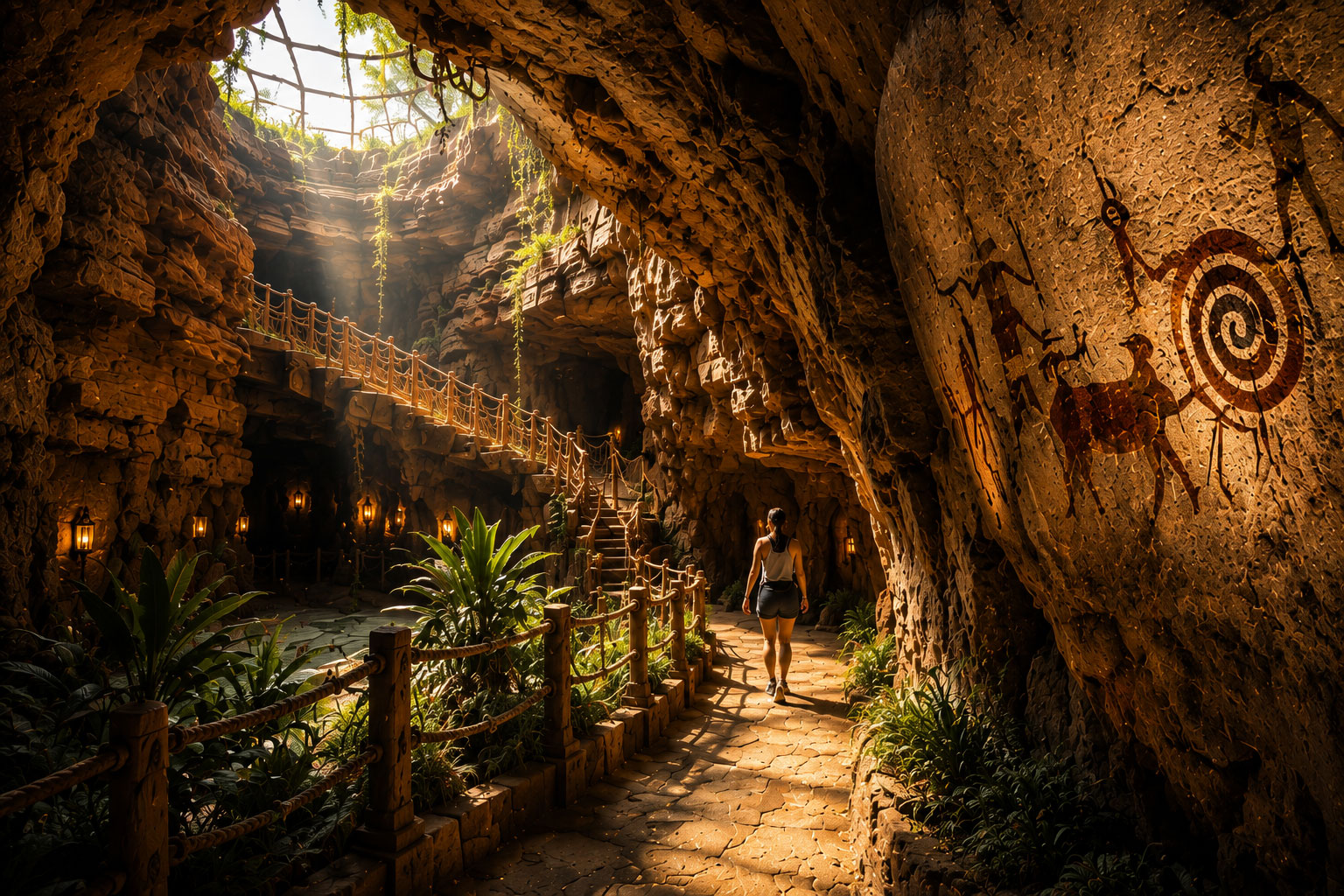
Adventure can also be created through narrative tension along the route. Or through interaction with water or other natural elements. Or by recreating fictional settings. Every design decision —the height of a walkway, the width of a gorge, the sound of the water, the appearance of a waterfall or the partial concealment of the route— contributes to a carefully orchestrated sequence of stimuli.
Theming reinforces users’ perception in theme and adventure parks through scenes inspired by mountains, canyons, caves, ruins or natural landscapes, while also making use of other elements that heighten the drama. Likewise, plays of light and shadow, changes in scale and carefully designed perspectives maintain a sense of unease and mystery. Sound —the murmur of water, moving vegetation, ambient music or specific sound effects— also creates an enveloping effect and forms part of the immersion, making it more intense.
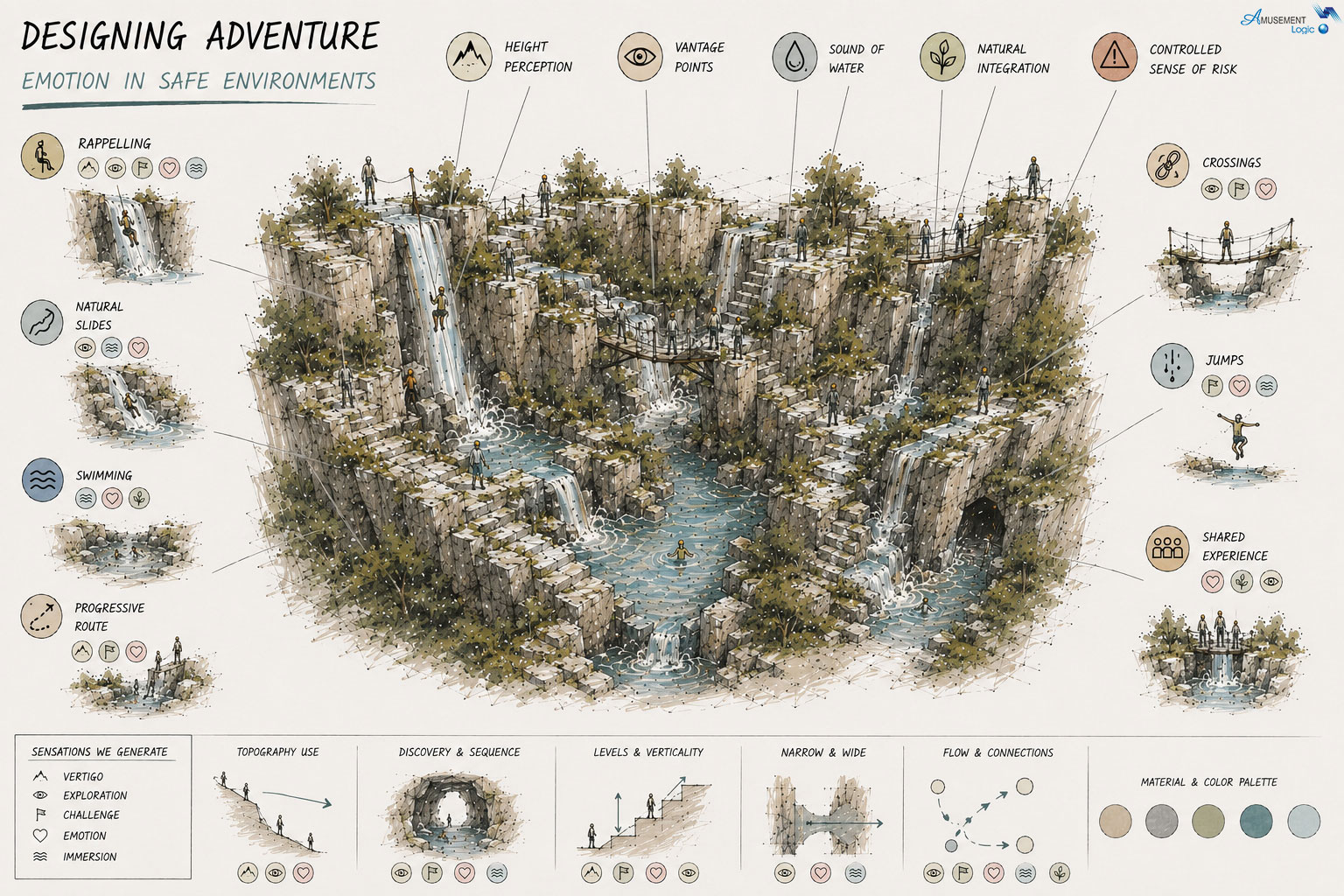
Artificial canyoning courses are a paradigmatic example of the power of design to define adventure. In them, architecture, engineering, hydraulics and theming work together to recreate the experience of descending a natural canyon. Waterfalls, narrow passages, pools, bridges, changes in level, and so on create immersive routes that stage a continuous sequence of discoveries and challenges, while the technical, operational and safety aspects remain at all times under control.
By Cristina Uchán, Senior Architect in the Architecture Department of Amusement Logic