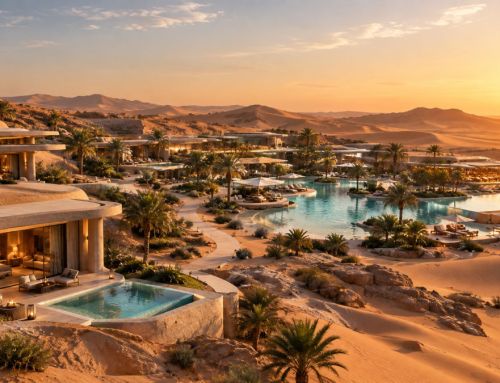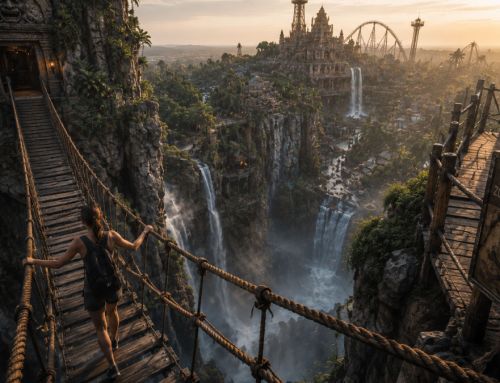

During the day, the landscape reveals itself in its entirety; one need only turn towards it and it unfolds, with scarcely any mystery, in the light. However, as night falls, the space fragments, folds in on itself and becomes camouflaged: a texture appears on a rock, the water casts a reflection, a tree is cloaked in shadows, or a path leads to an unknown place – or to nowhere at all. This is precisely what night-time design is all about: deciding what to reveal, what to insinuate, what to leave in semi-darkness and what to conceal.
In hotels and resorts, water parks and leisure and tourism complexes, the design of the night-time atmosphere transforms the experience of visitors and tourists without physically altering the site. Low-angle lighting accentuates the relief of a surface; a body of water amplifies the light; vegetation, selectively illuminated, adds depth and establishes hierarchies. The interplay between light and shadow guides the gaze and creates an evocative atmosphere. It is essential to avoid flooding everything with light, but rather to use it like a paintbrush or a designer’s pencil.
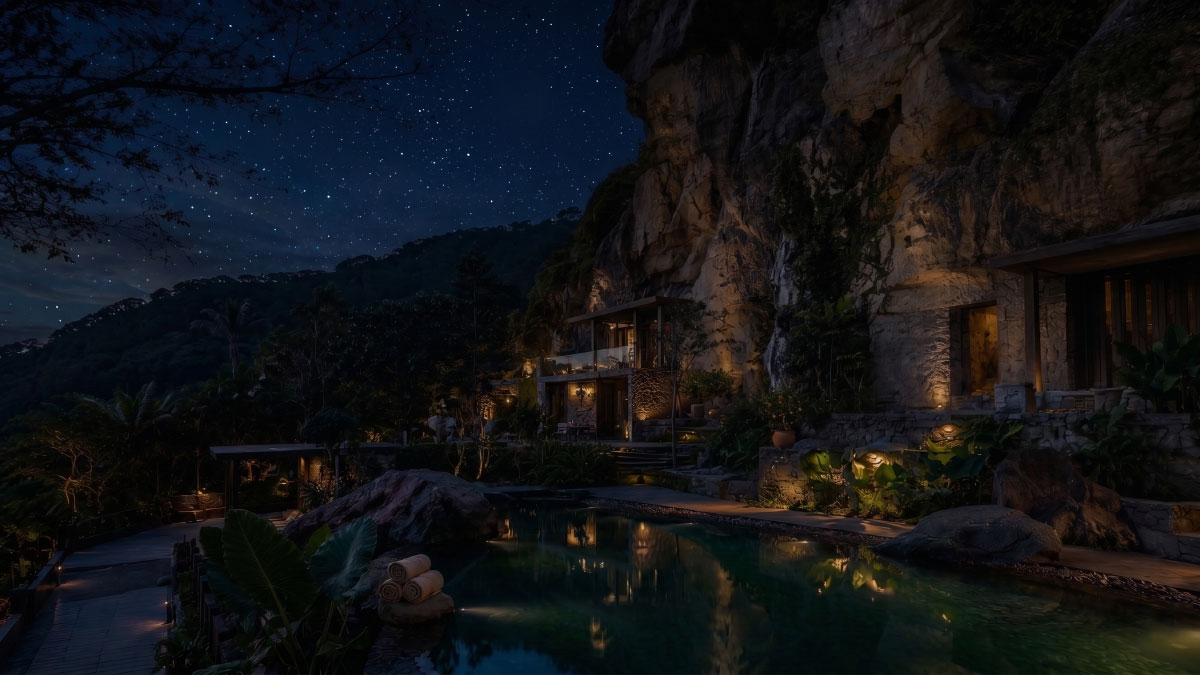
Architecture also takes on a new dimension thanks to light and shade. They mark an entrance, guide a route, highlight a roof or soften the transition between indoors and outdoors. When incorporated into the design from the earliest stages of a project, lighting ceases to be a purely functional element and becomes part of the space’s identity.
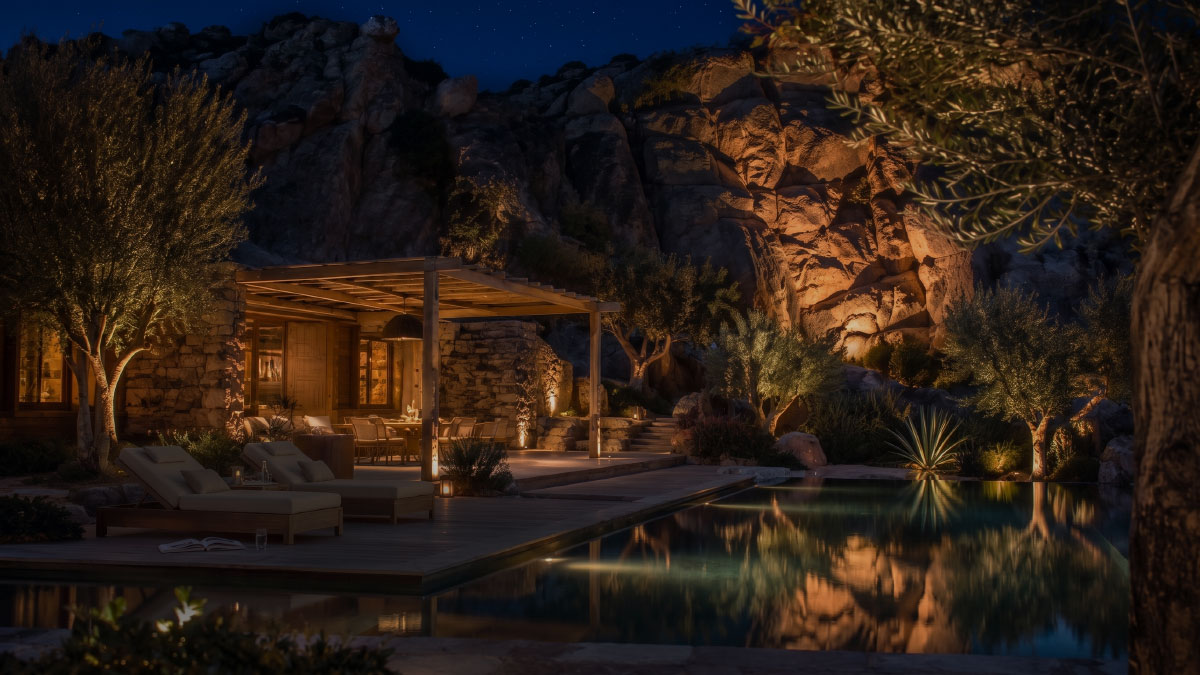
Carefully considered lighting enhances the night-time experience of these destinations: walkways, al fresco dining, waterside areas and relaxation spaces take on a unique character after dark. The value of the design lies not so much in adding light, but in using it with precision. Yet just as important as knowing when to illuminate is knowing when not to. Preserving dark areas reduces glare and energy consumption, whilst also bringing the starry sky into focus. The night then ceases to be a mere extension of the day and becomes a unique experience.
By Gabriela Gallego, designer in the Design Department at Amusement Logic