
We often limit our understanding of sustainability strategies for hotel or resort projects, theme parks, water parks, campsites, or even shopping centres to simply offsetting their impact on nature, reducing their footprint on the landscape, or minimizing their environmental impact. However, from a more advanced perspective, this approach is insufficient. Tourist and leisure destinations must offer more; they must avoid merely blending in and instead enhance the places where they are located.
From this more advanced viewpoint, we consider solutions grounded in nature itself. It’s not just about protecting what remains of it. It’s about utilizing its inherent functions and materiality, its very foundation, as strategic infrastructure: hotel spaces that protect beaches, areas filled with vegetation that capture carbon and cool destinations, lakes and pools that naturally purify water… And also—this is where Amusement Logic’s work comes in—attractions that blend seamlessly into the landscape, spaces that neither birds nor wildlife can distinguish from nature itself.
We’re referring to canyoning parks, lazy rivers, and naturalised themed attractions. These are integrated into nature not as mere decoration, but as part of the business model. Let’s look at three examples:
Canyoning parks represent the first of these. They are artificial canyoning circuits that recreate, with extreme fidelity, the natural canyons formed by millennia of river erosion; jumps into the water, rock slides, waterfalls and caves, climbing walls, etc. Their contribution, beyond the spectacular scenery, is that they reduce human pressure on natural environments and support biodiversity.
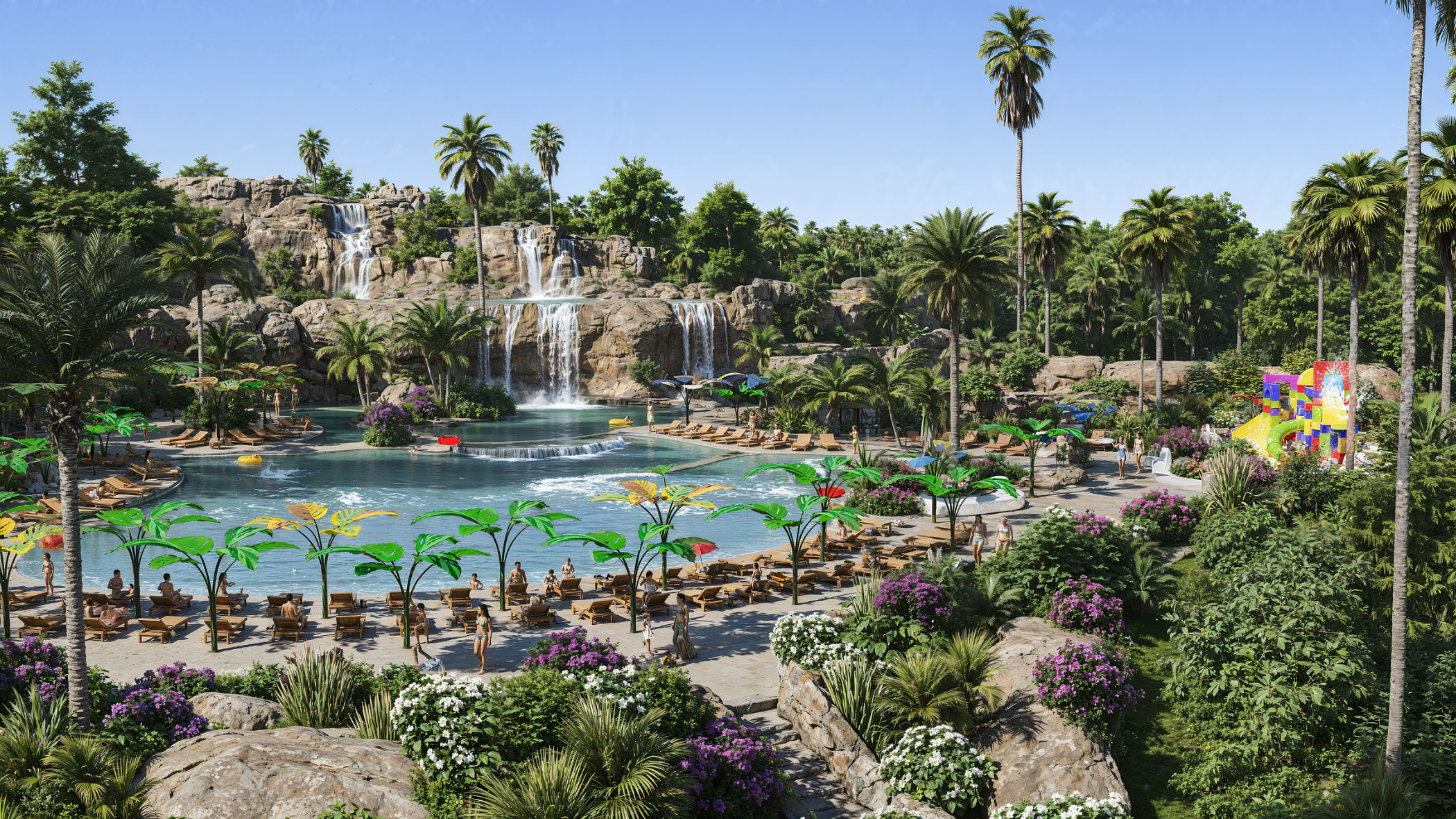
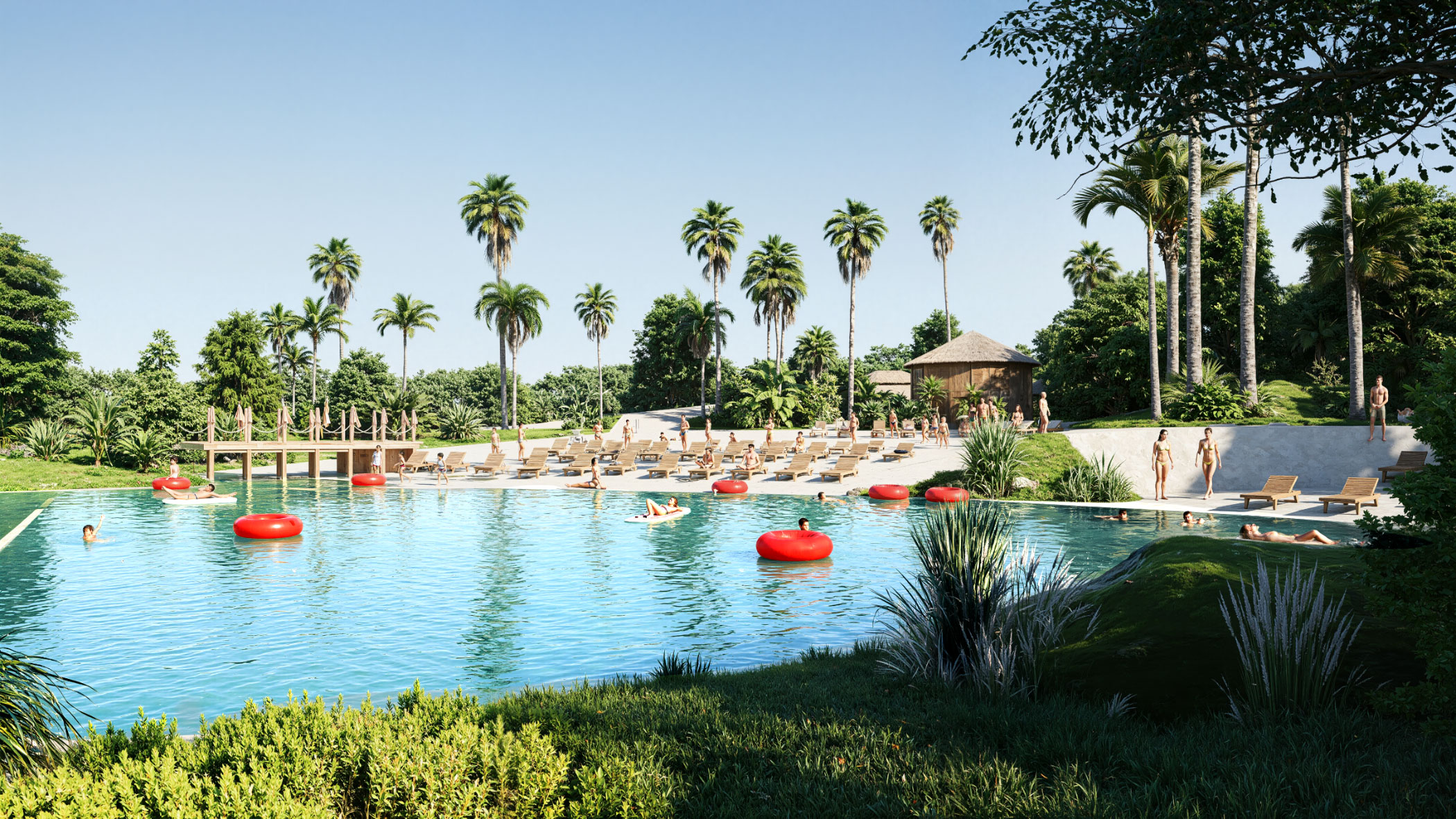
Another example is River Lagoons. These represent almost an ecosystem in themselves. Imagine a water park where the main attraction isn’t concrete, but a meandering river, lush plants, river beaches, waterfalls, and rocks. The water slides, children’s pools, and other attractions are integrated into the landscape. It’s a tourist destination that embodies continuity with nature; it is, in fact, nature by design.
The third example is the naturalised lazy river. The uniform, predictable, and bare channel is now transformed into open curves, intimate corners for relaxation, changes in width, variations in depth, accessible islands, and gently sloping beaches. All within an integrated system, dotted with rock formations, waterfalls, and dense vegetation. Visitors, guests, and tourists no longer simply float, but choose, discover, rest, or play.
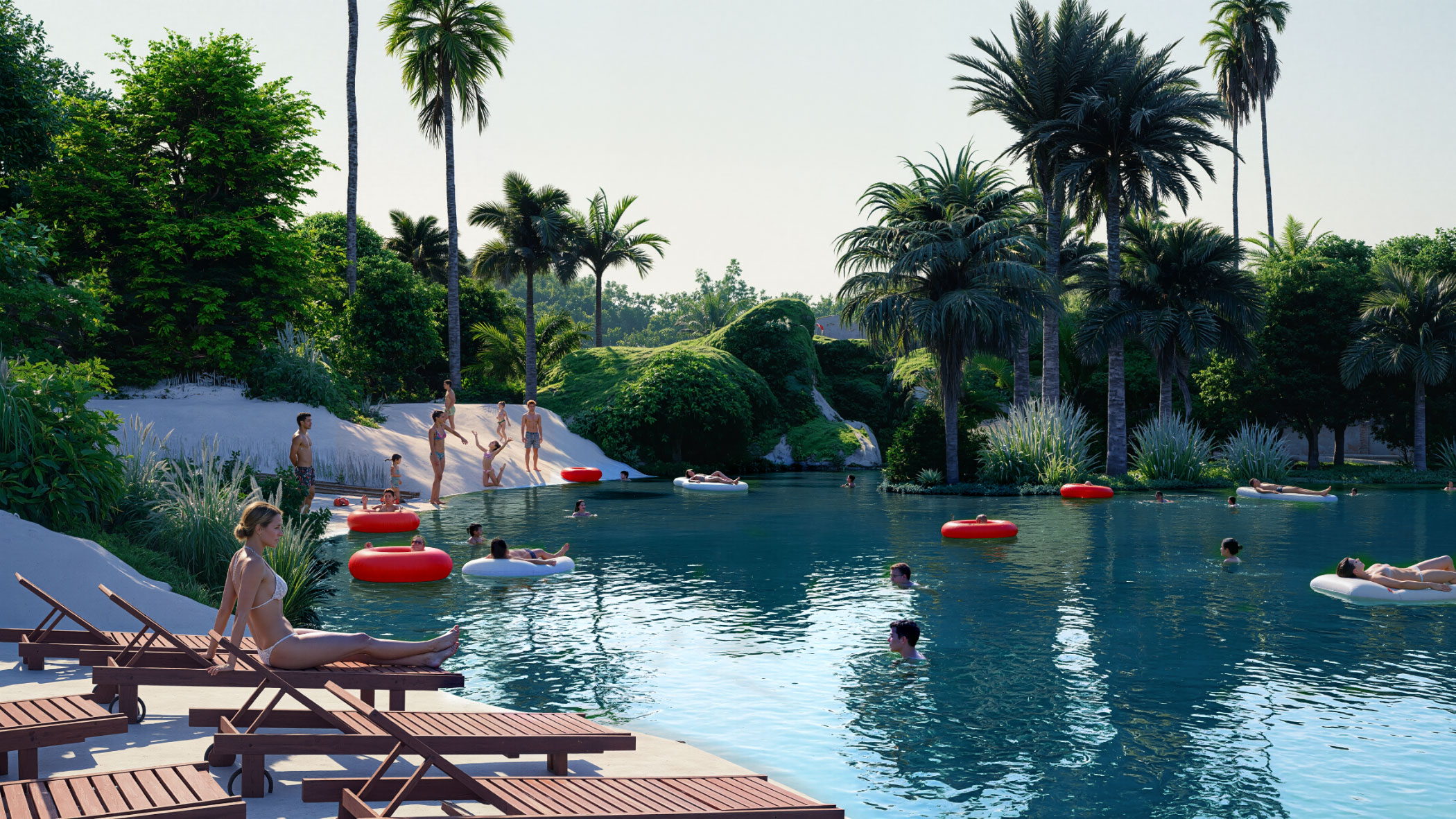
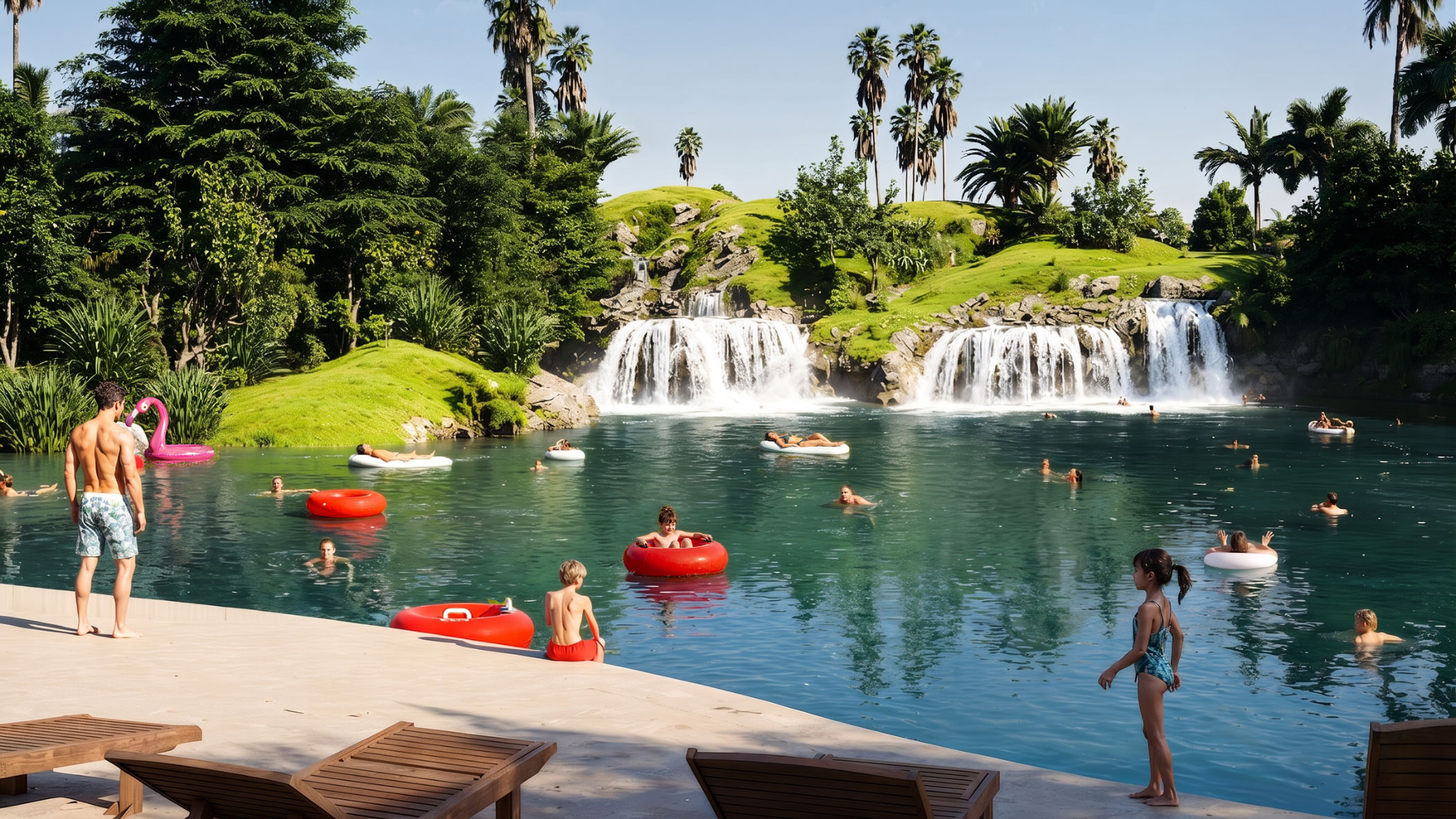
The three examples—Canyoning Parks, River Lagoons, and the naturalized lazy river—share a common goal: for tourist destinations to move beyond being mere spectators in the sustainability strategy and become active participants. Reduced operating costs, water recirculation, and climate mitigation through plants all contribute to an enhanced experience. Because nature by design is welcoming, provides well-being, and leaves a more lasting impression. Furthermore, these are attractions that appeal to the most conscious users and travellers, those seeking authenticity and genuine sustainability. Because nature itself is already 21st-century tourism infrastructure.
If you’d like to learn more about the attractions we’ve mentioned as examples, we encourage you to follow these links: