
Although they belong to seemingly opposite contexts — one linked to recreational leisure and the other to high-level competitive sport — the water slide and Olympic luge share physical and design principles. Luge, together with bobsleigh and skeleton, forms the family of sledding sports on ice tracks, disciplines that require a precise combination of technique, control and responsiveness to the forces involved.
In both luge and water slides, movement is driven exclusively by gravity along an inclined and geometrically defined trajectory. The speed achieved depends, in both cases, on factors such as the slope of the course, the length of the run, friction conditions between the sliding body and the surface, as well as the mass of the user or athlete. Essentially, this is a controlled application of the fundamental principle of free fall transformed into guided motion.
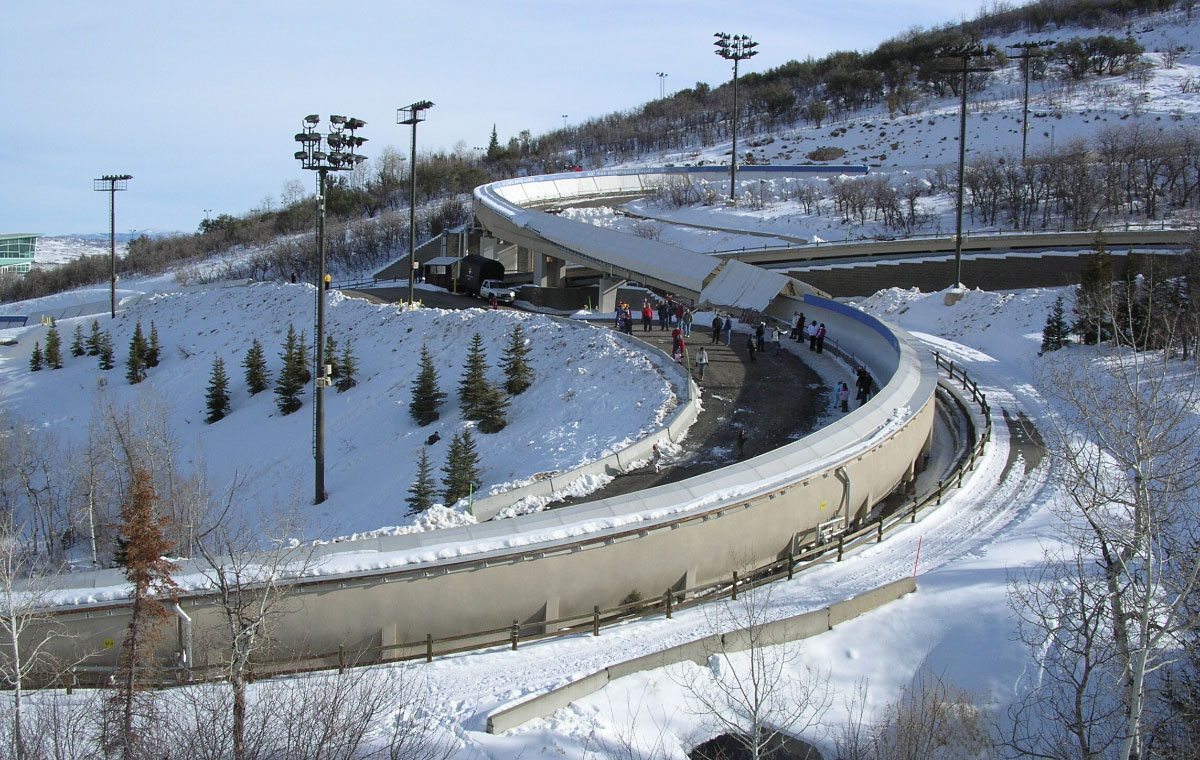
The design of curves and transitions represents another key point of convergence between the two disciplines. Whether on a luge track or a water slide, geometries must be conceived with millimetric precision. If centrifugal forces and lateral accelerations are not properly controlled in winding routes — through progressive curvature radii and carefully calculated banking — both safety and user experience may be compromised. Surface continuity is equally critical: both systems require continuous, low-friction surfaces to ensure smooth, predictable motion without abrupt interruptions.
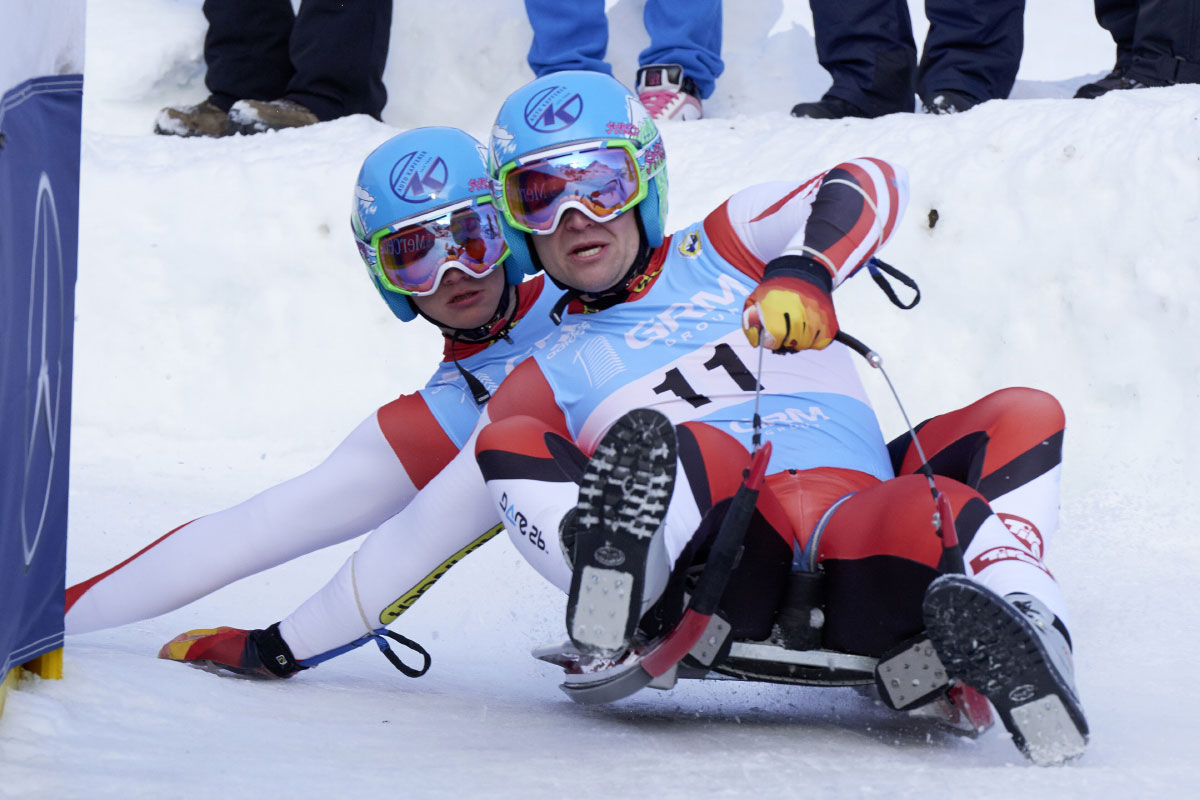
In essence, the water slide can be understood as a recreational application of physical principles that are virtually identical to those governing competitive luge. Luge originated in the Alpine regions of Europe in the mid-to-late 19th century and evolved into a highly precise Olympic discipline. The first water slides, by contrast, did not appear until the mid-20th century, within the context of the rise of amusement parks and leisure culture in warmer climates.
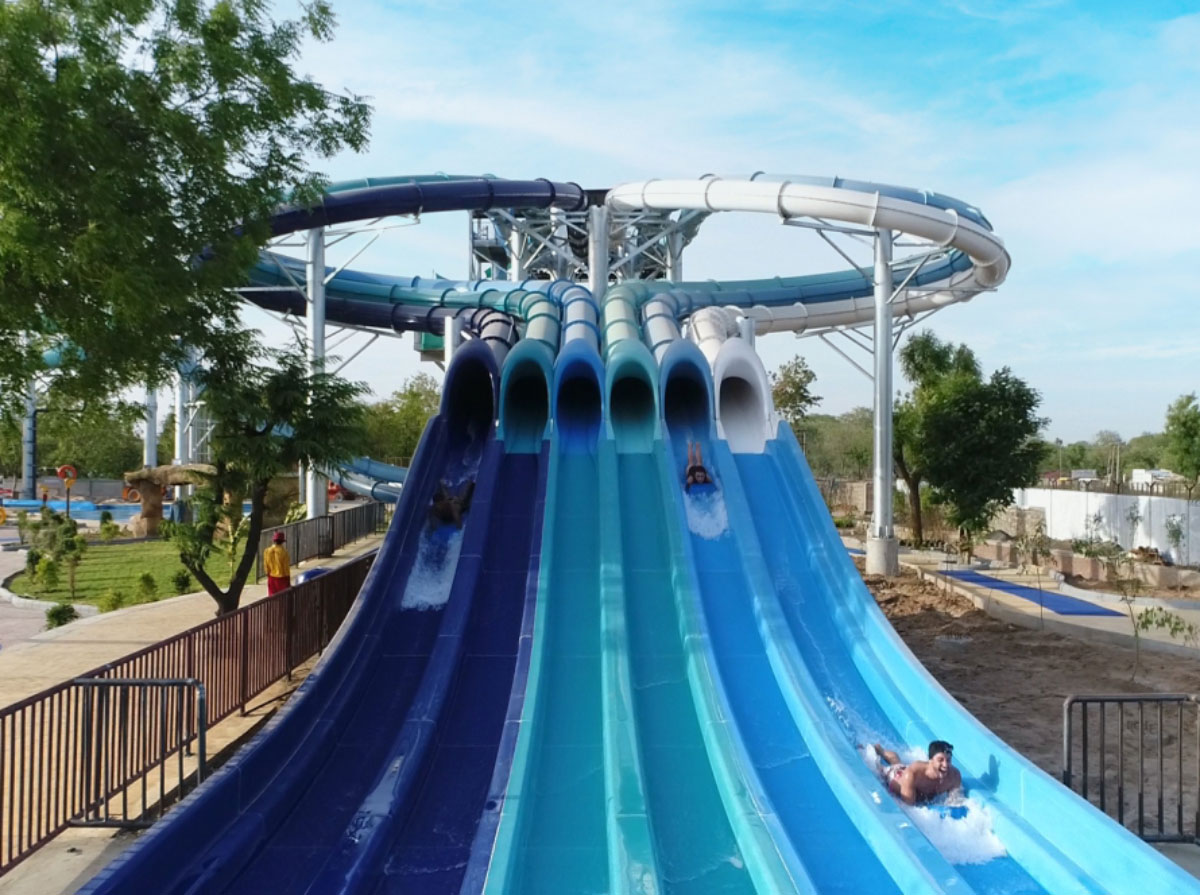
Shankus Water Park
As we can see, physics does not recognise seasons: gravity, inertia and trajectory control operate with the same precision on ice as they do in water. It is in this fundamental similarity that the true kinship between the two worlds lies.
By Carlos Rodríguez, specialist in Hydraulics and Water Attractions, Architecture Department, Amusement Logic