
When we talk about air conditioning, heating, or domestic hot water systems, thermal insulation is often overlooked. However, this component, though discreet and not very visible, is crucial to the overall performance of the MEP (Mechanical, Electrical, and Plumbing) system. Its main function is to minimise unwanted heat loss or gain, therefore contributing to efficient energy use.
In domestic hot water systems, poor pipe insulation leads to continuous heat loss, increasing waiting times and raising energy consumption. In heating systems, these same losses reduce efficiency, force equipment to work longer, and accelerate wear and tear. In air conditioning, poorly installed insulation can cause condensation, affect performance, and lead to problems in nearby components.
The role of insulation is equally important in air distribution networks. If ducts are not properly insulated, the air will change temperature before reaching the conditioned space, directly impacting comfort and system efficiency. Furthermore, in environments where condensation is a risk, insulation acts as an essential barrier to prevent damage and ensure the installation’s durability.
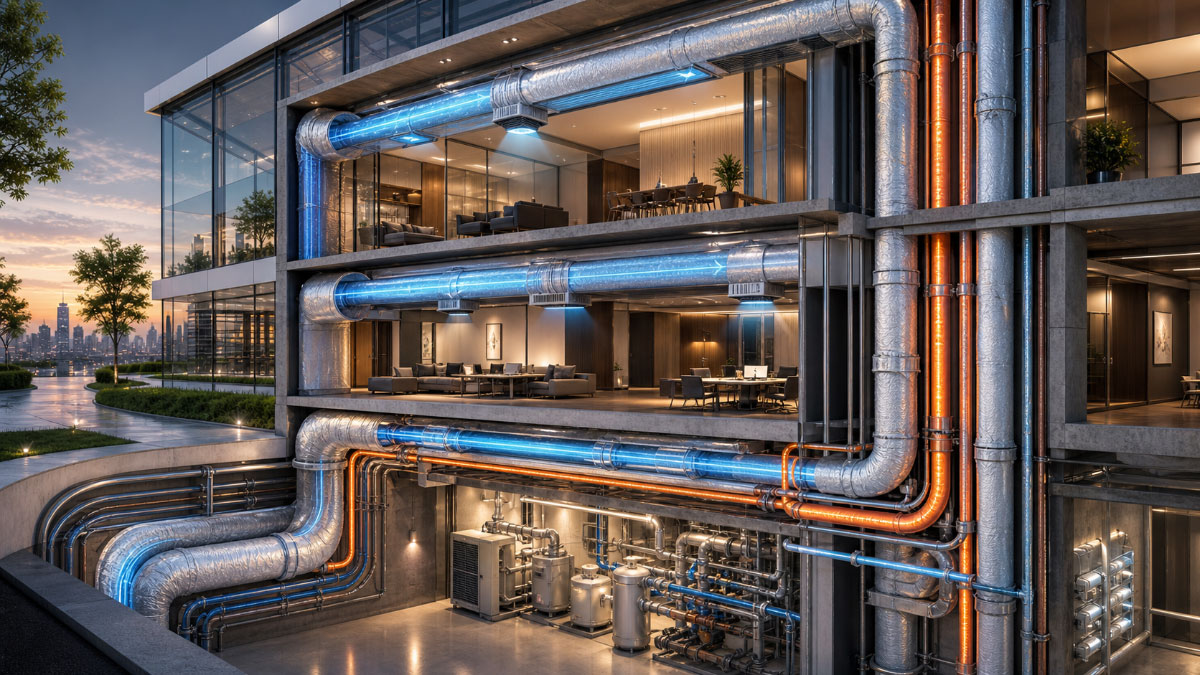
The choice of insulation type is based on technical criteria such as thermal conductivity, thickness, vapour permeability, fire resistance, and durability. Proper installation is also key: even the best material loses effectiveness if it is poorly installed.
In a context of increasing demands for energy efficiency and sustainability, thermal insulation is even more important. It helps reduce consumption, emissions, and operating costs, as well as improve the reliability of installations. Although its impact is not always immediately visible, its influence is constant and significant.
By Francisco Lozano, MEP Engineer in the Architecture Department at Amusement Logic