
In the field of MEP (Mechanical, Electrical and Plumbing) installations, electrical cable has evolved from a basic product into a component that is directly aligned with a building’s safety and reliability requirements. Indeed, high-performance cables are now designed as systems capable of withstanding disasters, maintaining functionality under extreme conditions and optimising energy consumption in infrastructure.
The new cables do not merely guarantee the flow of power under normal conditions; in the event of a fire, their advanced chemistry prevents the emission of toxic gases and ensures visibility of over 80% in light transmission tests during evacuation. These are cables that do not propagate fire and offer the highest level of safety in terms of the acidity of the gases released. In their circuit-integrity versions, they are capable of maintaining power to critical systems—such as alarms, fire-extinguishing equipment or emergency lifts—for more than two hours of direct exposure to flames.
However, the industry is moving towards a new generation of conductors that combine greater energy efficiency with a reduced environmental footprint. These incorporate aluminium-zirconium alloys and graphene-doped copper – materials that enable the transmission of more energy with less weight and lower heat dissipation.
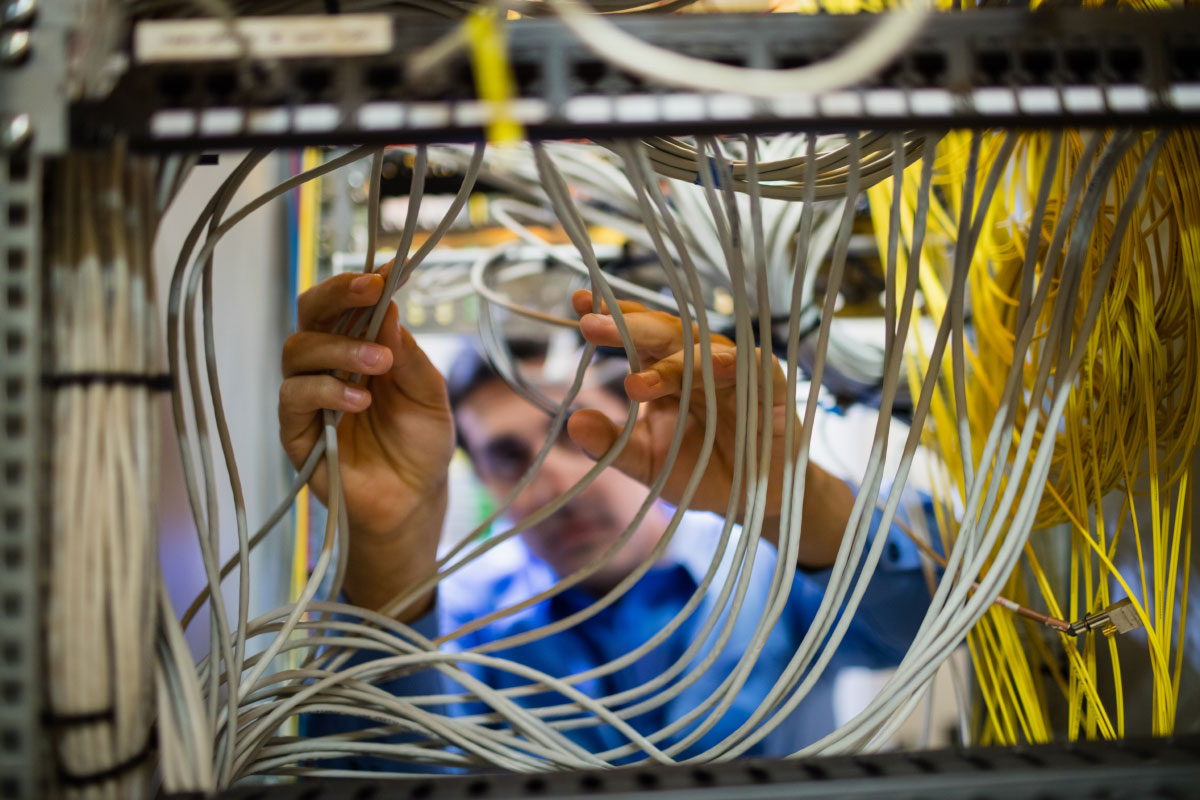
At the same time, so-called ‘sensing cables’ incorporate fibre-optic sensors into their structure. Thanks to these, they are able to monitor the conductor’s temperature in real time and warn of overheating before a fault occurs. In this way, they facilitate predictive rather than reactive maintenance.
Self-healing cables, meanwhile, use advanced polymers in their insulation which, when a micro-crack or mechanical damage occurs, release microcapsules of resin that automatically seal the crack. These innovations are complemented by the development of dynamic shielding: new magnetic screens that adapt to the frequency of the signal travelling through the cable, thereby eliminating electromagnetic interference in congested MEP environments—a capability essential for the harmonious coexistence of frequency converters, BMS (Building Management Systems) control systems and sensitive communication equipment.
The evolution of the electrical cable thus illustrates a broader trend: in contemporary architecture, components that have always taken a back seat are now becoming strategic players in safety, operational continuity and sustainability.
By Juan Carlos Soria, Senior MEP Engineer in the Architecture Department at Amusement Logic
Images: pikwizard.com