
The professional we bring you on this occasion knows well how to work with both the members of his team and the animals under his care. He came into the profession by chance, more than a decade ago, and he has remained ever since. Reading his words is enough to understand how deeply the emotion and professionalism involved in managing complex institutions such as zoos and large aquariums have shaped him. He first worked at BIOPARC Fuengirola and eventually arrived at BIOPARC Gijón Aquarium. We hope you enjoy this conversation as much as we enjoyed conducting it. You will discover insights that only someone speaking from within can reveal about an attraction such as a large aquarium. Here it is.
Amusement Logic: What led you to dedicate yourself to the world of aquariums and zoological parks? Was there any personal experience that sparked your vocation?
Alejandro Beneit: I came from a different sector; it was more the opportunity to work in this field than a deliberate intention to enter it. I’d never considered working in the zoo and aquarium sector. I was given the opportunity to manage a leading brand such as BIOPARC Fuengirola from the marketing department, and I didn’t hesitate. It was a decision based entirely on a career opportunity. The vocation came later. When you work with teams who are so passionate about animals, who care for them, are moved by them, and do so much for them… it is infectious. Eleven years later, I know I was very fortunate to have made the decision to join such an outstanding team on this remarkable project.
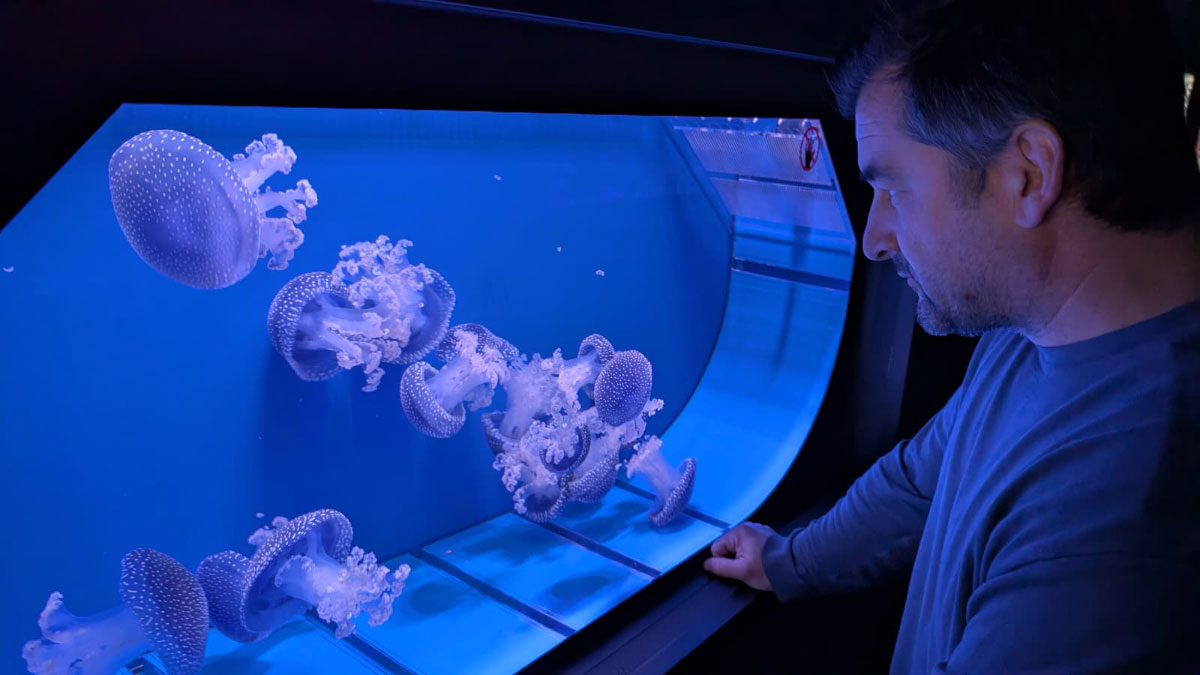
A.L.: Eleven years at the helm of BIOPARC Gijón Aquarium is a significant period. What was the greatest challenge you faced?
A.B.: In fact, it has been seven and a half years here at BIOPARC Aquarium, and three years at BIOPARC Fuengirola as Marketing Director. At the aquarium, the greatest challenge was my arrival. I found facilities in a very poor state and a team that lacked motivation and had been under considerable strain. Arriving from outside, beginning to make decisions and convincing people to follow you is difficult. The first few months were about observation and making very few decisions. Gradually, we won everyone over.
Once that initial stage had passed, the real challenge became maintaining relevance — convincing the public to believe in us every day. It may sound generic, but we keep this idea constantly in mind. Maintaining technical excellence, scientific credibility and economic viability is a daily balancing act. In short, the real challenge has been, and continues to be, building a respected, admired and relevant institution — not merely a visitor attraction.
A.L.: Which of the changes you implemented at the beginning are still in place today?
A.B.: The first two decisions were to remove penguins and otters from the collection — the two most recognisable species and those that attracted the most visitors. Even today, people still ask about them. Zoos and aquariums are under constant scrutiny from society, and we must lead in animal welfare and conservation. That is non-negotiable. Based on that principle, we removed all animals that did not have suitable facilities. If that meant fewer visitors, so be it. Over time, especially our local audience who know us best, have understood our way of working and decision-making. They trust us and the community supports us. That is very important.
A.L.: Education, conservation and business all converge in an aquarium. How do you balance these three pillars in daily management?
A.B.: Balance is fundamental in life and in business. Everything must be balanced and in order. Any project must be economically sustainable — that is the starting point, without doubt. However, there are two ways to approach it: short-term or long-term. If you want to make money quickly, it is relatively easy, but that has very little longevity. Only by incorporating elements that are genuinely relevant to society can you create a major project. Conservation, education — and let us not forget research — are the pillars that sustain this project. Conservation begins when someone falls in love with the sea. If we value that, the business becomes viable and everything else follows.
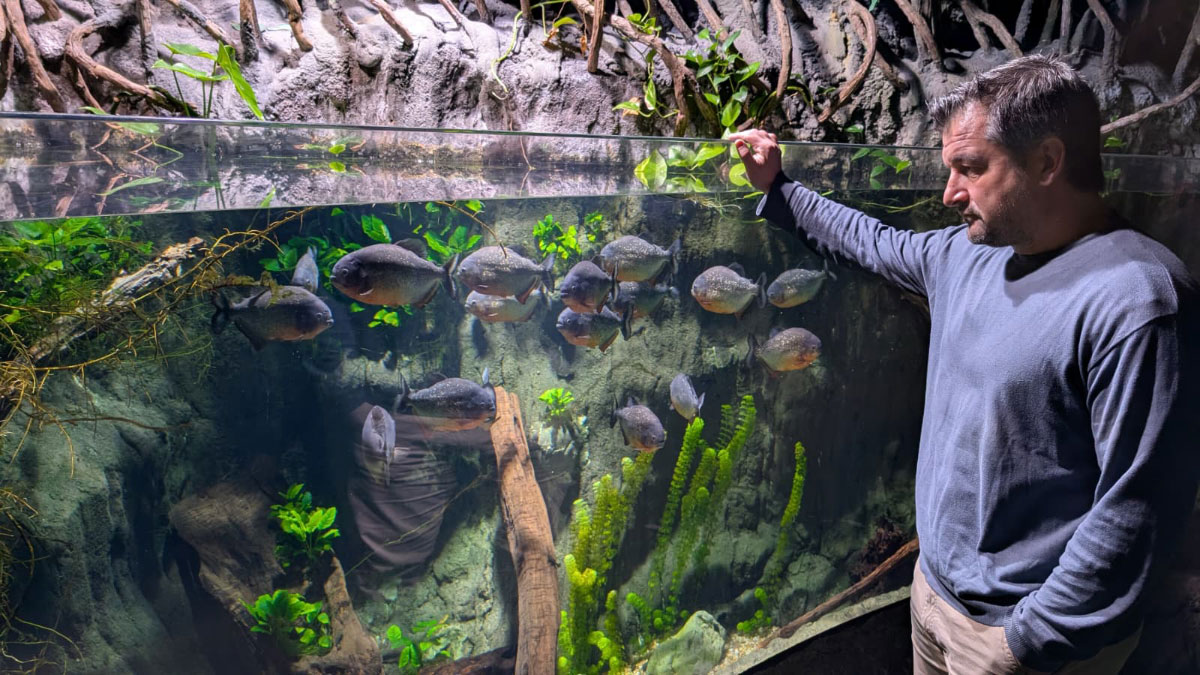
A.L.: From your dual perspective as a director and marketing lecturer, which strategy do you consider most effective for attracting and retaining visitors?
A.B.: The key is understanding that the experience begins long before visitors walk through the doors. For us, it is very easy to connect emotionally with visitors from the outset. Imagine coming to see a shark, a loggerhead turtle, or a great gorilla at the Fuengirola facilities, for example… The emotional connection is straightforward; it simply needs to be framed within a story. We are fortunate to work with emotions — we do not have to search far to capture attention. We aim to build a loyal community of followers; every visitor should be a BIOPARC ambassador. That is how we treat them. We continually measure NPS (Net Promoter Score) across all our parks and remain attentive to every possible area for improvement.
A.L.: You also directed the marketing and sales department at BIOPARC Fuengirola. How does your work in Gijón differ?
A.B.: Each park has its own character and different audiences. In Fuengirola, the cultural diversity, intense tourist flow and competition required very direct communication. There was less time to tell stories — the customer changed every week. We had to connect quickly and directly. In Gijón, the focus is more on the local community and partnerships with institutions of all kinds. The people of Gijón see BIOPARC Aquarium as their own; it is part of their city, and they are proud of it. Fuengirola is faster-paced and more intense. Gijón is calmer, with less competition. Here, we can build for the long term.
A.L.: Social-media has changed how we communicate. How do you use it to connect with the public and enhance the aquarium experience?
A.B.: Communication changed a long time ago. Now we are in a phase of continuous change within the platforms themselves, and we must adapt. Social media is the ideal bridge for dialogue and community-building. We do not only share visual and educational content; we encourage participation, answer questions in real time and launch campaigns that engage followers in environmental challenges. The stories behind the animals, direct interaction with keepers and active listening have turned our channels into dynamic spaces where the aquarium experience begins and continues beyond the physical visit. Managing this channel properly requires significant resources, as online content is highly ephemeral and fast-paced, requiring high content creation.
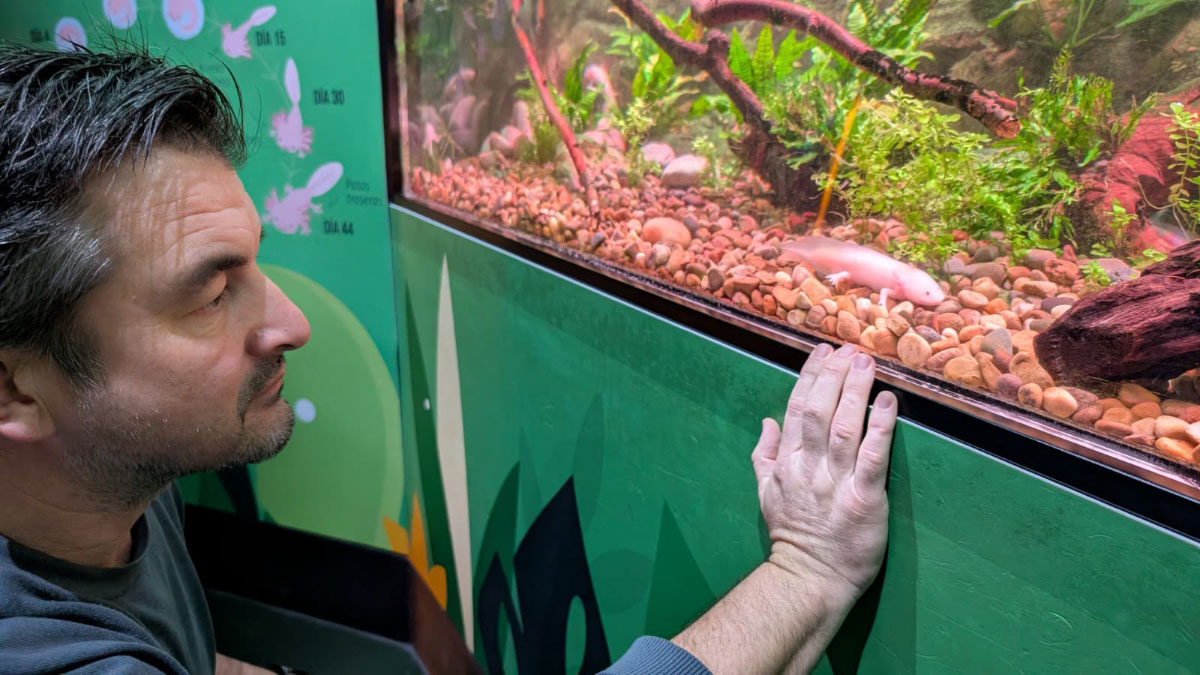
A.L.: After more than a decade in the sector, how do you believe aquariums and zoos should evolve in the coming years?
A.B.: The future lies in maximum professionalisation. It is no longer enough to manage facilities; we must manage institutions with the rigour of a company, the standards of science and the transparency of an essential public service. Society has changed.
Today, it is not enough to display animals; we must demonstrate why we exist. That means the highest standards in genuine animal welfare, conservation with measurable impact, and an active role in research and environmental education. The future will also be more collaborative than ever. No institution can protect biodiversity alone. Cooperation between centres, universities and public authorities will be key.
Finally, the visitor experience must evolve: more digitalisation, more immersion, more emotional connection. New generations are not seeking leisure alone — they seek meaning. It is not enough to explain what you do; the public wants to know why you do it. In short, the future is not about larger aquariums or zoos, but about credible institutions.
A.L.: Is there a particular memory or moment at Gijón Aquarium that you cherish most or that best represents your work there?
A.B.: The first turtle at the Marine Recovery Centre, and the process of setting up that facility. The effort involved in rehabilitating that turtle was very special — one of its flippers even had to be amputated. Releasing it back into the sea was a deeply moving moment at BIOPARC Aquarium. That entire process, and the ability to carry out such actions, is possible because the aquarium is sustainable and supported by an exceptional human team. I believe that represents my work well: effort, responsibility, optimism… But in more than seven years there have been many moments, including difficult ones. Not everything is rosy.
A.L.: If you had to give a single piece of advice to someone aspiring to direct spaces such as aquariums or theme parks, what would it be?
A.B.: I would say two closely linked things: do not be afraid of making mistakes. Fear of failure is one of the greatest obstacles. You only move forward by making decisions, and you only improve by learning from what does not go well. However, to “make good mistakes”, you must be clear about your direction.
As practical advice: avoid micromanagement. A director must set the course, the standards and the timing; the “how” should belong to the team. Otherwise, you are not leading — you are hindering. And finally, never forget something essential: we work with living animals. That demands a level of responsibility that is non-negotiable and allows no shortcuts.