
Some time ago, we offered a brief explanation of how concrete behaves when setting underwater. The truth is that, whether due to the depth of the seabed, existing currents, or for reasons of economic and environmental optimisation, it is often advisable to use other construction techniques. These constitute what we might call a true spectacle of civil engineering.
One of the techniques for laying foundations underwater is the use of floating structures. Essentially, this involves constructing hollow reinforced concrete elements that are transported by flotation, thanks to their hollow nature, to their final location, where they are sunk in a controlled manner. In most cases, floating structures are built in flood-prone areas adjacent to the coast. This avoids having to handle massive and heavy elements that are almost impossible to hoist and move with cranes.
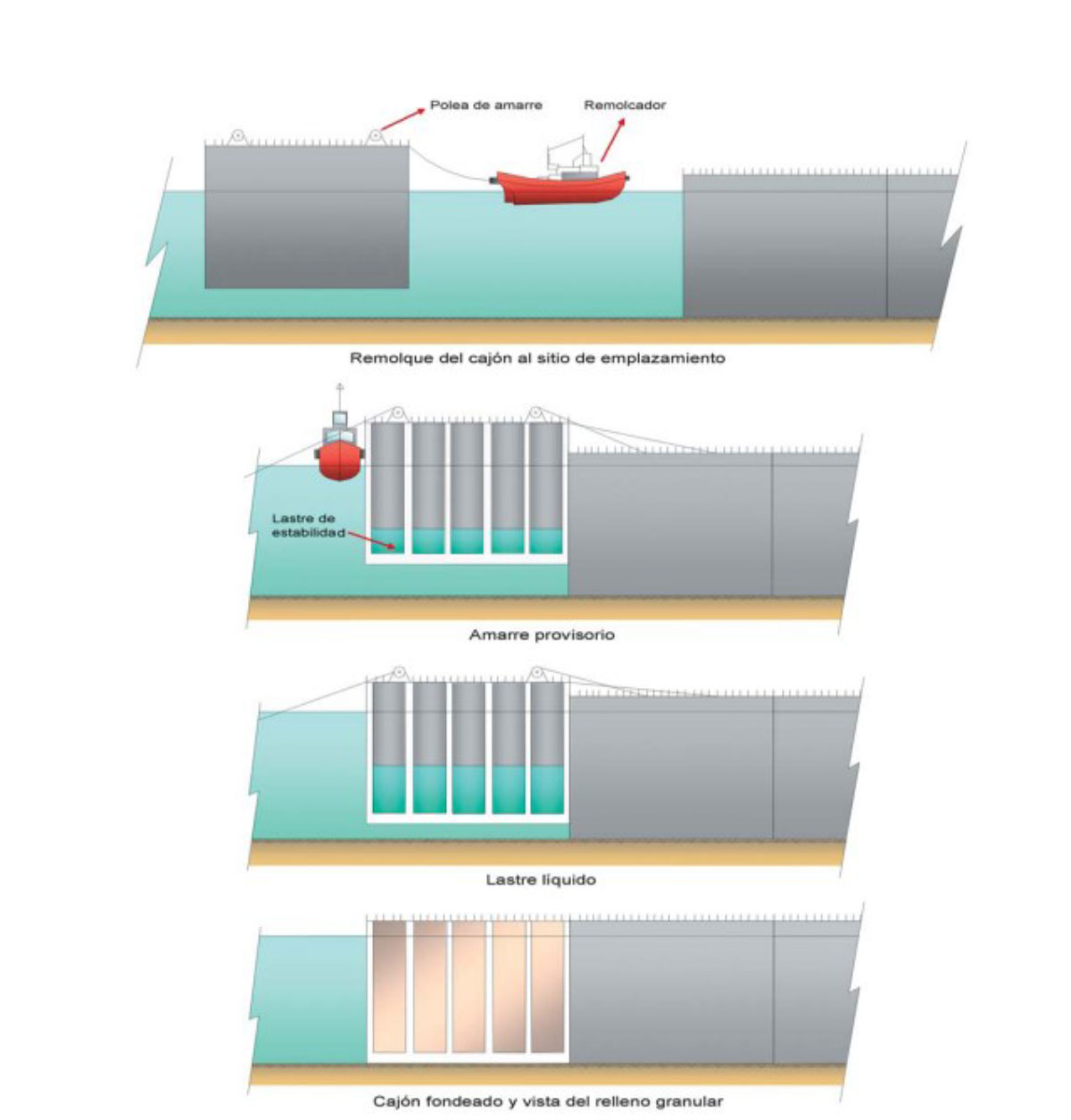
Image taken from the manual for the design and execution of floating concrete caissons from the IV INTERNATIONAL CONGRESS ON STRUCTURES – ACHE. Valencia 2008
Another technique involves creating watertight enclosures designed to withstand hydrostatic pressure and wave action. Water is pumped out of these enclosures, leaving the workspace dry and ready for construction work. These enclosures are usually filled with concrete and therefore permanently integrated into the final structure.
The spectacular nature of maritime construction works lies, to a large extent, in their monumental scale. This scale justifies the use of techniques without which such works would be economically unviable, such as the construction of large bridge piers.
By Jorge Laguna, head of the structures section of the Architecture Department at Amusement Logic.