
After two decades of studies, the project to link Qatar and Bahrain — or vice versa — via a 40 km elevated causeway is now regaining momentum. In January this year (2026), a €6.5 million contract was awarded to the consultancy Dar Al-Handasah to update the project’s feasibility studies.
The initial studies date back to 2001, when the international consultancy COWI, specialising in engineering, architecture, energy and environmental services, began outlining what would, if realised, become the longest elevated causeway in the world — surpassing the 38.4 km Lake Pontchartrain Causeway in Louisiana, USA. The moment when the project came closest to fruition was in 2008, when a consortium led by Vinci Construction Grands Projects signed a design-and-build contract valued at €2.5 billion.
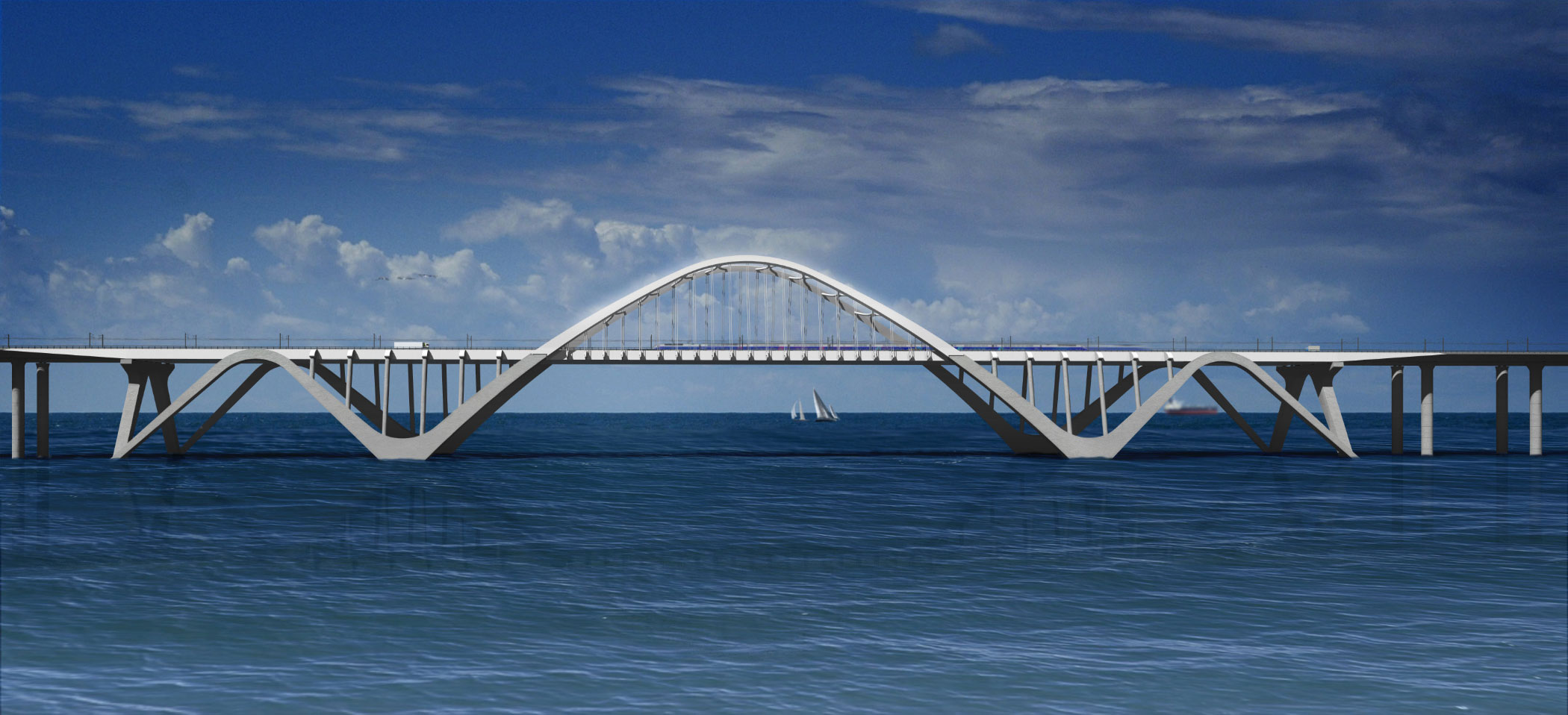
The consortium brought together major players: Vinci, Qatari Diar, Hochtief, CCC and Deme Group. For the architectural design of the two main bridges, French architects Thomas Lavigne and Christophe Cheron were appointed. Meanwhile, the Belgian firm Greisch, specialists in structural engineering, civil works and architecture, was responsible for optimising the preliminary design through detailed engineering. Notably, they introduced steel into the main structures in order to lighten loads and achieve spans of up to 250 metres in the principal section.
The route of the elevated causeway, intended to accommodate both road and rail traffic, combines 18 km of artificial embankments with 22 km of viaducts and bridges. Two of the latter would allow maritime routes to pass beneath with a vertical clearance of 40 metres. On the Qatari side, the connection would be located at Ras Eshairij, south of Zubarah, while in Bahrain it would make landfall north of Askar. The elevated road would reduce travel time between the two countries from the current five-hour ferry journey to approximately 30 minutes.
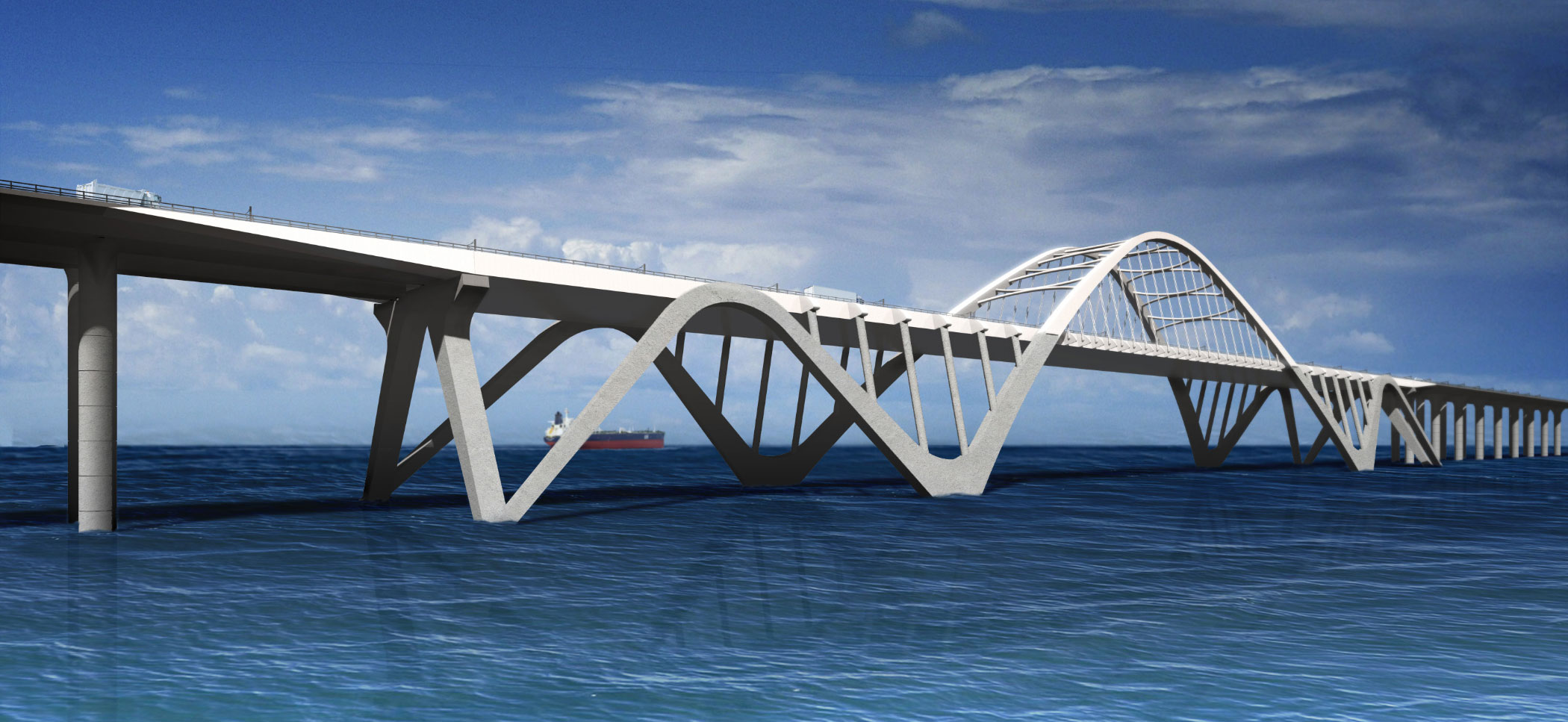
Following a series of crises, the project was revived in 2021, and since then bilateral meetings between the authorities of both countries have taken place. In February 2024, they agreed to restructure the project’s board of directors — a necessary administrative step to unlock progress. In the months that followed, momentum was consolidated with the awarding of the new feasibility studies.
Sources: Wikipedia, Construction Week Online, Bureau Greisch, Lavigne & Cheron Architects.
Images: Bureau Greisch and Lavigne & Cheron Architects.