
There are hotels we remember for a particular room, a view or exceptional service. Others remain in our memory because of a place we returned to every day: that little corner where we could enjoy a leisurely breakfast, the garden where we could read after an outing, the terrace where conversation would stretch into the evening. Sometimes, that place is a courtyard.
From the street, you can barely make it out. Once you’ve passed through the entrance, the architecture opens up to reveal a small inner world: trees, filtered light, water and spaces that invite you to sit and relax. The rooms look out onto it, the galleries wind their way through it, and the hotel’s activity finds its centre there. Guests discover a place where they simply want to be, even when they have nothing planned.
At Amusement Logic, we explore this possibility through design: conceiving the courtyard as an experience that lends identity to the establishment and forms part of its appeal from the moment a guest chooses their accommodation.
A place you begin to enjoy even before you arrive
A first impression of a hotel is usually formed through its images. Amidst photographs of rooms, restaurants and swimming pools, a courtyard with character can immediately convey the kind of stay the establishment offers. It can convey intimacy, tranquillity, a social atmosphere or a special connection with the nature and culture of the destination.
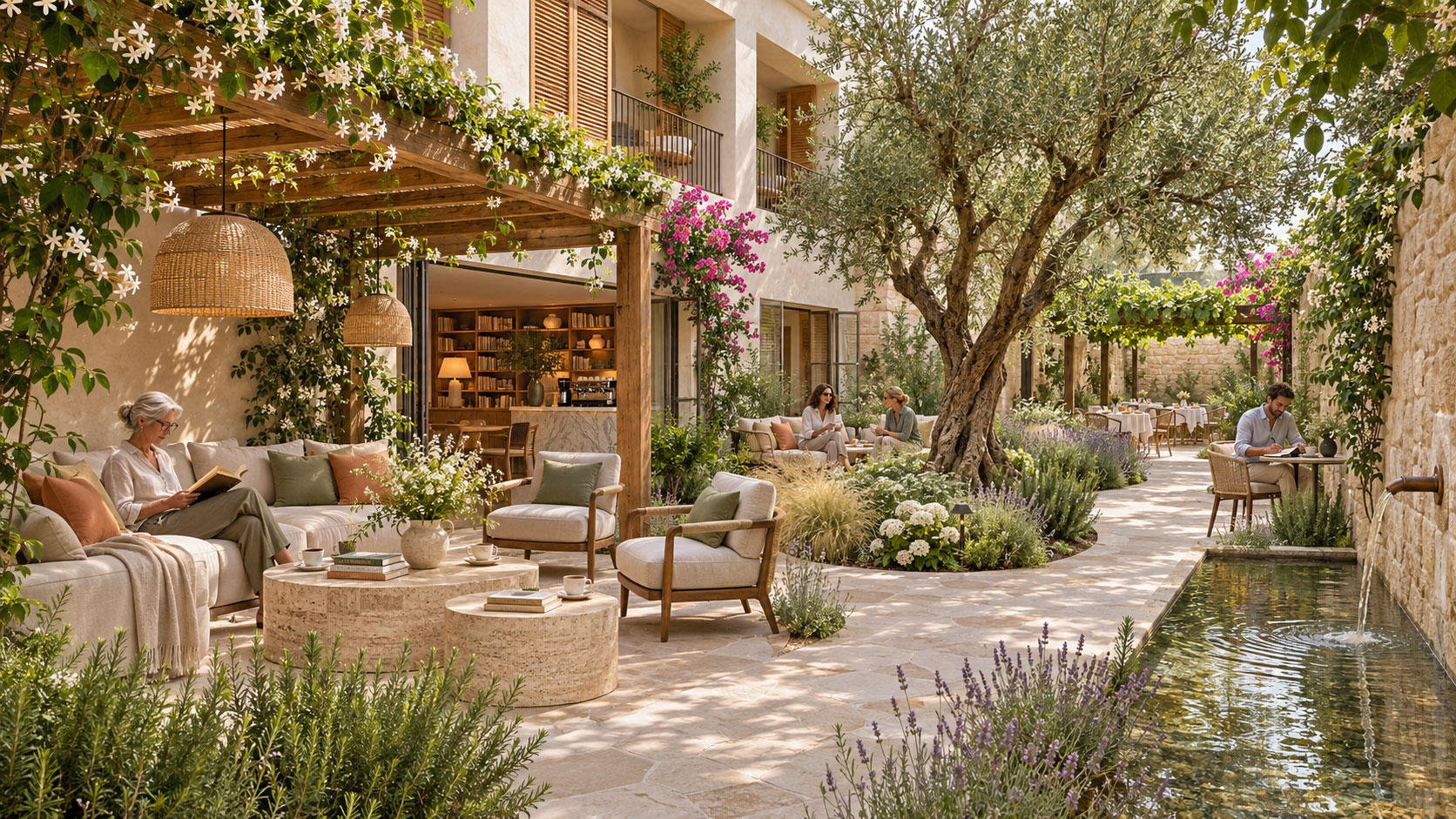
To achieve this, the architecture needs to offer something recognisable. A curved wooden gallery embracing the garden, a sequence of porticoes framing the water, or a large tree around which the lounges are arranged can give the whole complex its own distinctive character.
That element takes on real value when it also enhances the experience. The gallery provides a route through the space and shelters a lounge; the porticoes create shade; the tree brings people together beneath its canopy. Uniqueness arises from a design decision that can be lived in.
Arrival as discovery
The way one enters a courtyard influences how it is perceived. A modestly scaled vestibule can lead toward a taller, brighter space, allowing the garden to be revealed gradually: first, a treetop appearing between columns; then, a reflection; and finally, the entire scene.
This transition allows for the play of expectation and surprise. The reception area can be positioned discreetly to one side, letting the garden capture the visitor’s first glance and define the character of the hotel.
The path through the space should be intuitive. From the entrance, the connections to guest rooms, elevators, dining areas, and lounges should be immediately clear. An otherwise attractive design loses its appeal if it forces visitors to search for their way, or if it turns spaces intended for relaxation into mere thoroughfares.
Designing reasons to stay
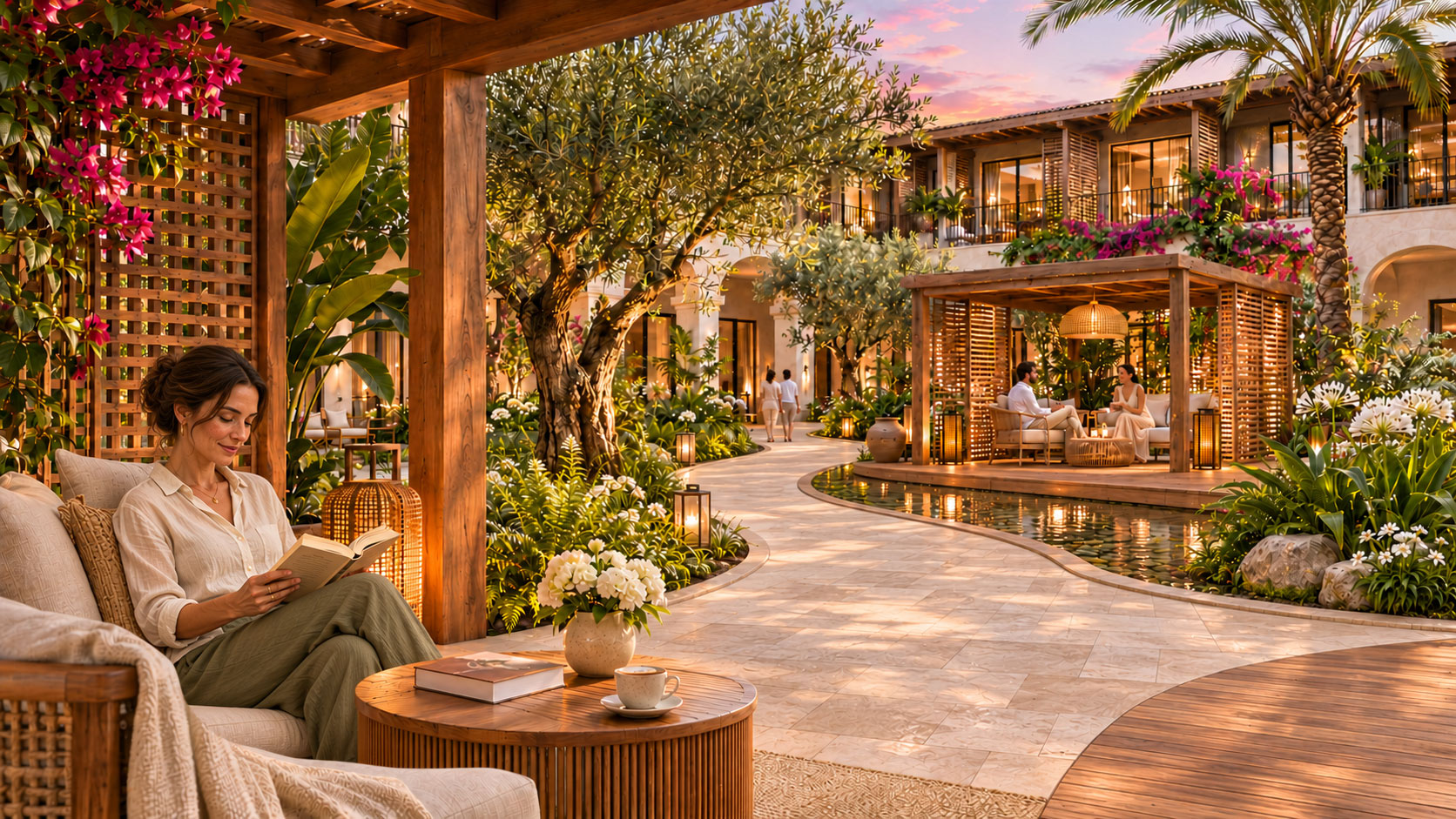
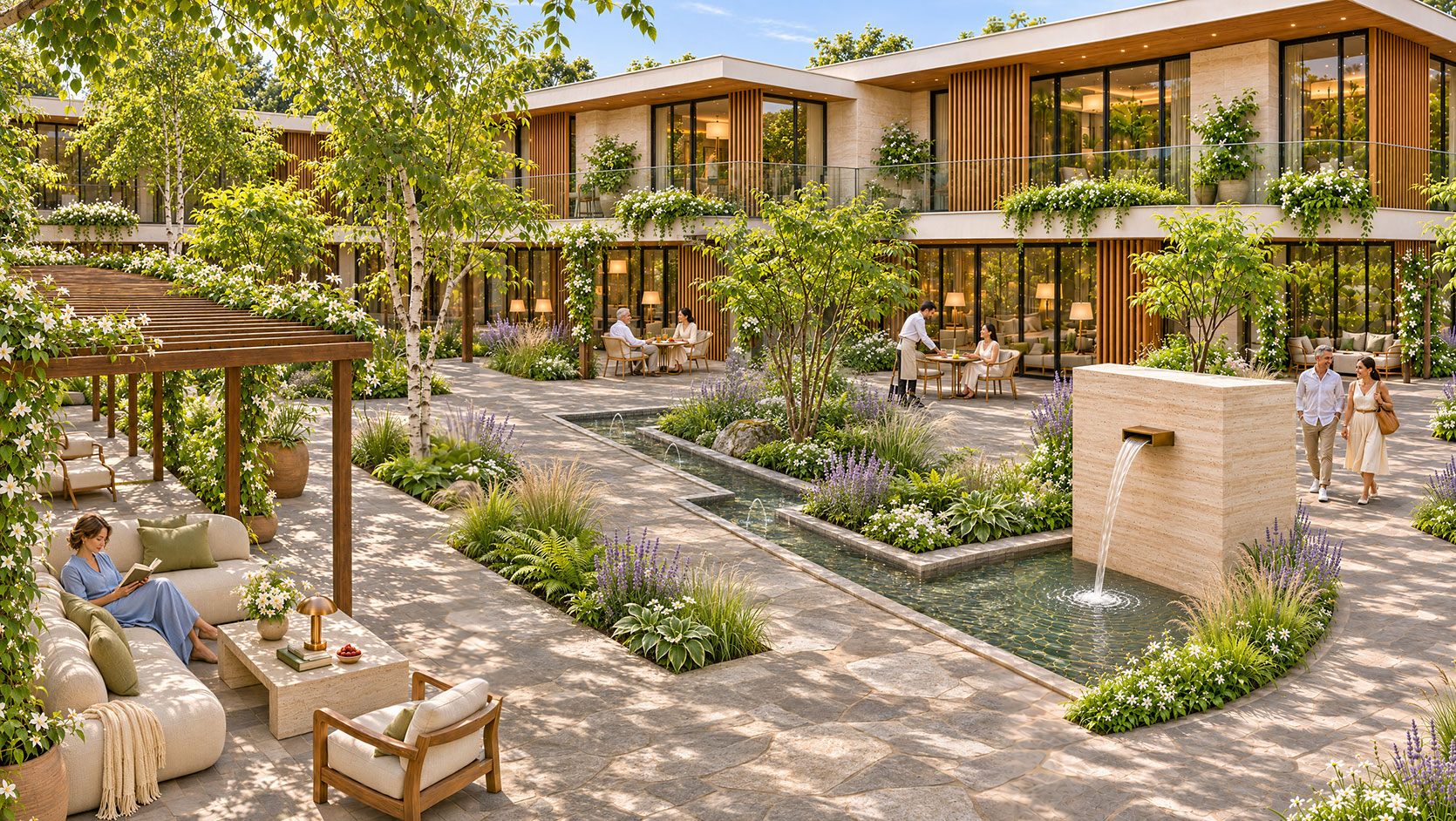
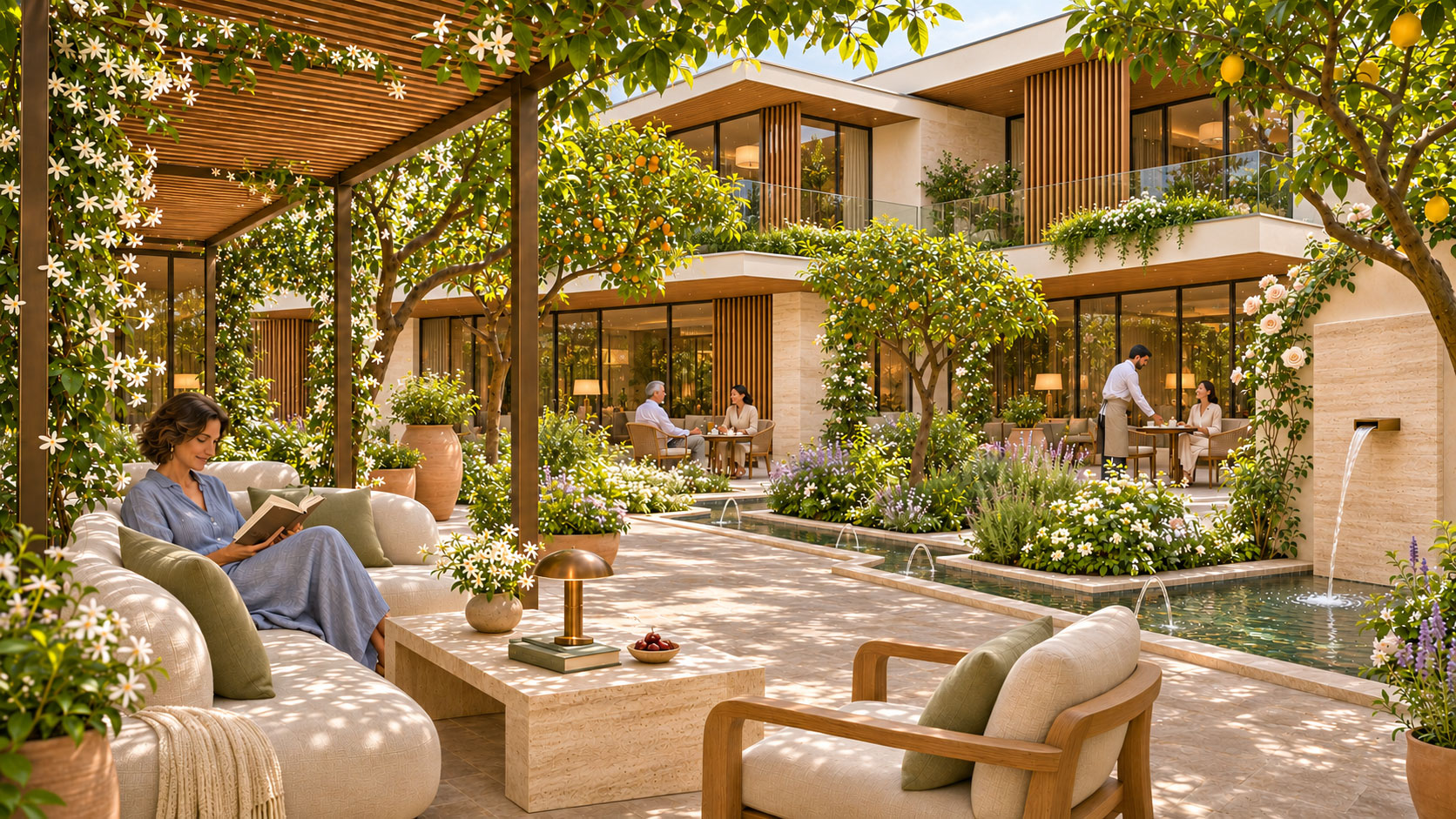
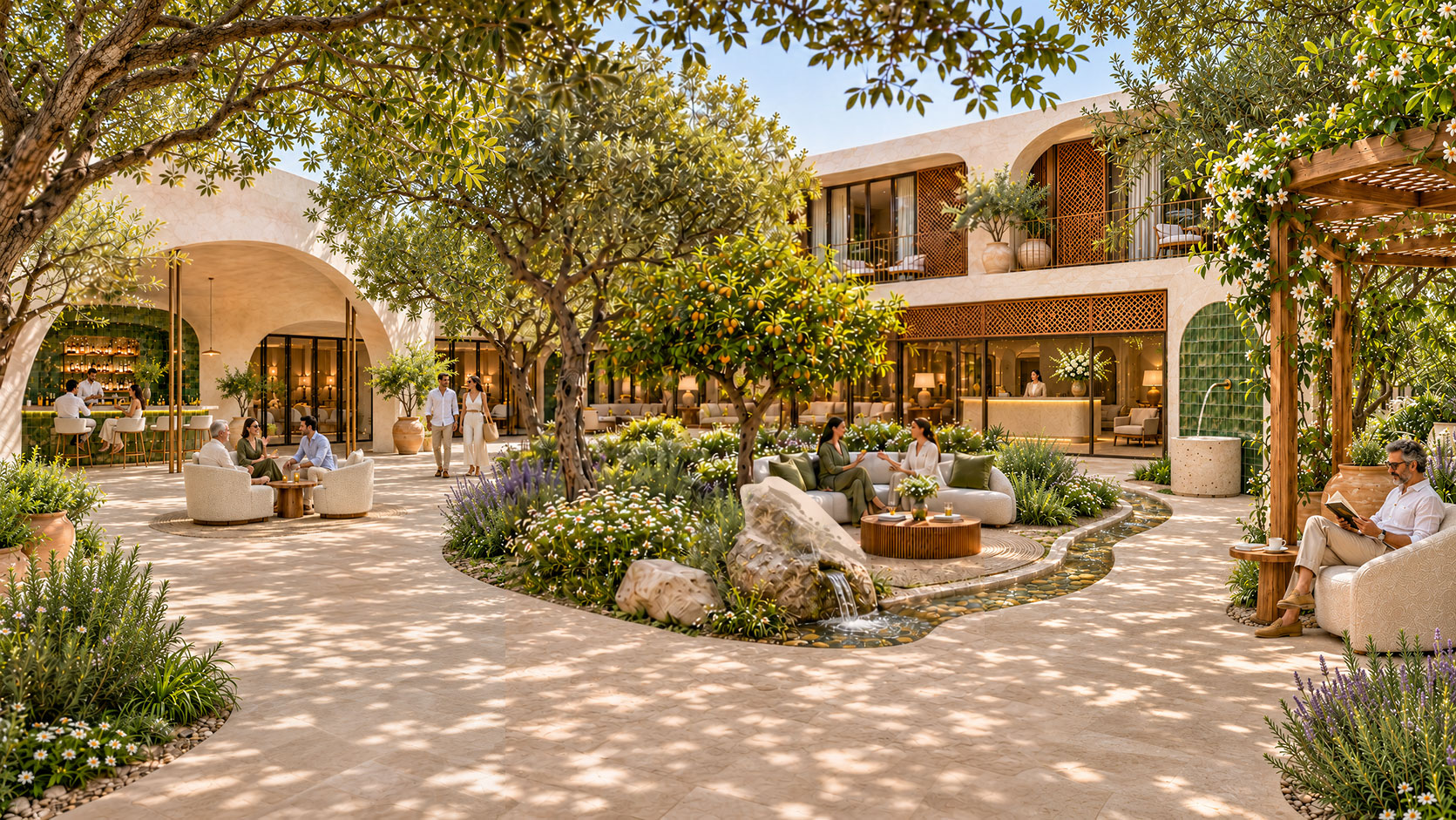
A courtyard invites people to linger when it offers a variety of options. Some may look for a table for conversation, others might prefer to read alone, and some may need to answer a few emails before heading out. For this reason, we suggest organizing the space as a series of small “living rooms,” each with varying degrees of openness and privacy.
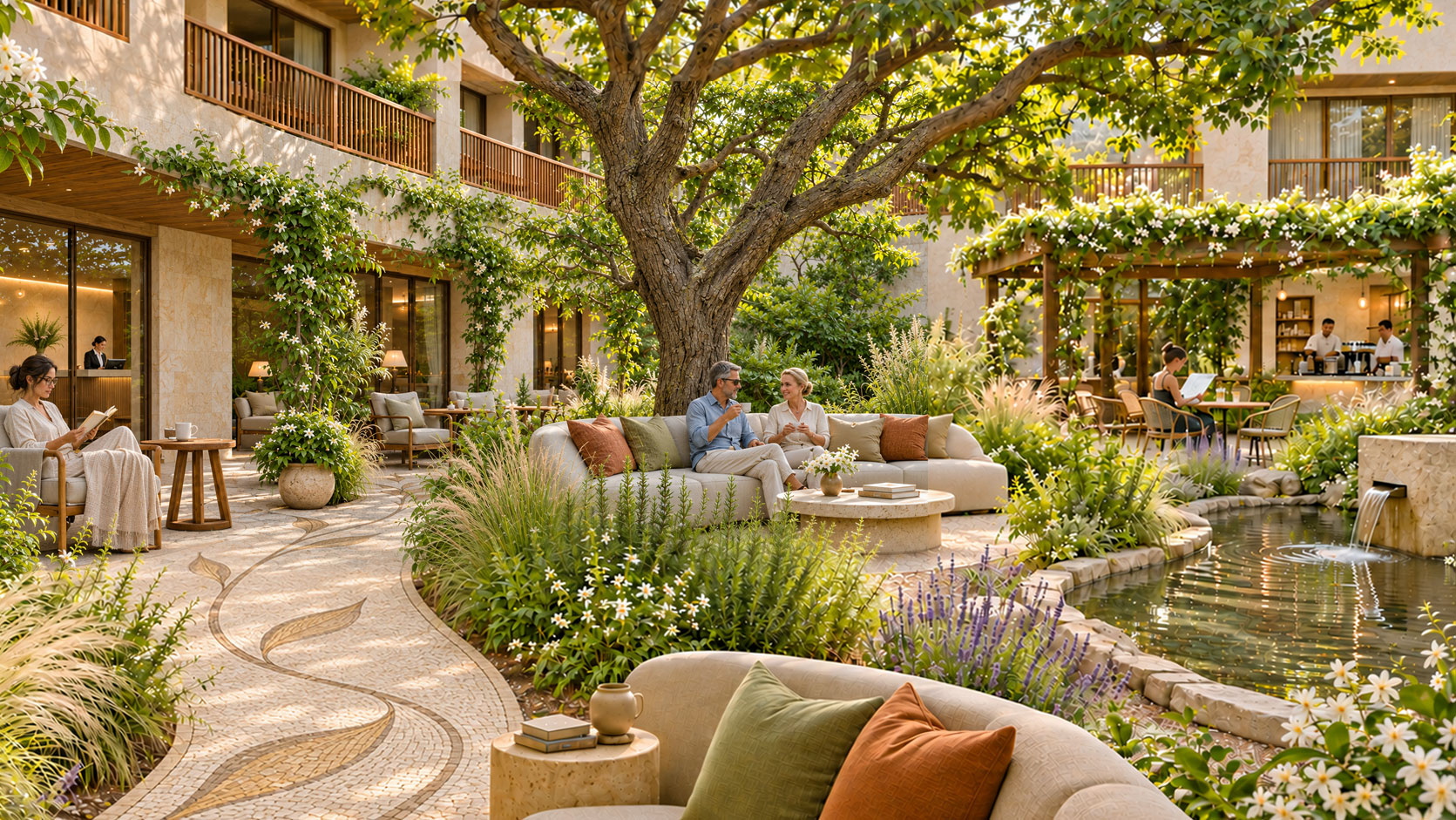
Beneath a covered gallery, an open-air library paired with a few armchairs can create a cozy reading nook. Among the trees, a sofa offers the perfect spot to share a coffee. Near the restaurant, a pergola provides a setting for breakfast or lingering over a post-meal conversation. In a quieter corner, two armchairs placed by the water offer a different kind of experience.
Vegetation helps define these distinct areas while maintaining a sense of spatial continuity. Adjusting the orientation of the furniture, adding a planter, or placing a small tree can filter sightlines and create a greater sense of intimacy.
Even the simplest elements matter: a comfortable seat, a table at the right height, shade when it’s needed most, and enough space to move around and reach these spots. These subtle design choices ultimately determine whether a space is put to use or remains empty.
The garden as part of architecture
Planting can provide structure to a courtyard from the very first sketches. Tree canopies create a living roof, trunks frame vistas, and lower-level vegetation defines paths. Viewed from upper levels, the garden presents a different composition, visible from rooms and galleries.
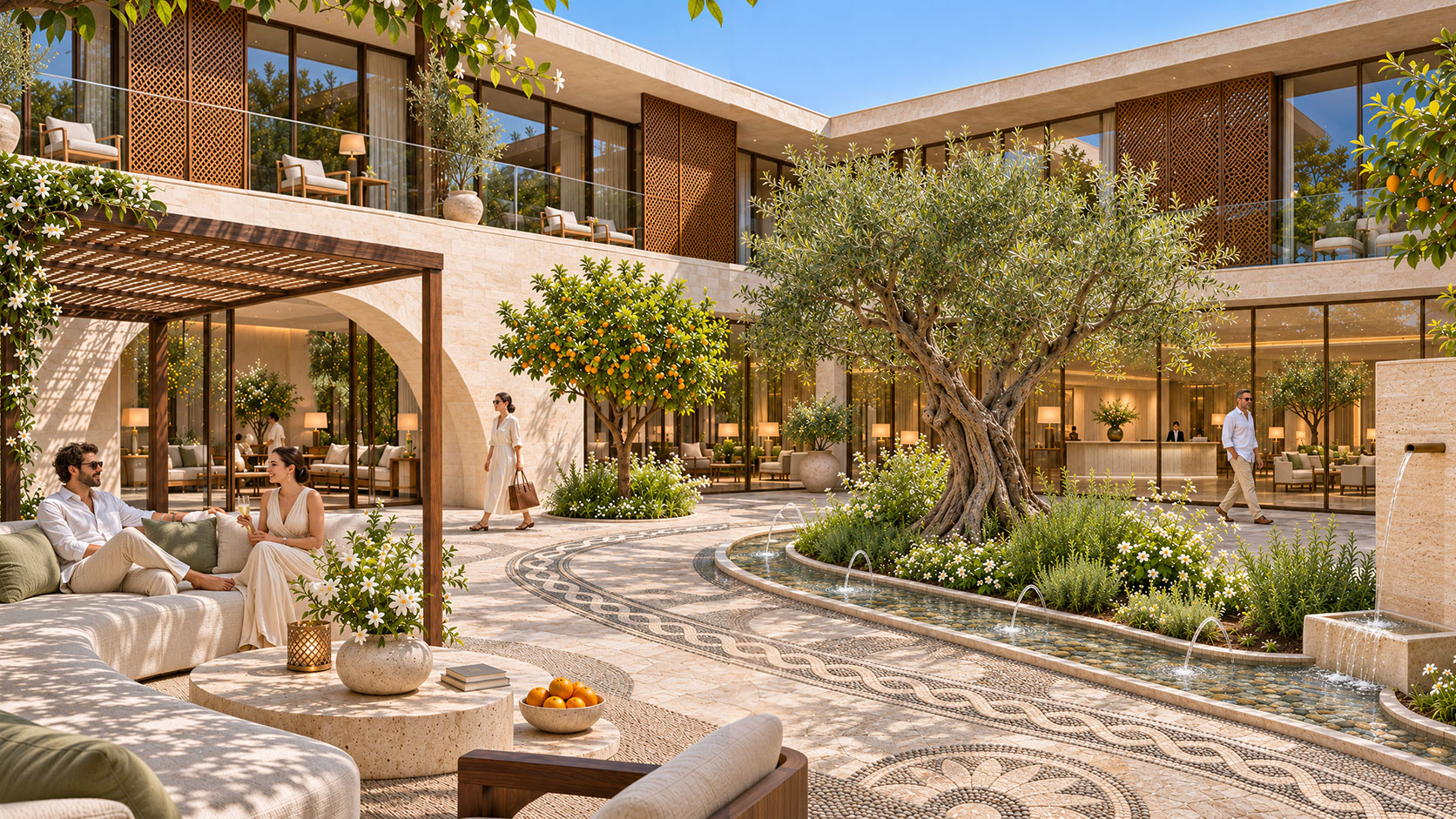
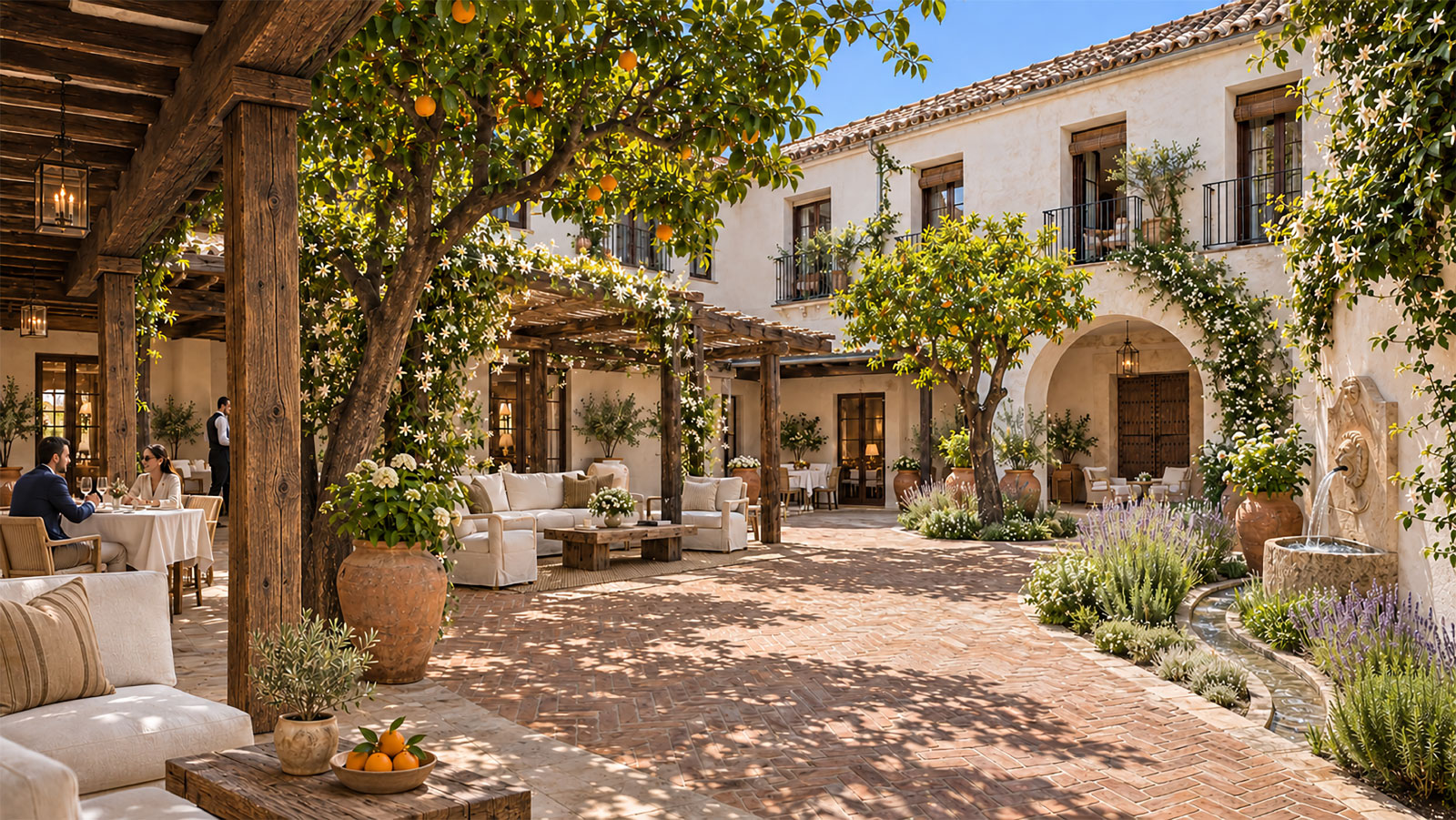
Each context demands a unique response. A Mediterranean courtyard might feature citrus trees, aromatic plants, and climbers, while another project might require species adapted to entirely different conditions. In a covered space, the selection will depend primarily on available light, height, soil volume, and environmental conditions.
Vegetation must be able to grow and thrive. Planning for irrigation, drainage, and access for maintenance ensures that the vision conceived during the design phase endures over time.
Water, on the scale of conversation
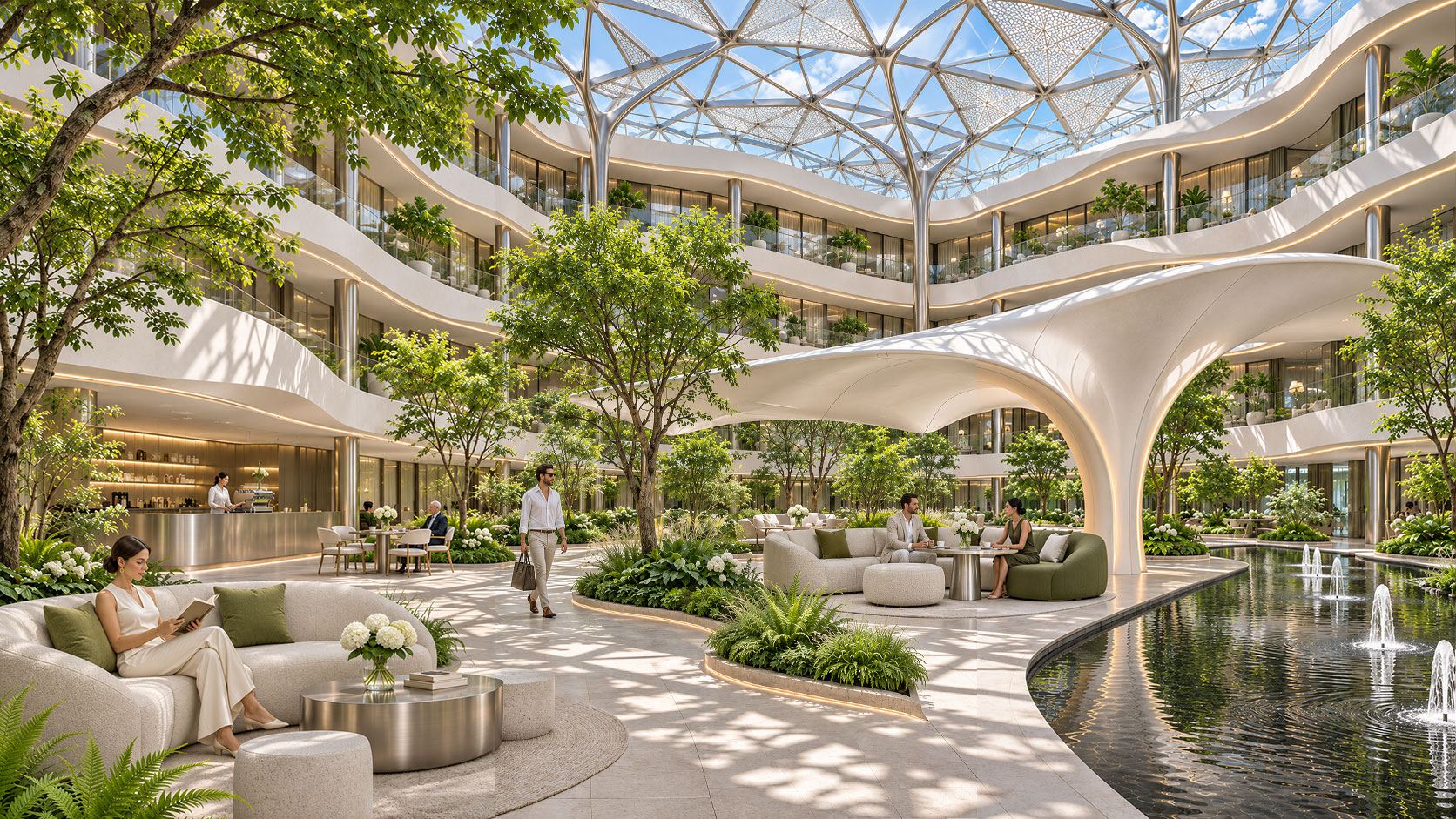
A sheet of water can introduce depth and reflections without dominating the entire space. A narrow pool beside a living area, a channel accompanying a walkway, or gentle water jets allow one to enjoy its presence from up close.
In such spaces, sound deserves as much attention as form. The movement of the water should be compatible with conversation, reading, and relaxation. Its intensity, the placement of the jets, and the distance from the seating areas are all integral to the experience.
Edges and pathways require equal care: clear routes, appropriate surfaces, and easy access to every area. Water treatment, cleanliness, and maintenance must be addressed in tandem with the architectural composition.
A courtyard open to the sky or an interior garden
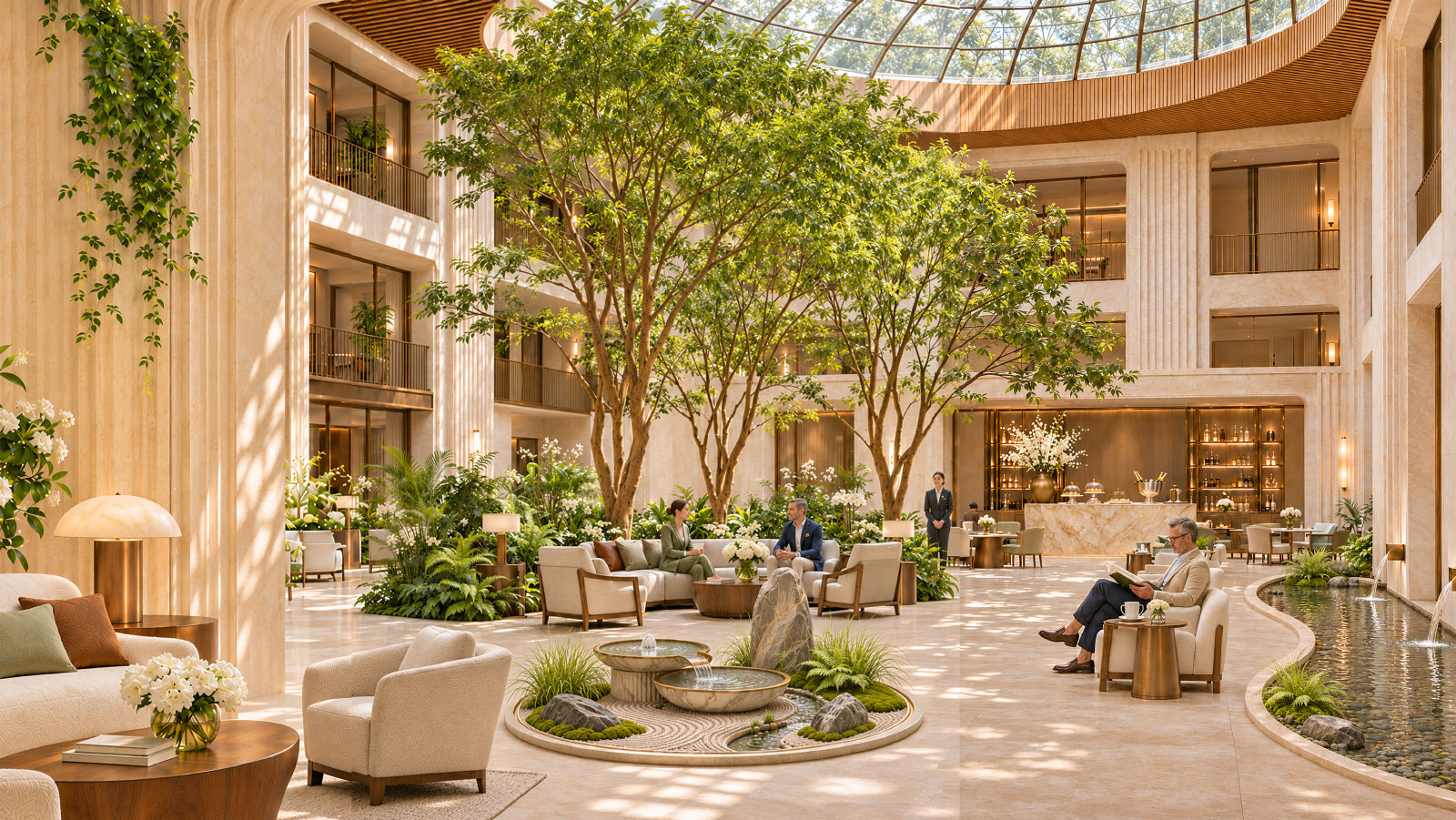
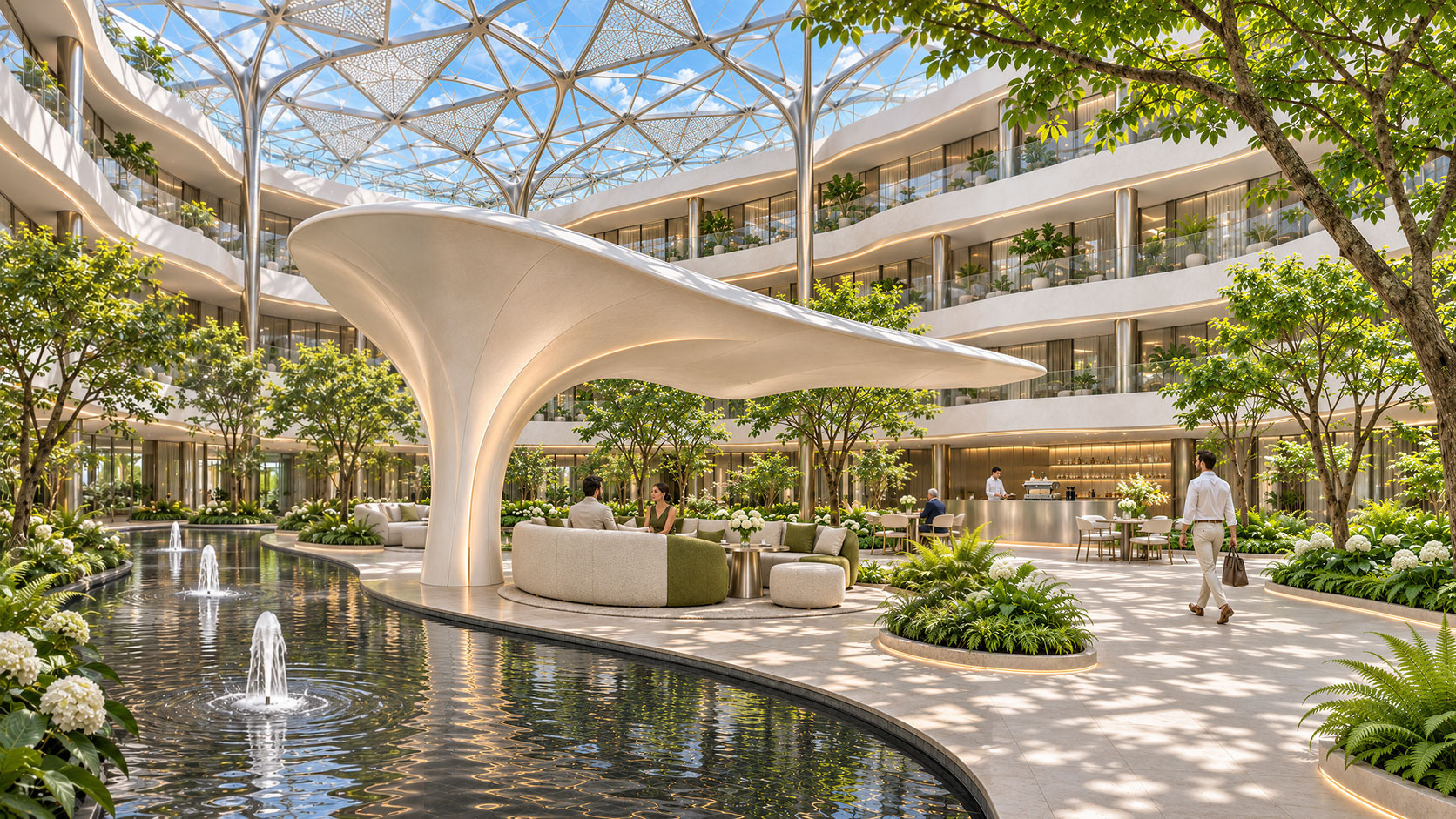
The concept admits very different interpretations. It can be an outdoor courtyard protected by galleries and pergolas, or an interior garden under a cover that allows it to be used in other climatic conditions.
In the second option, the skylight plays a decisive role. Its geometry, orientation and solar protection determine how light enters and how the space is perceived. The slats can draw changing shadows on the walls and pavement, while the trees receive the necessary lighting.
The solution requires studying thermal comfort, ventilation, acoustics and roof maintenance from the beginning. Transparency alone does not guarantee a pleasant place: it is the design as a whole that allows you to enjoy it.
The same space, different times of day
In the morning, the courtyard can host breakfasts and small gatherings. During the day, its more sheltered corners offer spots for reading or resting. At dusk, the lighting transforms how the materials are perceived and highlights new depths within the garden.
Warm light cast upon tables, illuminated trees, and subtly marked pathways can create an intimate atmosphere. Nighttime activity must coexist with the need for rest in the guest rooms; the positioning of the terraces, the scheduling of activities, and the acoustic properties of the space are all critical considerations.
This versatility allows the courtyard to play a role in various moments throughout a stay, without the need to pack it with activities.
Identity, hospitality and value
For the hotel, a well-conceived courtyard can support catering, offer a place for small gatherings and give reasons to enjoy the establishment for longer. These opportunities depend on its capacity, its operation and the accompanying service proposal.
Its most lasting contribution may be identity. The architecture, the garden, the water and the furniture together build an experience that the guest associates with that specific hotel.
At Amusement Logic we understand the courtyard as a comprehensive architecture, landscaping and interior design project, developed around the people who are going to use it. The scale can vary and the language can be contemporary, Mediterranean or linked to other traditions. The question guiding the design remains: what will make someone want to stay here?
When the answer is found in the shade of a tree, in the comfort of a living room and in the pleasure of discovering another corner, the courtyard begins to become a destination. And perhaps also in that place which, at the end of the trip, makes you want to return.