
This new interview offers an inside look at the expertise of a professional who applied the knowledge gained during his law studies to the management of animal parks and water parks—first in food and beverage services, and later in general operations. Organization, contracts, cost control, situational analysis, understanding legal responsibilities, staff planning, and safety—these are just some of the areas he has navigated throughout his extensive professional career. His experience spans locations such as the Parque de Atracciones de Madrid and L’Oceanogràfic in Valencia (Spain), as well as projects in Dubai and Vietnam. The resulting conversation is, from start to finish, truly invaluable. If you don’t believe it, see for yourself.
Amusement Logic: You began your career nearly 28 years ago as a food and beverage supervisor at the Parque de Atracciones de Madrid. What drew you to this industry and kept you here for so long?
Jesús Corrales Antúnez: What drew me in was the combination of people, constant activity, and the opportunity to create something that others can enjoy. I started in April 1998 in the food and beverage department at the Parque de Atracciones de Madrid, with responsibilities closely tied to day-to-day operations: organizing teams, managing hygiene, controlling costs, and handling special services. That foundation allowed me to understand the business from an operational perspective. Later came the opening of L’Oceanogràfic, followed by international responsibilities and, eventually, general management roles. I believe this variety explains much of my long-standing connection to the sector: I have never stopped learning, all while staying in touch with what is truly essential—ensuring that visitors have a great experience and that the team has the resources to make that possible.
A.L.: You studied Law, yet your career has always revolved around the hospitality industry and park management. Do you regret not practicing as a lawyer?
J.C.A.: I wouldn’t frame it as a choice between being right or wrong. My career path led me into park management, but I believe my legal training provided a very useful way of thinking: analysing situations, structuring arguments, understanding responsibilities, and seeking agreements. In a general management role, you deal with people, contracts, regulations, and decisions that require sound judgment. Even though I didn’t pursue a career as a lawyer, that foundation remains part of how I approach problems. Rather than dwelling on what I didn’t do, I prefer to value everything I’ve been able to learn and build within this sector.
A.L.: You were involved in the L’Oceanogràfic project in Valencia, starting from the pre-opening phase. What does it feel like to build something from scratch and watch it grow over more than two decades?
J.C.A.: Building something from scratch combines excitement with a great deal of responsibility. I joined L’Oceanogràfic in September 2002, during the pre-opening phase, and my time there lasted until May 2014. In the area of food and beverage services, I worked on a wide range of aspects—from the culinary offerings, recipes, and pricing to procurement, logistics, budgeting, staff planning, and the establishment of hygiene and operational procedures. This teaches you that an opening is about more than just completing the facilities; it’s about ensuring that everything functions in a coordinated way from day one. Although my career path later took me into other roles, witnessing the evolution of a project you helped shape from the very beginning holds a special significance. The satisfaction lies not only in the opening itself but also in what you help build for the future.
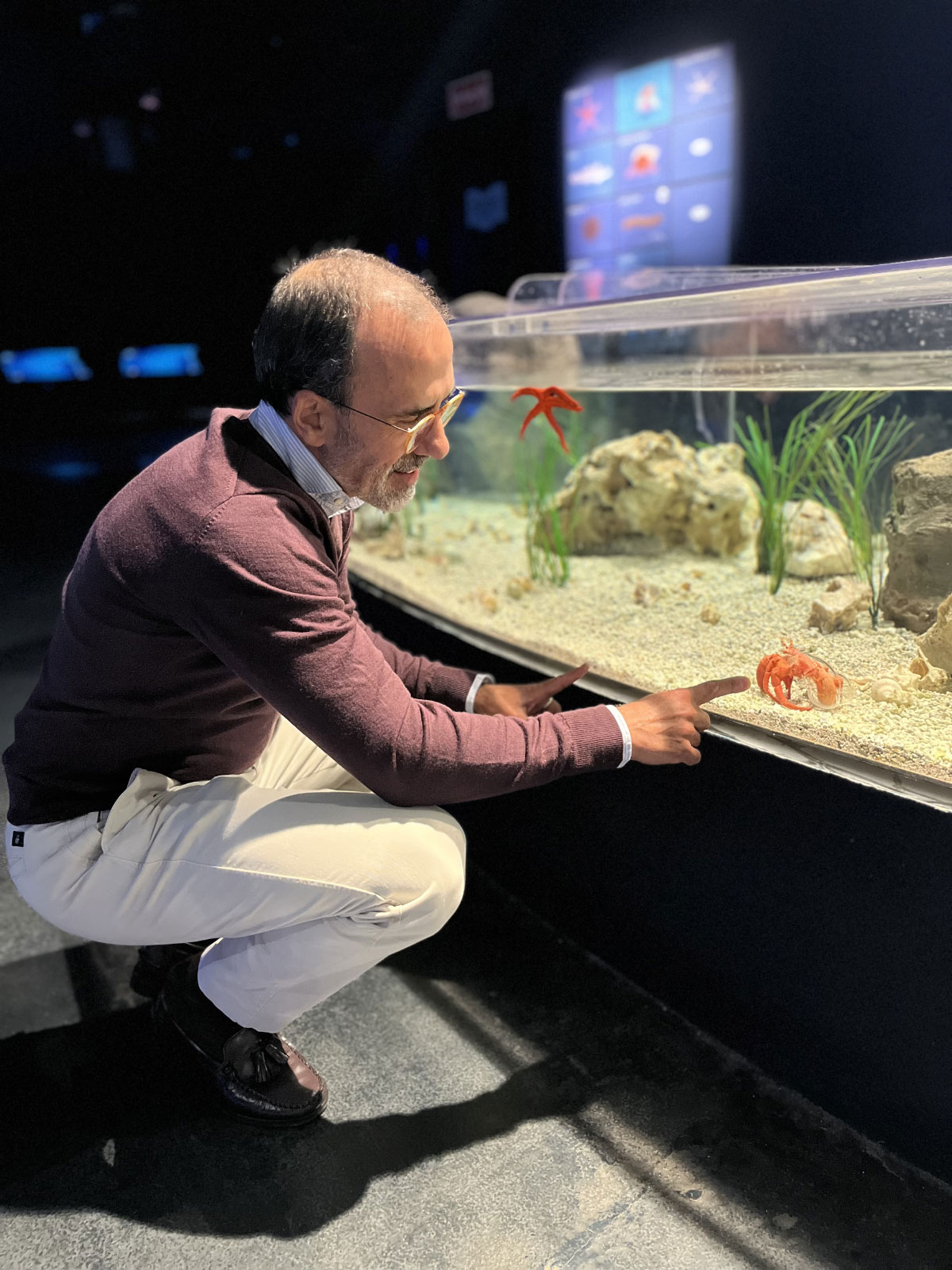
A.L.: You currently manage Faunia and Atlantis, two animal parks located in Madrid. What is unique about managing places where the “team” also includes animals?
J.C.A.: First and foremost, animals are not just another operational resource; they are living beings whose care must guide decision-making. For me, managing a zoological facility means creating the right conditions for specialized staff to carry out their work, while ensuring that the visitor experience remains compatible with animal welfare. You have to listen to those who know the animals best and respect their professional judgment. There is also an educational responsibility that I consider essential: it’s not just about a family having an enjoyable time—it’s about them gaining a better understanding of nature and leaving with a desire to protect it. That combination of care, learning, and emotion is what makes this work so special.
A.L.: You coordinate the animal parks—aquariums and zoos—operated by Parques Reunidos in Spain, and you have also worked in water parks. How does the management of these different types of facilities compare?
J.C.A.: My career path has taken me from food and beverage operations to corporate and general management roles; since September 2025, I have also been coordinating the animal parks in Spain. For me, the core management principles remain the same: safety, well-prepared teams, the visitor experience, and financial responsibility. The difference lies in how the operations are organized. In a water park, the focus is on coordinating activities and managing visitor flow during peak demand—with safety being the absolute priority. In an animal park, the care of living creatures dictates the planning, regardless of whether visitors are present. That is why I believe that “coordinating” does not mean “standardising.” It is about sharing criteria and lessons learned, listening to specialists, and tailoring decisions to the specific needs of each facility.
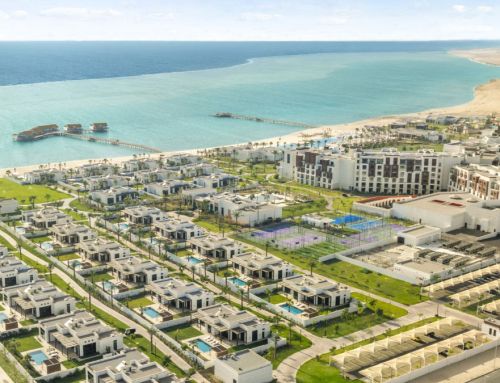
A.L.: You have worked as a food and beverage (F&B) consultant on international projects, such as those in Dubai or Ha Long (Vietnam). What surprised you most about setting up an F&B department at a park in another country?
J.C.A.: What stands out to me is that you cannot simply transplant a formula you are already familiar with; you have to build an operation that fits its specific environment. In the Dubai and Ha Long projects, my role as a consultant involved developing dining outlets, menus, staffing structures, and operational procedures, as well as defining the necessary equipment, materials, and work schedules. It also required coordinating between departments and ensuring that deadlines were met. That experience has taught me to value both the design phase and the ability to put that design into practice. You might have an appealing concept, but you also need a functional kitchen, a well-trained team, and realistic planning. For me, that is the key lesson: adapting the proposal without compromising on rigor or the quality of service.
A.L.: You went from directing the restoration to general director of parks. What did you learn from restoration that you now use to run a park?
J.C.A.: Restoration taught me to detect what the client wants even before he knows it himself. This ability to anticipate their needs allows us to offer a better customer experience. I also learned to connect the details with the business as a whole. I have worked from shift planning and cost control to concept design, budgeting, income statement analysis and coordination with architects and operators. I have also dedicated part of my work to training decision-makers so that they understand the economic dimension of their decisions. By assuming general management of the Xanadú centres in 2017, I was able to take advantage of that foundation to look beyond a department. The scope of responsibility changes, but not a conviction: a good strategy must work on a daily basis. For this you have to communicate clearly, listen to the team and be close to the operation.
A.L.: Nickelodeon Adventure and the entertainment centres at the Xanadú shopping mall have brought you into contact with families. What do families value most when visiting a park?
J.C.A.: I believe they value the ability to enjoy themselves together, without any complications. My experience leading Atlantis and Nickelodeon Adventure at Xanadú has led me to consider the entire visit, rather than just the main activity. Children should find fun and opportunities for discovery, but adults also need to feel comfortable, well-informed, and well-cared for. That is why I place importance on things like being able to navigate the space easily, understanding what is on offer, managing one’s time, and finding assistance whenever it is needed. In an aquarium or an animal park, I would add something truly special: the experience of learning together. A child asking a question, with the adults discovering something new alongside them—that can become one of the best memories of the day. That is the kind of family experience I aim to provide.
A.L.: And what tends to be the most overlooked aspect?
J.C.A.: I would say it’s what happens between the major highlights of a visit. It’s easy to focus on a new attraction or a particularly eye-catching activity, while paying less attention to things like confusing signage, a poorly explained wait time, or an unhelpful response when someone needs assistance. I don’t mean this as a criticism of any specific park, but rather as a standard we should always keep in mind. I believe clear communication is especially important: explaining what each family can do, what options are available to them, and how we can be of help. Sometimes, improving the guest experience doesn’t require a massive investment; it simply requires observing, listening, and handling everyday details with greater care.
A.L.: What do you think animal and leisure parks will be like in the near future?
J.C.A.: I would like to see us move toward parks that better combine enjoyment with a clear purpose. For animal parks, my vision involves placing a greater emphasis on animal welfare, conservation, and an approach to education that engages visitors—going beyond the mere transmission of information. Across the leisure sector as a whole, I believe we should make visits more comfortable, accessible, and personalized. I see technology as a tool to facilitate this, not as a substitute for human interaction or the authentic, real-world experience. If I had to summarise the future I would like to help shape, it would be this: that people leave having enjoyed themselves together, having learned something, and having found a reason to care for their environment.