
When we think of a water park, we often picture large slides, a wave pool or even a lazy river. However, its popularity with the public and its profitability do not depend solely on the list of its attractions. Although these are a fundamental part of it, right from the initial design stage it is necessary to consider other factors and identify other elements that contribute to that success. After all, the visitor’s experience is not limited to enjoying the attractions; they must, for example, be able to move smoothly from one to another, and rest or recharge their batteries in one of the restaurants.
Indeed, amongst the aspects that make a difference in the design of water parks, intuitive movement between attractions plays a key role. A well-planned route prevents overcrowding and distributes visitor flows evenly, ensuring a comfortable and safe experience. Meanwhile, waiting areas along the route and adjacent to the attractions should be seen as an opportunity. These are spaces sheltered from the sun that make queuing more bearable and increase visitor satisfaction.
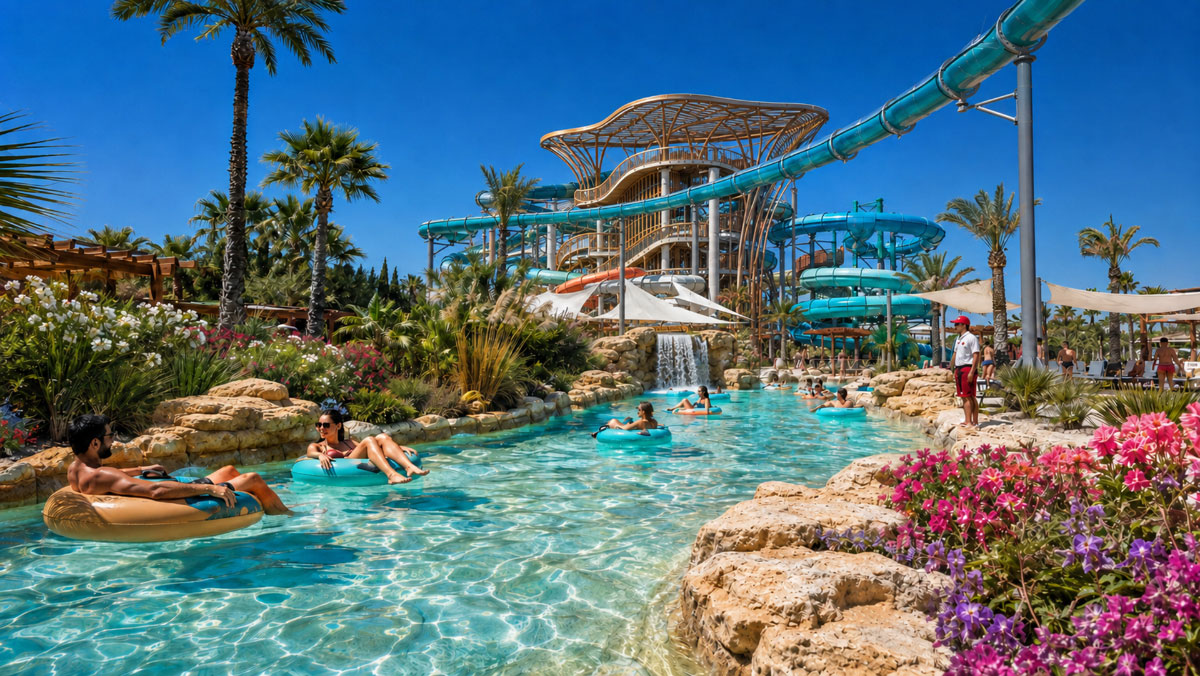
Equally essential are shaded and rest areas. The integration of suitable vegetation, as well as pergolas and tensioned canopies, creates havens where visitors can relax. This extends visitors’ stay and improves their overall perception of the park. Furthermore, the design of a water park must optimise aspects such as day-to-day operations and reduce maintenance costs.
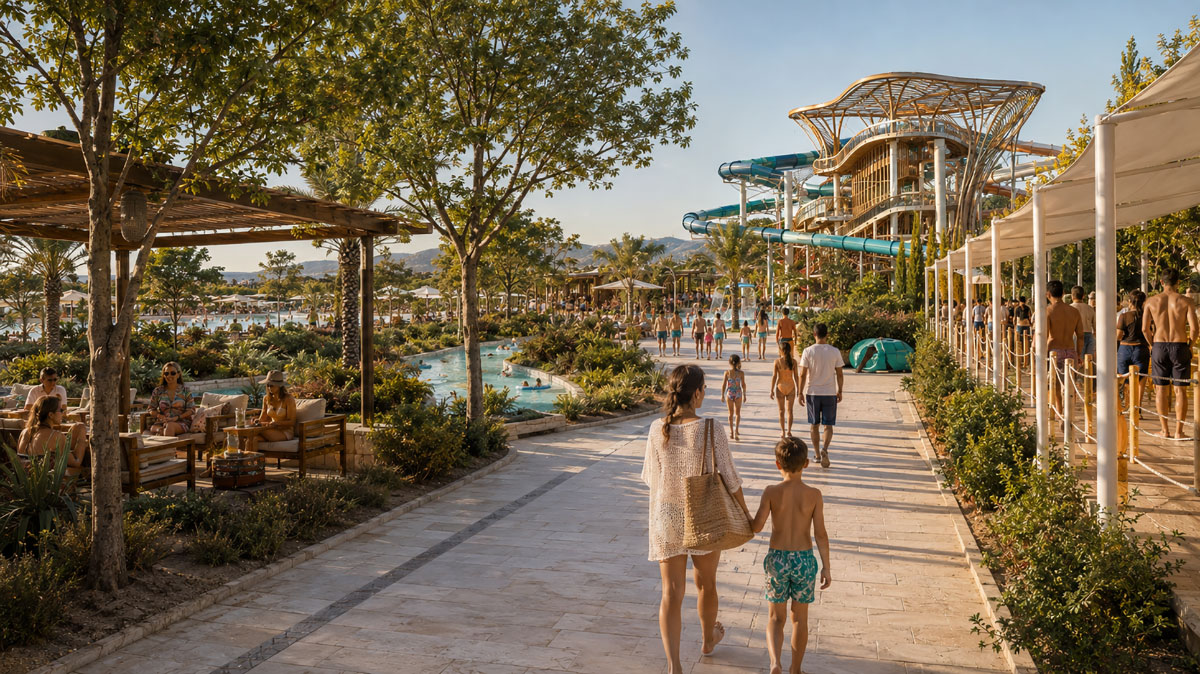
A water park design focused on operation and maintenance facilitates access to technical installations, utilises materials resistant to the climatic conditions of its catchment area, and reduces operating costs. Ultimately, all these design details contribute to the overall balance of a water park, ensuring minimum guarantees of success. Not only do they guarantee visitors’ comfort and a positive experience, but they also maximise the park’s long-term profitability. In this way, a water park becomes a functional and sustainable attraction that offers memorable experiences season after season.
By Ángel Ibáñez Pérez, Senior MEP Engineer in the Architecture Department at Amusement Logic