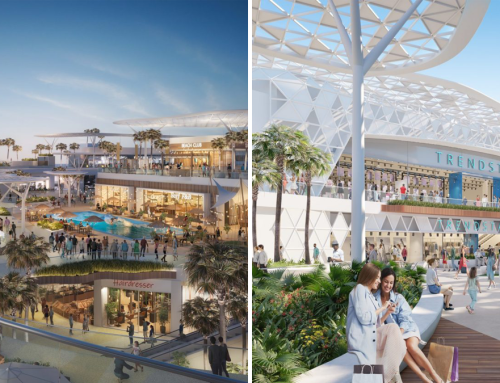

This time, we bring you a new conversation with the lead architect behind megaprojects such as Warner Bros. World Abu Dhabi and SeaWorld. As you’re about to see, he’s a professional with experience designing both stadiums and hospitals. You’ll be surprised by the difference—or perhaps the similarity?—between the design of these types of buildings and that of large theme parks. His approach: keeping the magic while staying on top of deadlines and budgets. An interview in which he reveals that every narrative detail must coexist with the most precise technical requirements. Let’s get started!
Amusement Logic: You trained as an architect. What motivated you to shift your career toward the design and leadership of large-scale theme and leisure projects?
Mahmoud Ghedjatti: It was the sheer scale of the complexity that drew me in. I was initially assigned as lead architect for a leisure destination in Oman without any background in themed entertainment. Fortunately, we brought in a semi-retired architect who had worked on the world’s biggest theme parks. He didn’t just teach us the technicalities; he showed us how every detail serves the narrative. That mentorship was a lightbulb moment. Once I realized that architecture in this sector is about storytelling, not just structure, I was hooked—and one park led naturally to the next.
A.L.: You served as a senior architect and project lead for the expansion of Warner Bros. World Abu Dhabi. What were the main technical and coordination challenges in a project of that magnitude?
MG.: While I’m restricted from sharing specifics due to confidentiality, I can say that the defining challenge on a project of this magnitude is design integrity during live operations. The park remains active, so every technical solution—whether MEP, structural, or theming—must be executed without disrupting the guest experience. The level of detail is microscopic; we are essentially building a movie set that has to withstand thousands of visitors daily. It requires a ‘surgical’ approach to coordination where every trade knows exactly where the other is working at all times.
A.L.: At SeaWorld Abu Dhabi, you worked on areas such as Rocky Point, One Ocean, and Polar Ocean. What is the difference between tackling the design of a marine theme park and that of an indoor park like Warner Bros?
MG.: The fundamental difference is the end-user. In a typical theme park like Warner Bros., every design decision optimizes the guest’s emotional journey—the flow, the queue lines, the reveals. But at SeaWorld, you are designing for two clients: the guest and the animal. My role evolved into that of a ‘translator’—not of language, but of disciplines. I had to sit with the Zoology team to understand the animals’ behavioral needs and environmental tolerances, then translate those non-negotiable biological requirements into architectural details that the contractors could build. If the guest journey is the art, the animal welfare is the science, and you cannot sacrifice one for the other.
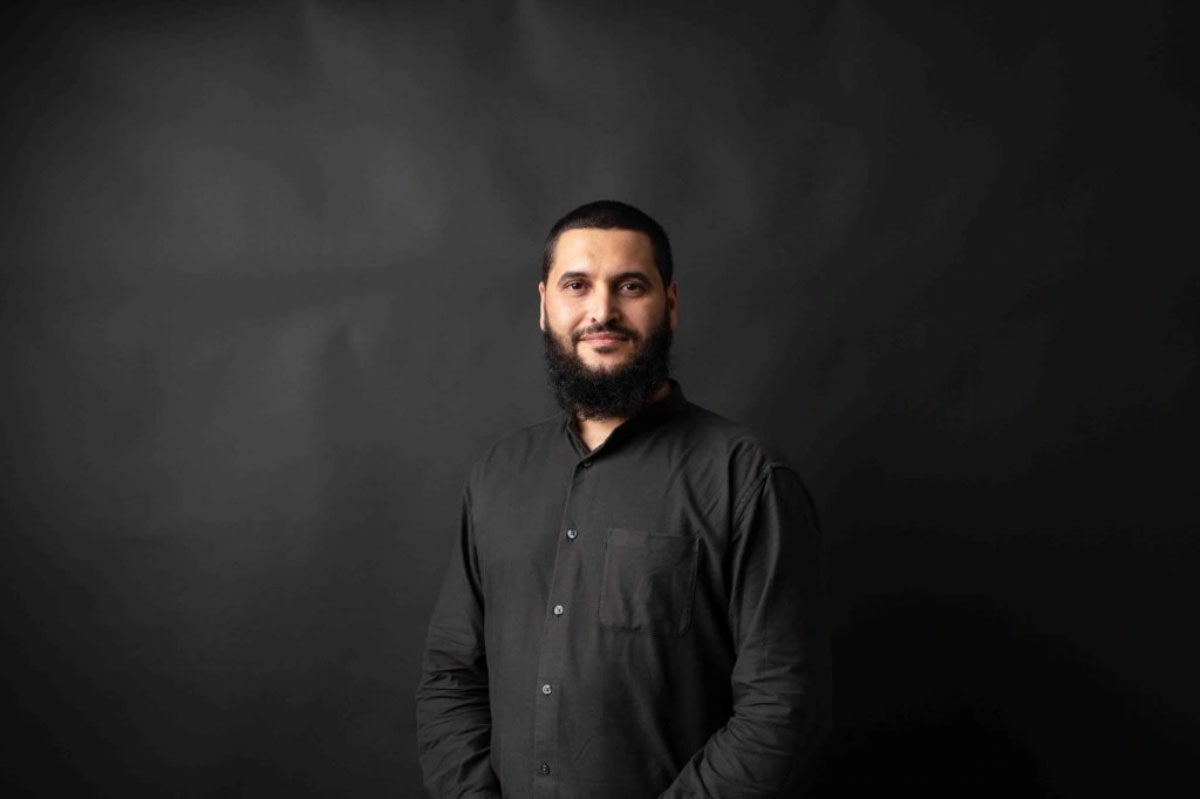
A.L.: And what is the difference between the architecture of theme park projects and that of healthcare projects, such as the ones you developed for hospitals in Abu Dhabi, Dubai, and Riyadh?
MG.: They feel like two different universes aesthetically, but at their core, they share a DNA of logistics. Both require a strict separation between the public ‘front of house’ and the operational ‘back of house.’ In a hospital, you are moving patients and sterile supplies; in a theme park, you are moving guests and food services. Both require intuitive wayfinding and a ‘stress-free’ flow. In healthcare, you reduce stress to heal; in entertainment, you reduce stress to delight. The planning methodology is surprisingly interchangeable.
A.L.: In your early years in Algeria, you participated in the design of the stadiums in Baraki (45,000 spectators) and Oran (40,000 spectators). What lessons from those projects do you apply today?
MG.: Designing for 40,000 to 45,000 spectators teaches you the true meaning of human choreography. The lessons I apply daily are about the dual journey: the fan’s experience—clear sightlines, quick access to amenities—and the staff’s operational efficiency. In a stadium, if a staff member has to walk an extra kilometer to restock supplies, that delays the service for thousands of fans. I carried that exact logic into hospitals and theme parks. If the ‘backstage’ team doesn’t have an easy day, the ‘onstage’ guest doesn’t have a great one.
A.L.: Coordination between architecture, MEP, structural, and theming teams is critical. What methods or tools have served you best in maintaining the integrity of the final design?
MG.: BIM and coordination platforms like Revizto are essential—they give us the ‘single source of truth’ regarding clashes and clearances. But the tool is useless without the facilitator. My most effective method is what I call the ‘War Room’ workshop. You need to lock the structural, MEP, and theming engineers in a room with a decision-maker who speaks all those dialects. Software highlights the clash; human conversation solves it instantly. The tool provides the data, but the workshop provides the speed.
A.L.: You say you have a passion for technological and innovative solutions. How did you incorporate research into new concepts in projects like Warner Bros. or SeaWorld?
MG.: I’m always chasing efficiency, because in themed construction, perfection is expensive. For example, achieving a perfectly flat wall in a themed environment is notoriously difficult due to substrate movements. So rather than fighting the materials, I look for alternative construction methods—like using adjustable steel framing systems or advanced compound curves that hide imperfections in the shadow lines. Innovation, for me, isn’t about flashy tech; it’s about finding a smarter, faster, and equally beautiful way to achieve the designer’s intent without breaking the budget
A.L.: In addition to Algeria, you have also worked in the United Arab Emirates. What differences do you observe in work culture, processes, and client expectations between the two countries?
MG.: Algeria operates at a more measured, reflective pace, which allows for deep contemplation of the design details. The UAE, by contrast, is high-octane—decisions are made rapidly, and the construction process is highly controlled and regimented to meet aggressive deadlines. Interestingly, I find value in both: the UAE teaches you speed and adaptability, while Algeria taught me patience and the importance of getting the foundational design right before breaking ground.
A.L.: Conflicts between design, deadlines, and costs are common in such complex projects. How did you manage these types of issues during the Warner Bros. expansion or at SeaWorld?
MG.: My primary strategy is pre-emptive education. I believe conflict arises when people don’t understand the ‘why’ behind a decision. So I make it my mission to educate as many stakeholders as possible about the project’s core narrative and technical risks early on.
Specifically, I rely on three pillars: Rigorous Change Control—I visually demonstrate the time and cost impact of every late-stage change; Forward Planning—I use my experience to anticipate repeating problems. For instance, ride vendors rarely communicate clearance paths to theming vendors early enough. Knowing this, I force those conversations and block out maintenance access paths months in advance; and Prioritization—We tackle the long-lead, high-risk items first, so we aren’t firefighting at the finish line.
A.L.: With 17 years of experience in multicultural and multidisciplinary projects, in which direction would you like to evolve professionally in the coming years, and what path do you think the leisure sector will take?
MG.: The region is currently writing the golden chapter of entertainment history, and I intend to be part of that narrative. In the next 5 to 10 years, I want to move beyond project leadership into a more strategic master-planning role—helping to shape the overarching guest experience from the very first concept sketch.
As for the sector’s path, I believe we are moving toward hyper-immersion. Guests no longer want to just ‘see’ a ride; they want to live inside a story. Projects like the Harry Potter expansion at Warner Bros. are just the beginning. I’m particularly excited about what Saudi Arabia and Abu Dhabi are planning—these are not just parks, but entire entertainment ecosystems. I want to be the architect who bridges the gap between that wild creative vision and the physical reality of construction.