
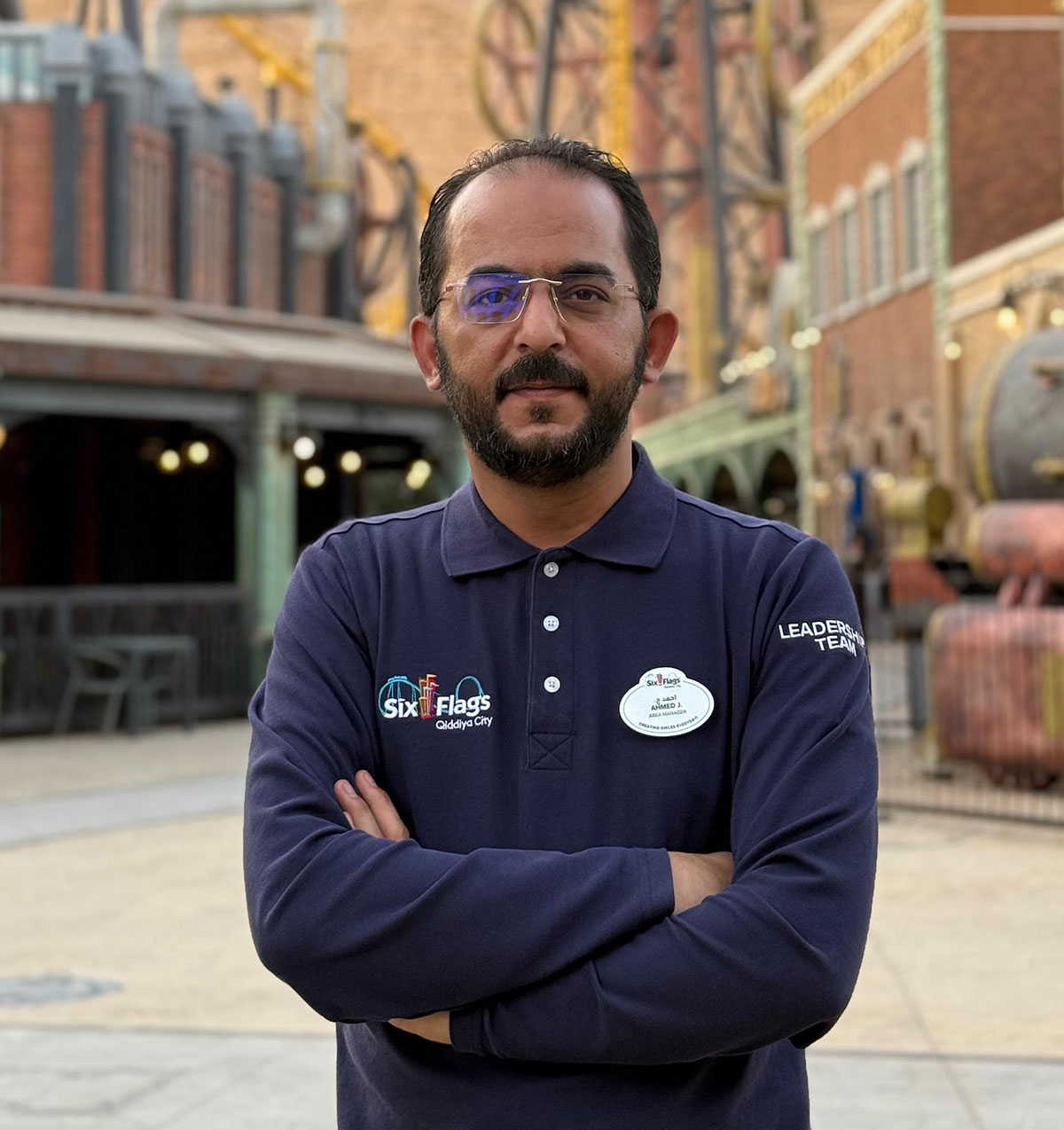
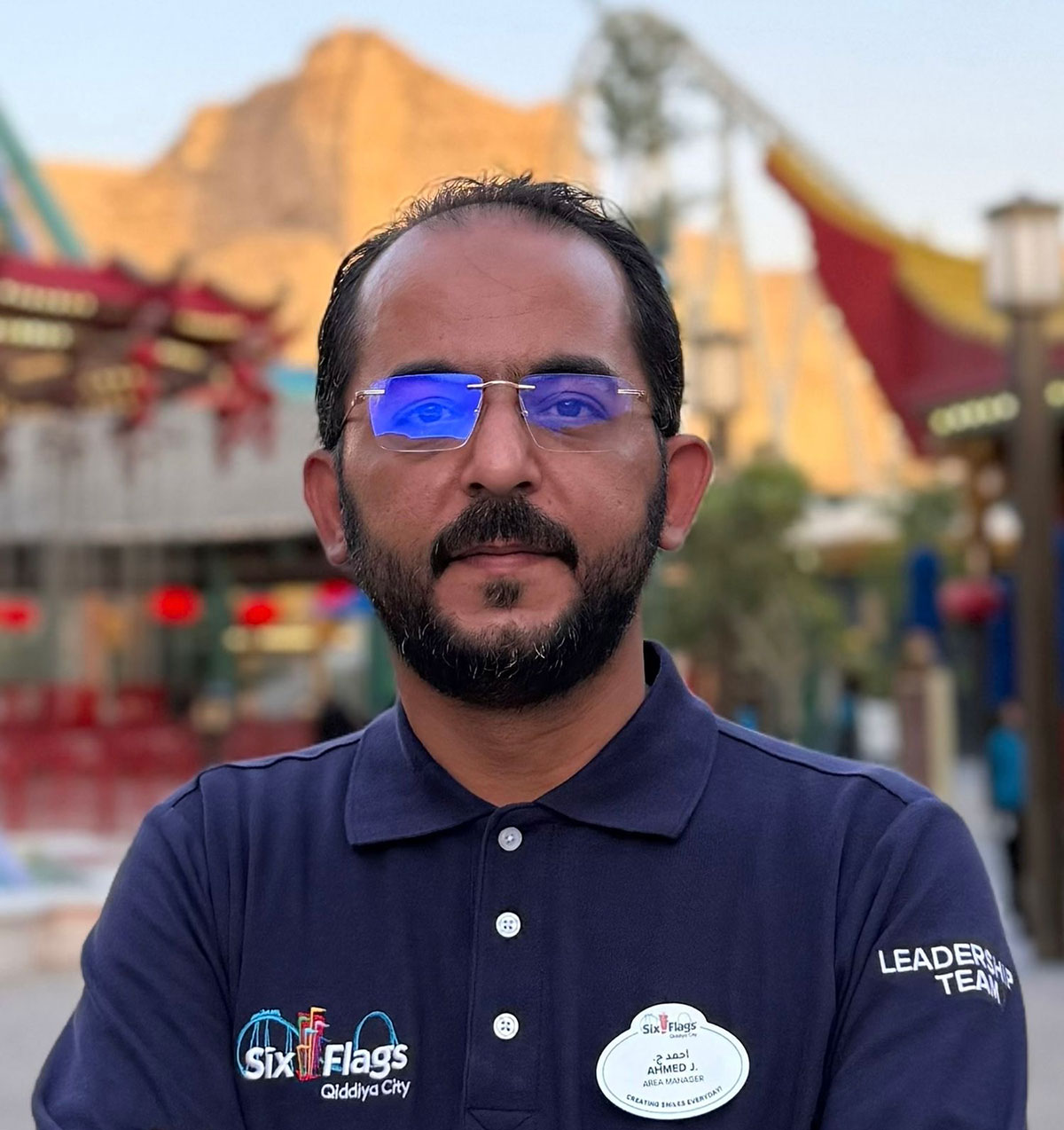
Let us introduce you to a professional who made a definitive career shift from the cosmetics industry to the theme park sector. Since then, he specialized in the pre-opening and operation of these sort of leisure and tourism attractions. He has spent his long career in various cities across the Middle East, a market that, as you are about to see, he knows inside and out. As if that weren’t enough, he has launched several staff training programs, the value of which he will explain to you. We invite you now on a brief journey through the different corporate cultures our guest is familiar with. Oh, and also Saudi Arabia’s program known as Vision 2030. Enjoy the trip!
Amusement Logic: Your career began in sales within the cosmetics industry, but you soon shifted your focus to family entertainment. What motivated that career change?
Ahmed Al Jassim: My career began in sales in the cosmetics industry, but I quickly realized that I was most energized by roles where I could work with people, operations, and guest experience on a larger scale. Family entertainment gave me that combination of service, management, teamwork, and continuous improvement. I also found that my background in sales was very useful, because it taught me how to understand customer needs, communicate clearly, and create value through service. Over time, I knew this was not just a job change for me; it was the right long-term path.
A.L.: You have been involved in the pre-opening phases of major attractions and parks. What are the main challenges and lessons learned when launching a facility from scratch?
A.A.J.: Pre-opening phases are exciting, but they are also demanding because you are building the operation from the ground up. The main challenges are recruiting the right team, training them properly, setting clear procedures, and making sure every department is ready before opening day. Another important lesson is that planning must be detailed, but flexible, because unexpected issues always appear during launch. In my experience, success comes from teamwork, discipline, and strong coordination between operations, maintenance, HR, and commercial teams.
A.L.: You have worked in various cities across the Middle East. What differences do you observe in visitor expectations, and how does operational management adapt in each case?
A.A.J.: Working in different cities across the Middle East taught me that guest expectations can vary depending on the market, the size of the city, and the level of familiarity with entertainment concepts. In some places, guests focus more on speed and convenience, while in others they value the full experience, atmosphere, and family comfort. Operational management must adapt by understanding local behaviour, peak times, cultural expectations, and spending patterns. The key is not to apply one model everywhere, but to adjust the operation while keeping the same standard of safety and service.
A.L.: Queue management is always a major challenge. What strategies work best to reduce wait times without compromising the visitor experience?
A.A.J.: Queue management is one of the most important parts of guest experience because long waits can affect how people feel about the entire visit. The best strategies are improving staffing during peak hours, using smart scheduling, monitoring live demand, and making sure operations are flexible. Clear communication is also very important, because when guests understand waiting times, they are more patient. In addition, when the queue area is organized, comfortable, and moving smoothly, the wait feels shorter even if the actual time is the same.
A.L.: You have devoted your career to designing training programs. How do these programs help maintain high standards of service and safety in large teams?
A.A.J.: Training programs are essential because large teams need a common standard of service, safety, and behaviour. They help employees understand not only what to do, but also why it matters. A well-designed training program builds confidence, improves consistency, and reduces mistakes in daily operations. For me, training is not a one-time activity; it is an ongoing process that supports performance, accountability, and team culture.
A.L.: Gathering real-time customer feedback is a key business strategy. What role does it play in the day-to-day operations of a modern theme park?
A.A.J.: Real-time guest feedback is a very powerful tool because it allows us to react quickly instead of waiting for problems to grow. In daily operations, it helps us identify service gaps, measure guest satisfaction, and make immediate improvements. It also gives teams direct insight into what guests value most, which is extremely useful for decision-making. When feedback is handled properly, it becomes part of operational control and continuous improvement.
A.L.: Balancing revenue and costs is key to operations. What initiatives have helped you reduce costs without affecting perceived quality?
A.A.J.: The best cost saving initiatives are the ones that improve efficiency without reducing the guest experience. In my work, this has included better staff planning, stronger control of resources, reducing downtime through preventive maintenance, and improving operational discipline. Small improvements in processes can create significant savings over time. My approach has always been to protect quality first, then look for smarter ways to deliver it.
A.L.: Outside of work, do you visit theme parks for fun, or do you prefer to unwind? What visitor experience has inspired you the most?
A.A.J.: Yes, I do enjoy visiting theme parks and entertainment venues, because it helps me see the guest experience from the visitor’s point of view. I also enjoy observing how teams interact with families, how attraction flow is managed, and how the overall atmosphere is created. One thing that has always inspired me is when a venue combines safety, efficiency, and emotional experience in a very natural way. That is the kind of operation that stays in people’s memory.
A.L.: You have worked in different corporate cultures. What have you learned from each one, and how has that shaped your leadership style?
A.A.J.: Working in different corporate cultures taught me that there is no single leadership style that works in every environment. From each company, I learned different strengths, such as structure, speed, flexibility, customer focus, and accountability. These experiences helped me become a more balanced leader who listens, adapts, and keeps standards clear. My style today is to be practical, respectful, and supportive while keeping the team focused on results.
A.L.: Saudi Arabia is undergoing profound transformation through the program known as Vision 2030. What opportunities and challenges do you see for professionals in the sector over the next five years, and where do you see yourself?
A.A.J.: Vision 2030 is creating major opportunities for professionals in the entertainment and theme park sector, especially in Saudi Arabia. The market is growing quickly, expectations are rising, and there is strong demand for local talent with international standards. At the same time, the challenge will be to develop teams, systems, and guest experiences that can match this growth in a sustainable way. I see myself continuing to contribute to this transformation by developing strong operations, building teams, and supporting world-class guest experiences in the Kingdom.