
The problem: between 2023 and 2025, during Vietnam’s rainy season — which typically begins in September in its central provinces and lasts until December or even January of the following year — the country experienced 17 consecutive storms that left 22 of its 34 provinces submerged.
The solution: a team of architects proposes accepting and living with water, rather than trying to defeat it. To this end, they have developed a prefabricated floating home that adapts to rising water levels and settles back onto the ground, as if nothing had happened, once the water recedes.
“Every year we witness the tragic losses of lives and property,” explain Creative Architects, the firm behind the project, to Designarcus magazine. “As architects and engineers,” they add, “we felt a professional responsibility to contribute a solution within our capacity.” This is how Bui The Long, the firm’s founder, together with his colleagues, sought an approach that would allow families to remain on their ancestral lands without putting their lives at risk. The result is the Prefabricated Floating House, developed in collaboration with Nhà Xanh — literally “Green House” in Vietnamese — and 5G Construction Solutions.
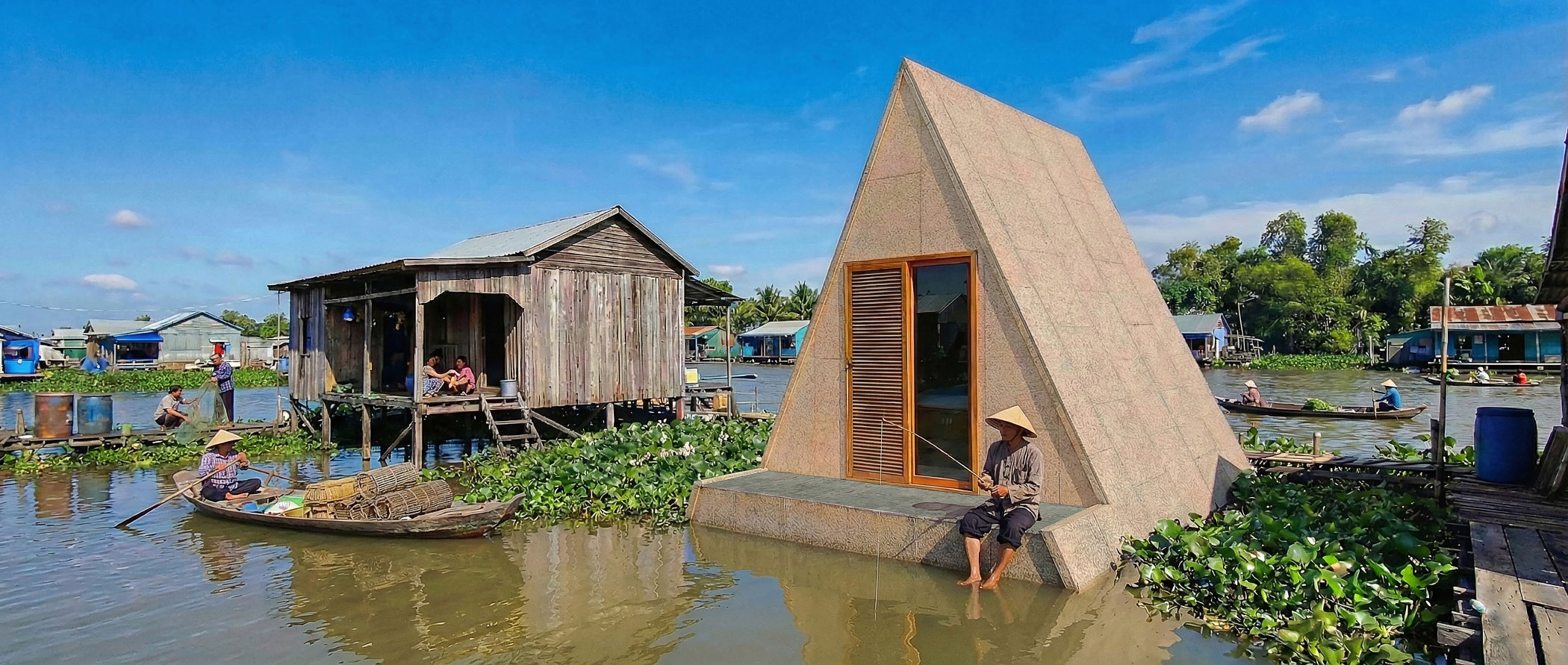
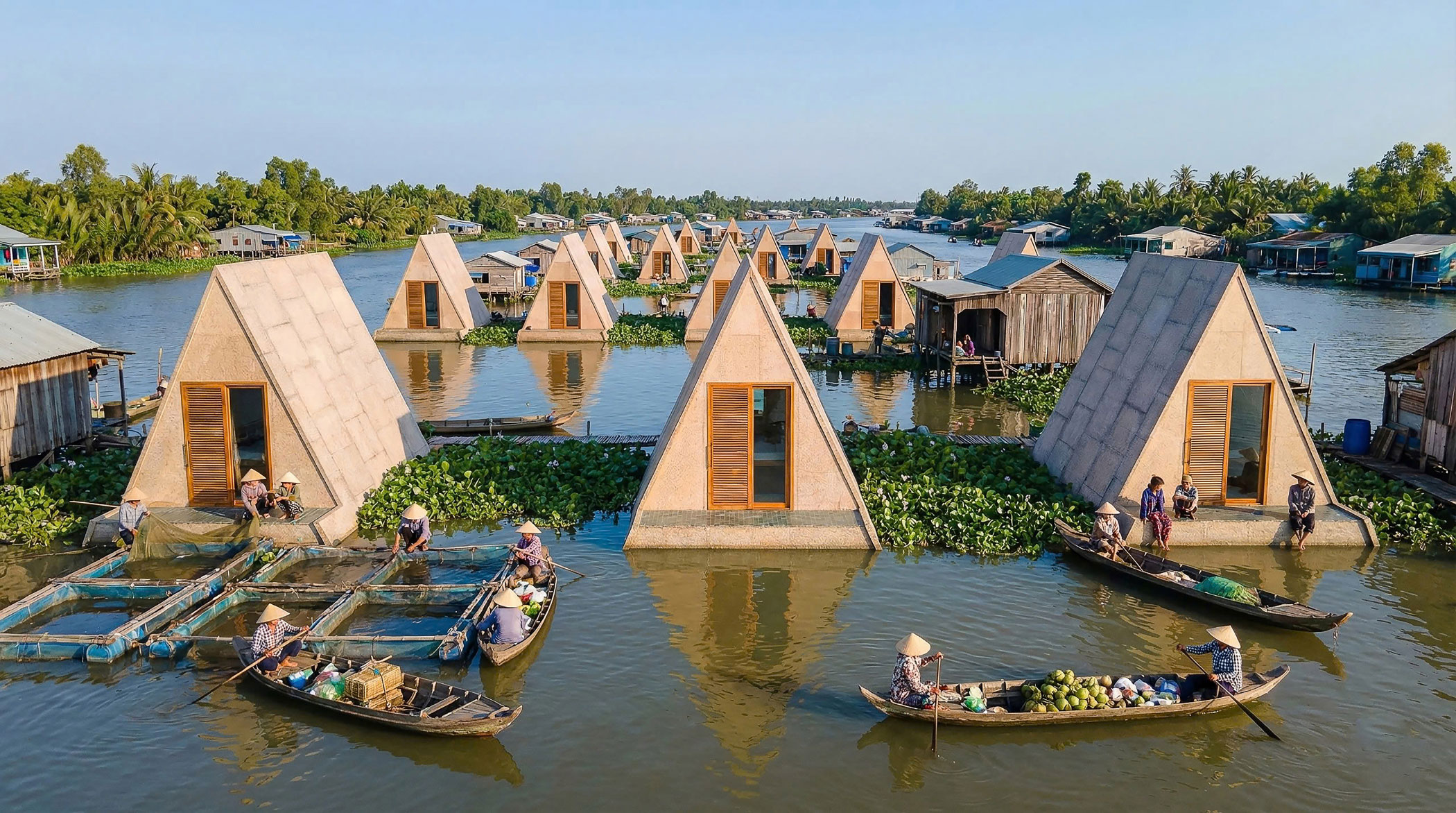
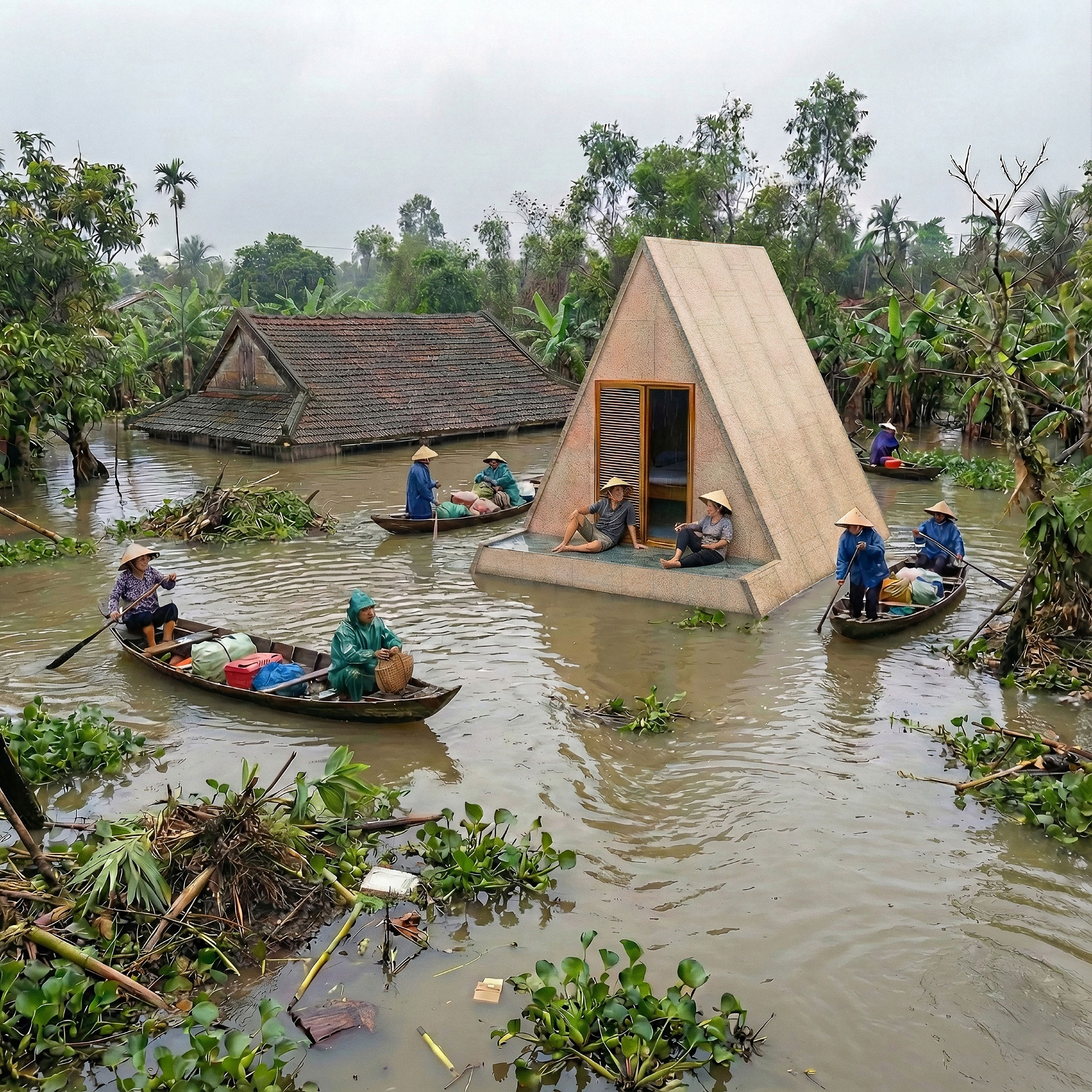
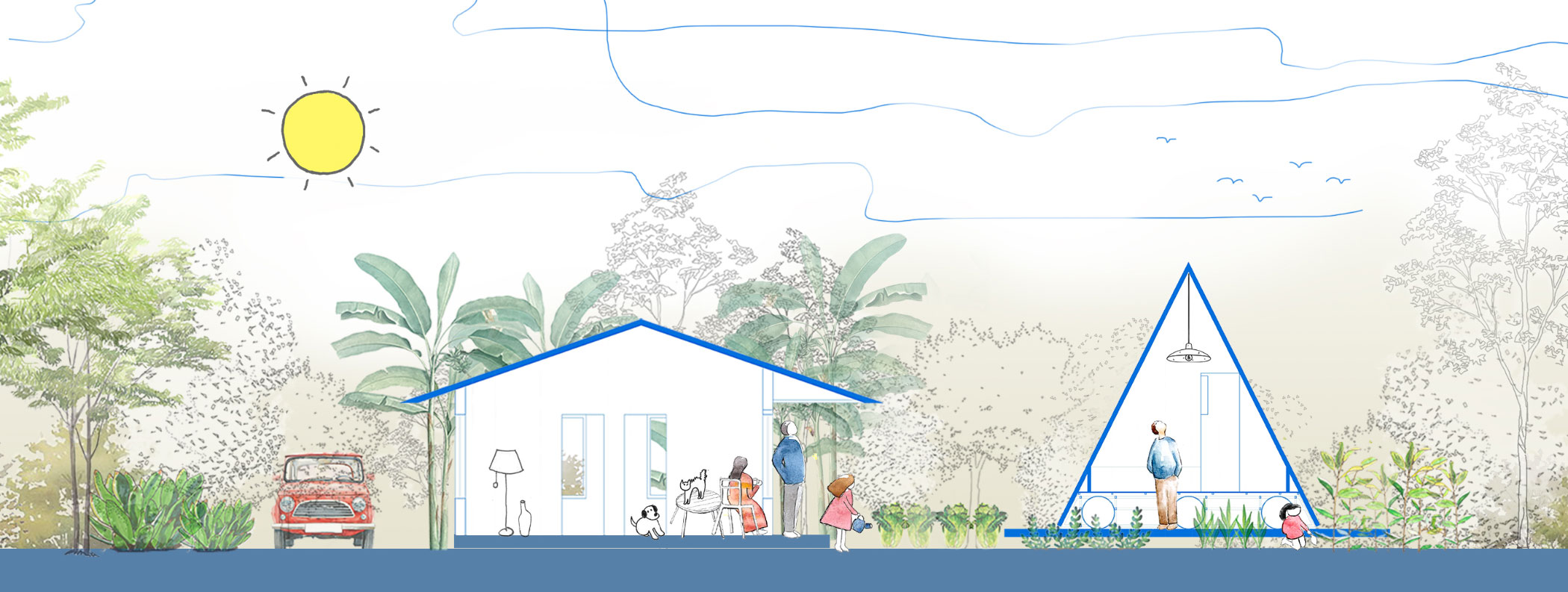
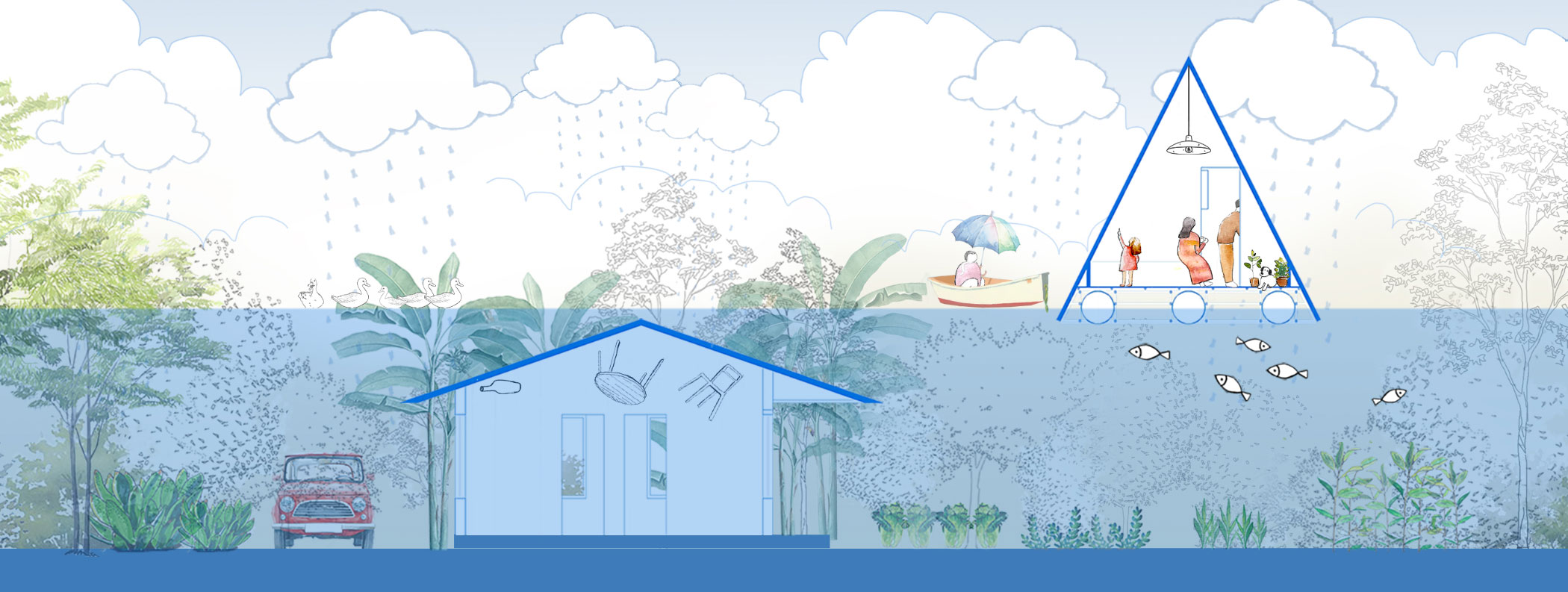
The concept behind the Prefabricated Floating House is based on a simple conviction: “no matter how capable we are, we cannot fight nature.” With this in mind, the architects radically shifted their perspective and began to ask: “why not live in harmony with water instead of constantly trying to eliminate it?” This approach, which they termed “living with water”, informs every design decision of the Prefabricated Floating House.
The technical solution is, essentially, an exercise in balance — quite literally. The form is not arbitrary but responds to a very specific challenge: the strong winds that accompany storms. “Without careful engineering, roofs can easily be uplifted,” Creative Architects explain to Designarcus. “A triangular form, particularly an isosceles triangle, provides optimal structural stability, it avoids protrusions or wind pockets, and distributes forces evenly.” At the same time, the homes maintain a discreet presence within the landscape. Soft exterior tones and the triangular silhouette minimise their visual impact.
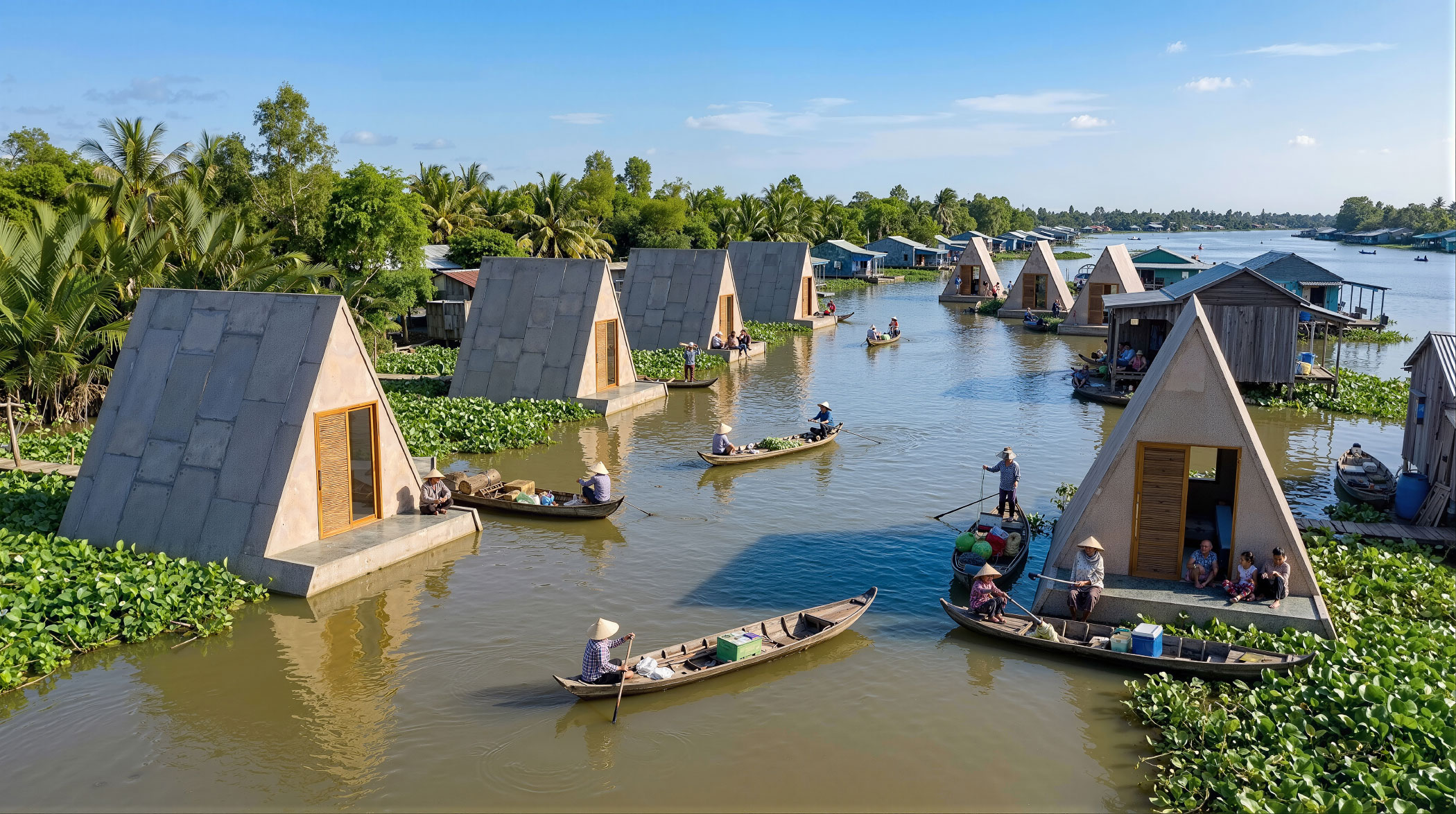
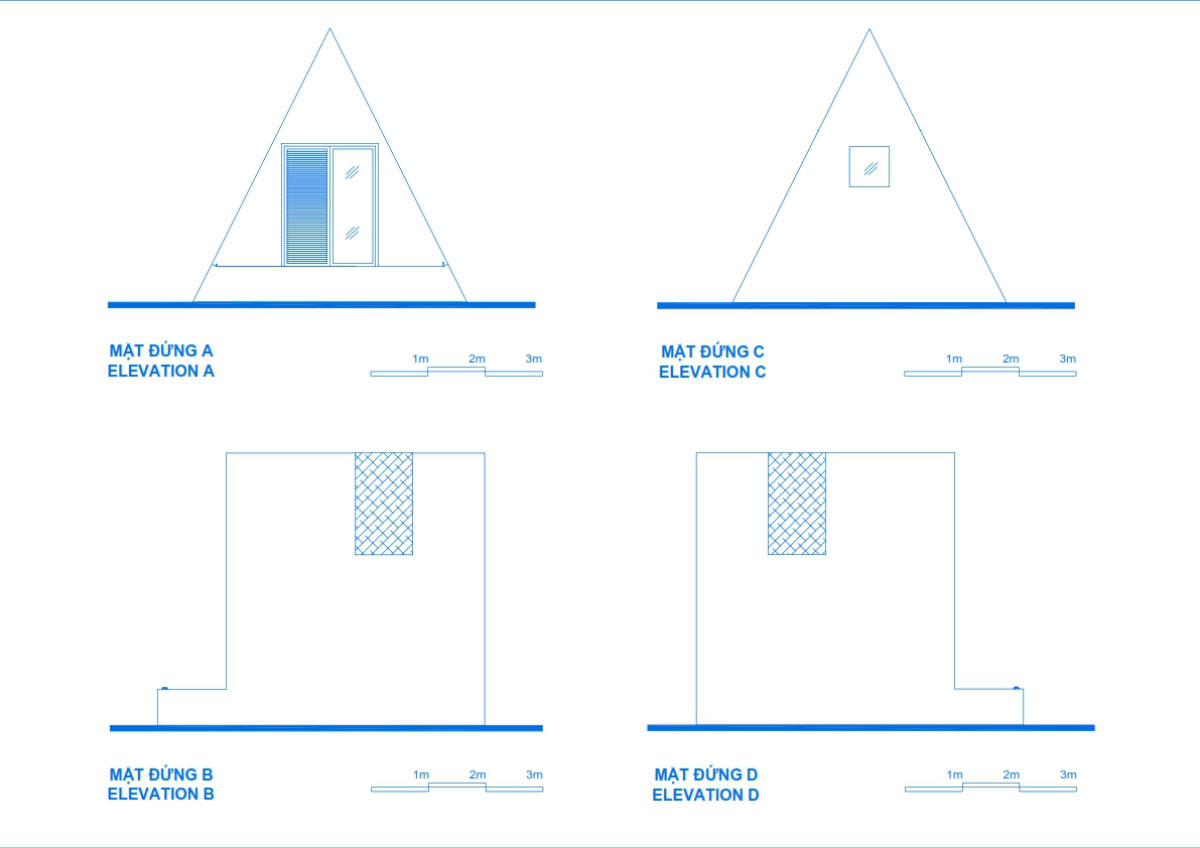
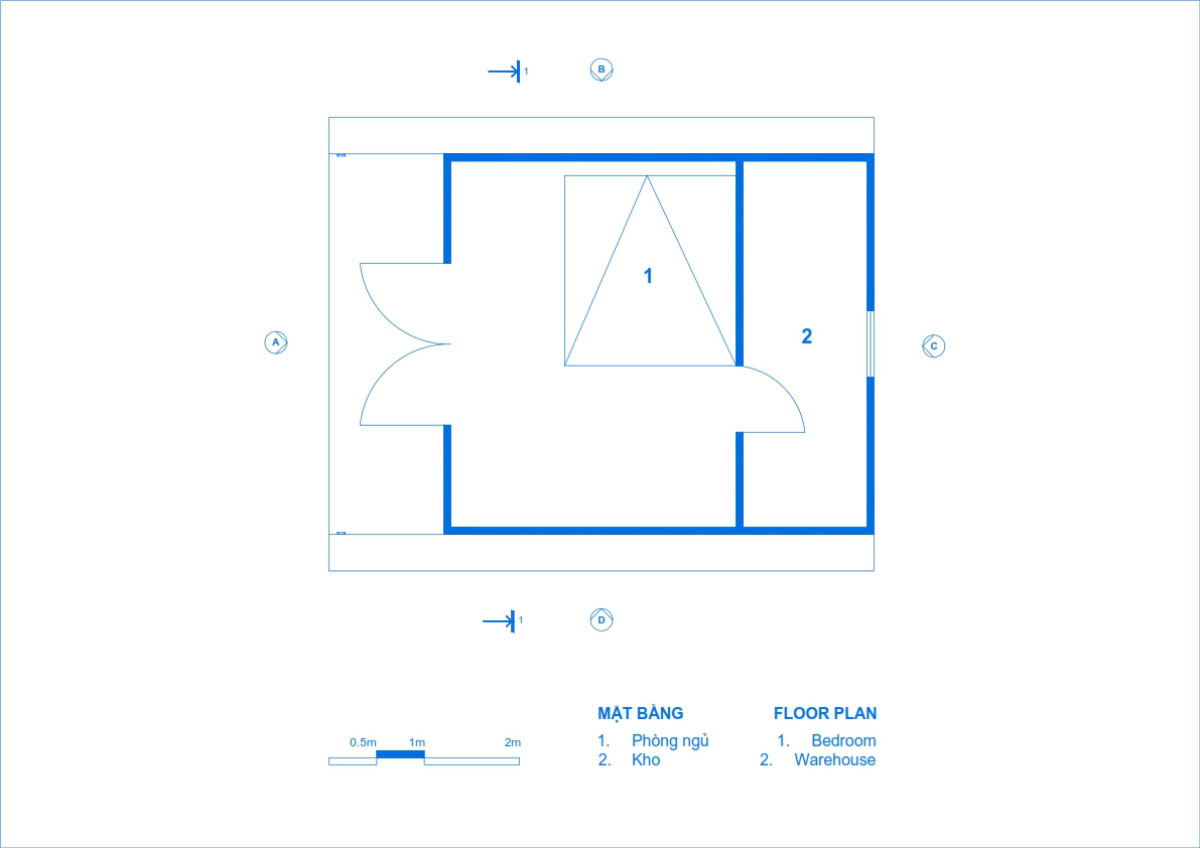
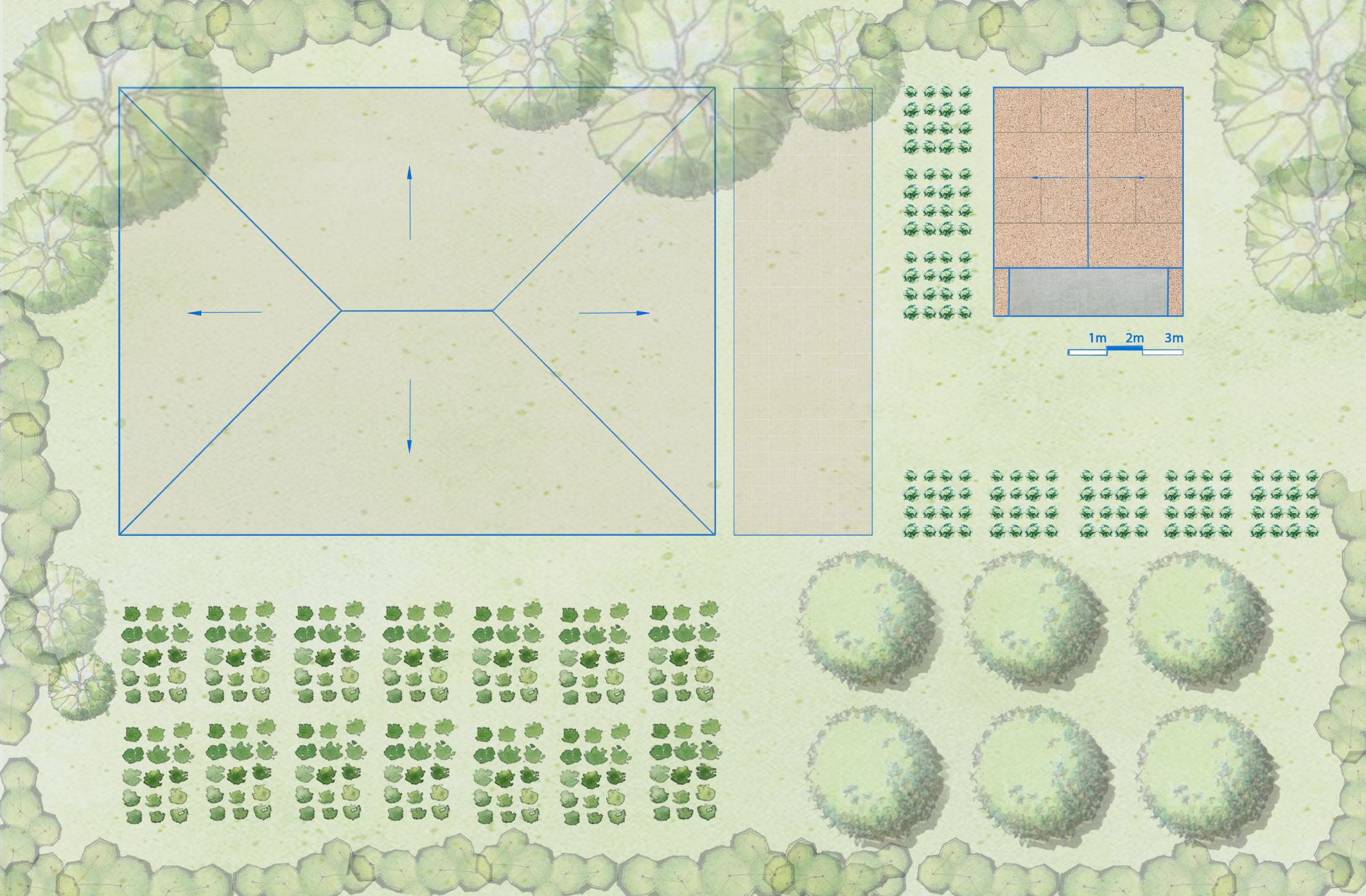
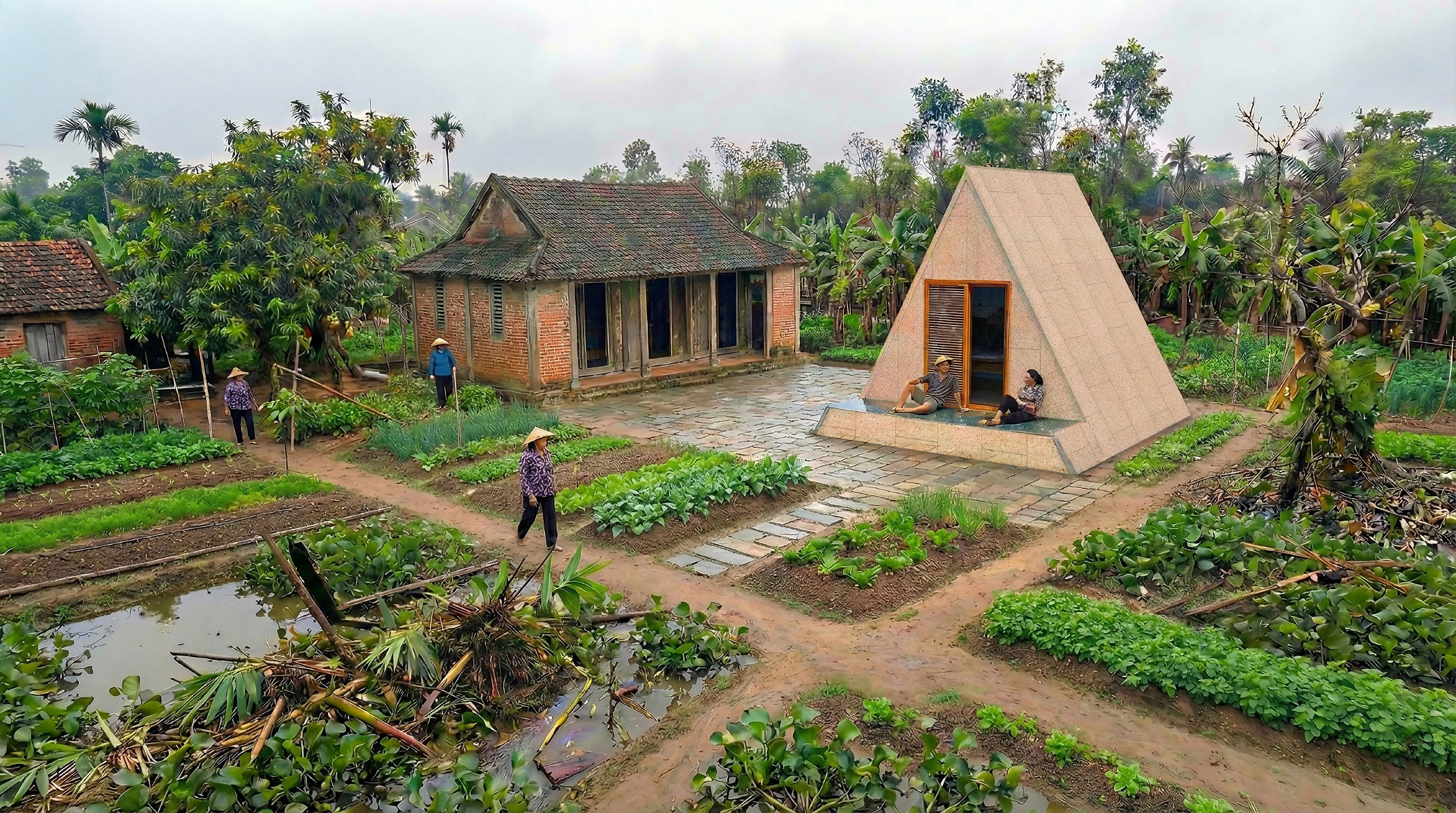
For flotation, the team evaluated several options: polystyrene blocks, specialised pontoons, metal drums… Ultimately, they chose high-density polyethylene drums — a durable material, readily available on the local market, lightweight and economical. “Most importantly, they provide reliable buoyancy while remaining easy to replace or maintain when needed,” the architects note. The system also includes guiding mechanisms that prevent lateral displacement and keep the house anchored as it rises with the water. Between 7 and 10 days later, as the floodwaters recede, it returns precisely to its original position.
The architects identified five essential survival factors to ensure the house remains self-sufficient during flood periods: food, rest, sanitation, electricity and water. The pantry, protected from the damp, can store provisions for 10 days; there is an independent gas kitchen that does not require electricity; and the bed, comfortable for two people, can be extended to accommodate up to four in an emergency. If necessary, the space allows for mats to be laid on the floor to shelter up to eight people, with additional blankets stored in dedicated compartments.
The sanitation system is one of the most distinctive features of the Prefabricated Floating House: the wastewater tank floats alongside it, ensuring that both hygiene and the natural environment remain unaffected during flooding. As the architects emphasise to Designarcus, the goal “is not luxury, but resilience: ensuring a family can maintain dignity and a basic comfort during temporary isolation.”
Cost, the architects acknowledge, was a decisive factor. The triangular form, by minimising the building envelope, helps reduce construction costs. The final price for a 24 m² unit — including bedroom, bathroom, terrace, small kitchen and thermal insulation — is around €9,000. The project has been selected for a programme run by the Ho Chi Minh City Department of Science and Technology, which will facilitate its implementation and expansion.
Sources: CTA | Creative Architects, Designarcus.
Images: CTA | Creative Architects.