
The Rothera Research Station, operated by the British Antarctic Survey (BAS) since 1975, is located on Adelaide Island, at the foot of the rocky promontory of Rothera Point, on the western side of the Antarctic Peninsula. It is one of the most remote sites in the world dedicated to polar research and scientific study. However, the harsh climate, outdated facilities and the need for greater energy efficiency recently led BAS to plan an ambitious modernisation programme. At the heart of this renewal is the new Discovery Building, a remarkable structure whose construction began in 2018 and was completed in 2025.
The building, covering 4,500 m² and comprising two storeys, is the work of the architectural practices Hugh Broughton Architects and NORR — the latter responsible for the original concept — in collaboration with a team of engineers from Ramboll, Sweco and Turner & Townsend. Its name, Discovery Building, commemorates the expeditions that first sighted the white continent two centuries ago. Its purpose is to bring together under a single roof the functions that were previously spread across nine separate buildings, including workshops, storage facilities, offices and staff welfare spaces.
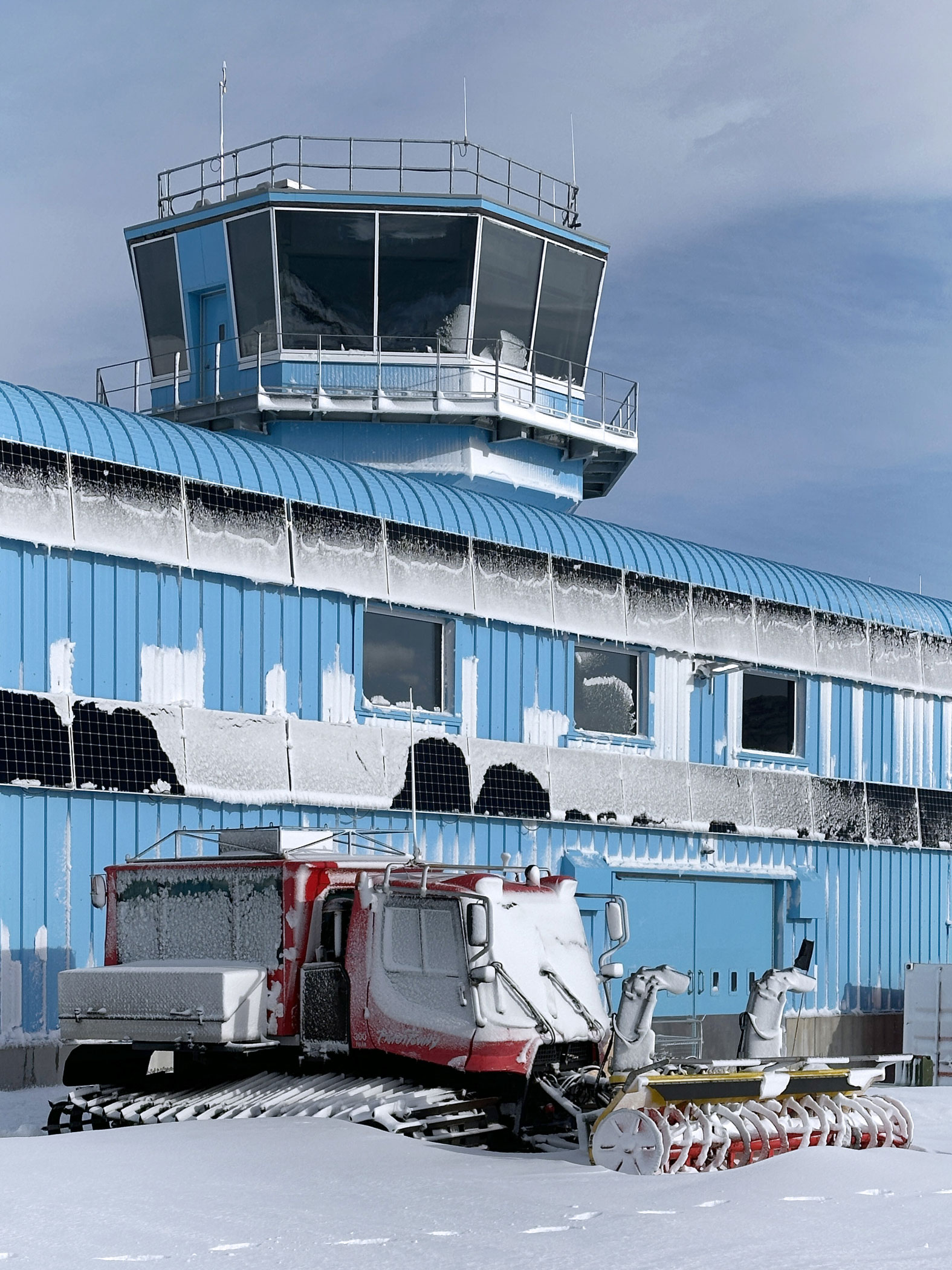
The solution adopted by the architects consists of a clean-lined volume with a pitched roof, clad in pale blue composite panels that echo the light and ice of the Antarctic environment. The most distinctive aspect of the design, however, is not its colour, but how it responds to wind and snow accumulation. The architects could not rely on traditional solutions, such as raising the building on stilts, as the Discovery Building required ground-level access for a workshop to repair and maintain the vehicles and machinery used in scientific exploration.
The ingenious solution devised to prevent snow from building up and blocking entrances was to incorporate a deflector at the top of the building. This extends across the roof to capture, accelerate and redirect the prevailing wind flow. In doing so, it creates a strong downward current that sweeps snow away from the perimeter of the southern façade. This aerodynamic solution responds precisely and effectively to a functional need in an extreme climate.
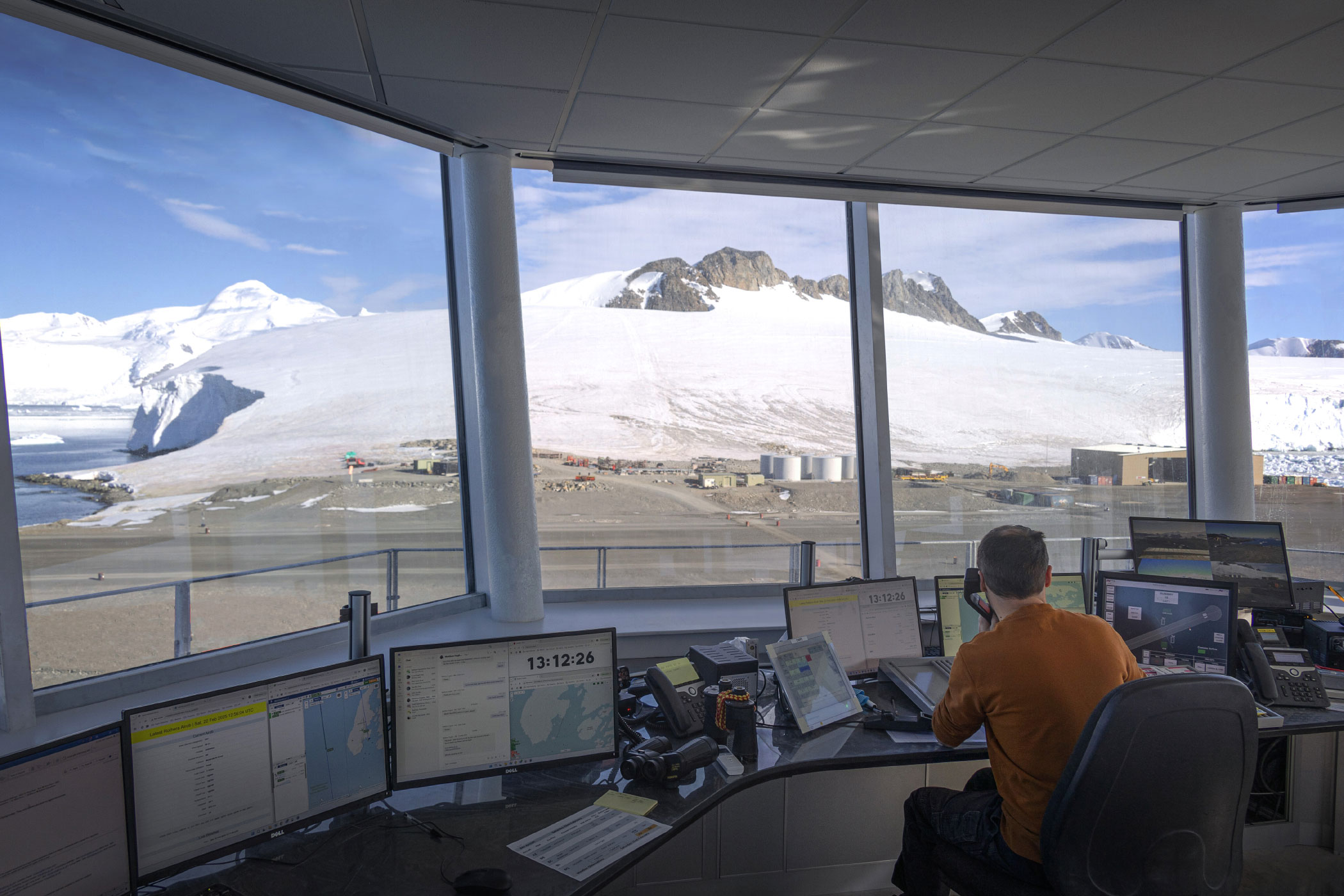
A glazed control tower rises from the roof, offering a 360-degree view over the snow-covered landscape and surrounding mountains, as well as the airstrip, the port’s loading quay, the coastline and the icebergs. Internally, the layout is designed for maximum efficiency. The ground floor houses the systems for energy and heat generation, as well as the main storage area. On the upper floor, alongside the offices, are spaces designed to make the winter confinement more bearable: a gym, a music room, an arts and crafts space, a sauna and even a climbing wall.
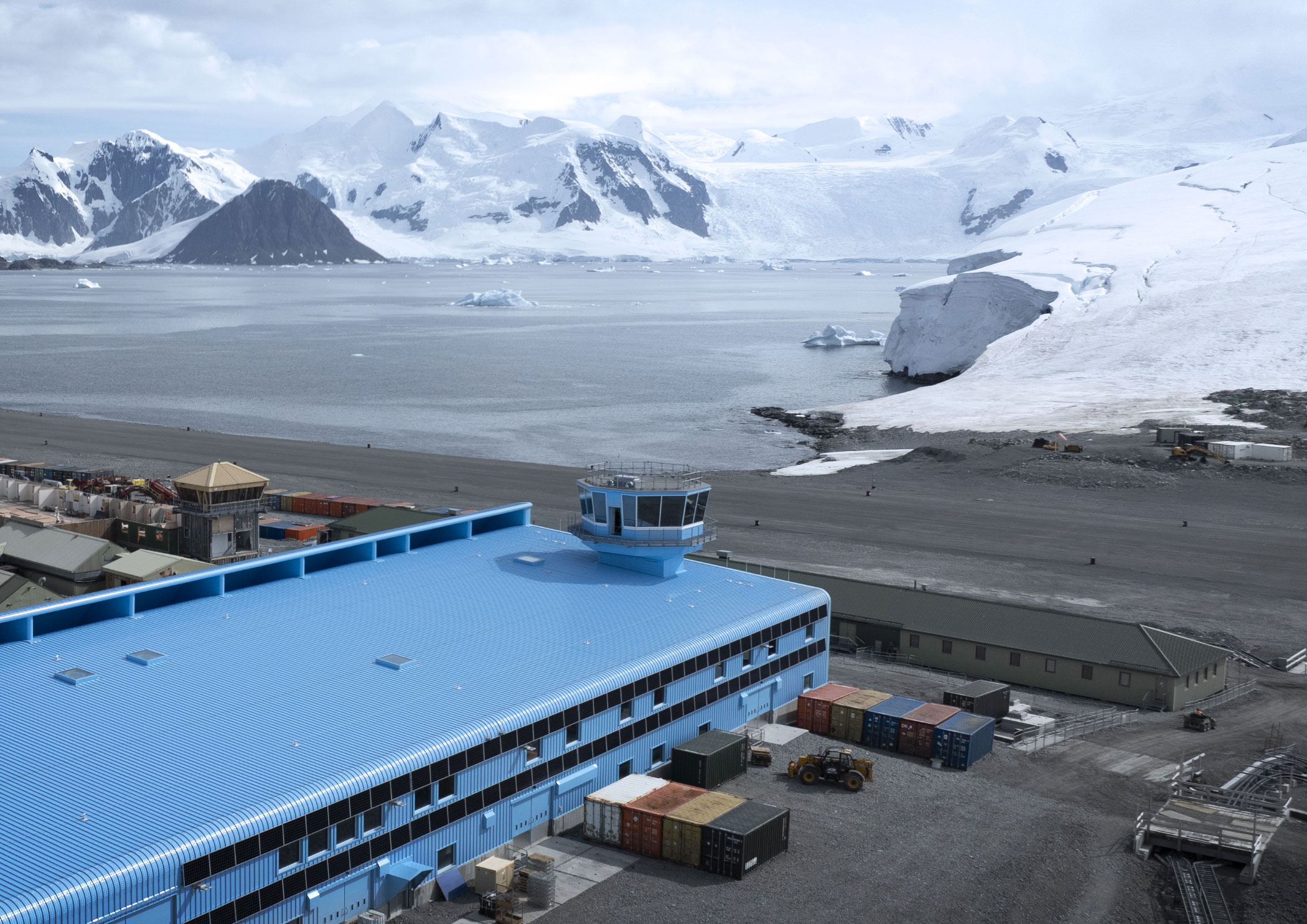
In an environment such as Adelaide Island, sustainability is a logistical necessity. Resources that cannot be produced on site must be transported from distant locations at considerable energy and financial cost. For this reason, the building prioritises high thermal performance, with highly insulated panels and triple glazing. The north façade, which receives more sunlight, is fitted with photovoltaic panels. A combined heat and power (CHP) system maximises the use of available energy.
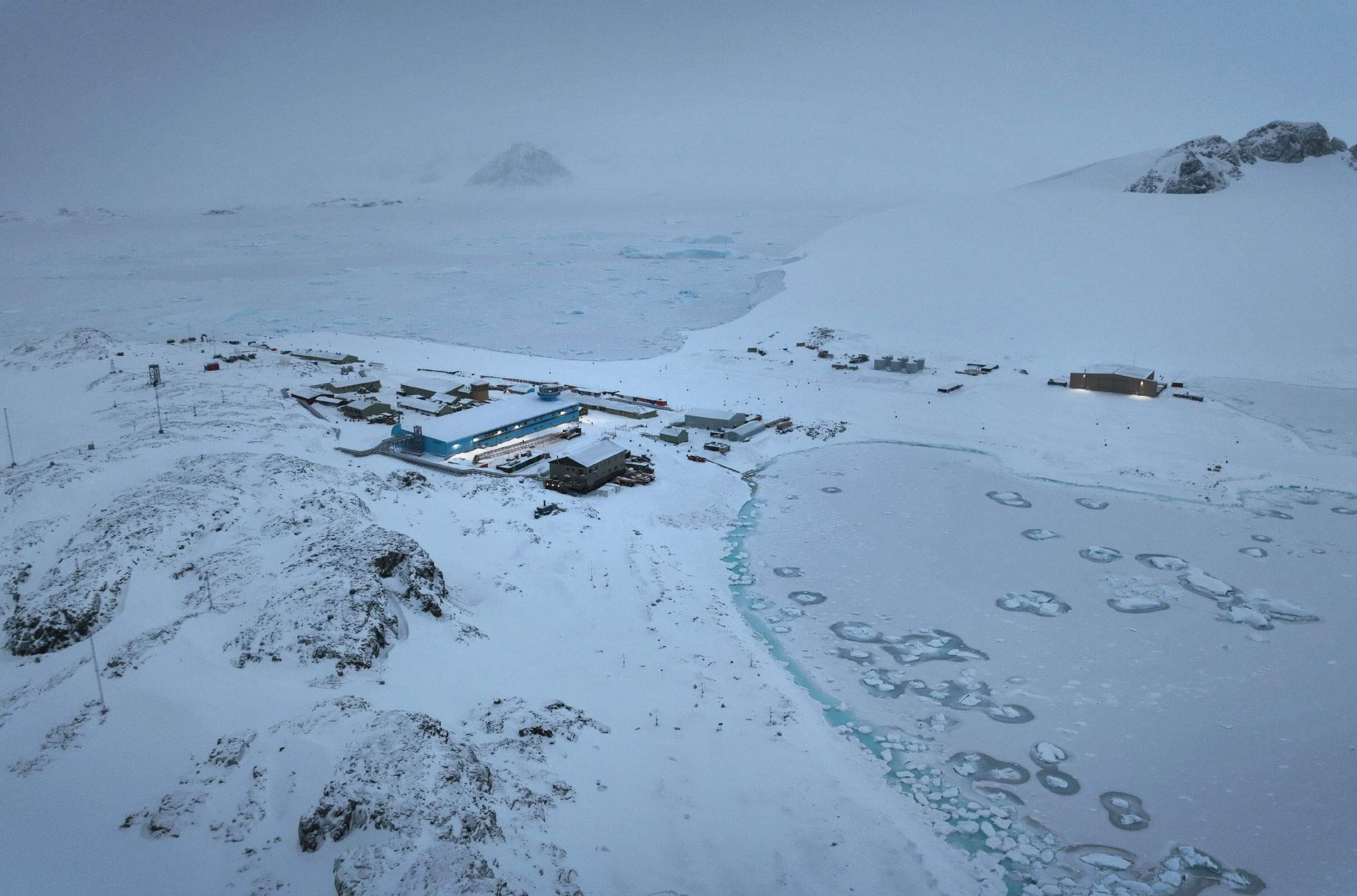
Indeed, this integrated energy management system makes the Discovery Building the first structure in Antarctica to achieve BREEAM certification (Building Research Establishment Environmental Assessment Method). This certification is widely recognised and, since its introduction in 1990, is the world’s longest-established method for assessing building sustainability.
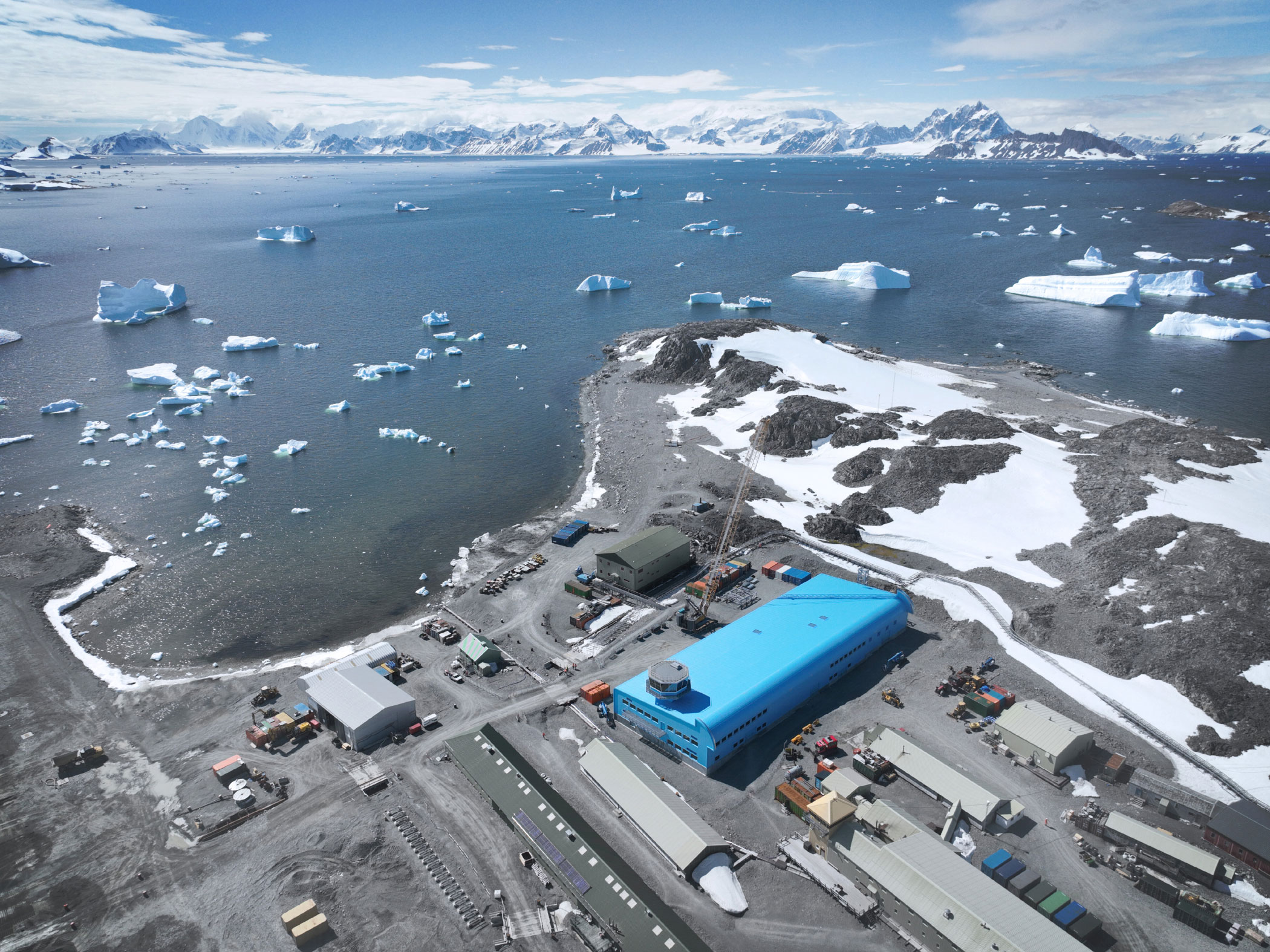
As we can see, in the hostile environment of Antarctica, every design decision matters and becomes essential for safeguarding both people and the environment. What began as a refuge for a handful of scientists spending Antarctic winters has, over the decades, evolved into a leading logistical and scientific complex, capable of accommodating up to 160 people during the summer months. The extreme architecture of the Discovery Building succeeds in creating a liveable space for them all.
Sources: Hugh Broughton Architects, NORR Architects, Wikipedia.
Images: Hugh Broughton Architects y NORR Architects.