
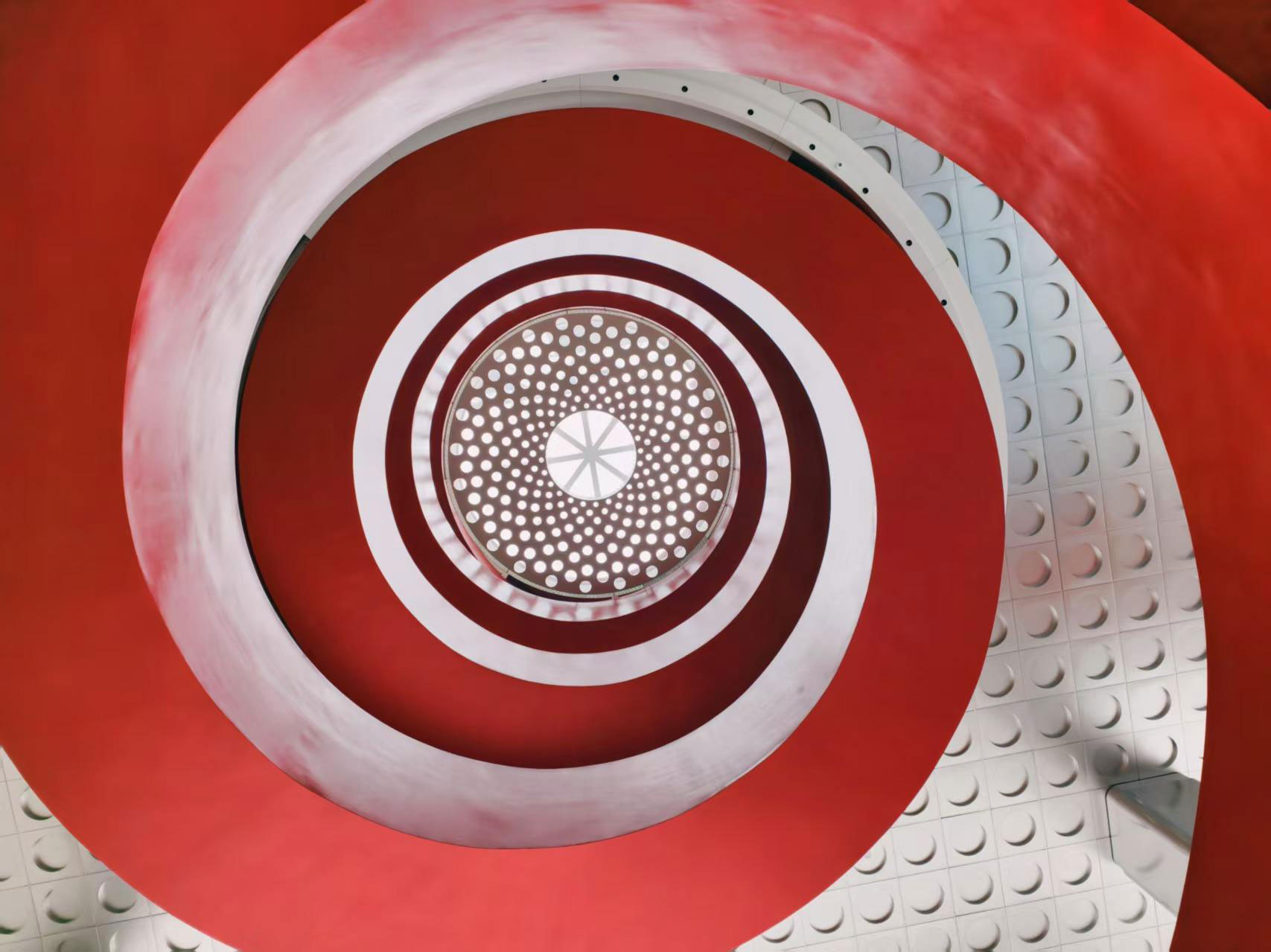
On Pazhou Island in the city of Guangzhou, southern China, there is an architectural feature that deserves close attention. In this case, it is not the building itself, but what it houses within. The building is the OneM Art Centre, and what it encloses like a jewel in a case is the so-called Ribbon of Pearl River — a very special spiral staircase.
The figures relating to this staircase at the OneM Art Centre are striking: in a brilliant scarlet hue, the Ribbon of Pearl River reaches a total height of 31.342 metres and unfolds along a 186.315-metre steel spiral, with a diameter of 13.6 metres. What distinguishes it as a remarkable monument, however, is not its size but a specific construction detail: it features a continuous 11.995-metre section without any central support or column. This has earned it the official Guinness World Record, awarded in December 2025, for the “tallest unsupported spiral staircase section” in the world.
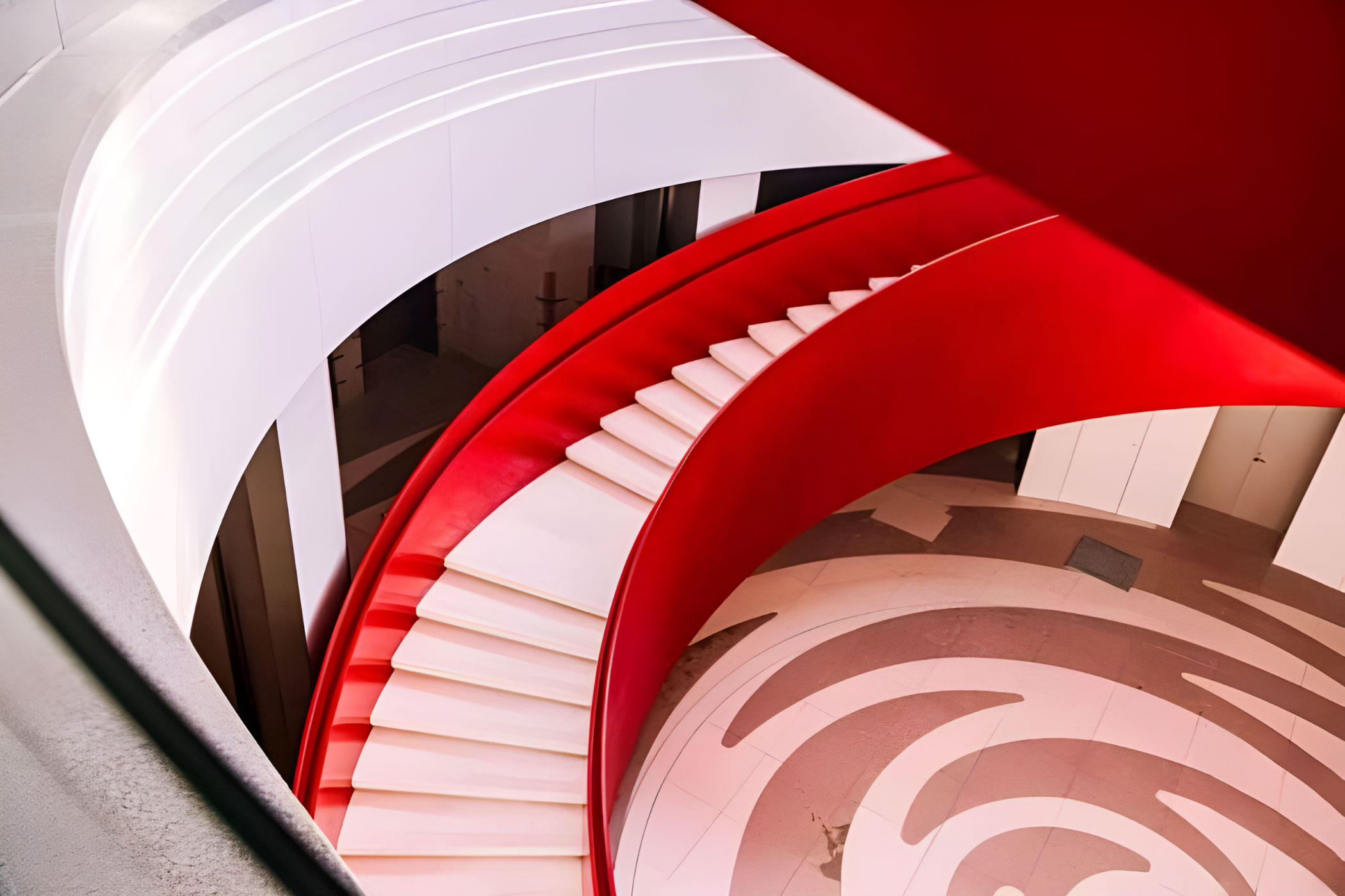
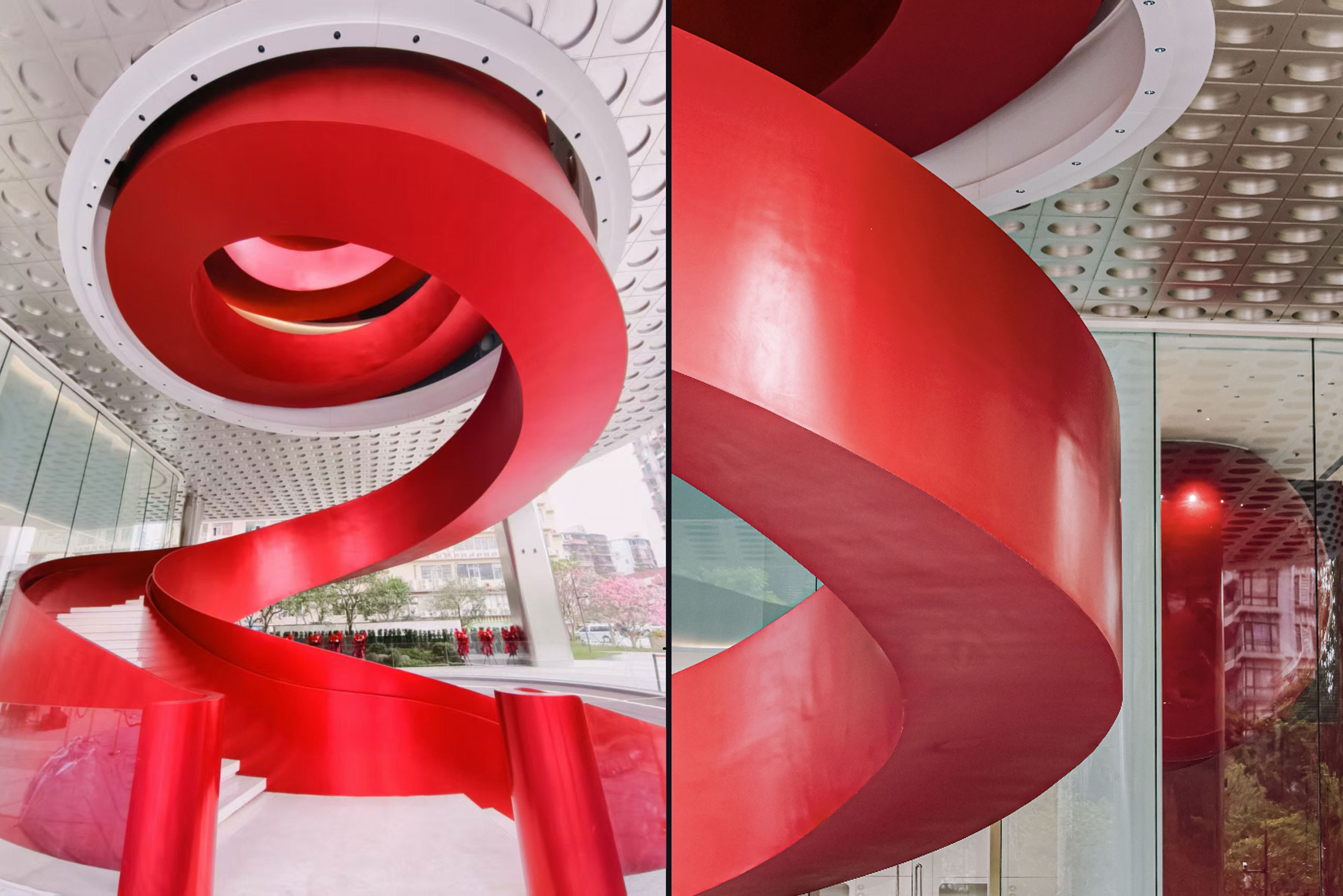
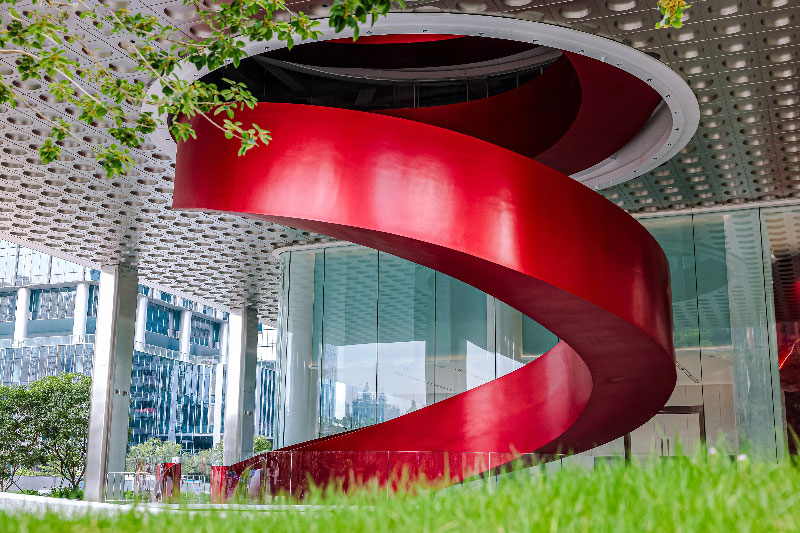
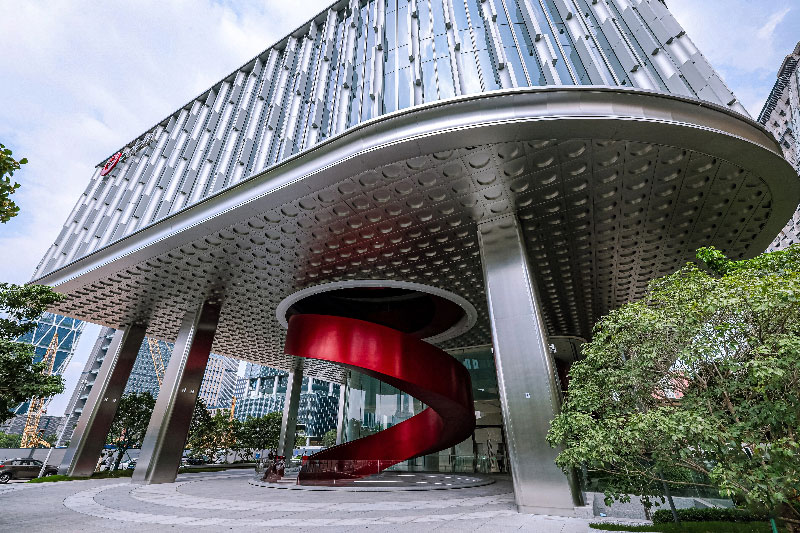
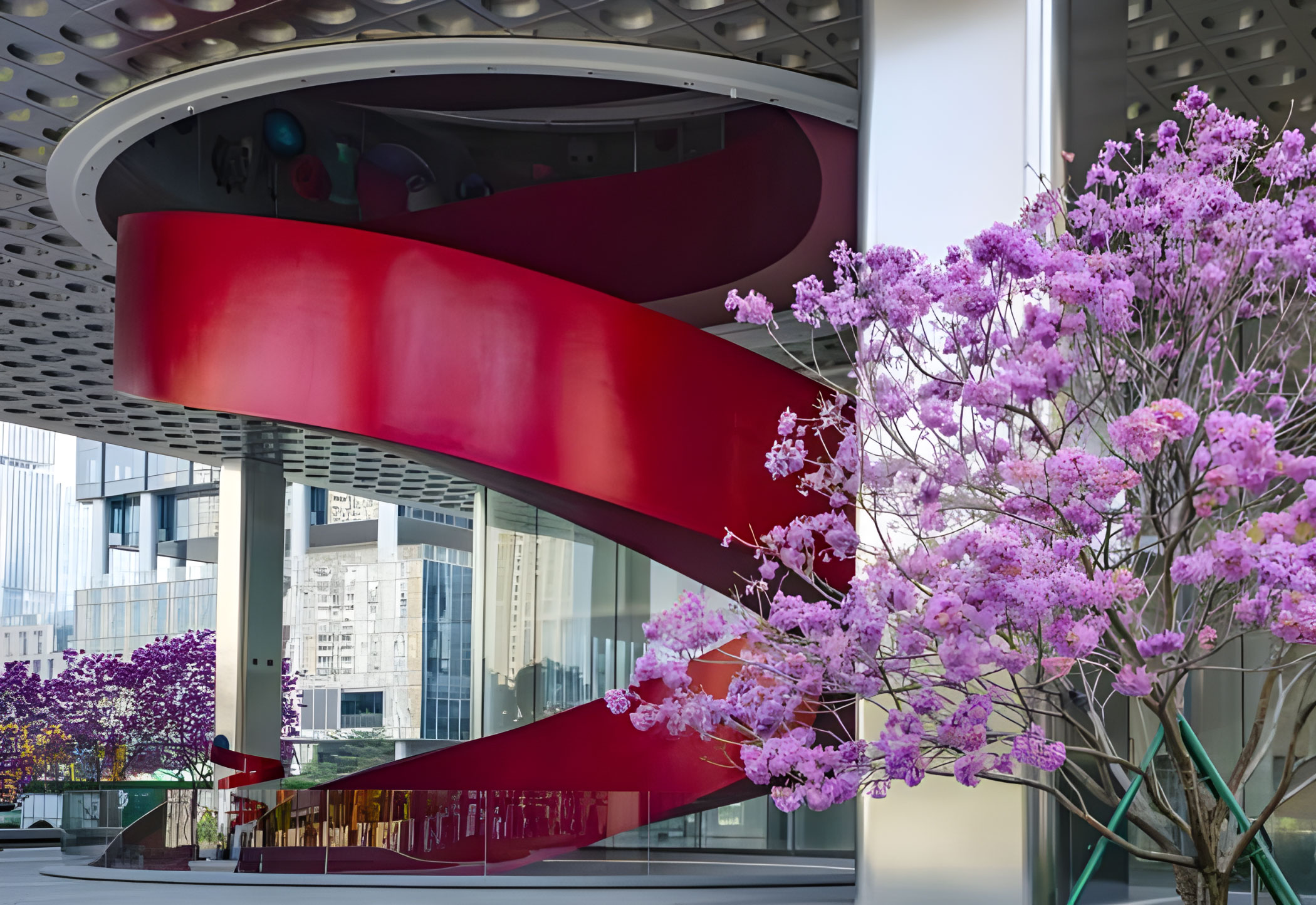
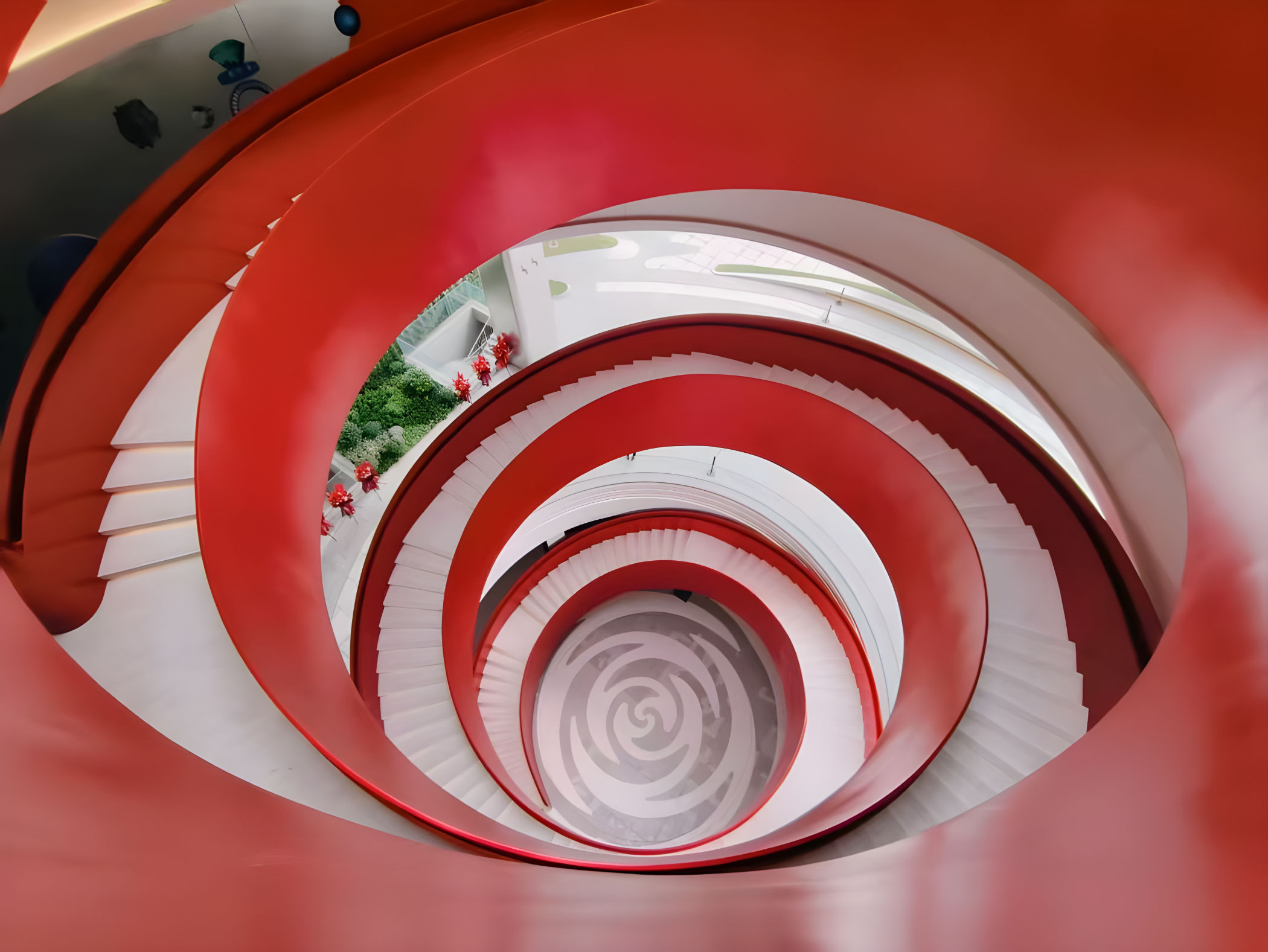
Achieving such fluidity without intermediate support required meticulous engineering. In addition to its own weight — nearly 1,000 tonnes — the staircase must bear the weight of those who use it. To accomplish this, the structure is anchored solely to the floor slabs it connects, creating the optical illusion of a weightless ribbon floating in the air or carried whimsically by the wind. Its vibrant blood-red colour contrasts with the sobriety of the façade, the industrial interiors and the glass walls.
The exterior architecture of the OneM Art Centre itself, with its stacked volumes that appear to rotate upon themselves, evokes the figure of a dancer. The interior staircase, however, creates a marked contrast with that arrangement, as though it were the axis around which that external dance revolves. If the building twists to face the city, the staircase winds around to offer those ascending it ever-changing views, through the glazing, of the urban landscape and the Pearl River.
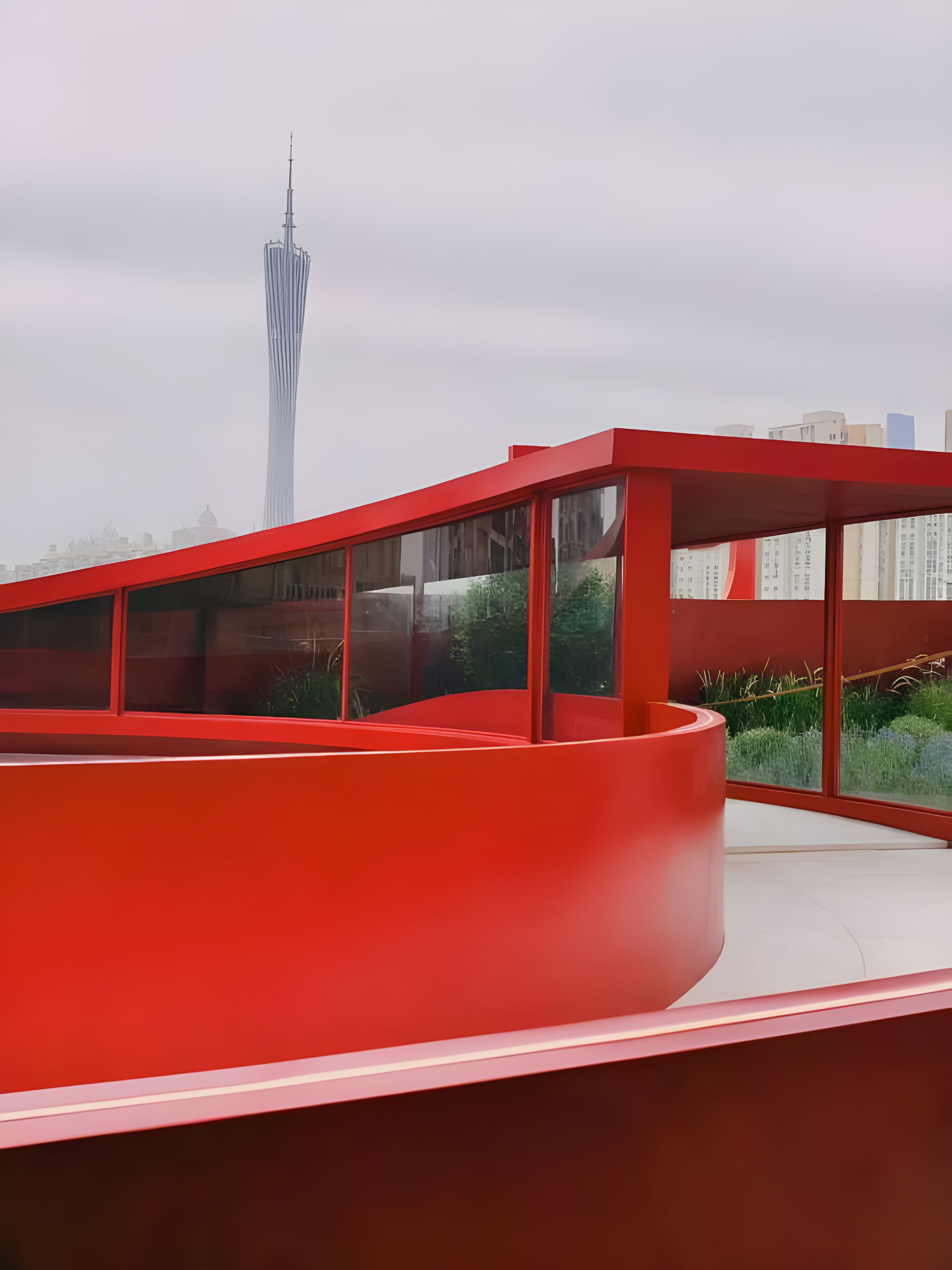
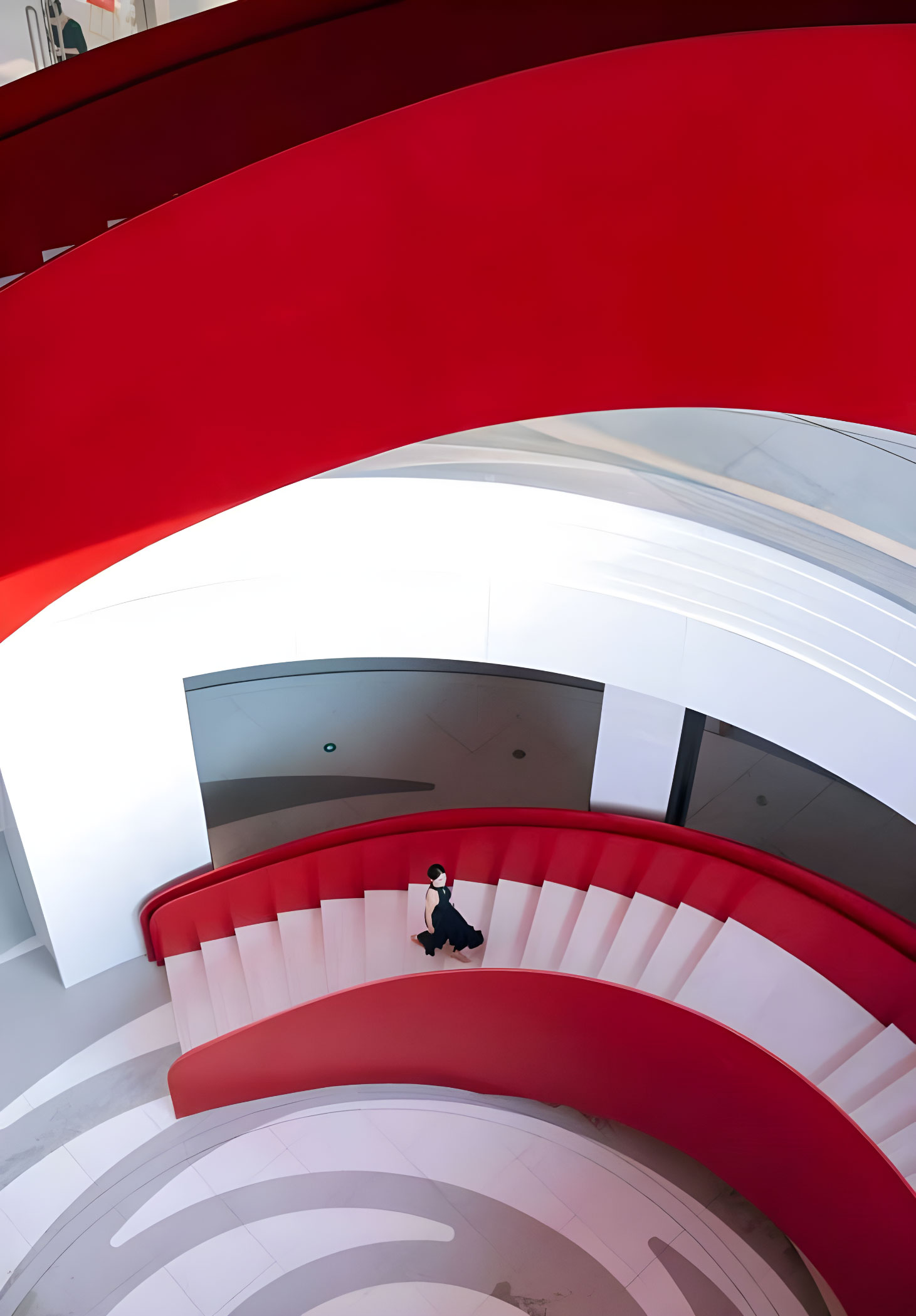
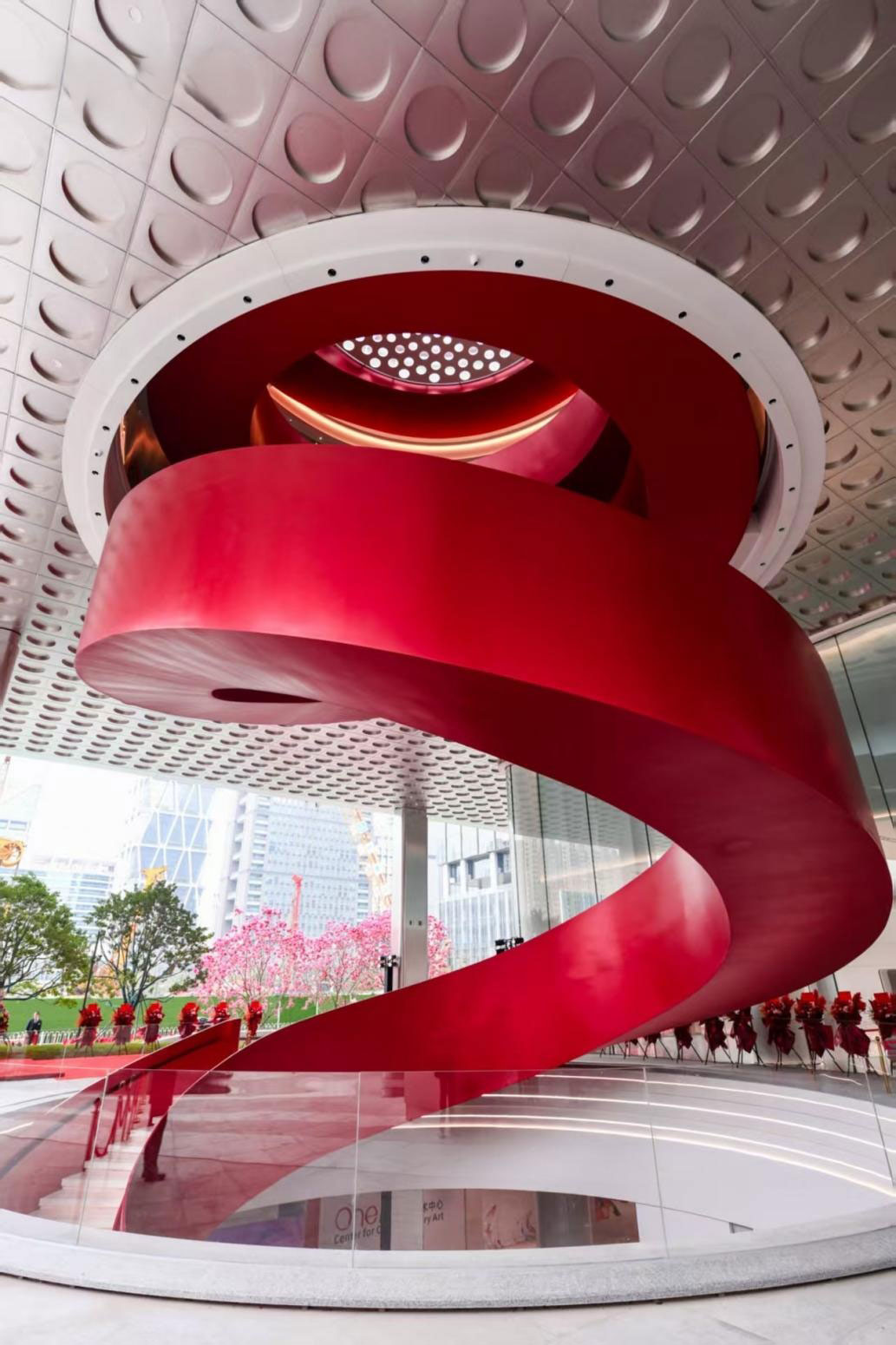
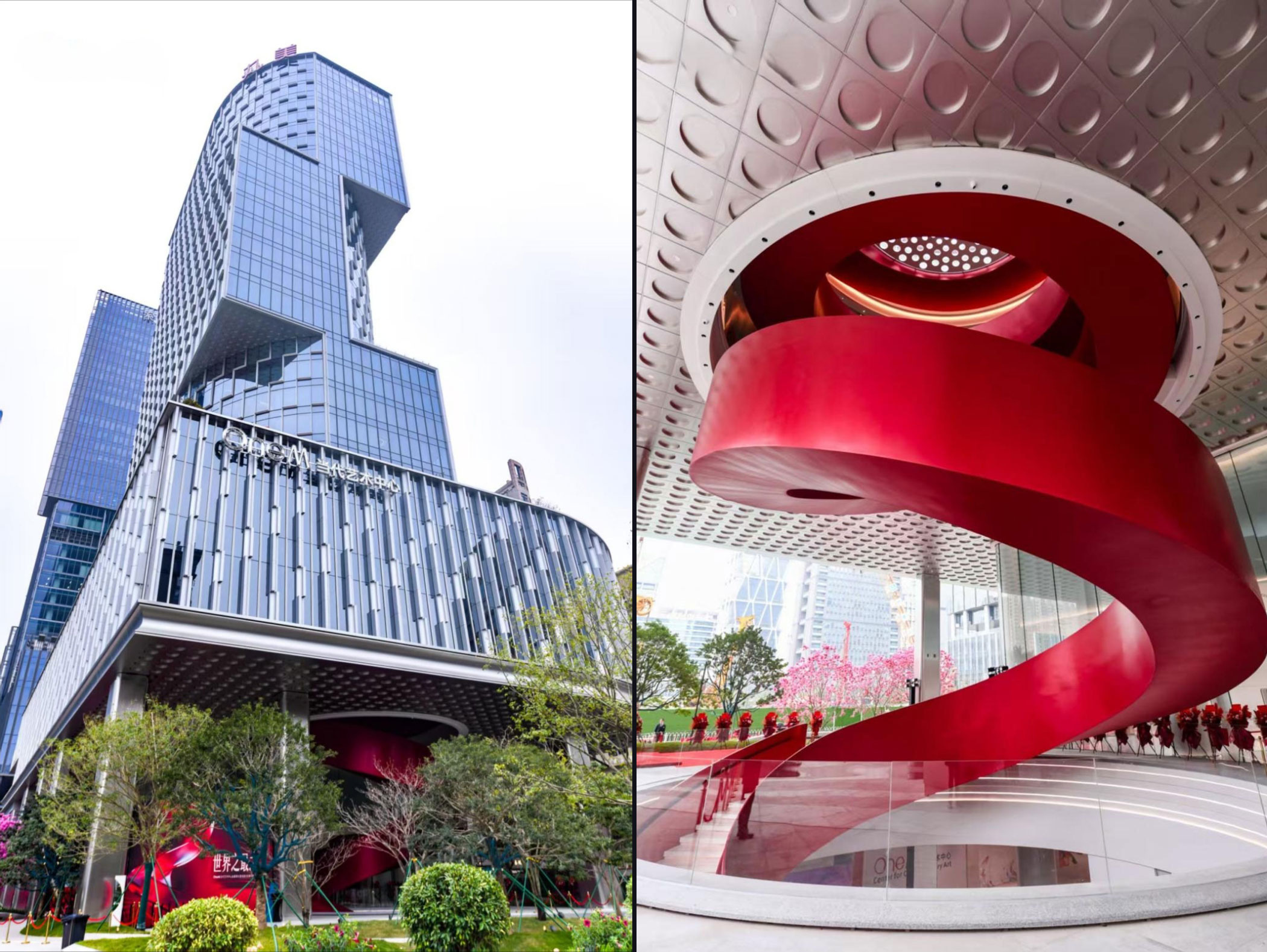
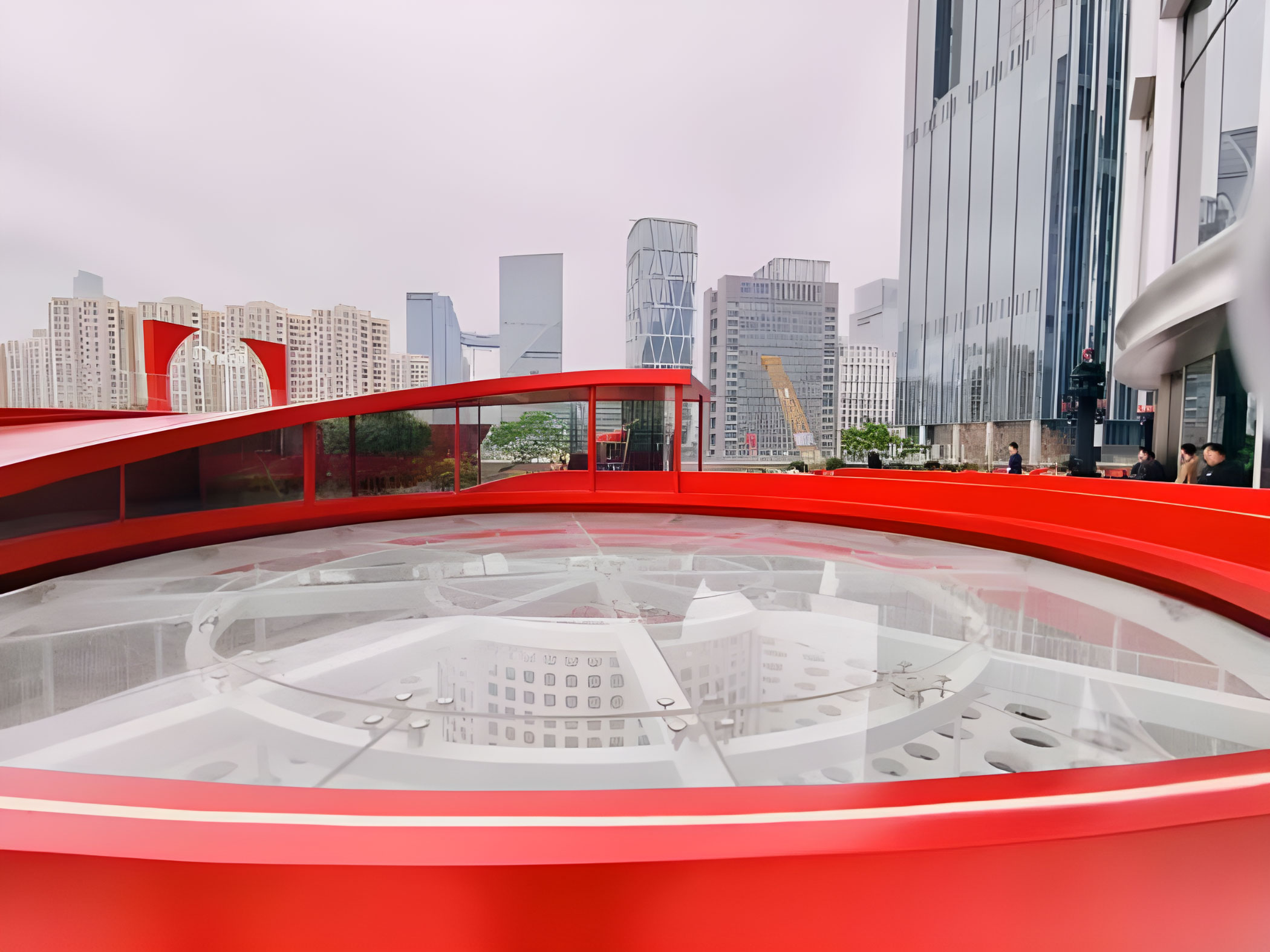
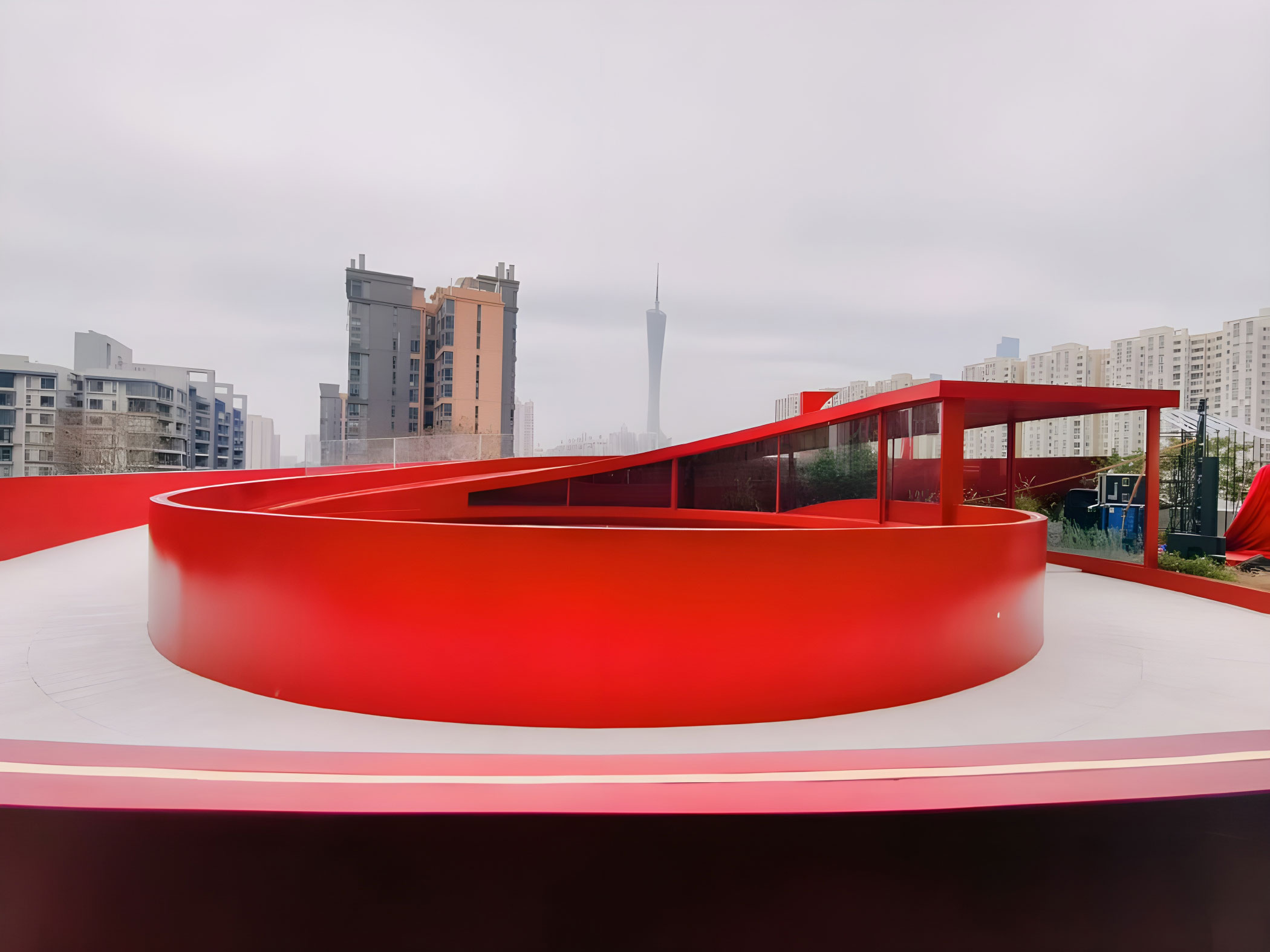
According to Chinese sources, to construct an organic form such as the OneM Art Centre’s spiral staircase, the project leaders turned to one of southern China’s largest manufacturers of artistic installations, since a conventional construction company could not guarantee the precision required for bending the structure. Over the course of approximately one year, the team assembled and welded each segment, observing maximum tolerance control to ensure that the helix maintained perfect geometry from floor to floor.
The driving force behind the OneM Art Centre and its spiral staircase is the contemporary art collector and Chinese entrepreneur Sun Huaiqing — founder of Marubi Biotechnology, one of the country’s leading cosmetics companies. “We opened this red staircase to the public,” he told CRI Online, “and voluntarily gave up the commercial space it occupies and the long-term rental income, thereby fulfilling our mission towards the community.”
Sources: Guinness World Records, ESRT Online, ABS-CBN, Nanfang Plus, CRI Online, Baidu Wiki, IFENG.
Images: Guinness World Records.