
Behind the experience of sliding down a water slide lies a complex design process that integrates structural, mechanical and hydraulic engineering, along with the necessary safety considerations. The ultimate objective in designing water slides is to achieve maximum enjoyment for the user with maximum safety.
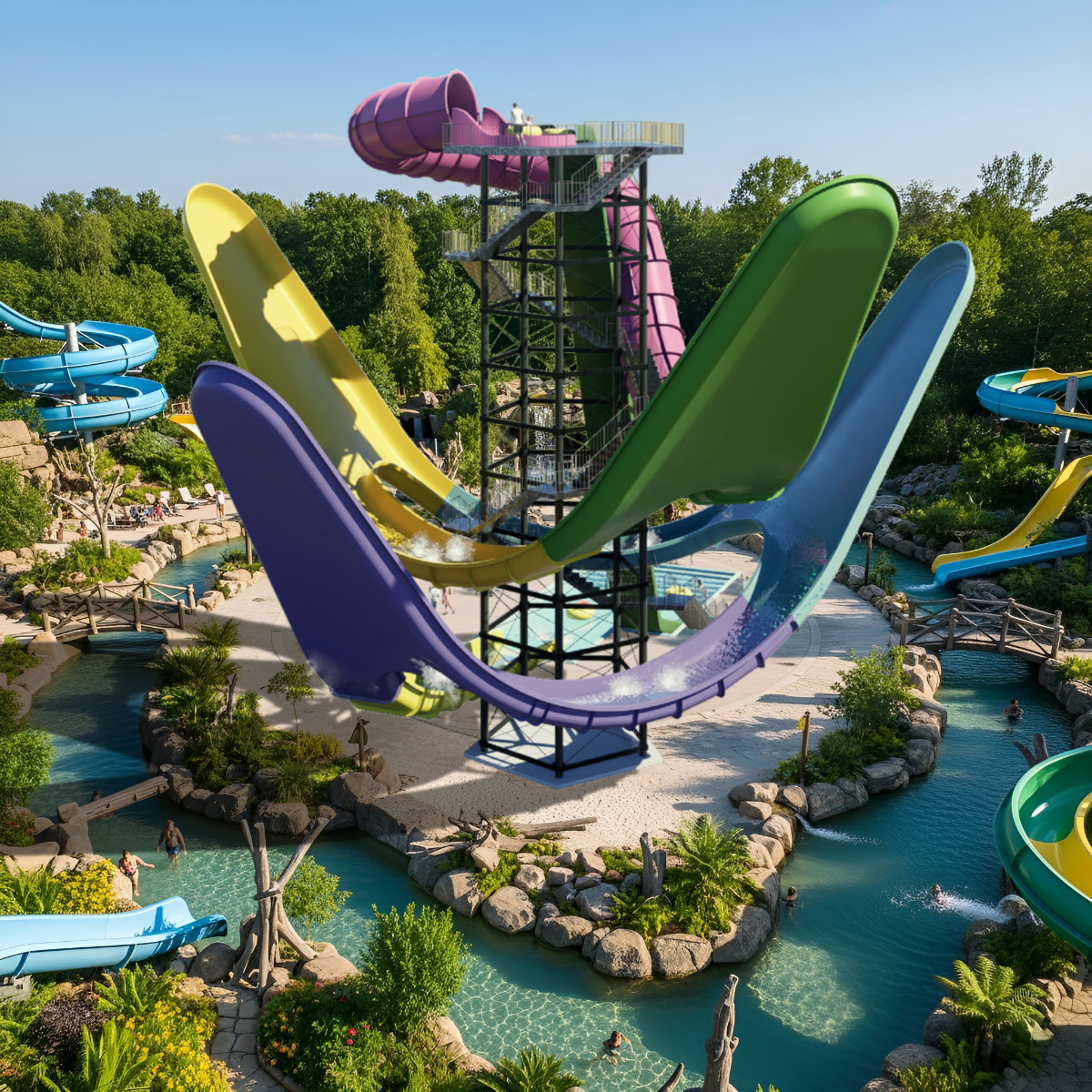
The starting point is the geometric definition of the slide in question. Slopes, radii of curvature and transitions directly determine the user’s speed, acceleration and trajectory. Designers establish precise limits: maximum gradients to prevent excessive speeds, minimum radii to avoid excessive lateral forces, and smooth transitions between sections to prevent sudden accelerations.
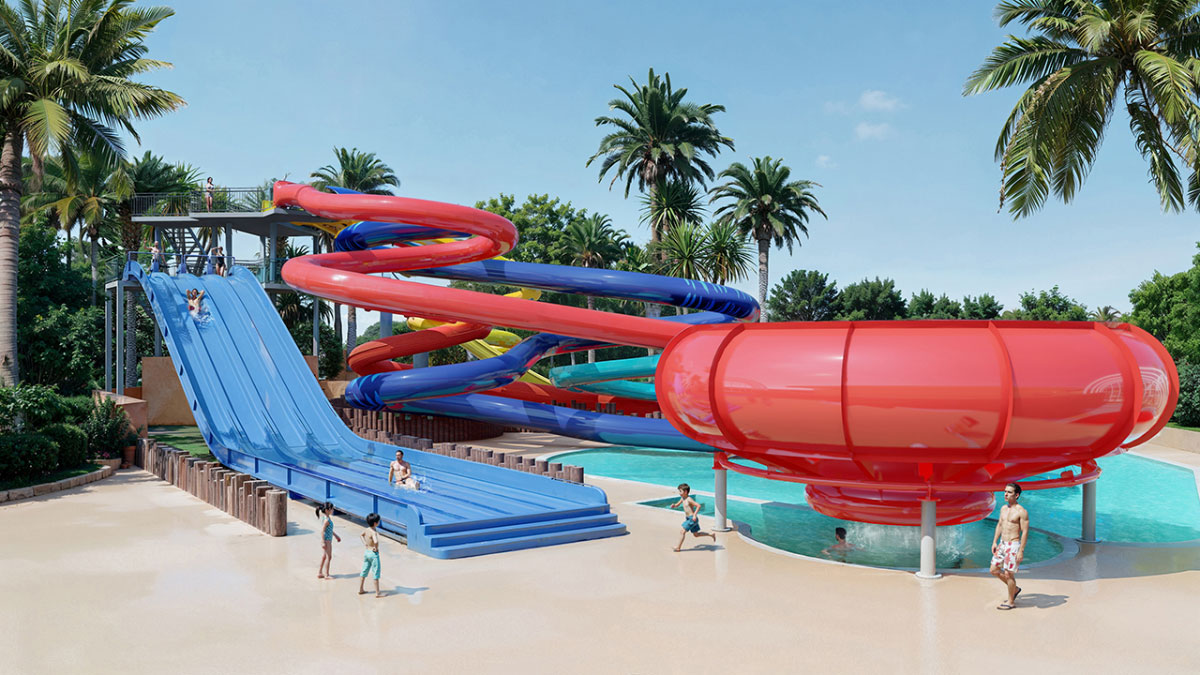
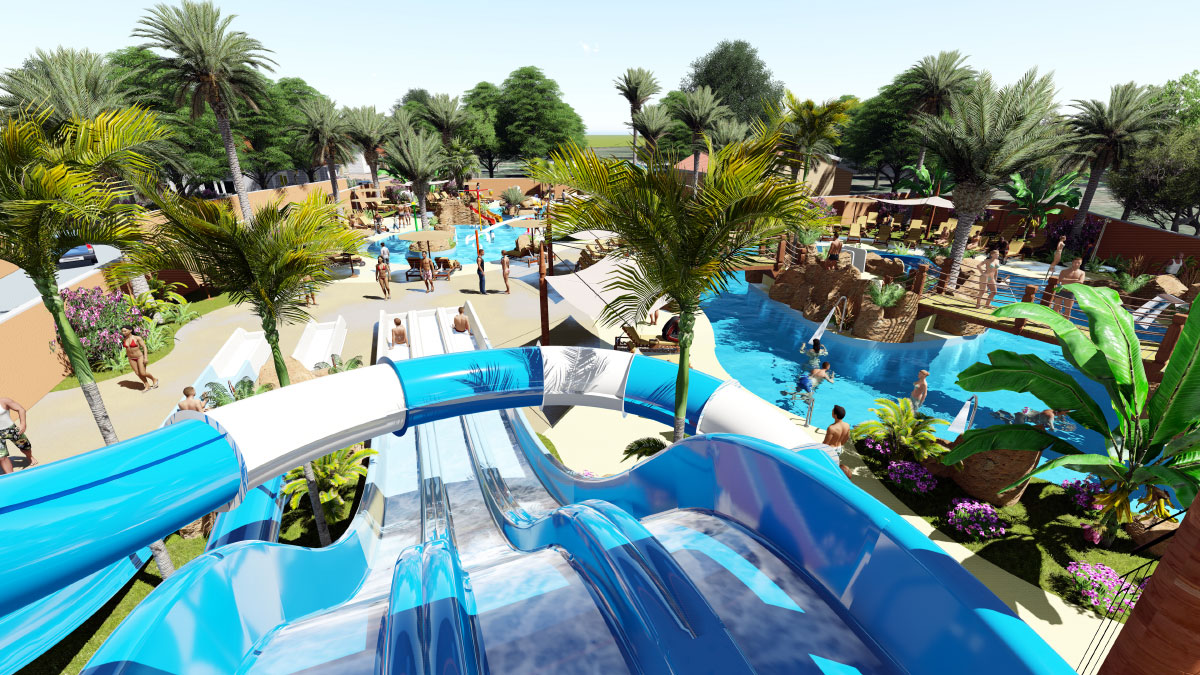
Through dynamic analysis, the user’s movement along the water slide is modelled according to variables such as speed, friction between the body or float and the slide surface, and the action of the water flow. These calculations make it possible to estimate maximum speeds, vertical and lateral forces, as well as to verify stability in bends, changes in gradient and the final braking area.
Despite all this, there is one factor that escapes any equation: user behaviour. However precise the design of a water slide may be, a safe experience depends on each person following the basic rules — correct posture, arms crossed and, above all, allowing oneself to be carried along without sudden movements. This human variable, impossible to model yet inherent to the fun, is precisely what completes the circuit. The rest is engineering.
By Carlos Rodríguez, Specialist in Hydraulics and Water Attractions in the Architecture Department at Amusement Logic