
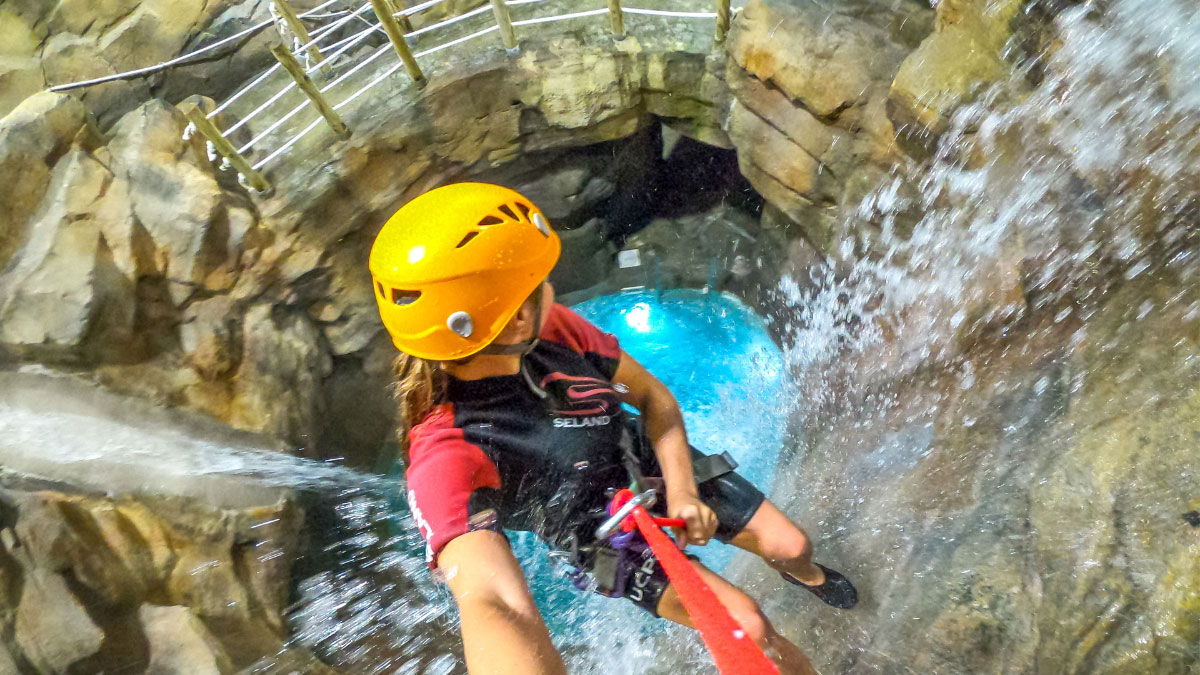
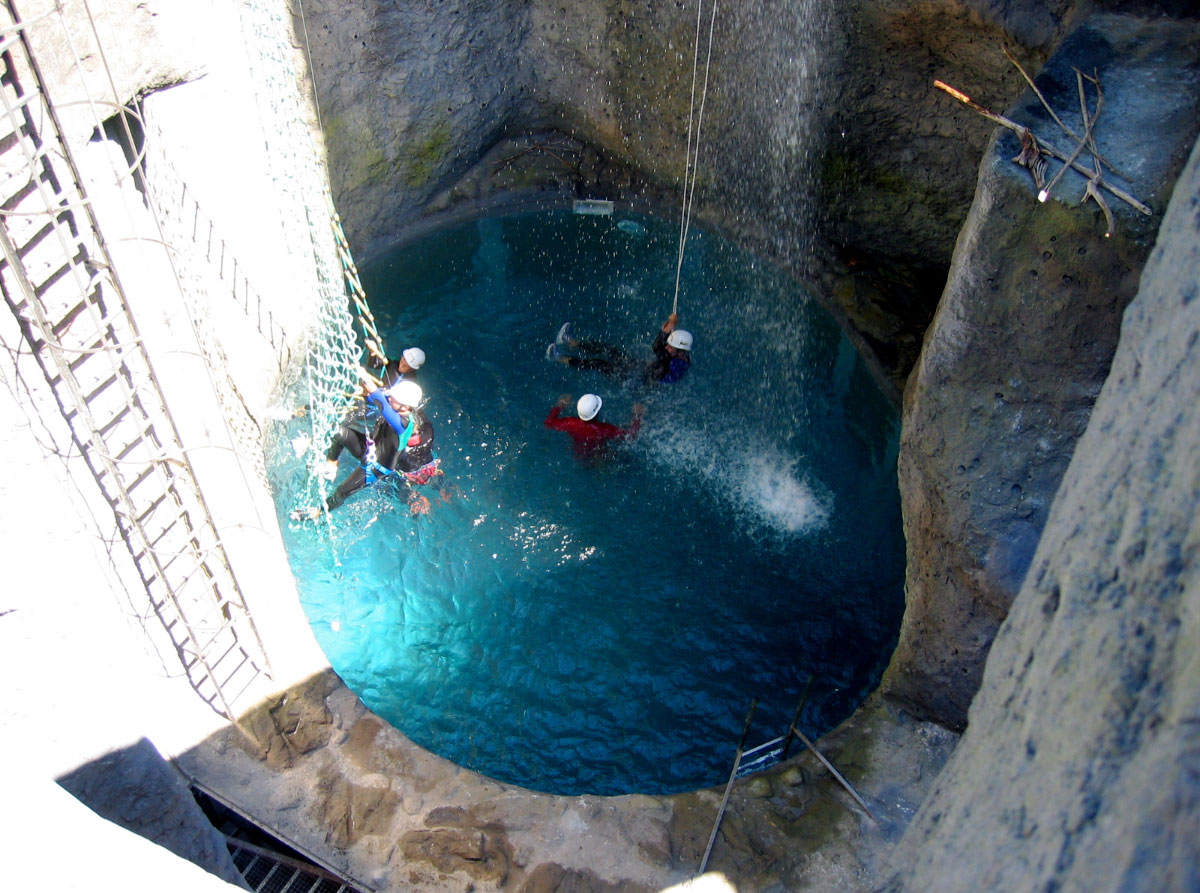
The design of adventure attractions requires precise calculation of safety volumes. After all, their goal is to guarantee exciting experiences without compromising the physical integrity of users at any time. In projects such as canyoning parks, which feature artificial canyoning circuits, jumps and rock slides, via ferrata or other vertical routes, each activity requires a specific study of the free space necessary for its safe development.
Given that, often because they are innovative, there are no specific regulations governing these attractions, the design process is based on a rigorous analysis of a set of reference standards. These include various UNE standards (acronym for Una Norma Española, or Spanish Standard) and others applicable to related disciplines, such as climbing, springboard design or water jumping activities. Specifically, Amusement Logic’s Design and Architecture Departments carefully and critically adapt and interpret these provisions to establish a solid technical framework.
This approach, which combines regulatory rigour with experience in designing complex adventure projects, allows designers and architects to accurately define the optimal safety volumes for each element and each sequence of the route. The result is a design that balances excitement, functionality and rigorous safety standards.
By Pablo Vidal, senior architect in the Architecture Department at Amusement Logic