
When we walk through our cities on a sunny day, we rarely think about what is happening beneath our feet. However, dozens of metres below, there are veritable concrete cathedrals waiting to fulfil an essential mission: to store rainwater when it rains too heavily. The function of these gigantic tanks, called ‘storm tanks’, is precisely to retain the first waters, which are the most contaminated as they carry dirt accumulated on streets and surfaces. Once the rain stops, the stored water is pumped in a gradual and controlled manner to the treatment plant for processing.
Storm tanks prevent flooding by acting as hydraulic buffers. By retaining the peak volume of the flood, they prevent the sewerage network from collapsing and water from bursting through drains and scuppers and flooding streets and basements. Secondly, they protect the environment by preventing untreated ‘mixed water’ from being discharged directly into natural watercourses. Without this infrastructure, each storm would send tonnes of rubbish and pollutants into the river, with a devastating impact on the aquatic ecosystem. Finally, they contribute to energy efficiency, as they allow treatment plants to operate at an optimal rate, without unmanageable and costly overloads.
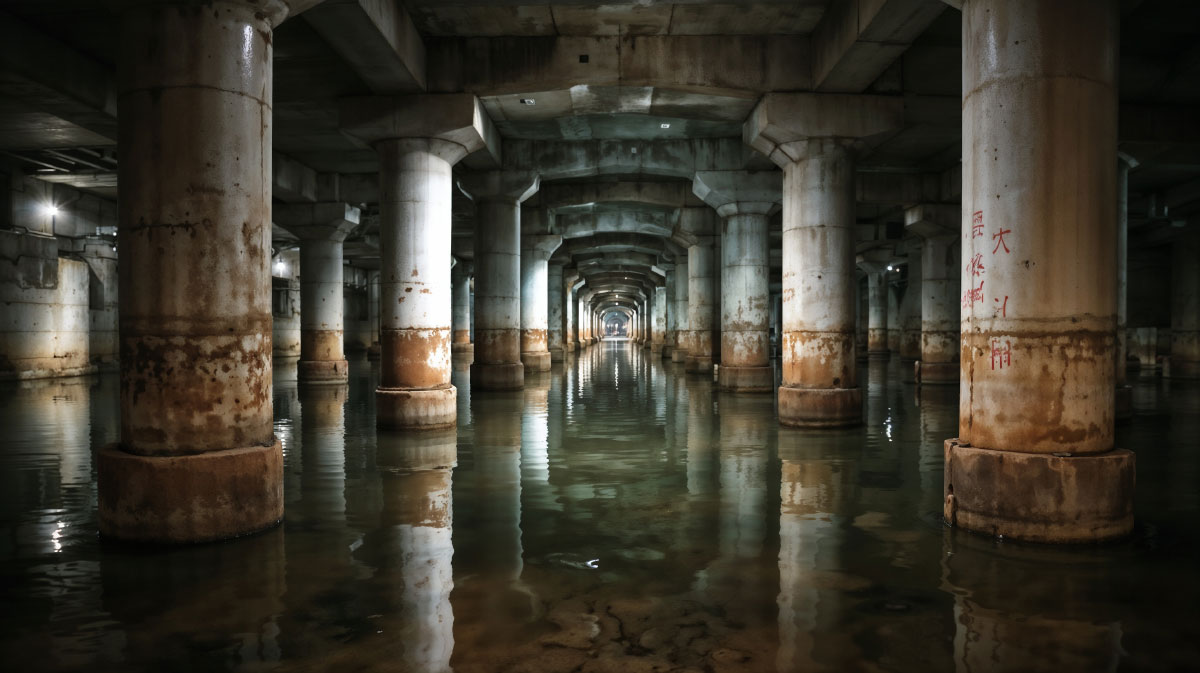
The city of Madrid, capital of Spain, has the most extensive network of storm tanks in the world in relation to its size. An emblematic example is the Arroyofresno tank, the largest in Spain and one of the largest on the planet. It is a monumental structure with a capacity of 400,000 m3, equivalent to eight times the volume of the pond in the city’s Retiro Park.
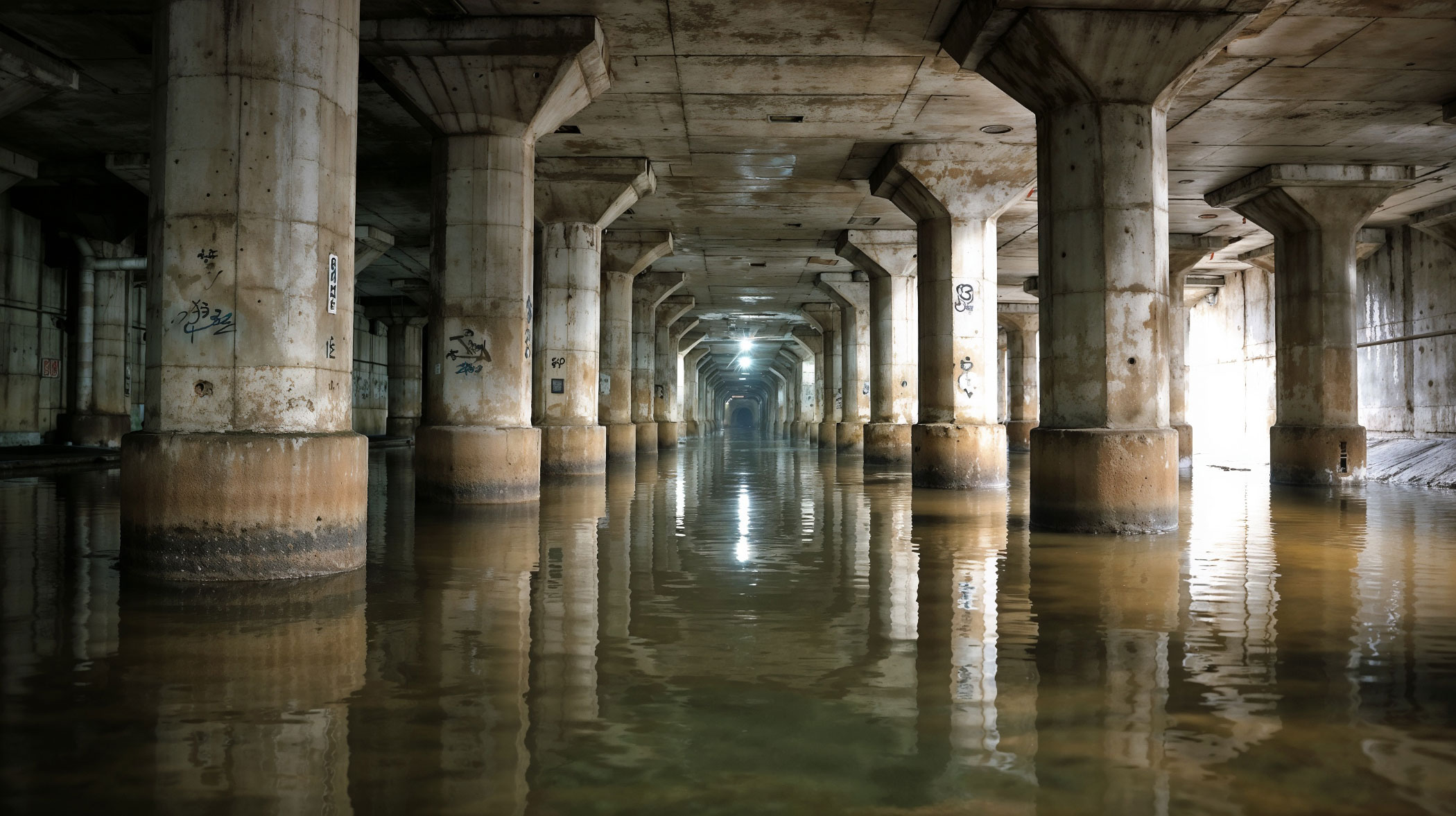
Hydraulic engineering reaches almost science fiction levels in other places. In Kasukabe, Japan, there is the so-called ‘underground Parthenon’ (officially, the G-Cans Project or Underground Drainage Channel), which protects the metropolis of Tokyo from typhoons. It is famous for its immense main hall, supported by 59 colossal pillars, and its capacity to pump 200 tonnes of water per second. And in Chicago, USA, there is the ‘deep tunnel’ (Tunnel and Reservoir Plan), an arterial system of more than 175 km of tunnels that protects Lake Michigan from pollution.
By David González Molina, BIM manager in the Architecture Department at Amusement Logic.