
The modern origins of water slides date back to the mid-20th century, when the first water parks began to incorporate simple structures into their facilities: straight slopes made of fibreglass or metal. These initial designs, with direct trajectories and few embellishments, had a single objective: speed.
With the growth in popularity of water parks in the 1970s and 1980s, the first spiral slides, sharp turns and steep changes in height emerged. At the same time, the incorporation of more powerful water pumps allowed for greater flow volumes, making it possible to design longer, smoother and safer rides.
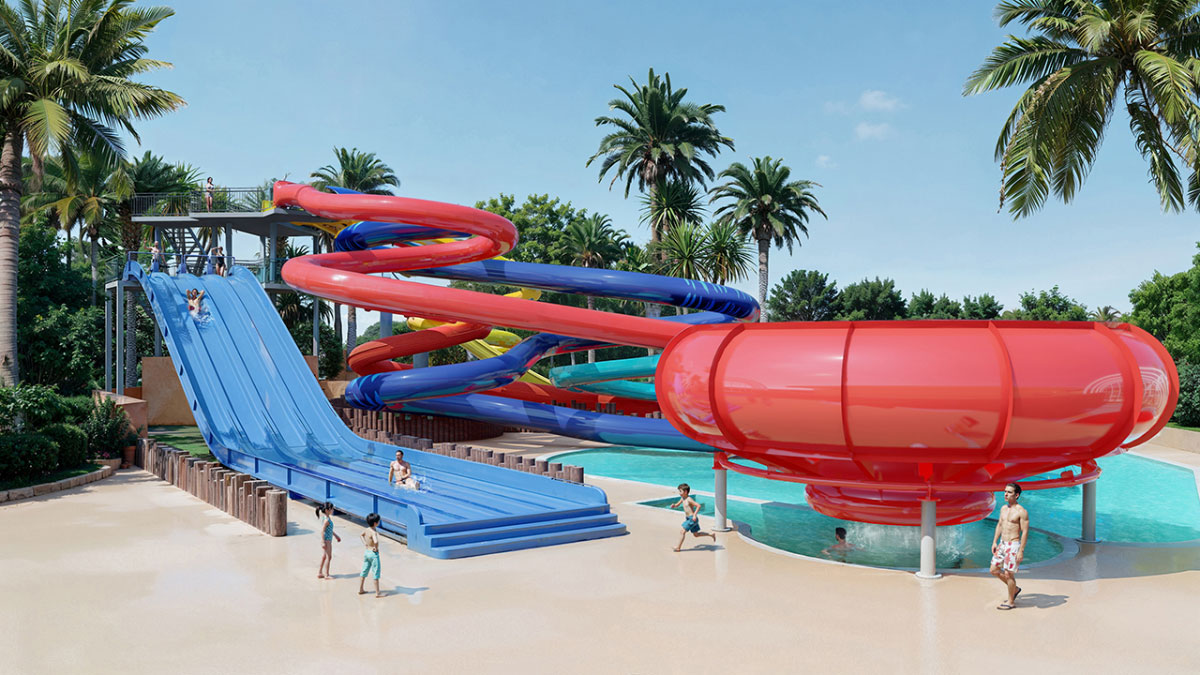
The real transformation in water slide design came in the 1990s and the first decade of the 21st century. This saw the emergence of enclosed tube slides, family floats and complex multi-level structures. This period was marked by experimentation with new, more resistant materials and optimised internal surfaces to minimise friction. As a result, the range of viable shapes and trajectories expanded enormously.
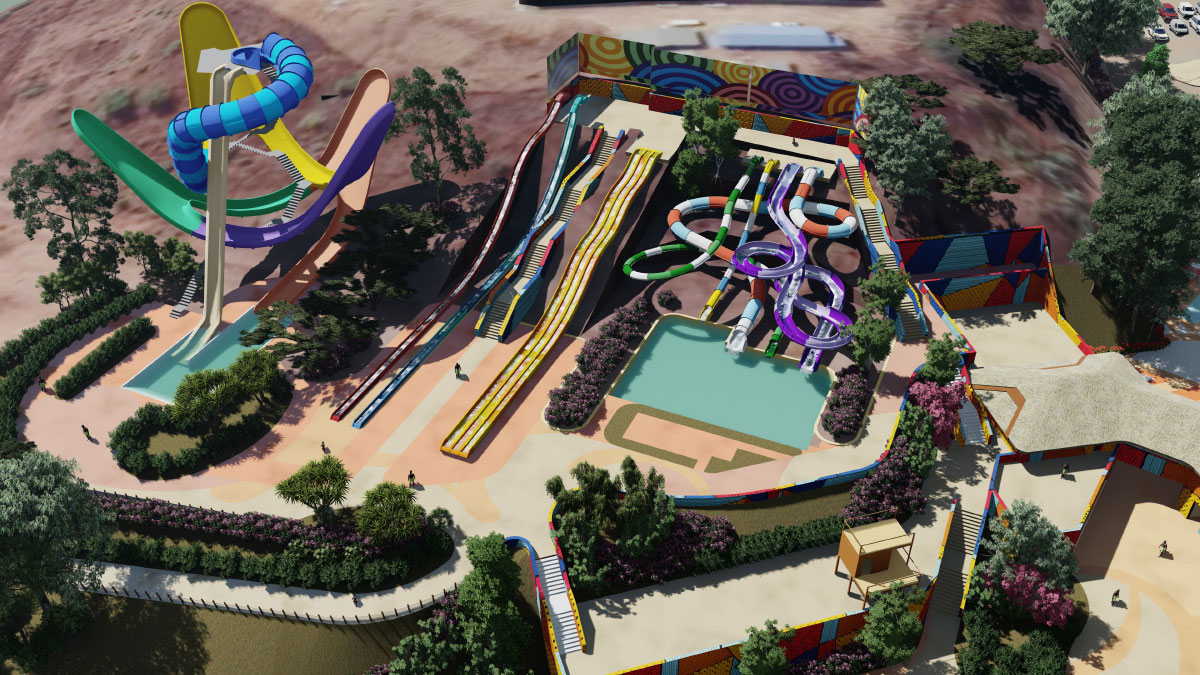
Today, water slides are true works of specialised engineering. They incorporate lighting effects, transparent sections, near-vertical drops and control systems that use sensors to manage the user experience. The evolution continues, driven by the relentless pursuit of multisensory experiences with increasingly exciting, safe and visually stunning rides.
By Carlos Rodríguez, specialist in Hydraulics and Water Attractions in the Architecture Department at Amusement Logic.