
This article concludes our series on BIM 2.0 (Building Information Modelling) methodology in construction and architecture. In it, we will analyse three additional platforms that exemplify the principles of this methodology.
–Hypar: a cloud platform specialising in automation and generative design for buildings. Its functional core simultaneously generates parametric geometry and structured data sets. These functions, which can be coded in languages such as C#, Python or JavaScript, are used to create building configurations, explore a vast space of variants, obtain detailed visualisations and analyses, and export the results to development environments such as Revit.

The platform represents a decisive step towards “design as code”, as well as democratising the ability to generate models and perform scale analysis through the distributed execution of “design logic” (a structured and rational process for conceiving and organising a functional solution, which defines what a building does —or logical design— before detailing how it will be implemented —or physical design—). This makes it an essential component that prioritises automation and interoperability in BIM 2.0 methodology.
It is important to note that its main purpose is not to replace construction or operational management tasks in isolation, but rather to enable and optimise the systematic application of design rules and the creation of models in a reproducible and scalable manner. Essentially, it acts as a cloud engine that transforms design rules and knowledge into reusable applications, placing logic—not just geometry—at the centre of the workflow. To cover the entire asset lifecycle, it requires integration with other documentation, construction, and operation platforms.
–Finch: an innovative generative platform that leverages artificial intelligence and graph technology to optimise architectural design, with a particular focus on the multi-family residential sector and the automated production of floor plans. In other words, it enables the automatic generation of layouts. It optimises the mix of unit types and the application of graph-based rules to ensure regulatory compliance. It offers extremely fast iteration with real-time performance feedback. Its integration with programmes such as Revit or Rhino allows for a continuous flow of information.
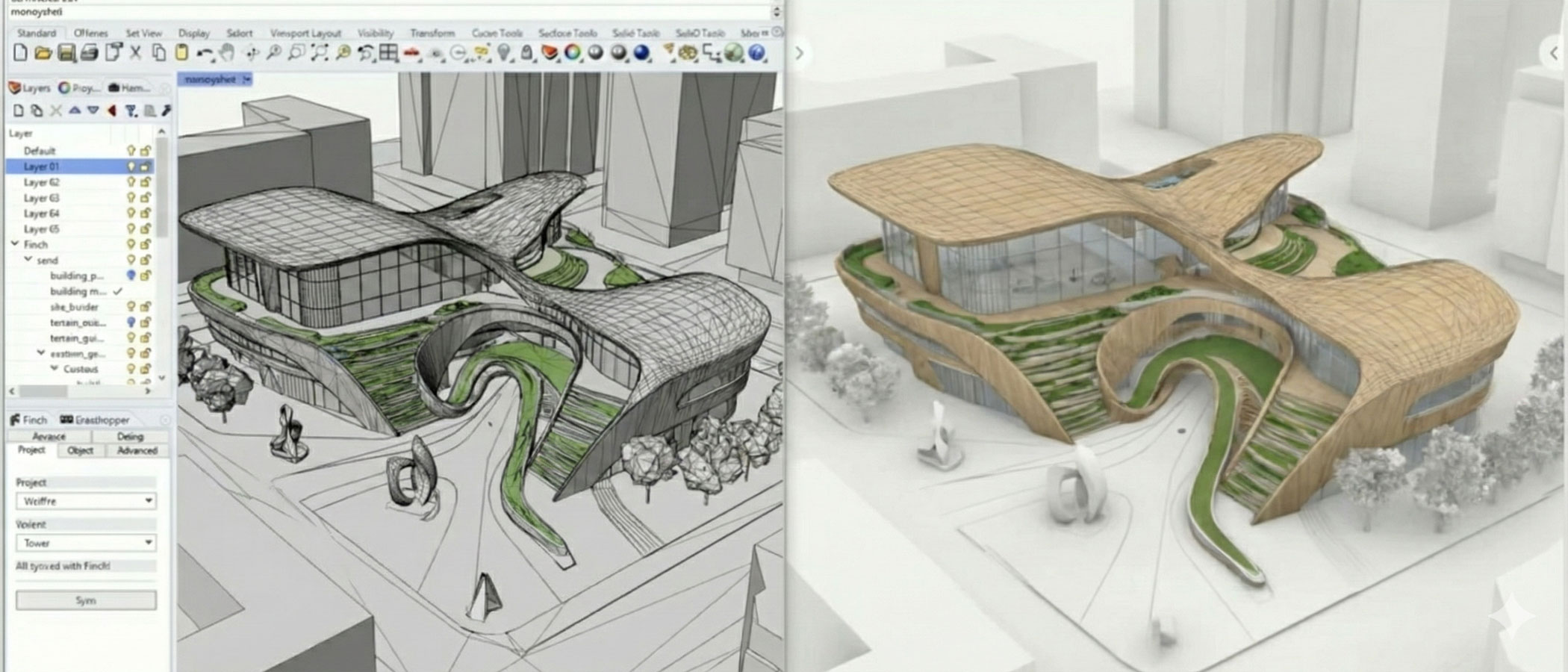
Finch embodies the principles of automation and algorithmic generation characteristic of BIM 2.0. In other words, it facilitates the exploration, optimisation and creation of models using intelligent algorithms rather than relying exclusively on manual modelling. It is strategically positioned as a ‘design co-pilot´ for architects. At least in its current state, it does not aspire to manage the entire construction, operation and asset management cycle, but rather consolidates itself as one of the most specialised tools for the early conception and optimisation phase.
–Speckle: open-source data platform for 3D and BIM environments, designed to optimise model exchange, versioning, automation and visualisation. It acts as the connectivity hub within the AEC (Architecture, Engineering and Construction) ecosystem, interconnecting tools such as Revit, Rhino, SketchUp, AutoCAD and Power BI.
Through specific connectors and a neutral data format, it enables a bidirectional flow of geometry, properties, and metadata. Its key features include robust version control, APIs (or Application Programming Interfaces) for developers, a customisable 3D viewer, and data dashboards. It facilitates the integration of models into automated workflows. Its open-source nature allows it to be used both on-premises and in the cloud.
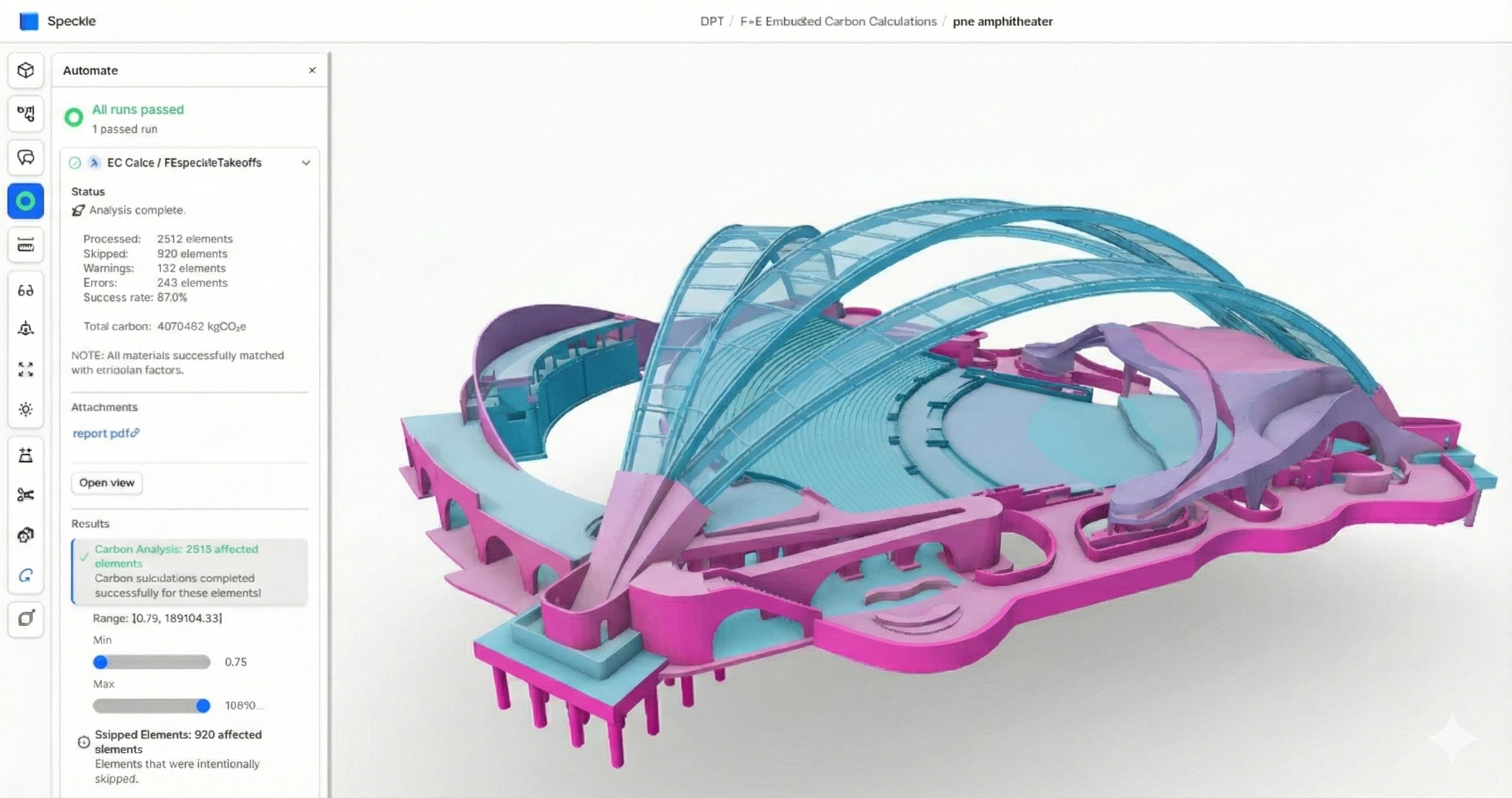
Speckle tackles the critical problem of data fragmentation in silos at its root. It paves the way for cohesive workflows, advanced automation, and the creation of dashboards and pipelines that ensure the persistence and relevance of information throughout the project cycle. This is essential for realising the vision of the digital twin and a truly dynamic and connected BIM.
It is crucial to understand that Speckle is not a modelling tool; its primary value lies in interoperability and advanced data management. It functions as the underlying infrastructure layer that enables seamless communication between all other specialised applications.
Based on what we have seen in this series of articles, we can conclude that the BIM 2.0 methodology will not materialise in a single omnipotent platform, but rather in a constellation of specialised and interoperable solutions. Its value lies in enabling seamless collaboration, advanced automation and the use of artificial intelligence.
To learn more, please refer to the previous chapters:
» Towards the future of architectural and urban design: BIM 2.0 platforms
» Towards the future of architectural and urban design: more BIM 2.0 platforms
By Raúl Soriano, senior modeller in the Architecture Department at Amusement Logic