
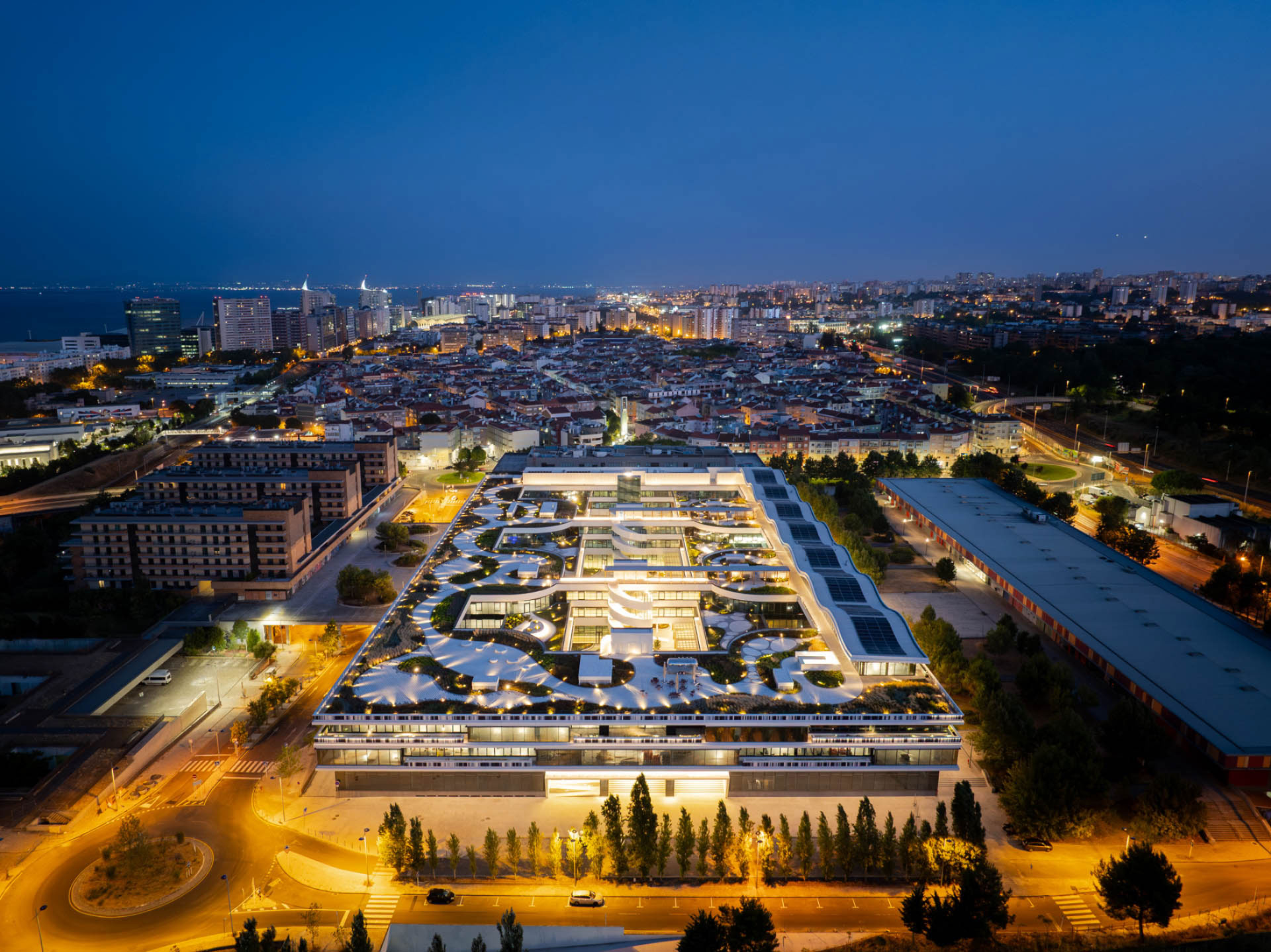
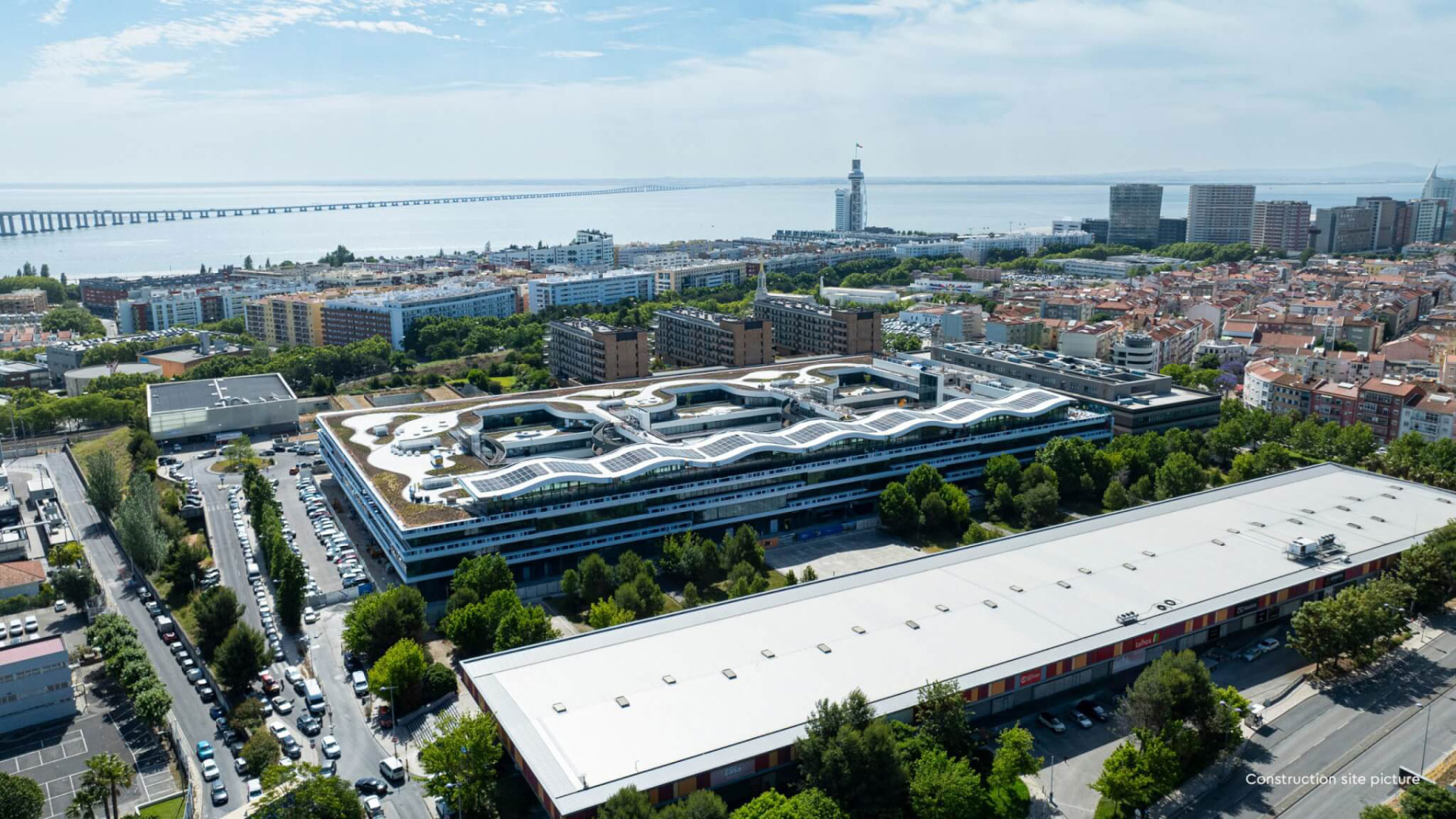
An old abandoned shopping centre is giving way to the Oriente Green Campus, “a true ecosystem of experiential learning”, in other words, a new campus for Universidade Europeia. It is located in Loures, a town in the Lisbon metropolitan area, opposite the Tagus River and the Vasco da Gama Bridge that crosses it. It is the result of the ambition of the architectural firms Saravia+Associates and KPF, and the landscaping firm LJ-Group.
The architects at KPF saw the original four-storey concrete structure as “a perfect opportunity for a transformative adaptive reuse project”. They set to work by opening up all levels of the old shopping centre for ventilation and converting the heart of the building into an open courtyard. In their own words: “by peeling back walls and selectively opening up ceilings, the building became naturally ventilated and filled with light.” As a result, two landscaped courtyards separated by a central axis allow natural light to flood into all areas, like two horizontal skylights, and reinforce the continuity between interior and exterior. In this way, they also bring the project closer to its sustainability goals.
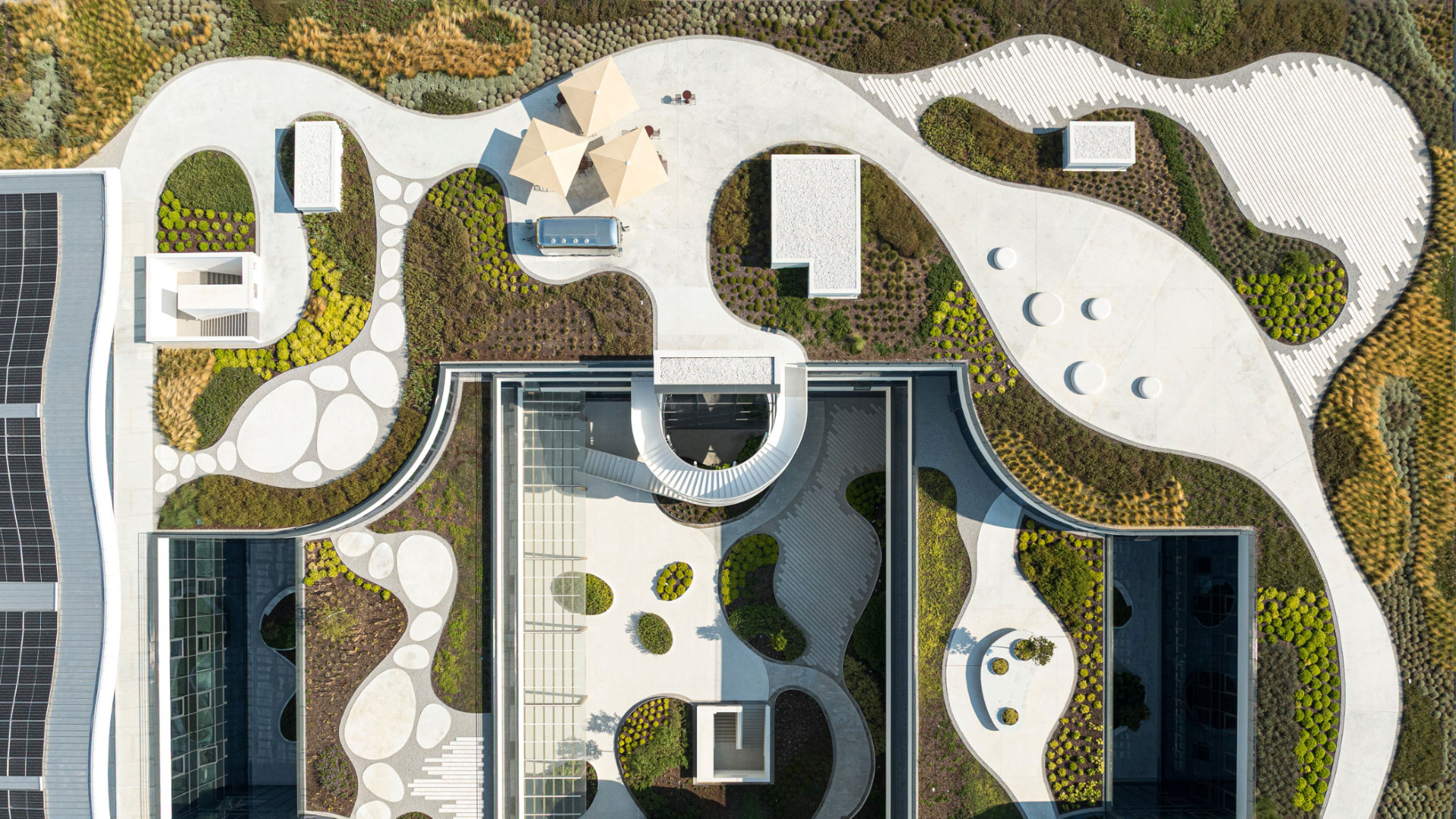
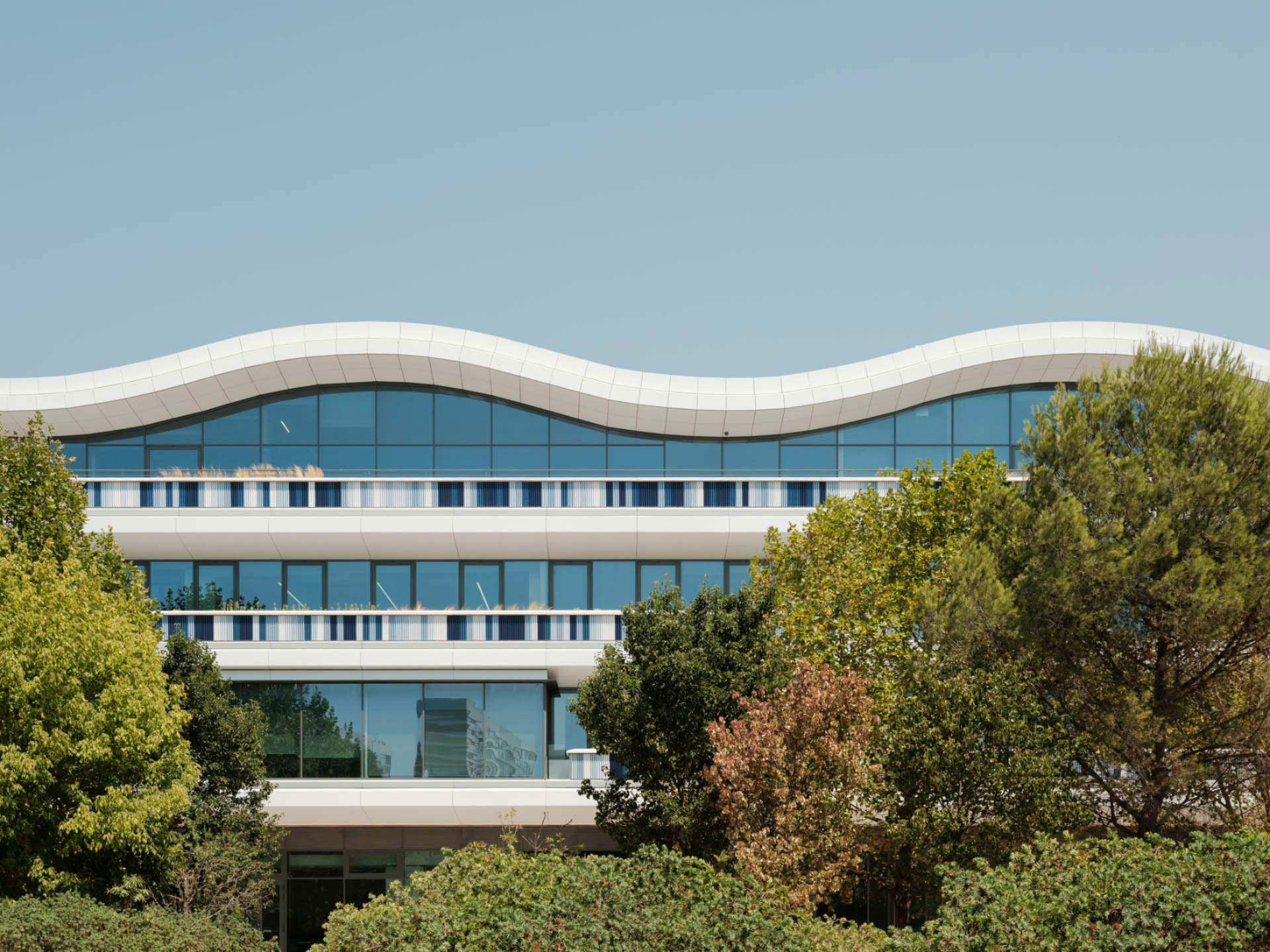
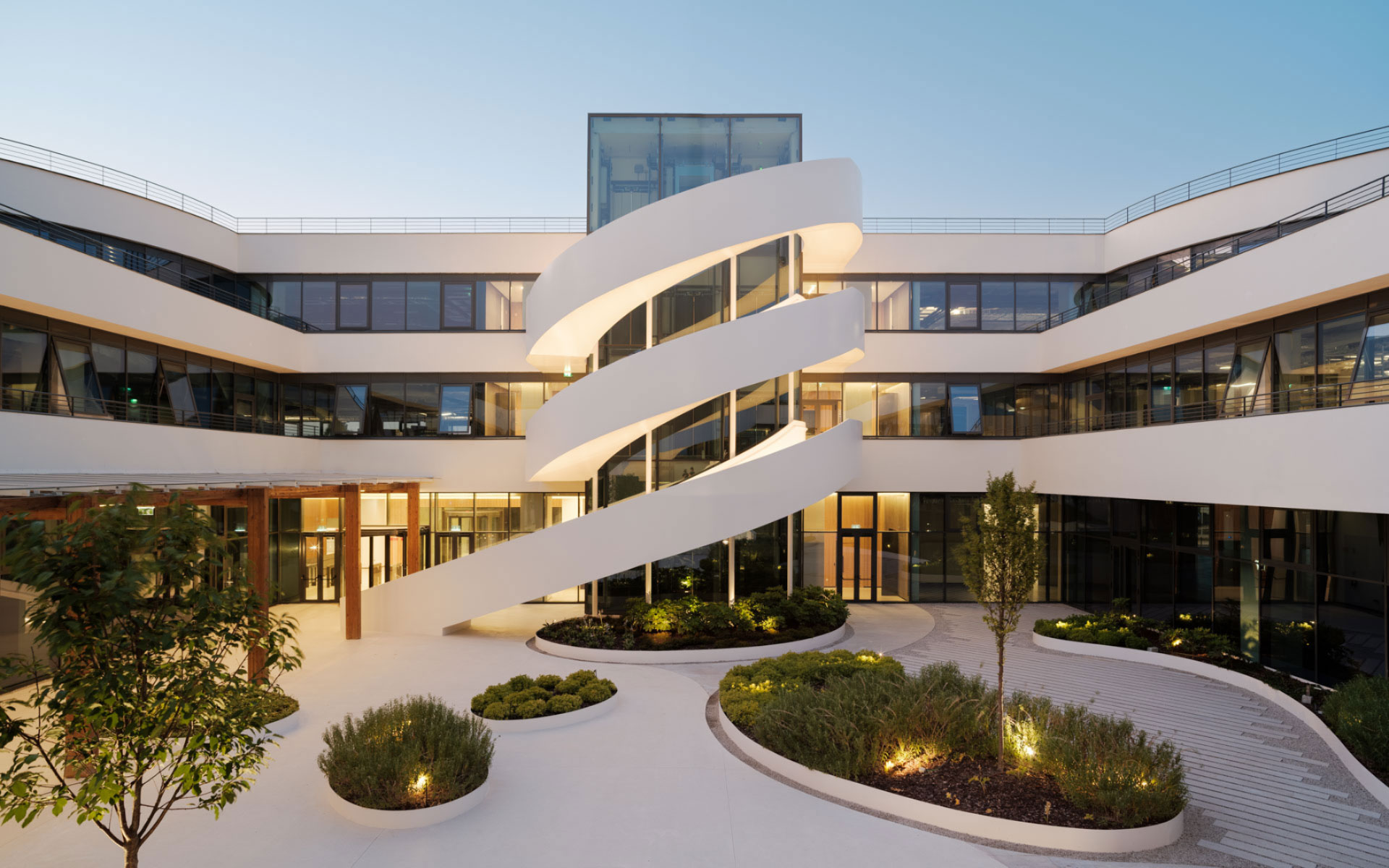
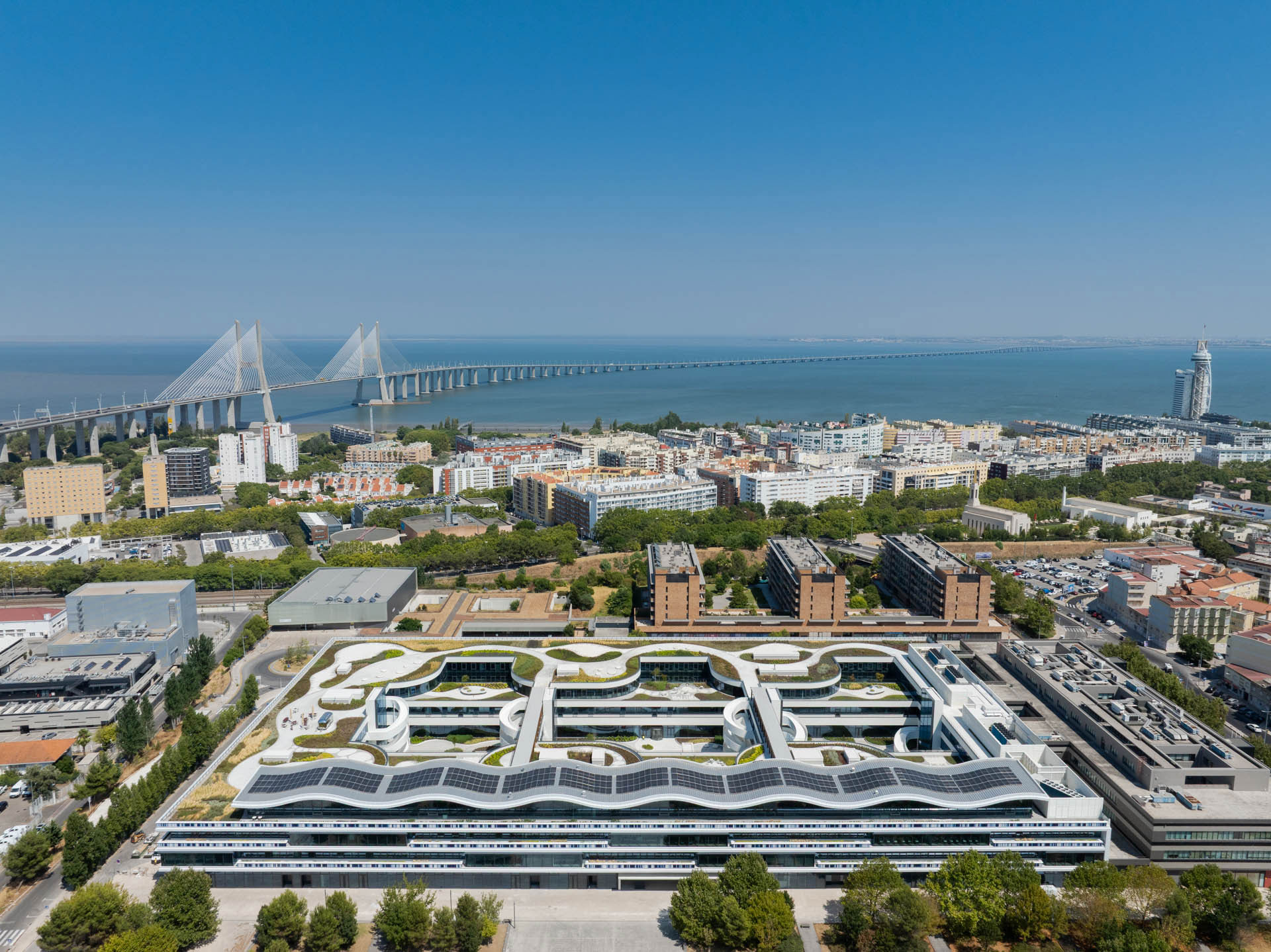
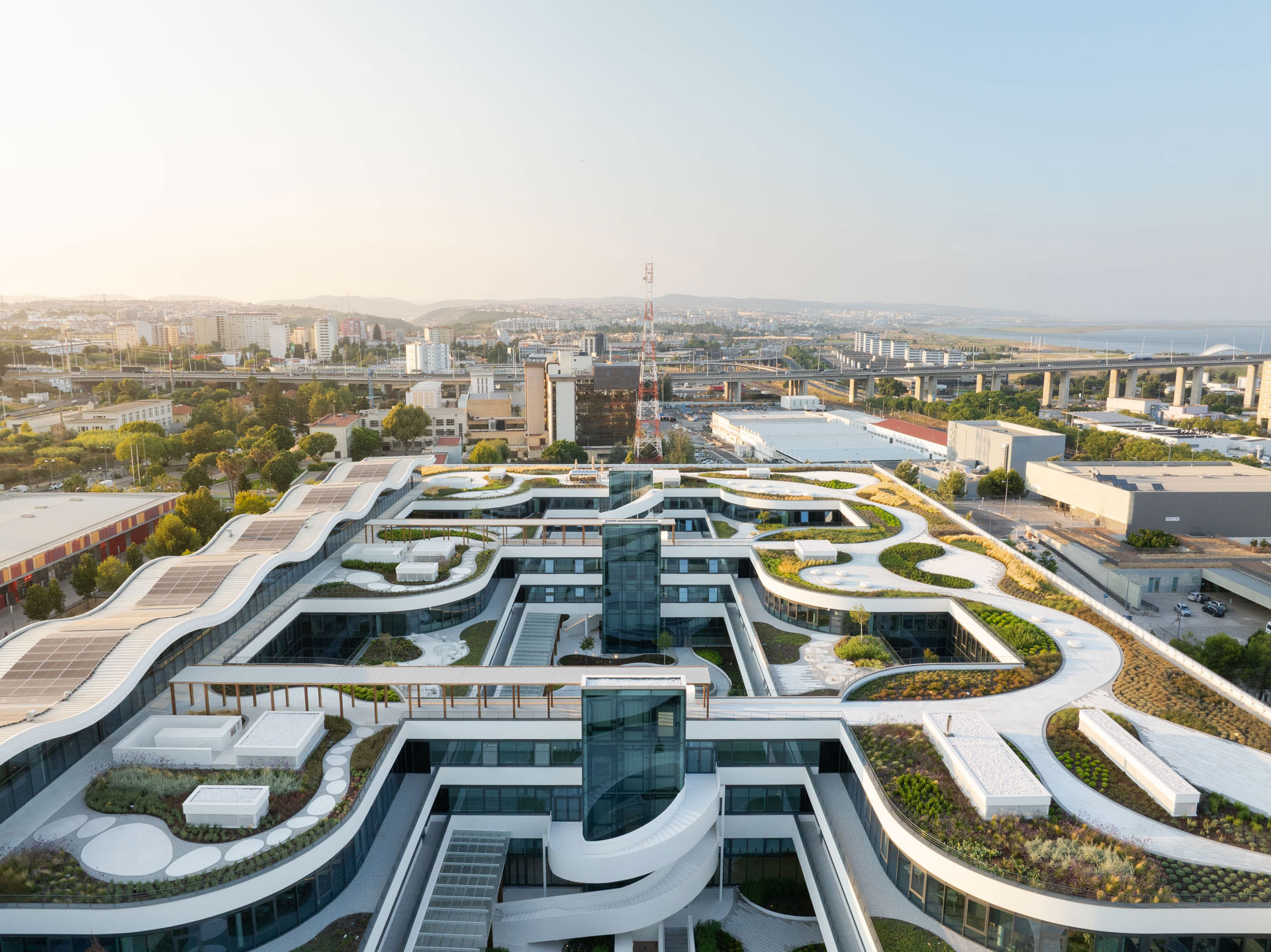
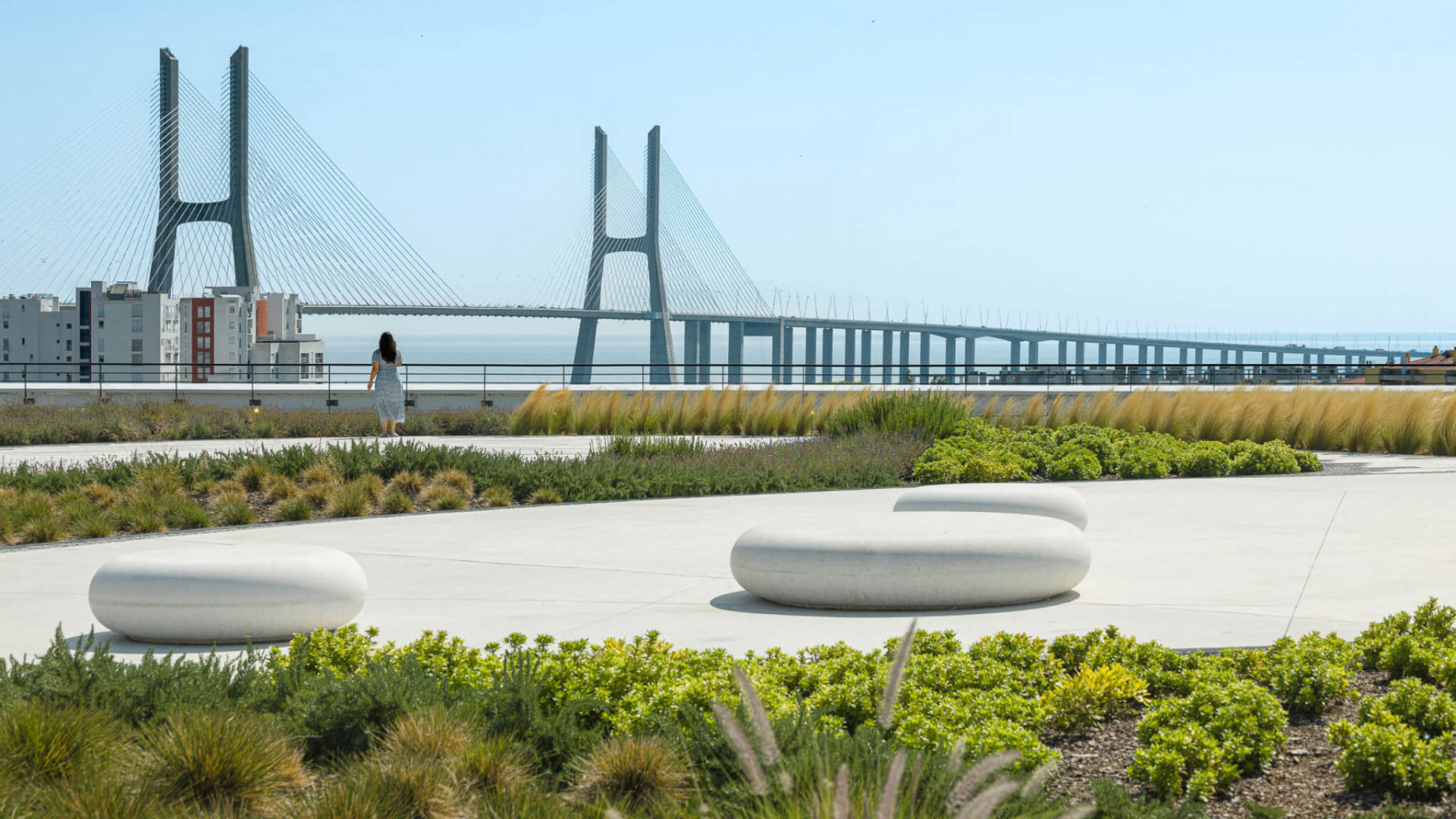
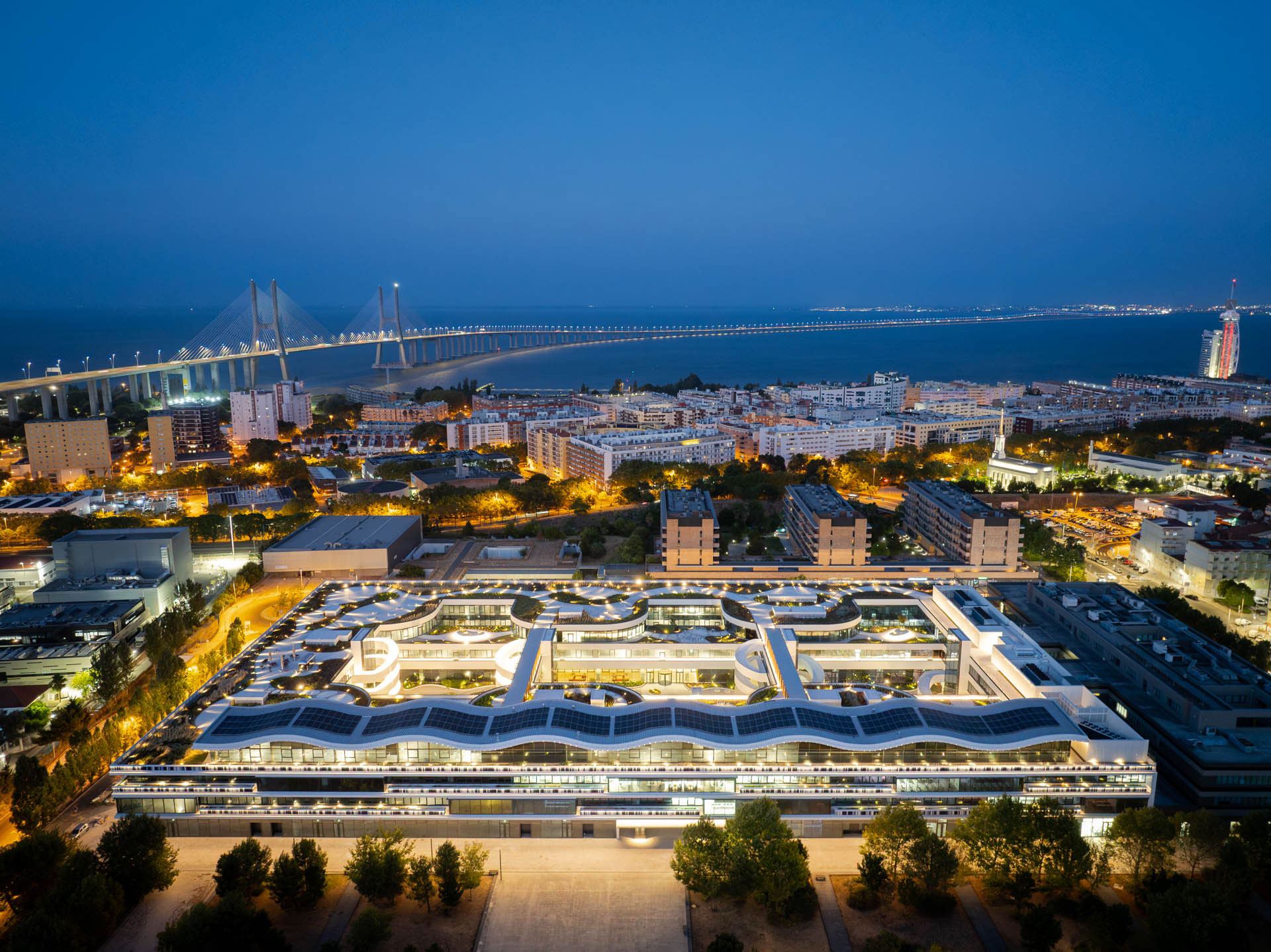
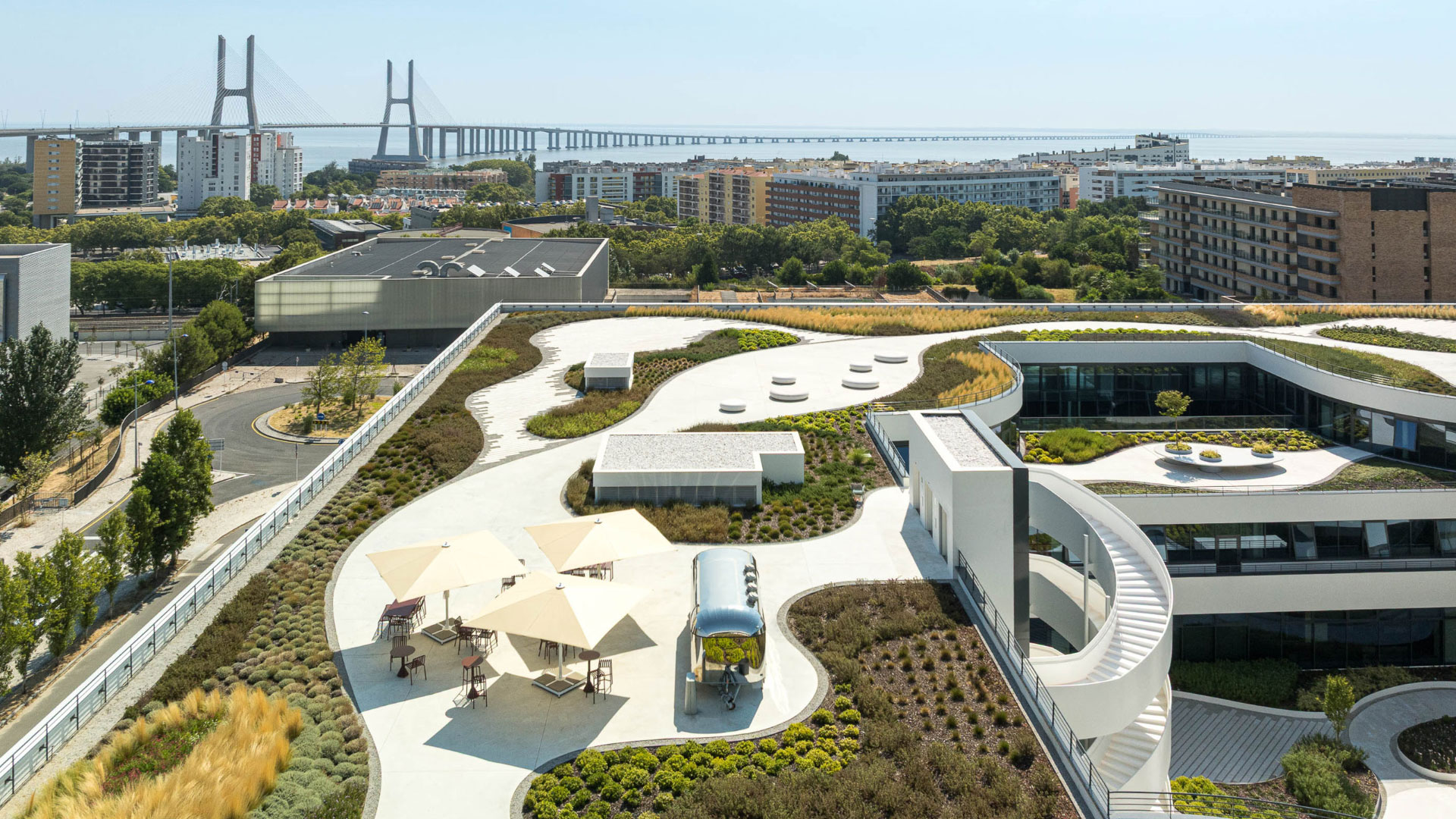
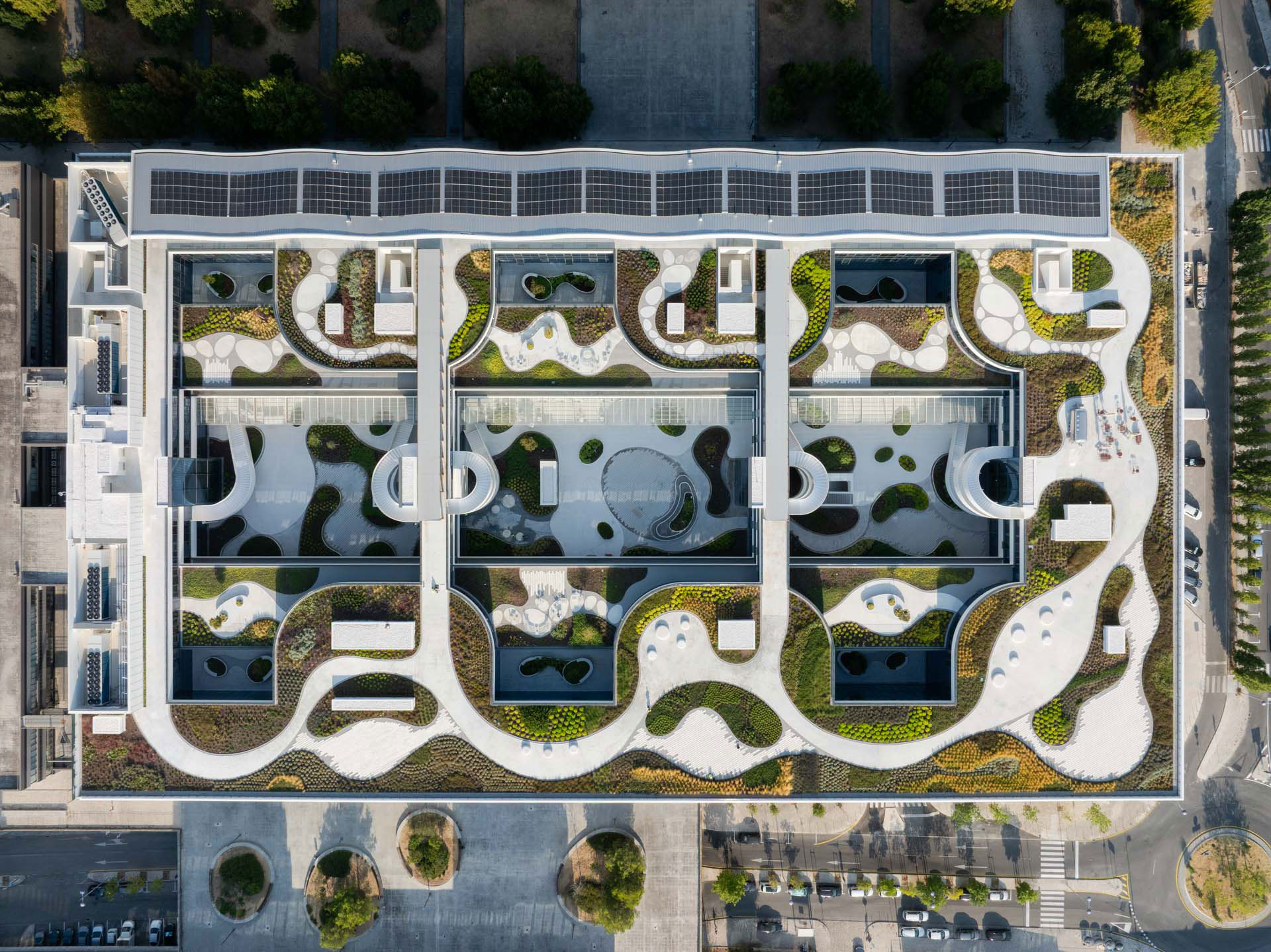
The architectural firm Saravia+Associates contributed to the idea with a simple and transparent architectural language. The architects wanted to make the building “a large panoramic window on the surrounding landscape (…) through simple geometries and a minimal language”. To achieve this, the building was clad in glass, which is a necessary complement to the landscaped courtyards.
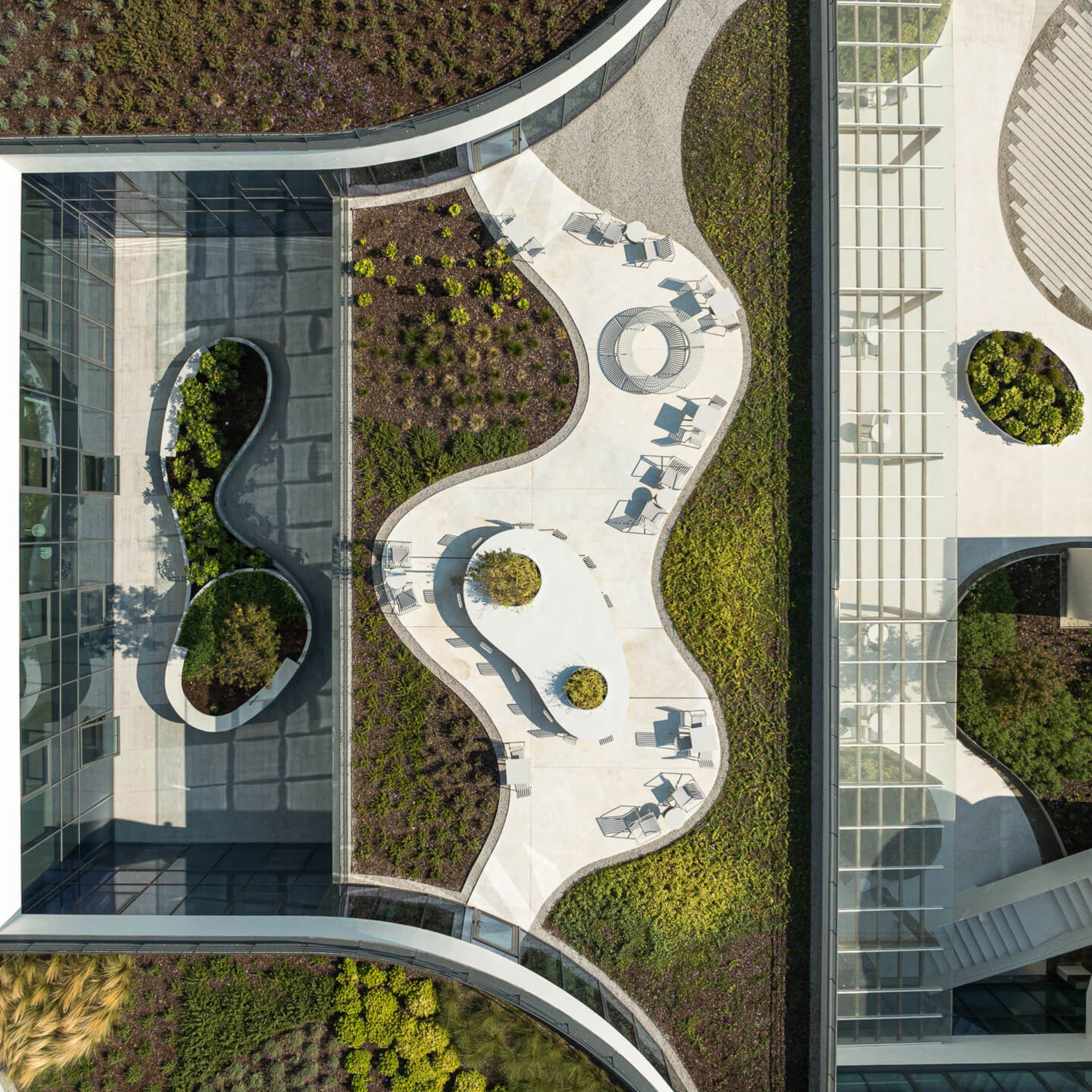
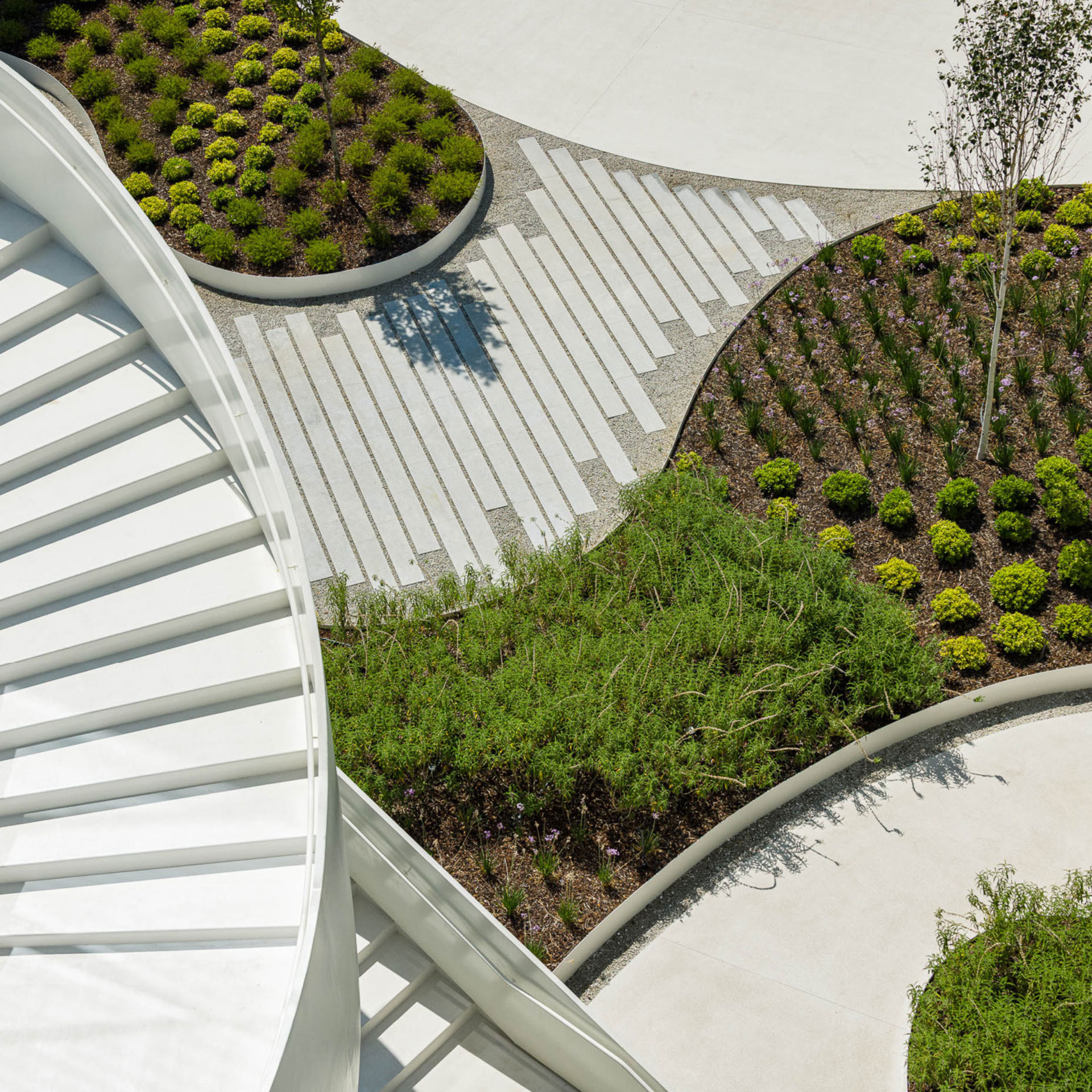
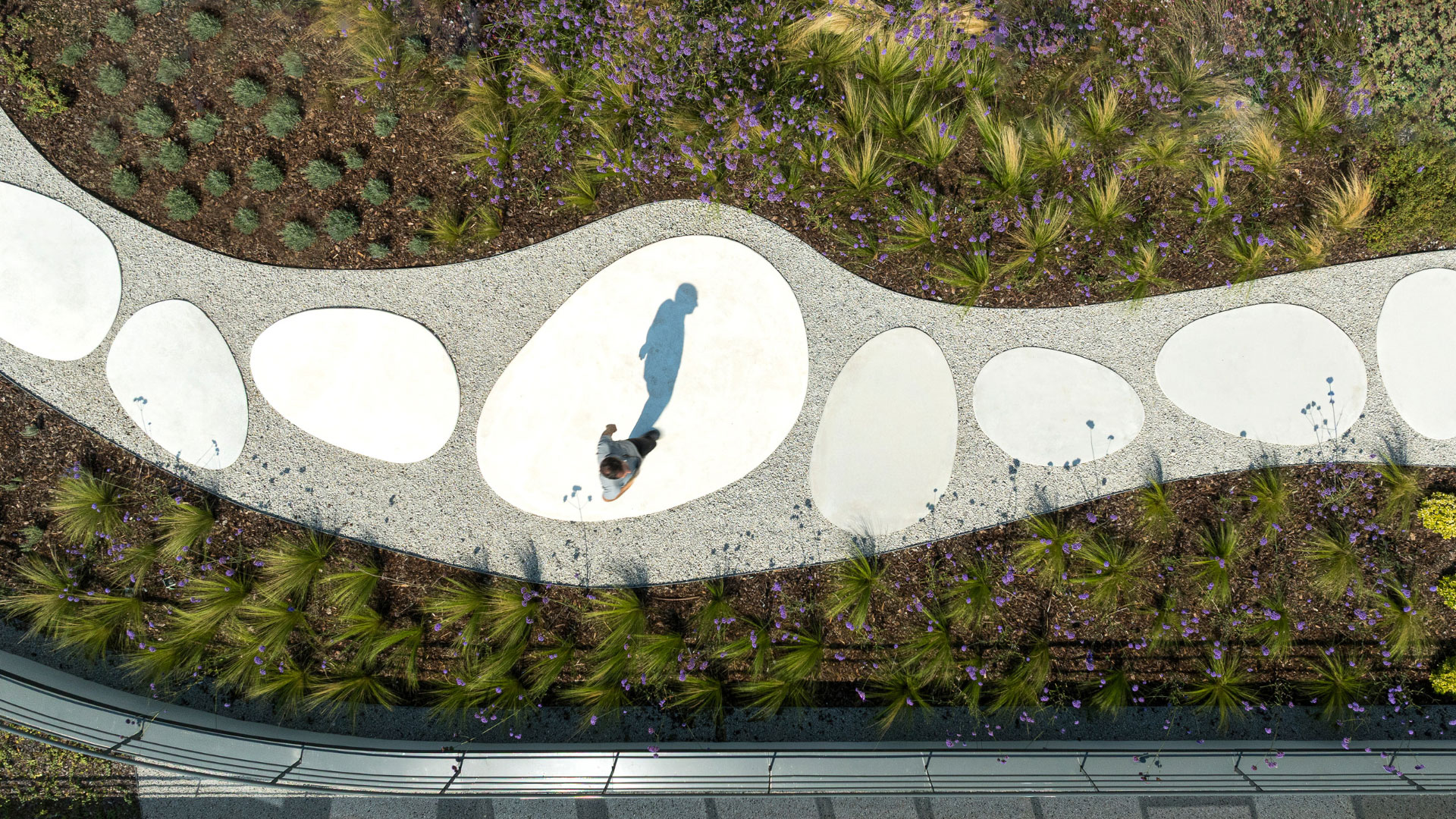
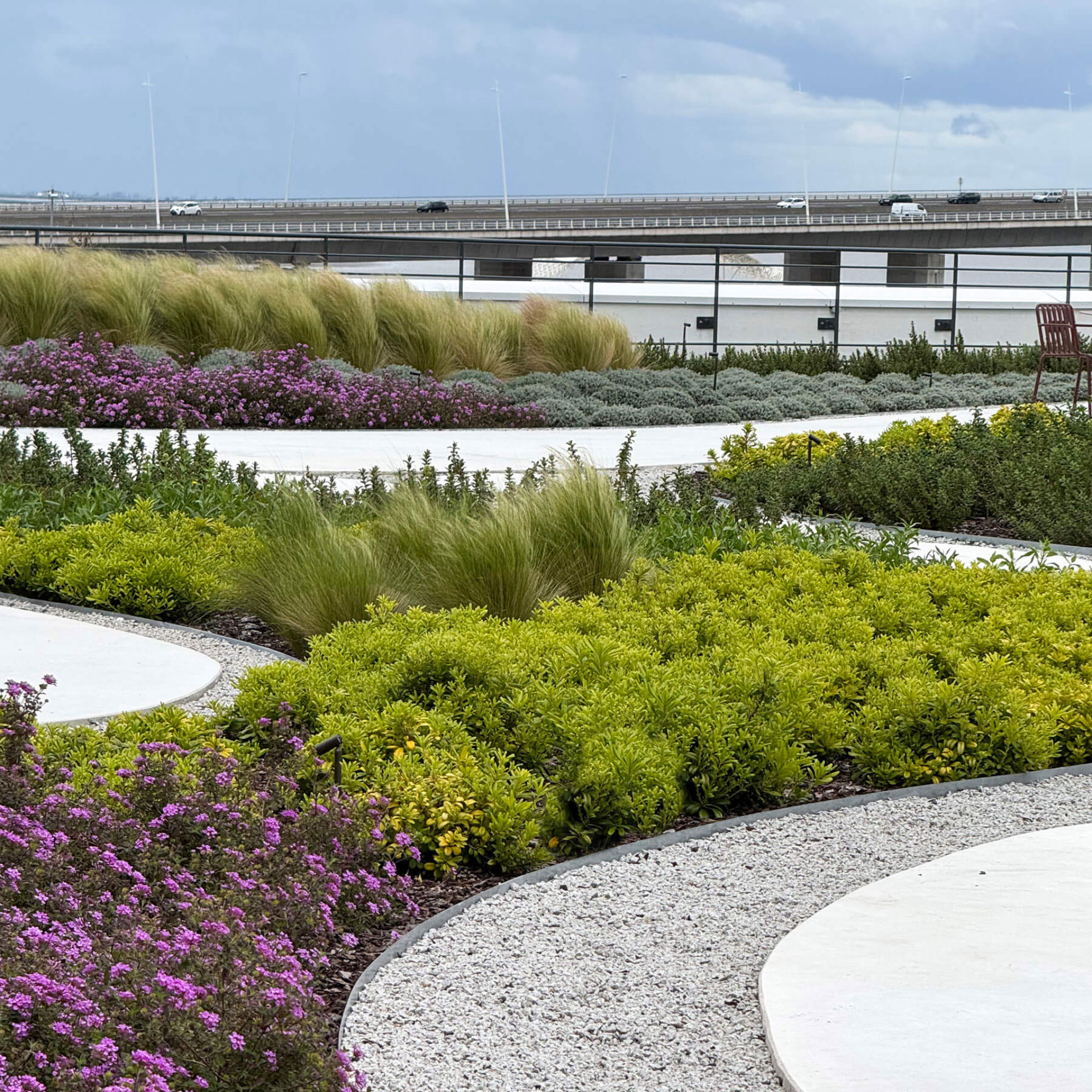
Then it was time for LJ-Group: its landscape architects wove a series of paths, flower beds, gardens, passageways, rest areas and event spaces with panoramic views of the Portuguese capital across 3.7 hectares. “The terrace blends native and adaptive vegetation with organic pathways,” creating an environment that “encourages both movement and pause.” In this way, the rigorous geometry of the building is offset by the organic nature of LJ-Group’s landscaping.
The end result is “an example of how public space, workplace needs, ecological awareness, and design quality can coexist in a dense urban setting,” or a way of living in the city that prioritises well-being, community and commitment to the future.
Sources and images: KPF, Saravia+Associates, LJ-Group, Universidade Europeia.